



Salesforce invests $300M in Anthropic tokens to automate coding tasks
Marc Benioff signals a shift from headcount to AI agents, projecting heavy token spend while keeping engineers in the loop.

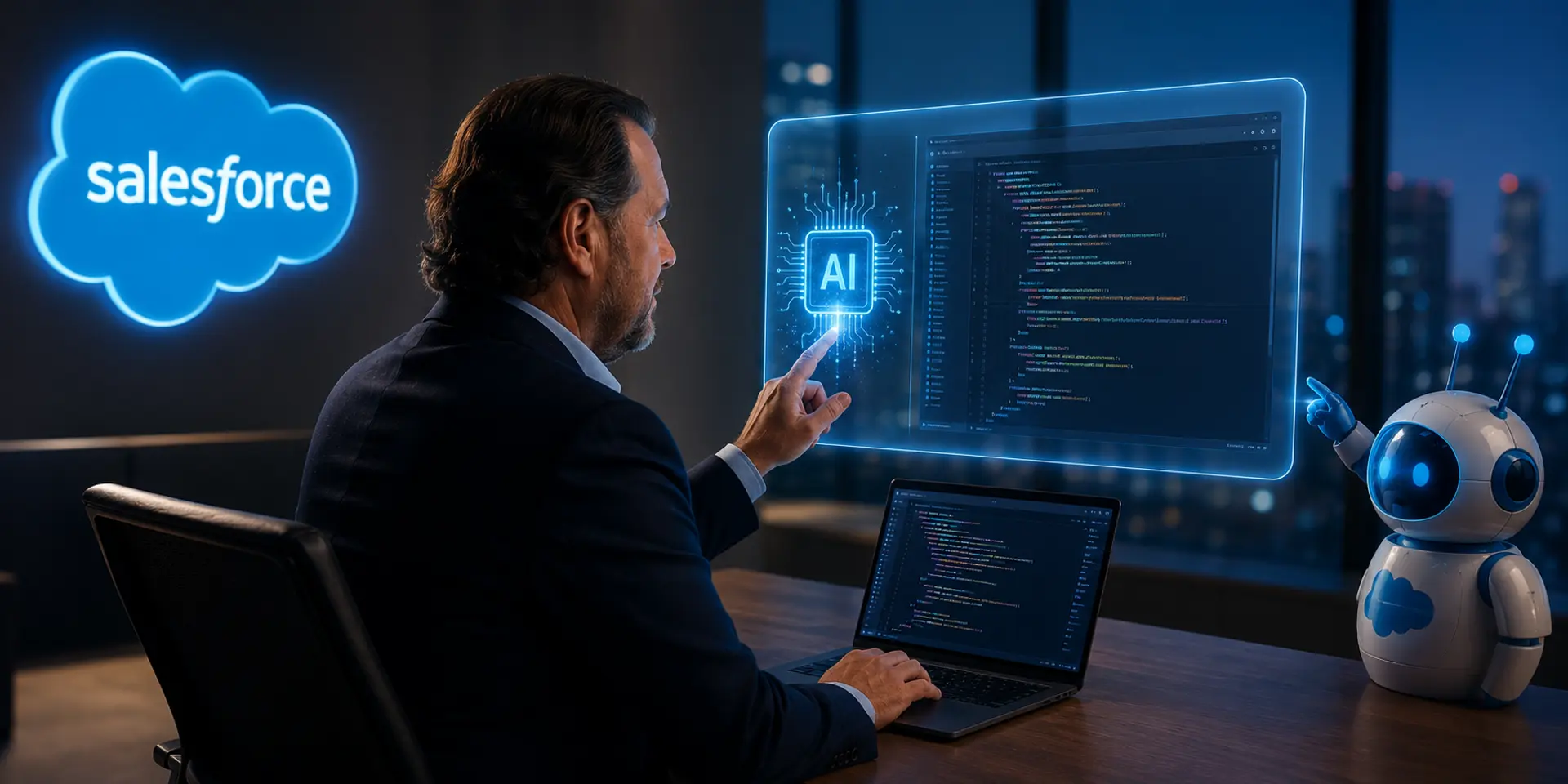

AI is changing how software gets built, and Salesforce is leaning in. The company’s top boss believes coding agents can take on a bigger slice of engineering work while humans direct the show. Here's everything that you need to know!
From a hiring freeze to bigger AI bills
Salesforce paused hiring new software engineers in 2025 after reporting strong productivity gains from its AI stack. This year, instead of expanding headcount, CEO Marc Benioff expects Salesforce to spend heavily on large model usage, saying the company could allocate around $300 million to Anthropic tokens in 2026.
He described coding agents as impressive tools that can cut development costs and speed up delivery.
30% productivity and the rise of coding agents
Benioff first outlined the shift in 2024, citing more than 30% productivity gains from Agentforce and other AI technologies used by engineering teams. Those tools, he said, have boosted engineering velocity and reduced the need to make fresh engineering hires in 2025.
Crucially, the CEO argues AI is reshaping roles rather than removing them outright. Salesforce’s roughly 15,000 engineers are increasingly working alongside coding agents based on models from Anthropic and tools like OpenAI Codex and Cursor. Engineers guide, review and supervise the outputs, since today’s systems are not yet able to operate independently.
What this means for engineering work
The emerging pattern is clear. AI can now handle more routine coding, testing and refactoring, leaving people to set requirements, architect systems and make judgment calls. That “human-in-the-loop” approach reflects how teams use agents to draft code and surface fixes, while experienced developers decide what to ship and where the risks lie. Benioff’s stance underscores this blended model, not a fully automated one.
Spending to save, and where Salesforce is betting
Salesforce’s pivot from salaries to compute reflects a belief that smarter model usage will keep costs in check over time. The company is building systems that route requests between larger and smaller models based on complexity to manage bills more precisely.
Alongside a prior investment of more than $300 million in Anthropic, Salesforce is also expanding AI features across its products, including Slack. In comparison, Agentforce has grown to about $800 million in annual recurring revenue.

The hiring picture has also shifted by function, not just volume. While pausing new engineering roles, Salesforce planned to add 1,000 to 2,000 salespeople to help customers understand and adopt its AI products. That sales-led push is designed to turn coding agents and automation into measurable customer value.
The road ahead
Benioff frames the moment as a digital labour revolution, with AI shouldering a growing share of day-to-day work. Internal estimates suggest AI now accounts for roughly 30% to 50% of overall workload at Salesforce, yet the company maintains that engineers remain essential to steer quality, safety and product direction. The message is pragmatic: AI coding tools can replace more tasks, not engineers themselves.
For teams watching from the sidelines, the takeaway is to treat agents as teammates who draft, test and iterate, while people set priorities and validate results. If Salesforce’s bet pays off, expect more technology budgets to move from payroll to tokens and inference, and more engineers to manage AI workflows as part of everyday software delivery.