



AI slop on YouTube Kids sparks calls for a ban
Over 200 groups warn YouTube about “AI slop” harming kids. Should AI-generated videos be banned from YouTube Kids?

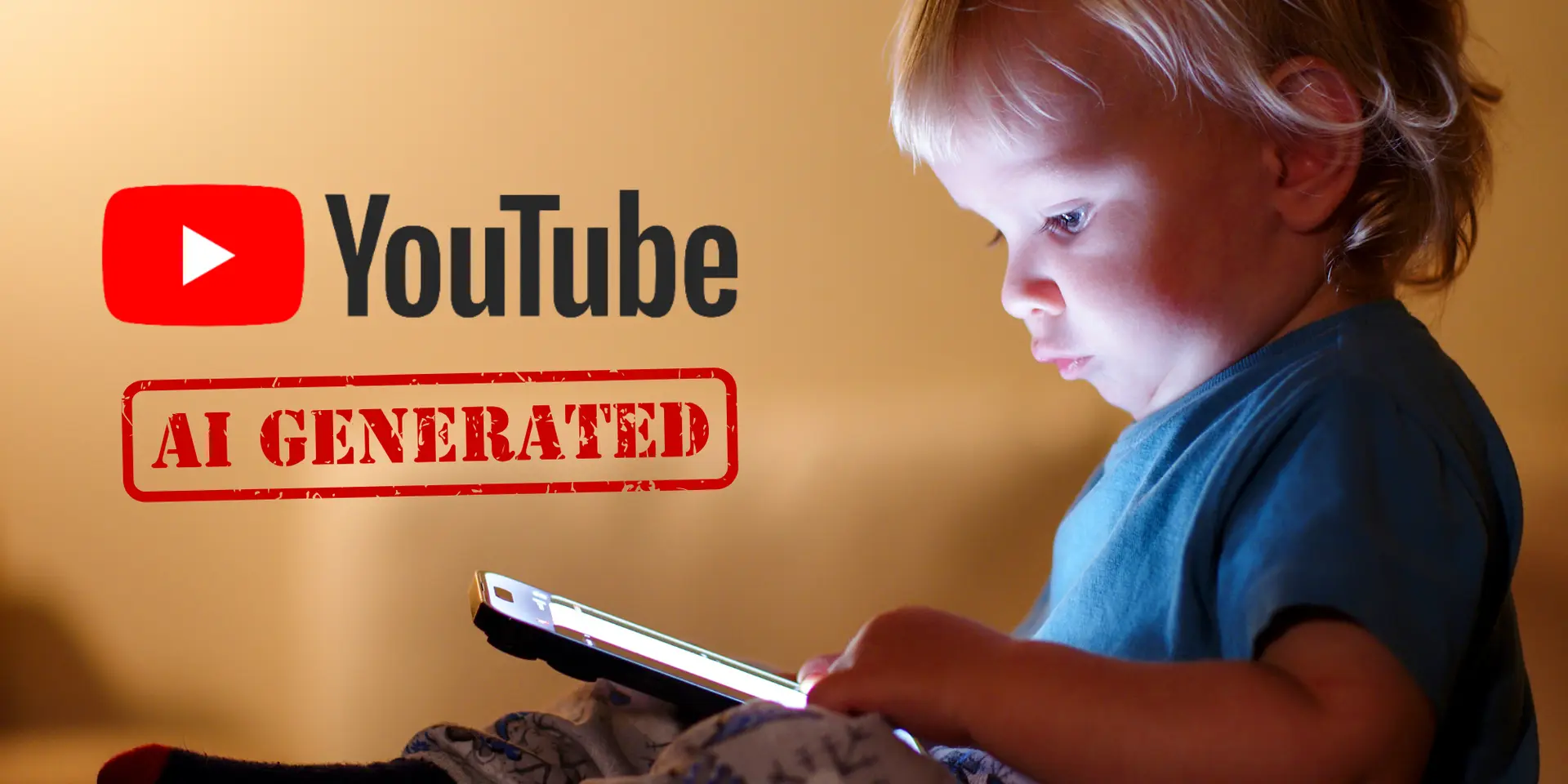

Most YouTube videos are turning into AI-powered brain rot. But do kids even realise it’s not made by real people, and where do we draw the line?
And that is exactly what over 200 organisations and experts are now pushing back against. On 1st April, a coalition led by Fairplay urged YouTube to ban AI-generated videos from its Kids app, warning that so-called “AI slop” is distorting attention, confusing young viewers, and prioritising profit over quality.
Let's unpack whether measures will be taken against AI slop on YouTube soon!
What exactly is ‘AI slop’?
The term refers to mass-produced, low-quality videos generated using AI tools. These videos are often repetitive, surreal, or loosely educational, made to maximise watch time.
For young children, who are still developing the ability to distinguish fiction from reality, such content can be particularly influential. Signatories to the letter include major organisations like the American Federation of Teachers and the American Counselling Association, along with researchers such as Jonathan Haidt.
Their concern is how these videos are engineered to exploit attention.
A growing industry built on cheap content
According to the association, the rise of AI-generated children’s content is being fuelled by platform incentives. Because these videos are inexpensive to produce and easy to scale, they can generate significant revenue through ads and recommendations.
Estimates suggest that top AI-driven kids’ channels collectively earn over $4.25 million annually, roughly Rs 35 crore. This creates a feedback loop. More views lead to more revenue, which encourages more production of similar content, often at the cost of creativity and educational value.
What the coalition wants YouTube to change
The demands outlined in the open letter go beyond moderation. As of now, the group is calling for a complete ban on AI-generated videos within YouTube Kids. On the main platform, they want restrictions on content labelled as “made for kids” if it is AI-generated.
They are also pushing for clearer labelling of synthetic content, stronger recommendation controls for users under 18, and changes to monetisation policies that currently reward low-cost, high-volume videos.
YouTube’s response so far
YouTube has acknowledged the issue but stopped short of agreeing to a ban. The company says it already enforces strict content standards on YouTube Kids and limits AI-generated videos to a small set of vetted channels.
It also requires creators to disclose realistic synthetic media and is working on dedicated AI labels for the Kids app. In a January 2026 update, CEO Neal Mohan described managing low-quality, repetitive content as a priority, noting that systems are being expanded to suppress spam-like videos. However, critics argue that these measures may not go far enough.
Why this matters beyond the US
While the letter originates in the US, its implications are global. India is one of YouTube’s largest markets, especially for children’s content. Many families rely on the platform for nursery rhymes, early learning, and entertainment.
Experts point out that even adults can struggle to identify AI-generated media consistently. For young children, the challenge is even greater. This makes platform-level safeguards, such as clearer labels and stronger defaults, particularly important.
The bigger question for platforms
The debate around AI slop highlights a broader issue. As generative AI (GenAI) lowers the cost of content creation, platforms must decide how to balance scale with quality. Algorithms that prioritise engagement can unintentionally reward content that is optimised for clicks rather than value.
This raises a fundamental question. Should platforms simply host content, or actively shape what gets seen?
Final thoughts
The push to ban AI-generated videos from YouTube Kids is about more than content moderation. Who decides what children watch, algorithms or accountability? With pressure mounting on YouTube leadership, the next steps will be closely watched. Whether through bans, labels, or changes in monetisation, the platform’s response could shape how AI-generated content is governed across the internet.