



Age is just a number: 72-year-old Vidya Singh becomes oldest Indian woman to summit Mount Kilimanjaro
Vidya Singh, 72-year-old entrepreneur, philanthropist and an athlete summited Mount Kilimanjaro defying age with discipline and consistency and proving no mountain is too big to climb.

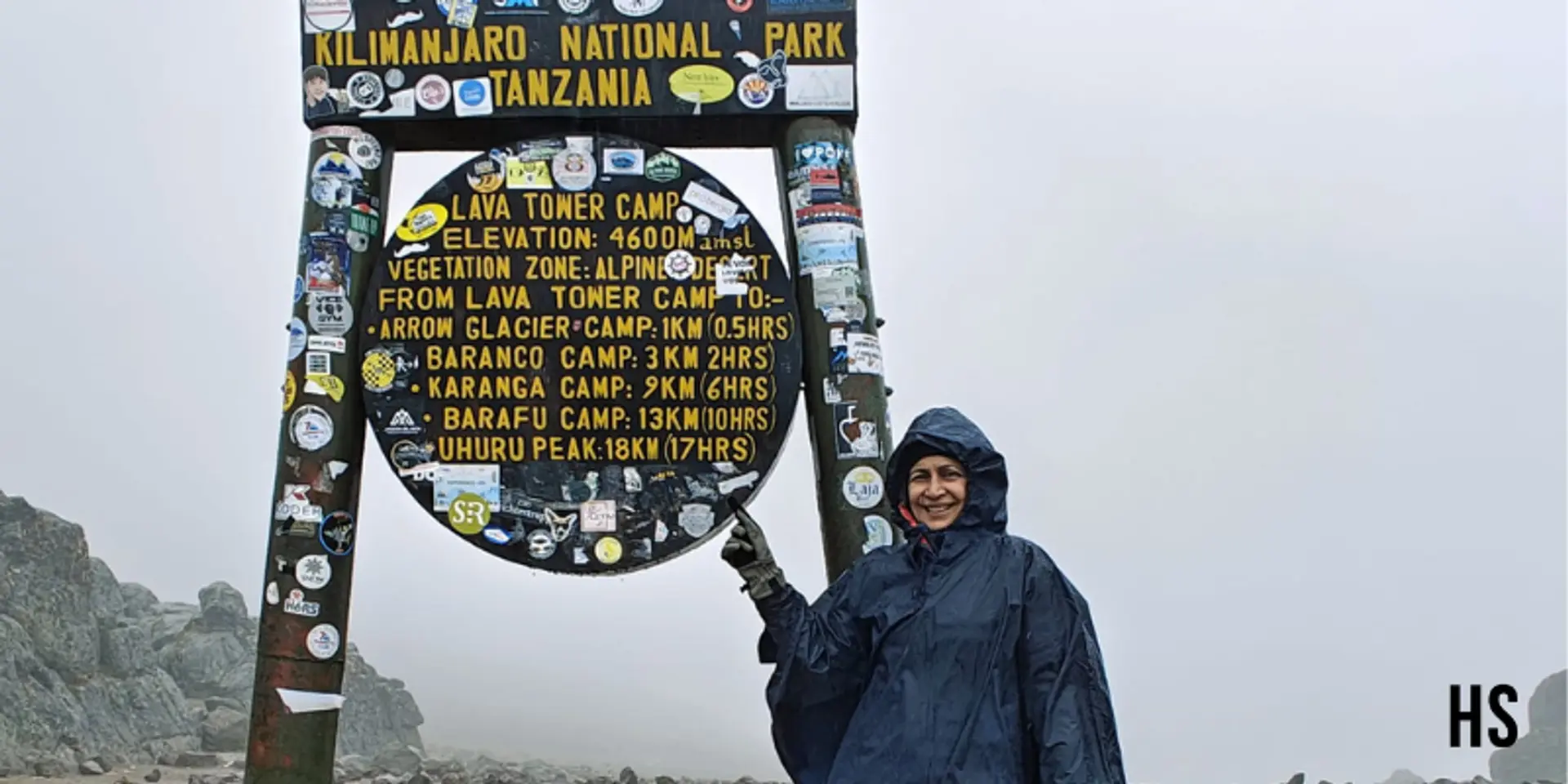

On March 13, Vidya Singh stood triumphantly at 5,895 metres above sea level, becoming the oldest woman in India to summit Mount Kilimanjaro.
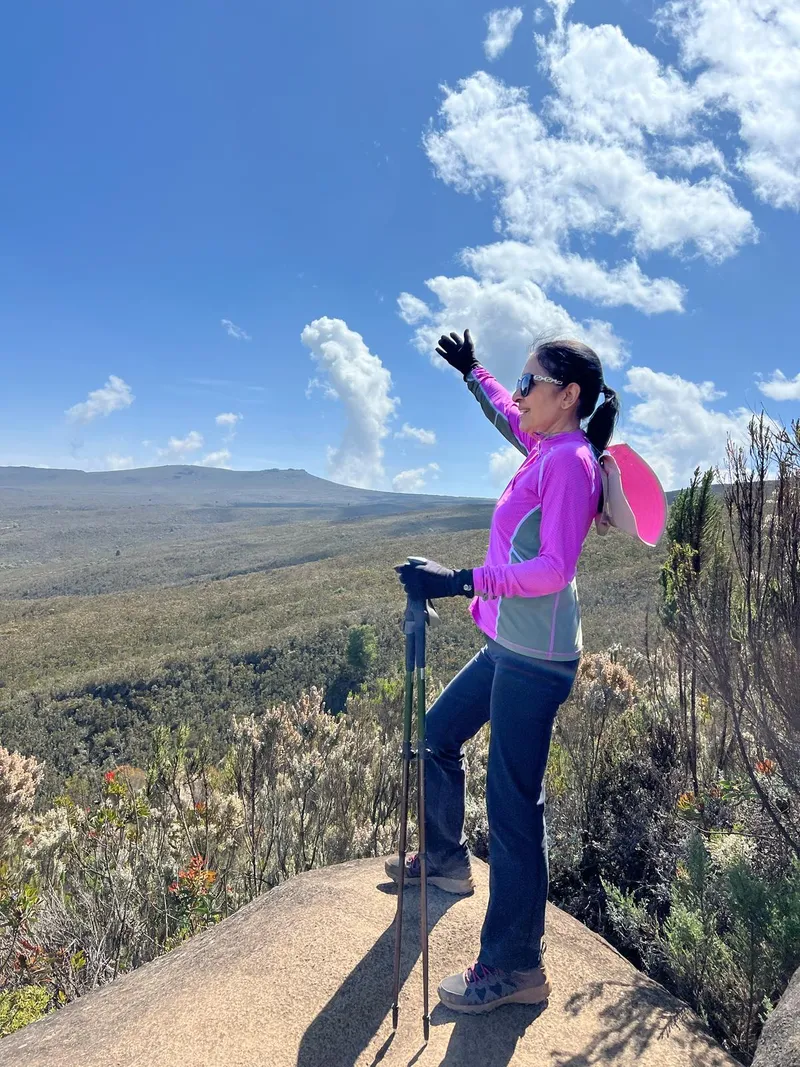
This 72-year-old woman from Chennai, whose passion for trekking began in 2013 has completed 19 high-altitude treks across India, Bhutan, and South America, including Mentok Kangri and Machu Picchu.
The “feeling of top of the world” has come after years of consistent efforts at fitness and a lifelong love for sports.
Born into the royal family of Vijayanagaram in Northern Andhra Pradesh, Singh’s life has been anything but ordinary. "My father's elder brother was the last crowned Maharaja in 1945, just before independence," she says.
Growing up in Madras (now Chennai), she attended prestigious institutions like Church Park and Stella Maris College. Her father played golf, tennis, and rode horses. Her mother was an excellent tennis player.
Her introduction into sports began early, partnering with her mother in tennis tournaments at the age of 13 or 14. "We won the tournament and we got headlines in the papers, the first mother-daughter team to win this tournament, ladies doubles," she recalls with pride. She captained the Madras University women’s tennis team, has won medals in Masters Swimming Championships and cycles 50-60 km every weekend with her cycling group, “The Spokespersons’. She also ran marathons and loved horse-riding.
Beyond sports, Singh has dedicated her time and efforts to women’s organisations and philanthropy, serving as president of the International Women’s Association and has been actively involved with FICCI FLO, Soroptimist International and is a patron of the Karunnai School for destitute and mentally disabled children.
For over two decades, she has also run a successful wedding and event planning business with her partner Rekha Rangaraj.
The path to Kilimanjaro’s peak
Singh points out that while Kilimanjaro is a “trekkable summit”, the extreme conditions could pose serious risks. So, she always makes it a point to trek with Chennai-based trekking company Get Up and Go, led by Arjan Kripal Singh.
For the Kilimanjaro expedition, Singh’s group consisted of 10 trekkers supported by a similar number of guides.
The Kilimanjaro is usually an eight-day trek with Singh’s climb to the summit beginning on the night of Day 6.
Singh recalls the most harrowing part of the journey was scaling the Barranco Wall on Day 5. It’s a 900-feet vertical cliff and viewing it looming over the campsite seemed like an impossible obstacle to conquer.
"We saw it in the evening when we reached the camp and we were like, 'Oh my God, how are we going to climb this cliff?'" she remembers.
The two-and-a-half-hour climb up Barranco Wall tested every limit of Singh’s physical and mental strength. "It was actually hugely challenging, but surprisingly, I think every single one of us enjoyed it because we actually enjoyed the challenge of climbing up narrow bits of rocks where you put your foot on and then climb to the next."
The climb to the summit began at 10.30 pm on Day 6 with only headlamps lighting the path for the trekkers to follow the guides.
"The paths are narrow and winding. So, they go almost like a zigzag, which makes it easier to climb at an altitude," Singh explains.
After hours of grueling night climbing, the group reached Stella Point as dawn approached, then trekked on for another 45 minutes to reach Uhuru Peak, Kilimanjaro's true summit.
"It's an incredibly beautiful sight to watch the day break over the horizon. The visuals are amazing. But it’s difficult to stay up there for a long time with the temperatures at minus 12 degrees and more climbers waiting to reach the summit,” she describes.
Discipline defies limits
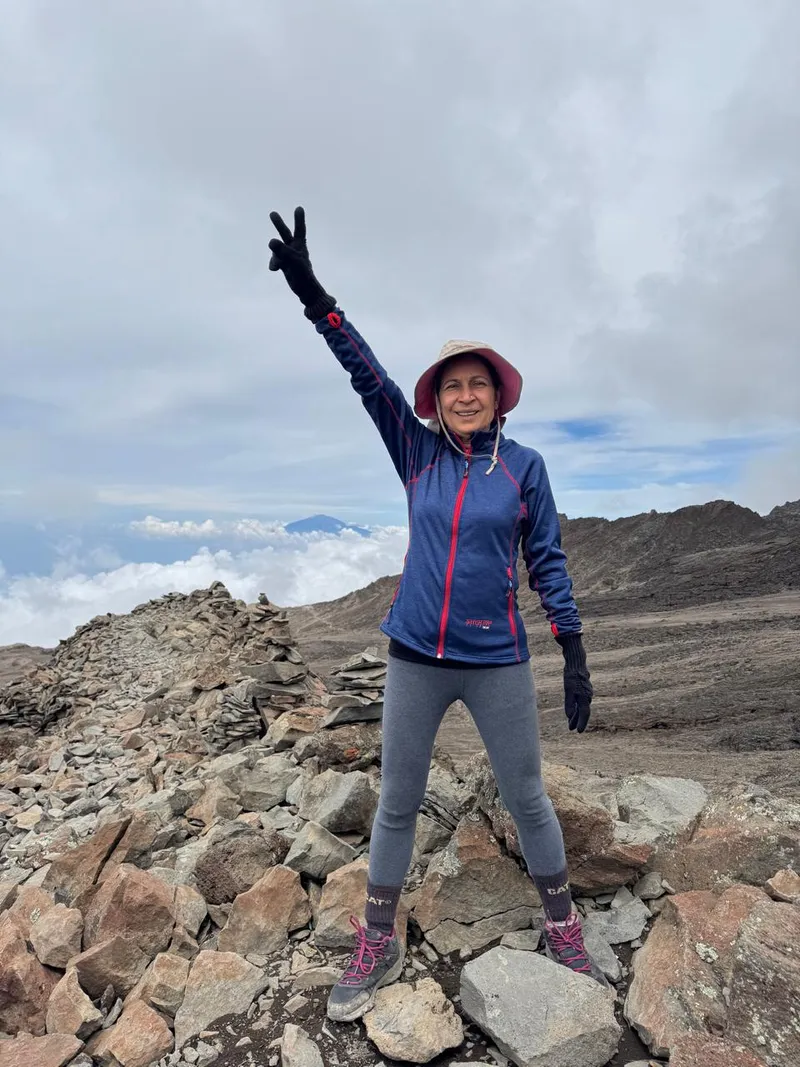
Singh admits that inheriting “good genes” and a consistent fitness routine have helped her immensely, despite her advancing age.
“I don’t think there’s been a time in my life where I have not exercised. What I do has changed according to interests,” she explains.
Singh lifts weights a couple of times a week, cycles every Sunday, swims twice a week and uses the ladder mill in the gym for a 30-minute climb each time. Before every trek, for five weeks, she climbs the hills on St Thomas Mount and Tirusulam in the city.
A lot of it comes down to mental discipline too, she avers. Climbing requires one to be cautious at every step.
"It's a place where you simply cannot take a risk. You have to watch every step. It is so easy to fall and break a bone or have some serious injuries. There's danger every day. But you have to be aware and careful when you are climbing,” she emphasises.
For Singh, the mountains also offer a spiritual connection.
"The more you are out in the mountains, they seep into your soul, something happens to you out there. You feel how insignificant we are as human beings in the middle of this beauty of nature,” she reflects.
Her sights are now set on Mount Elbrus, the highest peak in Europe and Mount Fuji.
When asked about Everest, she admits that if she had started 40 years ago, she would have had the drive to do it, but now it is out of her reach.
Singh believes women should not be limited by age. “Age is not an excuse. It should not stop you from doing anything you want to do,” she says.
Although she doesn’t recommend every woman to just get up and climb a mountain, she says there’s no harm in beginning to train, build strength, resistance and practice cardio fitness.
“Once you start trekking, you will get addicted, and halfway through your trek, you’ll start planning your next one,” she says.
Edited by Affirunisa Kankudti