



How Sanitree is designing menstrual equity in India
What began as a grassroots awareness campaign in Rajasthan is now a global social enterprise connecting Edinburgh to Jaipur, empowering women with sustainable menstrual solutions.

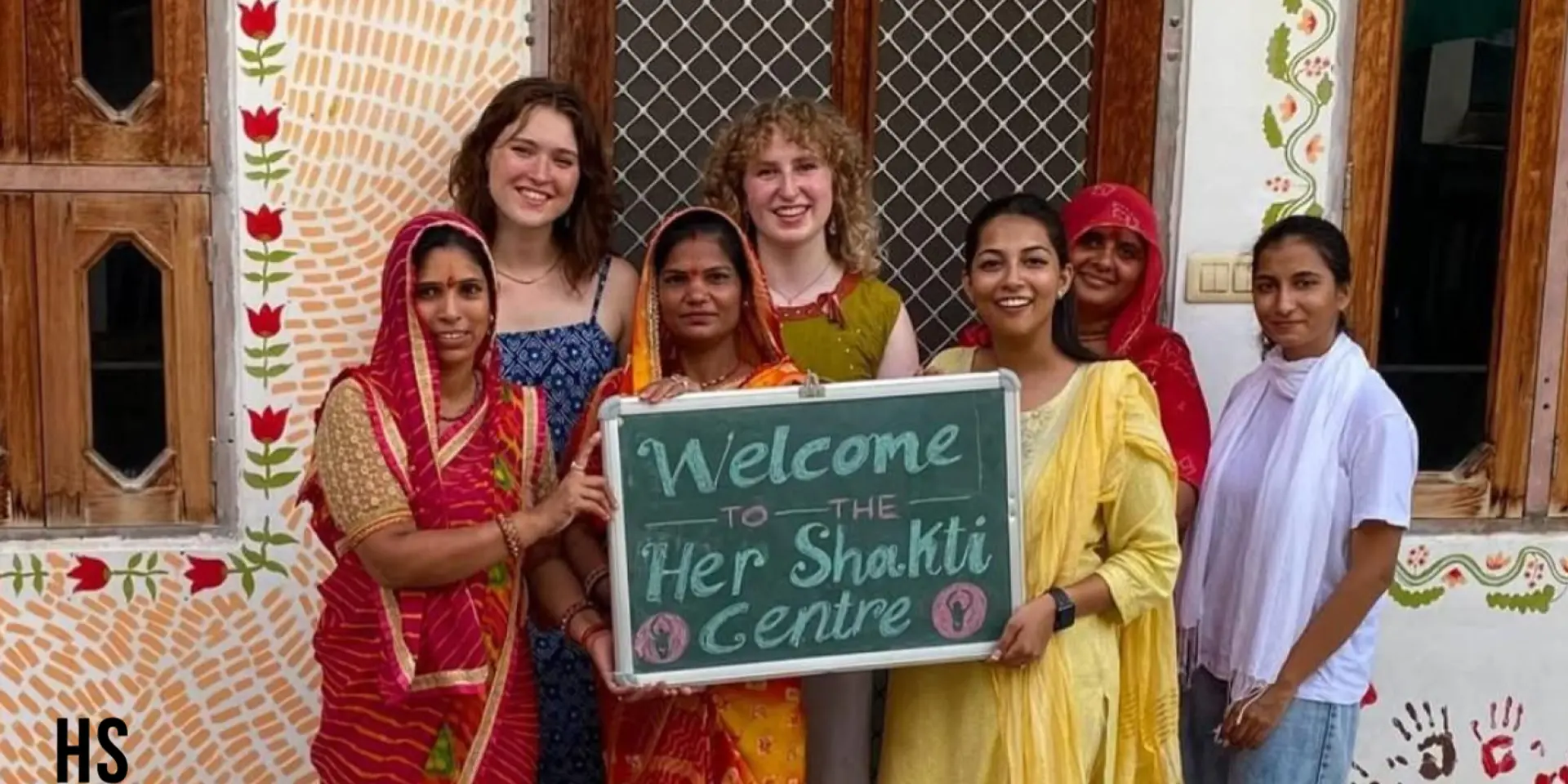

Tucked within the vibrant chaos of Jaipur’s slums, a team of women are rewriting the narrative around menstruation.
The Her Shakti centre where they work, is a grassroots production unit where women sew, stitch and craft reusable menstrual pads under an initiative by Sanitree. The cross-continental social enterprise was born from a chance meeting, a shared mission, and the radical idea that periods should never be a barrier to opportunity for menstruators.
Co-founded by Ishu Shiva and students from the University of Edinburgh, Sanitree blends education, sustainability, and employment to confront period poverty head-on.
The journey started in 2017 when Shiva, a yoga instructor and menstrual health educator, was left shocked by the loss of a student to cervical cancer—a tragedy which she believes was entirely preventable.
“She never told anyone about her symptoms,” says Shiva. “The shame around menstruation was so deep, that even talking to her husband was unthinkable for her.”
The incident led Shiva to reflect on how normalised silence around reproductive health had devastating consequences for women across India.
Meanwhile, in Madhya Pradesh, Edinburgh student Martha Flynn was working on a pilot project to introduce cloth pads in rural areas. Through mutual contacts and shared purpose, Shiva and Flynn connected; they realised how combining grassroots insight with international collaboration could amplify the impact of their shared mission.
By 2019, they had launched the Her Shakti Centre in Jaipur, designed to both produce reusable cloth pads and provide flexible employment to marginalised women.
Understanding ‘Period Poverty’
Period poverty, which refers to the lack of access to sanitary products, safe spaces to use them, and proper education, remains a major barrier for menstruators in India.
According to a 2016 study by strategic philanthropy organsation Dasra, nearly 23 million girls in India drop out of school annually due to menstruation-related issues. In rural areas, only 36% of menstruating women use sanitary pads. Although urban statistics seem marginally better, affordability and awareness remain key concerns.
Shiva found that in some communities, even wearing underwear was considered taboo. “We saw girls free-bleeding or tying cloth to their waists with strings. Disposable pads, if available, were often used for dangerously long hours due to cost and accessibility constraints,” she says.
This practice not only increased risk of infection but reinforced a cycle of shame and poor health outcomes.
A collaborative model
Under Sanitree’s model, the Jaipur team, led by Shiva, handles manufacturing, community engagement, and educational outreach. “Jaipur, being rich in textile and fabrics, turned out to be the ideal choice for setting up the unit,” says Shiva.
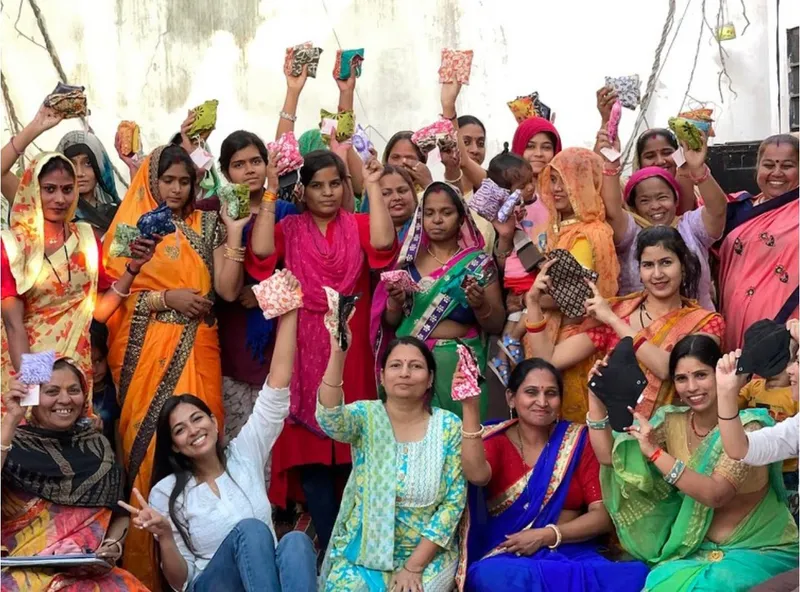
The initiative has trained over 29 women, with seven currently employed at the new manufacturing unit. Past employees have gone on to find jobs in export houses and textile firms.
The team also trains women from the local community—many of whom were previously in domestic labour or unemployed—to stitch high quality, breathable cloth pads. Since its inception, the initiative has trained over 29 women, with seven currently employed at the new manufacturing unit in rural Jaipur. Shiva says past employees have gone on to find jobs in export houses and textile firms.
“But there are also many women, for whom this is their first job. Some come in not knowing how to even thread a needle, and within weeks, they’re supporting their families, paying their children’s school fees, and even buying small luxuries for themselves,” Shiva says.
In Edinburgh, a rotating team of 15 student volunteers handle “cloud work”, which includes grant writing, website management, social media, awareness campaigns, and fundraising. They’ve hosted events like the Heavy Flow club night and represented the organisation at the Scottish Parliament’s Period Dignity Roundtable.
Their advocacy also contributed to Scotland’s groundbreaking legislation to make period products free for all.
Measuring the impact
To date, Sanitree’s reusable pads have reached over 11,500 women across India and the globe. “More than 95% of our users are from India, and hail from disadvantaged backgrounds,” says Shiva.
These pads are distributed for free via the over 30 NGOs that Sanitree has partnered with, including a recent tie-up with Tata Trusts, which quality-checked 60 suppliers before choosing Sanitree.
Each pad lasts up to two years and can be washed 150–200 times, significantly reducing environmental waste. By replacing disposable pads. Even pad production waste is repurposed; 160 kg of fabric offcuts have been used to stuff cushions.
Educating to empower
Going beyond just creating sustainable menstrual products, Sanitree has also taken upon itself to educate community members. It has delivered educational sessions in 109 schools, reaching over 5,000 students, and conducted outreach with 3,100 women in menstrual hygiene and dignity. These sessions often include a gynaecologist to provide medical guidance and bust myths surrounding menstruation.
Interestingly, participants are introduced to all menstrual products—disposable pads, cloth pads, tampons, and cups—and are encouraged to choose what works best for their bodies and lifestyles. “It’s not about pushing a product. It’s about informed choice,” Shiva explains. “But we have also seen that in India, so far, cloth pads have worked best and are the most preferred choice.”
Sanitree is now in its third unit, a larger, semi-rural facility closer to where Shiva lives in Jaipur, where the team continues to grow. Plans are underway to scale production, strengthen their education modules, and expand international partnerships.
There is also a strong intention to introduce vocational training—from self-defence to English language and financial literacy—to further support the women they employ.
“Period poverty isn’t just about a lack of pads,” says Shiva. “It’s about power, access, and information. And until we address that, our work is not done.”
Edited by Affirunisa Kankudti