



Foreign policy through a feminist lens: Why it matters
Foreign policy has long been perceived as an elite, insular field—shaped in high-level summits, diplomatic circles, and networks of power. In response, Ambika Vishwanath and Priyanka Bhide founded Kubernein Initiative as an independent policy think tank that focuses on feminist geopolitics.

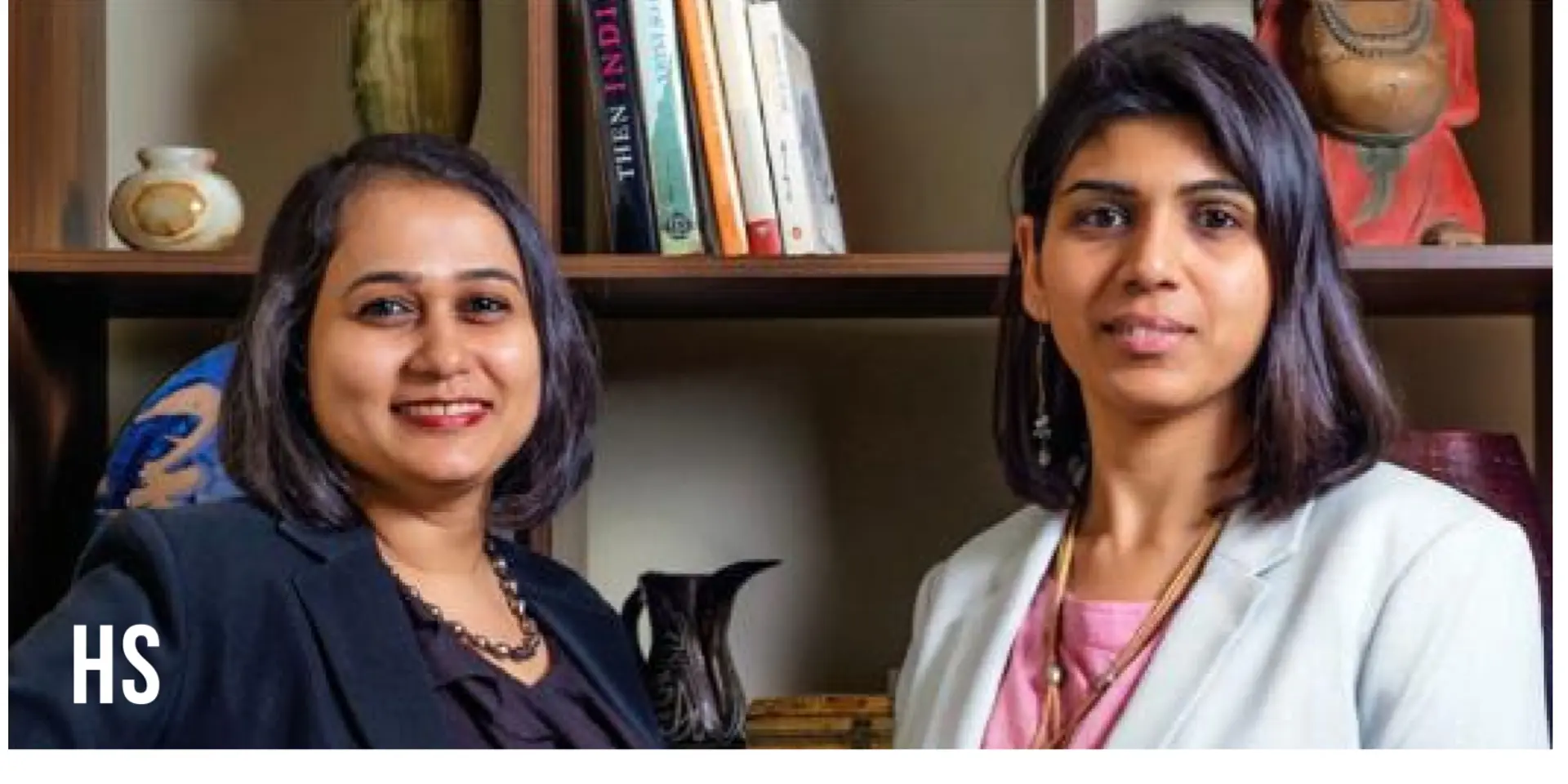

Foreign policy often carries an air of exclusivity—shrouded in diplomatic language, high-level negotiations, and strategic interests that seem distant from everyday reality.
Traditionally framed as something for governments, think tanks, and elite institutions to shape behind closed doors, this perception of inaccessibility keeps ordinary citizens from seeing or understanding foreign policy’s direct impact and influence over everything from economic opportunities to climate resilience.
Around 2017, Ambika Vishwanath, a water security and conflict resolution specialist, and Priyanka Bhide, a seasoned strategy and communications leader, became keenly aware of this sector’s apparent failure to centre women in its decision making, even when dealing with issues that disproportionately affected them.
“We realised that while policy was being shaped in research centres, universities, think tanks, and government spaces, there were critical gaps - particularly in integrating a gendered perspective across different policy areas,” says Vishwanath.
For instance, they saw that urban governance, women’s health, and water were widely studied, but the connection between them— - in terms of how they impact women—remained largely overlooked.
“These themes aren’t separate; they intersect and affect women in ways that policy often fails to address. We began exploring how to bridge these through an approach that brought together public policy, foreign policy, and security with a gendered lens, so as to ensure that women’s lived realities aren’t overlooked in decision-making,” adds Vishwanath.
In 2019, Kubernein Initiative, an independent, feminist geopolitical advisory and policy research organisation, was created as a pursuit to realise what such an integrated approach to policy making would look like.
Among other things, it intended to challenge the rigid, top-down approach that traditional foreign policy followed, which is often inconsiderate of how gender fundamentally shapes the way global challenges are experienced and addressed.
The think tank works across key areas in water, gender and climate, and among other things, strive s to shift the conversation - breaking down silos and ensuring that gender is not just an afterthought, but an essential lens in policy decisions.
The founders say they combine the analytical and advocacy role of a think tank with the fieldwork-driven approach of a development organisation. “We ask: how do we bridge the divide between domestic policy advancements in gender, climate, and water security and India's foreign policy outlook? And how do we create a more intentional, intersectional, and forward-looking policy framework that integrates all these dimensions?," notes Vishwanath.
The feminist lens in foreign policy: Why it matters
For many, ‘feminist foreign policy’ remains a vague, misunderstood term. But at its core, it advocates for inclusivity, intersectionality, and a recognition of how policies impact people differently based on gender and socio-economic backgrounds. Sweden was the first country to formally adopt a feminist foreign policy in 2014, followed by Canada, Mexico, and Germany, but even these frameworks have faced criticism for being more rhetorical than action-driven.
Vishwanath and Bhide’s approach is “about recognising that gender is a key factor in global conflicts, economic policies, and climate security.” “For example, when we talk about coastal security, we’re not just looking at military threats but also how climate-induced displacement disproportionately affects women and their access to resources,” Bhide explains.
A gender gap that cannot be ignored
Despite incremental progress, the presence of women in foreign policy remains disproportionately low. According to the Council on Foreign Relations’ Women’s Power Index, only 20% of the world’s foreign ministers are women, and in many countries, representation in diplomacy, security, and strategic policymaking remains tokenistic at best. The numbers are even dismal when it comes to leadership in foreign policy think tanks. A 2023 study by Women in International Security found that less than 15% of top foreign policy think tanks worldwide are led by women.
This imbalance, while reflecting broader gender disparities, also directly impacts the scope and depth of policy discussions. “Foreign policy has long been a domain dominated by an entrenched network of privilege—an ‘old boys’ club’,” says Bhide. Here, access is as much about lineage as it is about expertise.
“Foreign policy is often shaped not just in formal diplomatic corridors but in informal spaces—social clubs, closed-door meetings, and networks of privilege where women have historically been sidelined. Women in this space often find themselves battling not just systemic exclusion but also skepticism about their authority, especially when speaking on subjects perceived as ‘hard security’,” a young woman who worked in the foreign policy space tells HerStory. “While hard security, military strategy, and economic policies continue to be male-dominated spaces, “women’s issues” in foreign policy are often reduced to soft power and humanitarian work,” she adds.
Which is why, establishing Kubernein as a female-led foreign policy initiative, is in itself a revolutionary action by Vishwanath and Bhide. “Breaking into these established networks wasn’t easy,” explains Bhide. “It’s not just about being women—it’s also about coming from different backgrounds, not necessarily having the legacy connections that many men in this field benefit from.”
Vishwanath adds, “There’s still a bias in how seriously women are taken when speaking on subjects like national security. The expectation is often that we will focus on ‘soft issues’, not on military strategies, geopolitical risk, or economic diplomacy.”
Yet, their work has proven otherwise.
Tangible steps towards an equitable policy framework
Kubernein Initiative’s flagship project, ‘An Inclusive Indian Foreign Policy’, focuses on integrating gender mainstreaming and human security into decision-making. This initiative has led to valuable research, including the paper ‘Inclusivity in Action: Evolution of Feminist Principles in India’s Foreign Policy, which examines how feminist principles have shaped India’s foreign policy.
They have also actively worked on integrating gender considerations into urban climate policies. Serving as the knowledge partner for dialogues like ‘Creating a Women-Led U-20 Framework’, they created the report ‘Mainstreaming Women-Led Urban Frameworks’, which provides strategies for building inclusive and resilient cities.
The initiative has established partnerships with governments, diplomatic missions, universities, think tanks, and organisations such a,s Observer Research Foundation, REVOLVE Media, Overseas Development Institute and the Australia India Institute - collaborations that have facilitated dialogues and projects addressing non-traditional security matters, including gender, water security, and climate change.
Challenges and pushback
While the need for a gendered approach to foreign policy is increasingly recognised, implementing it remains an uphill battle. “Many policymakers see gender-focused frameworks as secondary, rather than integral to security and diplomacy,” says Bhide.
This extends to on-the-ground challenges. Many foreign policy mechanisms—whether development financing, trade negotiations, or peace-building efforts—fail to adequately account for direct violence against women or the gendered impact of economic policies. While frameworks like UNSCR 1325 on Women, Peace, and Security exist, their implementation often falls short due to lack of enforcement and funding.
Kubernein’s work, therefore, is not just about research—it’s about advocacy, ensuring that gender is factored into policy design from the outset.
Despite these challenges, there is progress. “There’s now a visible allyship, not just among women but also among men who recognise the value of diversity in decision-making,” says Vishwanath. Creating these networks is crucial in dismantling barriers to entry for the next generation of women in foreign policy.
Kubernein’s vision extends beyond its own leadership. By mentoring young professionals, engaging with policymakers, and pushing for greater representation, they are working to institutionalise change. Their presence in a space that has long been resistant to female leadership is itself a testament to shifting tides.
But as Vishwanath puts it, real change will take time. “We’re seeing movement, but the pace is slow. It will take a few generations before we see foreign policy spaces that are truly inclusive.”
Edited by Jyoti Narayan