



These girls are saying no to child marriage, and yes to reproductive rights
In the rural districts of Bihar, young leaders are addressing critical issues such as menstrual hygiene, child marriage, and access to adolescent-friendly health services.

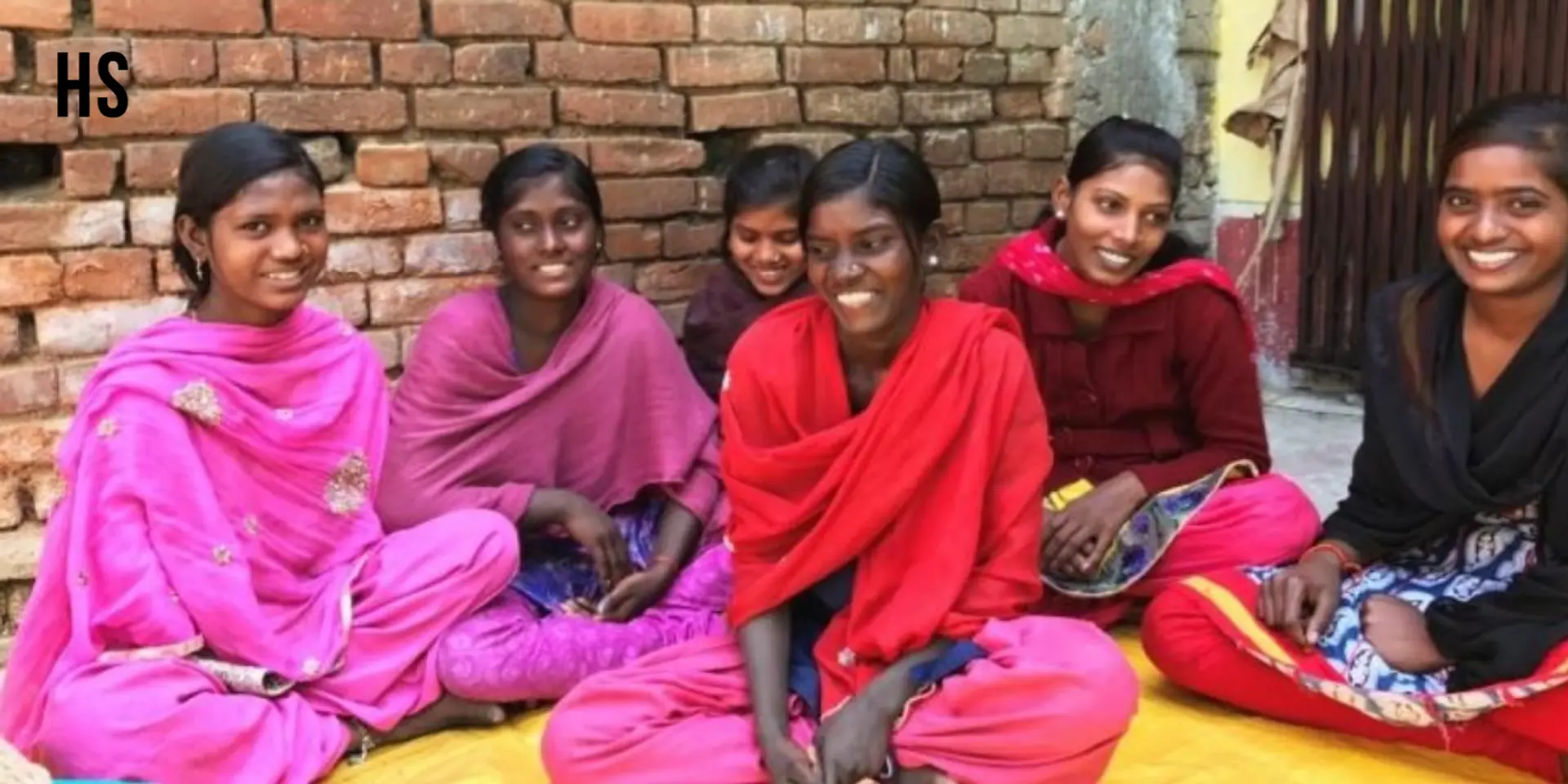

In a small village in Bihar’s Darbhanga district, 18-year-old Sania Kumari has become a central figure in a growing youth leadership movement. What began as a simple introduction to menstrual hygiene through an adolescent group for her in 2017, has evolved into a leadership journey that has changed the lives of hundreds of girls in her community.
By 2020, Sania was heading an adolescent collective called Ekta Kishori Samooh, an adolescent girls’ group, and had launched a sanitary pad bank to provide adolescent girls in her village with access to safe menstrual hygiene products—something most of them had never had.
Sania is among 80 Youth Champions who have been mentored by the Population Foundation of India (PFI), an NGO dedicated to promoting and advocating for gender-sensitive population, health, and development policies, under its Ekta Kishori Samooh programme.
Since 2015 in Bihar’s Nawada and Darbhanga districts, PFI has, through its Youth Champions Programme, focused on adolescent leadership as a means of bridging critical gaps in sexual and reproductive health awareness, access, and rights (SRHR). Many of these champions, who began their journey as members of Kishori Samoohs have now become grassroots leaders, advocating for reproductive health, menstrual health, prevention of child marriages and early pregnancy.
Sania was just 11 years old when she went to her first Kishiri Samooh meeting. “I saw that many girls were not being allowed by their families to attend,” she says.
All the buzz and mystery around it made her curious and she snuck in. “But instead of jumping right into talking about periods and menstrual health—which was a taboo in our community—the youth leaders, with help from PFI’s team, began asking girls about their experiences at school, and their career dreams. Later, they saw that parents needed to be sensitised for the girls to come and therefore conducted sessions with the parents. This was how the movement grew,” adds Sania.
In many parts of rural Bihar, menstruation remains shrouded in silence and stigma, and even mentioning the word is considered taboo. Adolescent girls lack basic information about their menstrual cycles, and conversations around menstrual health are missing from both homes and schools.
“Girls were using old cloth, and not even drying it in the sun (which acts as a natural sterilising agent), as they didn’t want this cloth to be spotted by boys and men. Worsening it were beliefs that anything that comes in contact with a menstruation woman will turn ‘impure’ or ‘rot’,” says Sania.
Before establishing a ‘pad bank’, one of PFI’s most successful ideas, Sania and her fellow youth champions had to navigate through these complex cultural reservations to even get the girls to come out and join them.
“The initiative was born out of necessity,” explains Nilanshu Kumar, PFI spokesperson. “The NFHS data for Bihar showed glaring gaps—high rates of child marriage and teenage pregnancy, and poor awareness among adolescents about their health and rights. We needed to build agency for these adolescents from the ground up,” he adds.
The Youth Champions were capacitated through intensive workshops covering SRHR, adolescent leadership, and communication strategies. These young leaders went on to form over 204 Kishori Clubs—each with 10 to 15 adolescent girls—to reach more than 5,000 peers with critical information and tools to make informed choices about their health and futures.
Menstrual hygiene, one of the most pressing and neglected issues in rural India, quickly emerged as a priority for the young leaders. According to NFHS-5, only 58% of girls in Bihar use hygienic menstrual products—with Nawada and Darbhanga lagging at 57% and 65%, respectively.
In response, the Youth Champions launched 52 sanitary pad banks—community-run banks where girls contribute Rs 1 a day to collectively purchase and distribute pads to those who cannot afford them.
The idea of the pad bank came from the girls themselves. “It was a thoughtful response to a systemic gap,” says Kumar. “During the lockdown, when schools and health centres were shut, these girls didn’t stop. They made masks, distributed pads door-to-door, and talked about menstrual hygiene in households that had never spoken of it openly.”
The programme also led to institutional change. In 2018, Mausam Kumari, a Youth Champion from Hardiya, another village in Bihar, raised the issue of lack of adolescent health services during a Jan Samwaad (social audit) at the Rajauli Sub-Divisional Hospital. Following her intervention, an adolescent health corner was set up, staffed by a trained auxiliary nurse midwife.
Similarly, Aarti Kumari from Darbhanga conducted a community survey that reached over 6,000 adolescents. Her efforts threw light on the issues faced by young women, and led to regularisation of medicine supplies and the establishment of adolescent-friendly clinics in her district.
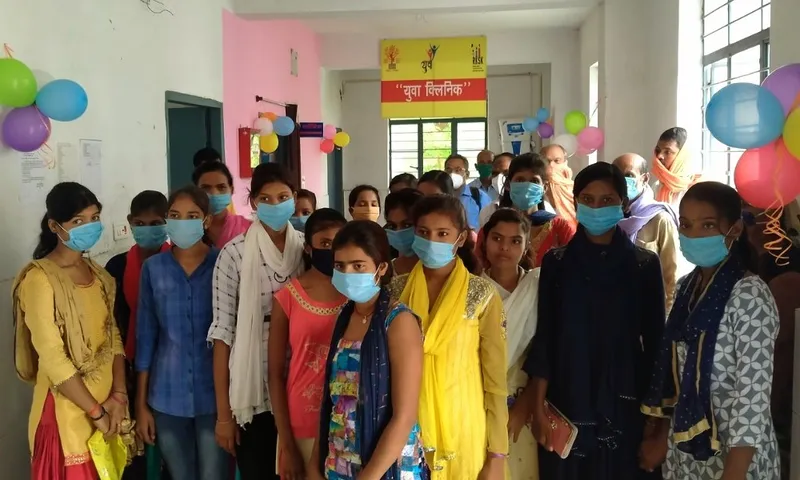
In September 2020, an Adolescent Friendly Health Clinic was inaugurated at the PakribarawanPublic Health Centre of Nawada district, Bihar. Thanks to the efforts of PFI's youth champions, 14 such clinics are functioning across Nawada and Darbhanga today.
“In Nawada, we supported our youngsters to assess health facilities and draft a charter of demands,” says Kumar. “They submitted this to the District Civil Surgeon and even met the State Health Minister. Today, 14 adolescent-friendly health clinics are functioning across Nawada and Darbhanga because of these efforts.”
The Youth Champions are also members of village health committees, where they help monitor and evaluate adolescent health services. “This isn’t token representation,” Kumar says. “They sit at decision-making tables. They advocate, track progress, and submit reports. Their lived experience makes them powerful agents of accountability.”
The impact of the programme extends beyond SRHR. During the COVID-19 pandemic, the Youth Champions mobilised vaccination drives, distributed masks, and supported local health departments.
In just a few years, the Youth Champions have also helped prevent over 90 cases of child marriage in Kawakol and Rajauli blocks in Nawada, and Baheri and Singhwara blocks in Darbhanga. “They don’t just raise awareness; they intervene,” says Kumar.
“They confront families, alert local panchayats, involve police when needed, and follow through. When things escalate, we step in to support them.”
The challenges are real. Many girls face social backlash, even threats, when they try to stop marriages or address taboo subjects like menstruation and contraception.
Sania and her team faced flak from their own families for stopping child marriages, and persisted through continuous dialogue and joined hands with the local police to continue their work.
“We have lost young girls to premature pregnancies in the past. Some of our friends would have been married before they turned 15, had we not intervened. They are all now going to college and aspire to work too,” says Sania.
“Now, we also talk about sexual health for men in our campaigns. Whenever we are reprimanded for addressing these subjects, we normalise them through conversations with confidence.”
Kumar says, they train the girls on navigating these situations, and also engage with their parents and local leaders to build a network of support. Their aim is to demonstrate that when young people, especially young women, are trusted with leadership, they can drive change locally.
As the Youth Champions Programme looks to scale and adapt to other states, its core lesson remains unchanged—systemic change begins with investing in those most affected by the system.
Sania and her peers are not just beneficiaries of a programme, but are reshaping what reproductive rights, community care, and adolescent agency look like in rural India.
Edited by Megha Reddy