


Chennai’s first disabled-friendly gym is helping women athletes build strength and independence
For women with disabilities, especially from underserved backgrounds, access to sport is barred by infrastructure, cost, and social expectations. A new gym in Chennai’s Better World Shelter is changing that.

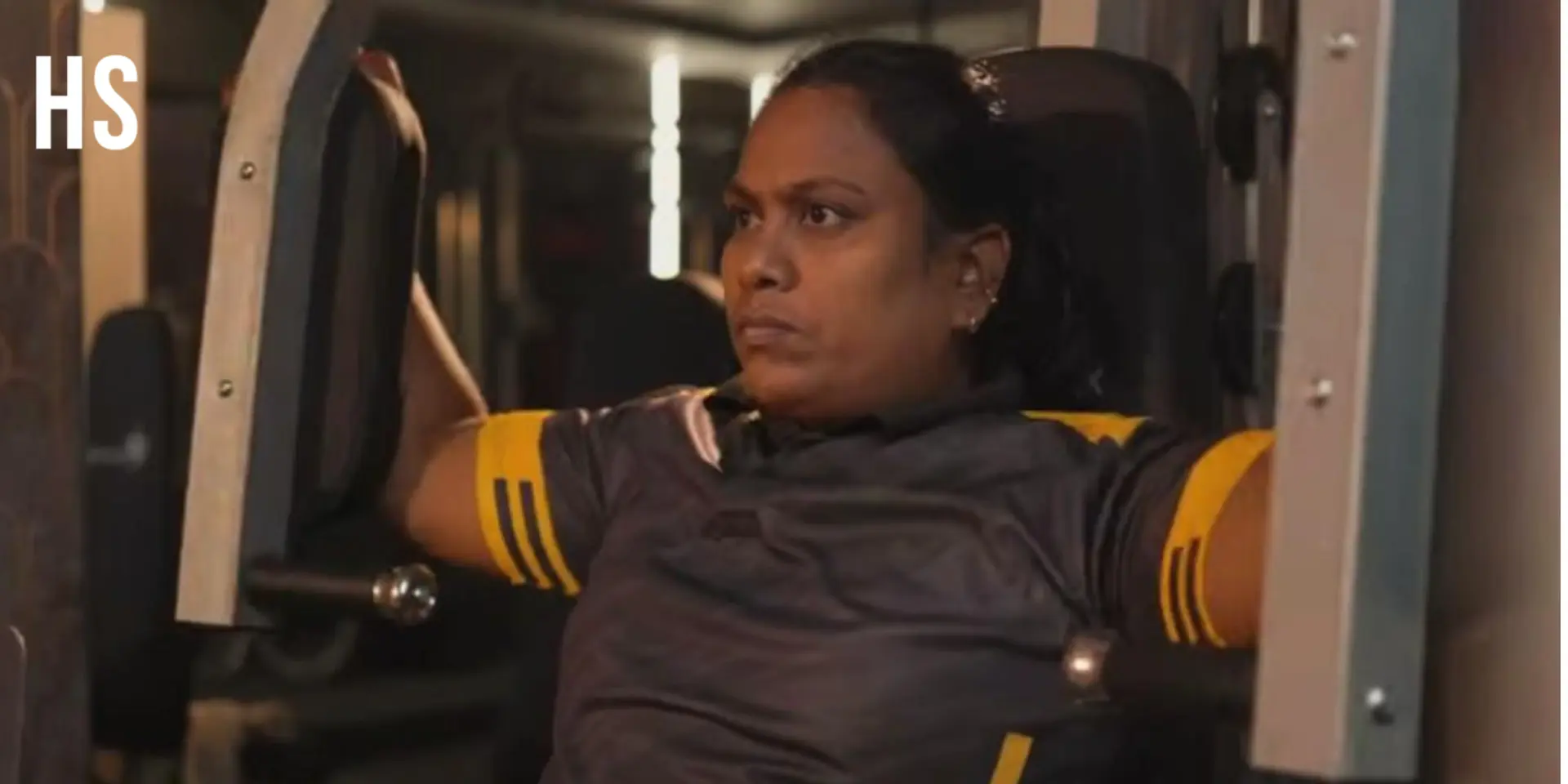

M. Nadhiya, who has been wheelchair-bound for years, grew up in a low-income family in Virudhunagar, Tamil Nadu. With little support beyond her immediate caregivers, her life was shaped by the limited choices often handed down to disabled girls in poor households—where even basic needs are a struggle, and early marriage is seen as the only path forward.
Instead, Nadhiya, now 38, moved to Chennai, where she began training as a para-athlete—starting with javelin and shot put, and later taking up powerlifting. Over the years, she has participated in 38 national and state-level tournaments, steadily building a career in sport and a life that has come with greater independence and purpose.
Nadhiya is among the many women athletes who live at Better World Shelter, a pioneering rehabilitation center dedicated to supporting women with disabilities through sports and fitness training.
Established in 2016 by Dr. Aiswarya Rao—a pediatrician and disability rights activist—the shelter operates under the Dorcas Research Centre for Education, Art, and Culture, in collaboration with the Greater Chennai Corporation.
In March this year, Dr Rao opened an exclusive new gym for women with disabilities at the shelter, with support from the Tamil Nadu government. It was launched following a proposal submitted to the Minister of Youth Welfare and Sports Development, and offers free-of-cost training and disability-friendly equipment to help women build strength, improve mobility, and boost their confidence. This also provides them with opportunities to pursue fitness, mental and physical wellbeing, and in many cases, competitive sports.
For young girls with disabilities from under-resourced backgrounds, sports can be a powerful turning point—offering not just physical strength, but a pathway out of isolation, early marriage, and lifelong dependency. In communities where their futures are often prearranged, stepping onto a court or into a training space becomes an act of defiance and possibility. “It boosts our self-confidence and helps us look beyond the four walls of our world, which is always rife with despair and imposed limitations,” says Nadhiya.
The facility has been a game changer for women like her, who see sport not just as a personal pursuit, but as a path to greater freedom, mobility, and visibility in a world where people with disabilities (PwDs) find themselves sidelined.
Among the equipment it houses is a multi station gym machine, designed for various exercises such as chest presses, leg curls and lat pulldowns; a hammer strength chest press machine which strengthens the chest muscles by providing a controlled pressing motion; and a functional trainer machine.
What makes them disabled-friendly is an adjustable seat position that allows users to move from their wheelchairs on to the padded seats of the equipment with ease and independence. The handles on all equipment are thicker, have ergonomic, contoured grips, and have soft, non-slip surfaces. They also come with adjustable handle height and angle.
K Mary, a 41-year-old wheelchair basketball player says the new gym has opened a variety of strengthening options for athletes like her, who previously had to rely solely on dumbbells. “Our upper body strengthening was limited to just weights in a regular gym. Many times, we couldn’t even access these fitness centres as they would be positioned at higher floors without lifts. Most importantly, we would have to be dependent on someone else for everything from entering the facility to using the equipment and transport.”
“Now we can do it all by ourselves and for as long as we want,” she adds.
Mary and her team, which also includes other wheelchair users like 38-year-old J Benita and 50-year-old Matilda Fonceca, recently went for an inter-state basketball tournament in Coimbatore where they won gold and came back with a trophy.
“We can clearly see that regular working out builds our core strength and muscles much faster than just doing weights. Even with the disability, I find my mobility and flexibility increasing, and this makes me feel so much more independent, ” says Benita.
“I now believe I can survive independently, and also have a community to grow with.”
Edited by Jyoti Narayan