


Slow healers in a fast world: The story of a millennial cycle-breaker
Millennials are often labelled as overthinkers, emotionally indulgent, even late bloomers. But for many of us, the delay isn’t dysfunction—it’s the price of choosing differently, and of repairing emotional legacies we didn’t choose. This is a story of what that work looks like.

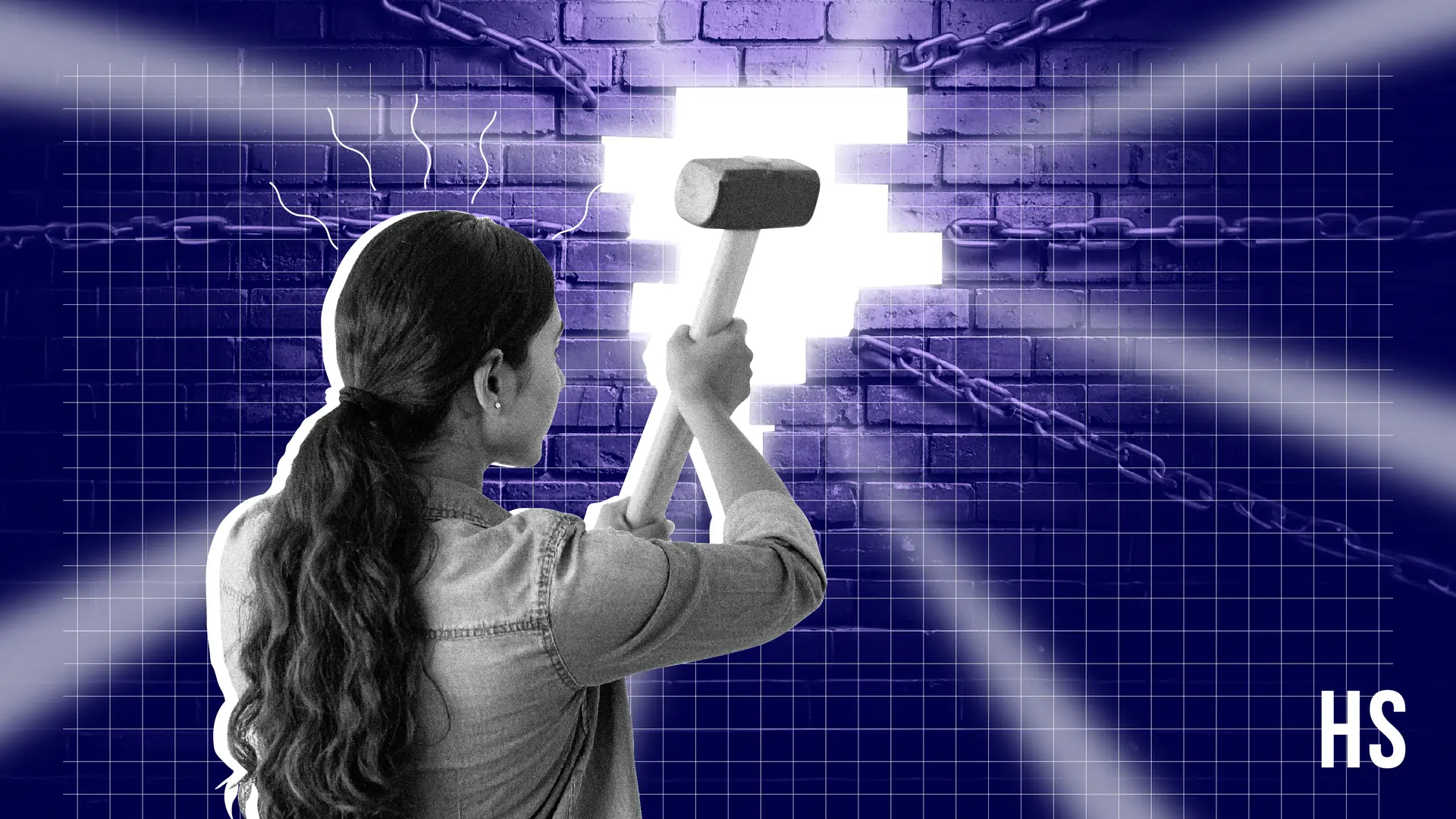

Over the past year, as I edge deeper into my late 30s, I find myself quietly reckoning with the time and conditions I was born into.
It is only now, after years of coping by default rather than intention, that I am beginning to understand that this is in fact, a shared reckoning. One that surfaces differently across caste and class lines, but connects many of my generation in slow-burning existential grief: our fitful but staggering efforts to unlearn, and our longing to live more freely than those who came before us.
I was born at the threshold of two contrasting inheritances. The first, my parents’, was shaped obstinately by post-colonial austerity, quiet endurance and tightly-scripted familial and social roles. And mine, which unfolded in an era of liberalisation, rising individualism, and the ruthless metrics of a productivity-driven world.
I hold with awareness that these inheritances—though endemic and deeply rooted—shape our lives differently depending on caste, class and gender identity. My experience, as someone from a culturally and socially privileged background, is not comparable in scale or consequence.
And yet, for many across this generation, what looks like autonomy also masks continuity of psychologically inherited patterns from home against the illusion of freedom outside.
I was a teenager when Y2K happened; we were still writing notebooks, when the world was already coding its way into something faster, shinier, and far less forgiving. We were the beta testers of burnout; raised on landlines, and shrivelled into hashtags, all before we knew it.
The rules changed faster than we could name the toll.
Cut to today, the world we inhabit has grown comfortable enough to name emotions, brand healing, and commodify mental health. And yet, it remains too brittle to accommodate the vulnerability such work demands.
Autonomy, it turns out, isn’t a beginning; it’s what follows years of such reckoning. For many of us, the real work of our twenties and thirties hasn’t been “building a life,” but learning how to live differently from those who raised us. Before love, before careers, before clarity—healing demanded its due. And in a world obsessed with timelines, productivity, and public proof of success, taking that time often felt like missing culturally sanctioned milestones, falling out of sync with peers, and carrying the quiet grief of not ‘arriving’ on time.
A friend of mine, once a thriving fashion entrepreneur, left everything behind and moved to a small town after the unrelenting pace of her life—networking, performing, pushing through—cracked open what years of unspoken trauma had buried.
She had grown up in chaos, and though that chaos had stopped, its psychosocial effects were steering her out of control. And like so many of us who are the first in our families to name grief, to sit in a therapist’s office, to say ‘this stops with me’—she’s now learning that breaking cycles is not a single act of courage, but a long, messy devotion to oneself. One that was never meant to be done alone, but in community.
During a well-caffeinated debrief with another therapist friend, she laughed and said, “Our parents ran households, raised kids, and held jobs by the time they were our age—and, of course, they never miss a chance to remind us! But what they didn’t do was emotional labour. That’s what we’re doing now—processing their wounds, while still expected to be 'perfect' partners, parents, daughters, professionals.”
Different times, different curses.
But hand on heart, this isn’t about faulting our parents. They made do with what was available to them—emotionally, culturally, and historically. If anything, our unlearning attempts to make sense of what they carried—and what it cost them. And what it may cost us too if we toed the line.
Refer, for instance, to this 2020 research, which observes that “self-silencing by women is both an act of maintaining structural balance…and an internalised regulatory mechanism,” often passed down through family and cultural norms.
When generational trauma goes unrecognised—especially in a world that moves faster than we can process—it often manifests as anxiety, depression, chronic emotional fatigue, and forms of neurodivergence that are less a disorder than an adaptation to a world that we are forever outpaced by.
We’re often accused of being a generation that overanalyses, is quick to diagnose and turn everything into a trauma response. ‘Why does everything have to be unpacked—can’t we just move on?’
But, the pace of modern life, intensified by performance culture and the erosion of collective structures, makes unprocessed pain harder to suppress. What previous generations could bury under ‘duty’ or denial, now surfaces as mental illness. Social media floods us with glimpses of what healing might look like—queer joy, gentle parenting, chosen families, therapy breakthroughs. Some of it is real, much of it performative, as is the case with any cultural wave.
However, what’s impossible to miss is that the discourse is here! And it demands our attention every minute of the day—on our phone screens and social media feeds.
Once you know the name of something—narcissism, trauma bonding, codependency, intergenerational shame—you can’t unknow or unsee it. The awareness itself demands a response, and studies support this conundrum.
Between selfhood and survival, my generation has learnt to choose both—but at different, negotiated timelines. In conversations I’ve had with women and gender non-conforming people from varied caste and class locations, this reality returns often. A transman I met has long been out—to his friends, his colleagues, his community. But not to his parents. “This could kill them,” he says, without the slightest bitterness.
“I want them to live a full life knowing me as the daughter they always loved.” To his immediate support system, which is his family, he keeps his most authentic self closed, not because he doubts himself, but because he loves them enough to know that this is a futile battle to pick.
That, too, is a choice.
A 2021 study by Live Love Laugh Foundation found that Indian millennials face high levels of anxiety and depression tied primarily to generational expectations, familial silence around emotional needs and career pressures. We have, after all, lived through at least two economic recessions, a global pandemic and are now navigating rapid AI-driven disruption.
In another study, the same NGO surveyed 3,497 urban Indians and found that while awareness of mental illness grew from 87% to 96% since 2018, only 10–12% of those with lived experience of mental illness sought help. This meant that increased “mental health vocabulary” didn’t necessarily translate into emotional safety or the ability to act on what one feels.
In contexts like ours—where families remain tightly woven into adulthood, and caste, class and gender deepen emotional and financial interdependence—the language of individual boundaries doesn’t always translate.
Western frameworks fail to account for the complexity and consequences of choosing care over rupture, or the impossibility of severance when survival itself is shared. What we desperately need are decolonial, culturally rooted approaches to mental healthcare that honour interdependence without denying agency.
Most of all, we need them to be accessible to those navigating not just grief, but powerlessness and years of dissociation.
With all this, if in our lifetimes, we manage to create homes, relationships, and identities built not on silence, but on choice, then maybe we’ve already broken the cycle. One small win at a time.
Edited by Affirunisa Kankudti