



Breaking barriers: A transwoman’s fight for space in the Indian classroom
Jency’s journey from a marginalised childhood in rural Tiruttani to the front of a college classroom is a testament to the transformative power of education and perseverance. However, struggles of trans youth must be made systemically easy too, she says.

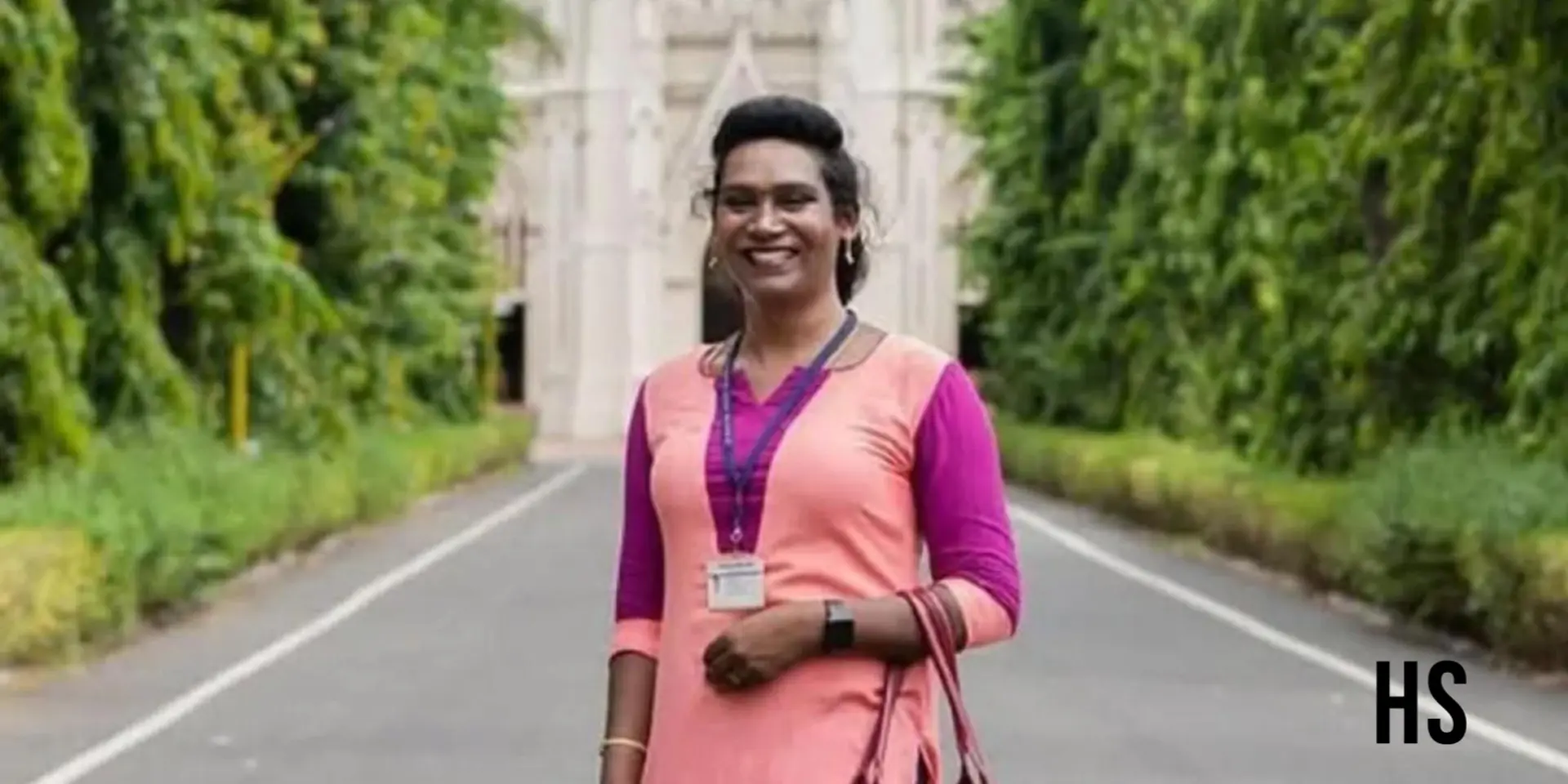

In a first for Tamil Nadu, a transwoman has been appointed Assistant Professor of English at one of the state’s top colleges, marking a significant moment not just for education, but for trans representation in academic spaces.
N. Jency, who hails from a small village near Tiruttani, Tamil Nadu, now teaches English literature at Loyola College in Chennai. Her journey—from facing discrimination as a visibly trans child in rural Tamil Nadu to earning a PhD and stepping into a college classroom as faculty has been a long and painful fight that is telling of the power of education in challenging caste, gender, and class barriers.
Growing up in a small village near Tiruttani, Jency realised she was different as early as Class 2. “I always felt like a girl,” she says. “I liked walking with girls, playing with them, even doing household chores like them. It all came naturally.” But in a deeply gendered and conservative setting, her femininity drew attention and ridicule. “Neighbours would come and complain to my parents and that is when my family began to notice that this was troubling for me in society,” she adds.
Yet amidst this rejection, Jency clung to one thing that no one could take from her—education. She attended a government higher secondary school and, despite the taunts and isolation, found her escape in books. “Education was my only way out, and I realised this early on” she says. “It helped me manage the pressure from my family, classmates, and society.”
In school, she consistently topped her class, and her academic performance began to shift how others treated her. “Some people who mocked me also started praising me because of my marks,” she says. “Even teachers who didn’t understand me appreciated my commitment to studies.” Still, the isolation remained. “Boys would avoid talking to me—they thought the teachers would scold them if they did.”
Jency's fascination with English interestingly developed from lack of privilege and access to good English teachers in the village. “In our school, we never had an English teacher. They would be posted there but get transferred to Chennai quickly. So I had to prepare on my own,” she explains. Ironically, she scored her lowest marks in English in her Class 12 exams—an experience that only deepened her resolve. “I wanted to understand why I got low marks in English. That curiosity drove me.”
She went on to earn a gold medal in both her undergraduate and postgraduate degrees in English literature, and later completed her PhD at Loyola College. When a faculty position opened up at Loyola, Jency applied. “Many people had applied for the post. It was a rigorous selection process,” she says. “But when I received the appointment letter, I felt I had arrived. As a transwoman, I was not only accepted, but praised and encouraged. I felt change is possible.”
The appointment marked a milestone, not just for Jency, but for Tamil Nadu. Chief Minister M. K. Stalin publicly congratulated her, calling her achievement an inspiration to the trans community and beyond.
But Jency’s journey wasn’t shaped by individual brilliance alone. It was a conscious strategy of survival. She decided to postpone her gender-affirming surgery until after her MPhil. “If I had transitioned before finishing my studies, I would’ve ended up like many other transwomen—forced into begging or sex work,” she says. “Education gave me choices.”
Jency is clear about the structural barriers trans people face—especially those from poor, rural, and unsupportive families. “When parents reject their trans children, where can they go? How will they survive?” she asks. “Often, older members from the trans community take them in. But after a while, they are pushed into sex work. It’s not a choice, but survival.”
In her view, family support is the single most important factor in a trans person’s life. “If parents accept their child, they can achieve anything,” she says. “We have so many skills, but we are not encouraged. That’s the real problem.”
Now, in her classroom, Jency sees her role as going beyond teaching grammar or poetry. “I don’t want to teach only my community. I want to be seen first as a professor, and only then as a transgender woman,” she says. “If I do my job well, my students will tell their families, friends, and neighbours. That’s how understanding and change grows.”
Her students, she says, have embraced her with warmth and encouragement. “They tell me, ‘Ma’am, you are teaching so well. We are here to support you.’ That kind of acceptance means everything.”
What Jency wants most now is systemic change. “The government should introduce a curriculum about trans people in school,” she says. “And they must raise awareness among parents. Once families understand, many things will change.”
Edited by Jyoti Narayan