



Chennai’s working-class women discover strength and solidarity in free gyms
For Chennai’s working-class women, fitness was once an alien concept. Now, the city’s free EmpowHER gyms are offering both exercise and a sense of community.

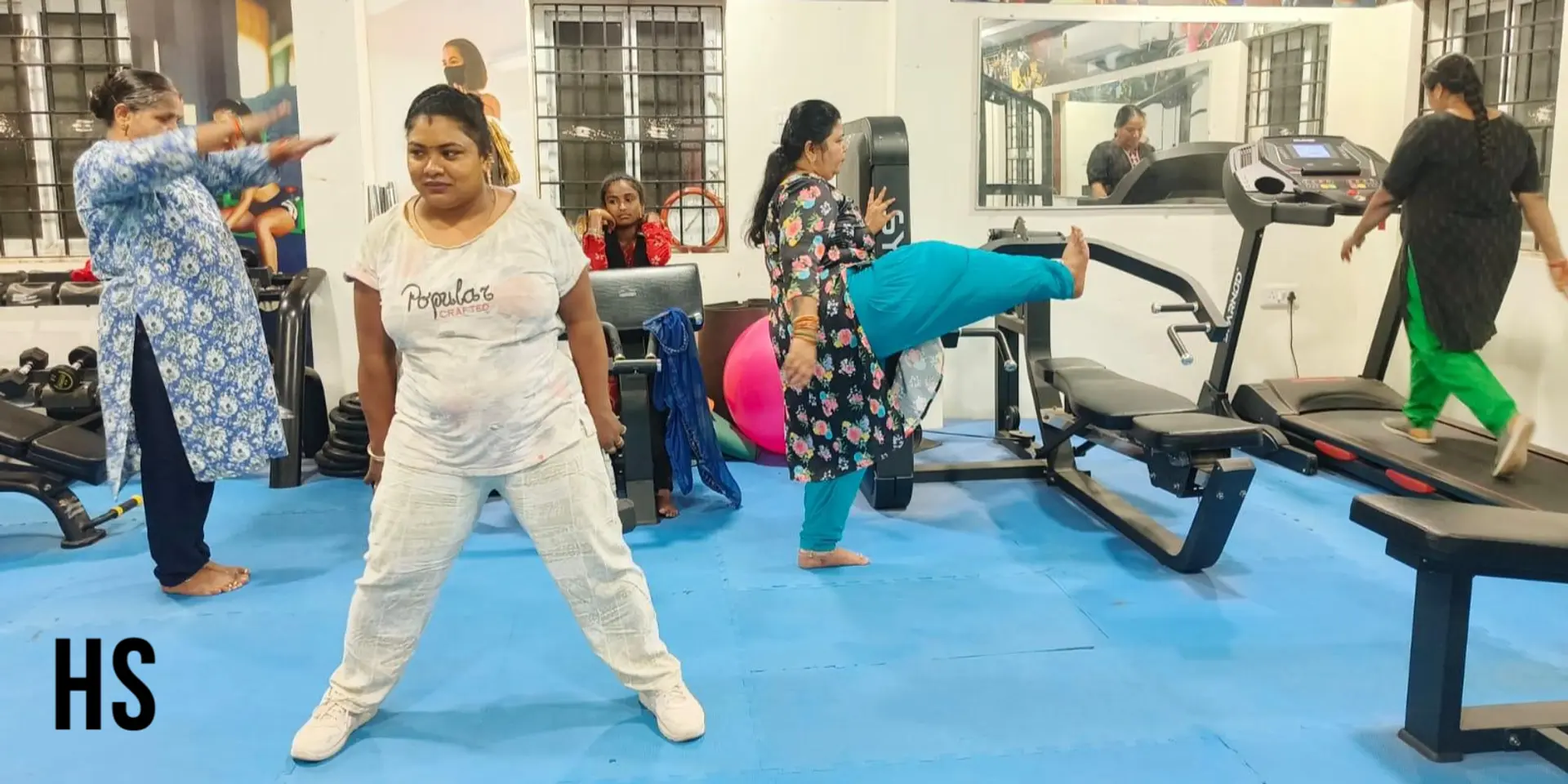

On a usual day, the West Jones Road in Saidapet in Chennai, isn’t exactly the place you’d expect to find a gym. A notable tertiary street in West Saidapet, this neighbourhood is a chock-a-block junction teeming with shopfronts spilling bolts of wire, buckets, and rice sacks.
Here, every day at 4 PM, Y Deepa, G Bhuvaneswari, and S Malarvizhi pause their endless carousel of chores, slip shoes into their handbag, and head to the local ward office—home to Greater Chennai’s Corporation’s (GCC) free women-only gym, EmpowHER. For a whole uninterrupted hour, they sweat out stress, frustration, and body fat.
This is their uncompromising time for ‘self-care’—a concept unfamiliar to them until about one-and-a-half years ago, when the GCC initiative first opened its doors.
Under Mayor R Priya’s EmpowHER plan, GCC is rolling out 39 dedicated gyms in the first phase, funded with Rs 10 crore. Twenty-two are already under construction, and four more will begin soon in neighbourhoods including Thiruvottiyur, Ambattur, Kannagi Nagar, and Velachery’s Millennium Park.
Some of these neighbourhoods and slum resettlement colonies house women, who often carry the double burden of unpaid work and low incomes, leaving negligible room for fitness or leisure.
EmpowHER centres house a mix of cardio machines such as treadmills, stationary bikes, and ellipticals; strength-training equipment, including leg, chest, and shoulder press machines; and free weights and stability balls.
“What really makes this gym work is that it’s free, and run entirely by women. Unfortunately, the reality is that women are expected to sacrifice, not spend on themselves, and avoid male-dominated spaces,” says A Malini, a trainer at the Saidapet branch.
A study by IIM Ahmedabad says Indian women in the working-age group spend 7.2 hours a day on unpaid domestic labour, compared to just 2.8 hours for men, which leaves them physically and mentally drained.
Another study with domestic workers in a Kolkata slum found that 80% suffer from musculoskeletal and other chronic health issues, worsened by long hours of unpaid, physically demanding labour.
“After 35, women experience shifts in metabolism, muscle mass, bone density, and hormonal balance. Strength and resistance training are crucial to countering this and managing weight. But all this information is promoted mainly in the fitness market, which is inaccessible to our clients,” Malini adds.
Usually, the primary motivator for these women to hit the gym is weight loss. It is only after working out for a little over a month that they experience more benefits, such as increased stamina, a stronger core, and most of all, higher confidence.
Deepa, who works as a housekeeping staff at a nearby school, has lost 6 kgs since she started working out at the EmpowHER gym. Every day after school, she’s at the gym in track pants, a string of jasmine in her hair, and vermilion on her forehead.
“I don’t get time to freshen up, so I go home briefly after work, just change, and come here,” Deepa says. “Everything can wait, but I must keep aside this one hour for myself. I feel like working out has made me faster, more efficient at work, and less stressed overall.”
Being a ladies-only gym has also attracted a large number of Muslim mothers and homemakers from orthodox homes, who have found fitness, freedom, and community at the EmpowHER centres.
Hajira Beewi, 38, says it was the factor, that convinced her family. “I also feel a lot more at ease. Our trainer is a woman and a mother, and I find it easier to confide in her about my health conditions and share my fitness goals with her.”
Beewi was putting on a lot of weight and says the shopkeepers she met explicitly commenting on her body, .
Over the last two months, she has lost more than a kilo, and says she feels the confidence showing in her body language. “When I shake hands now, I am told I have a confident grip. My stomach fat has reduced, and even if the visible effects may take time to show, my self-esteem has gone up like never before.”
Fifty-seven-year-old Neela T is one of the oldest members and longest beneficiaries of the Saidapet gym. She works at a finance company, and in the years nearing her retirement, she has been more confident and energetic than ever.
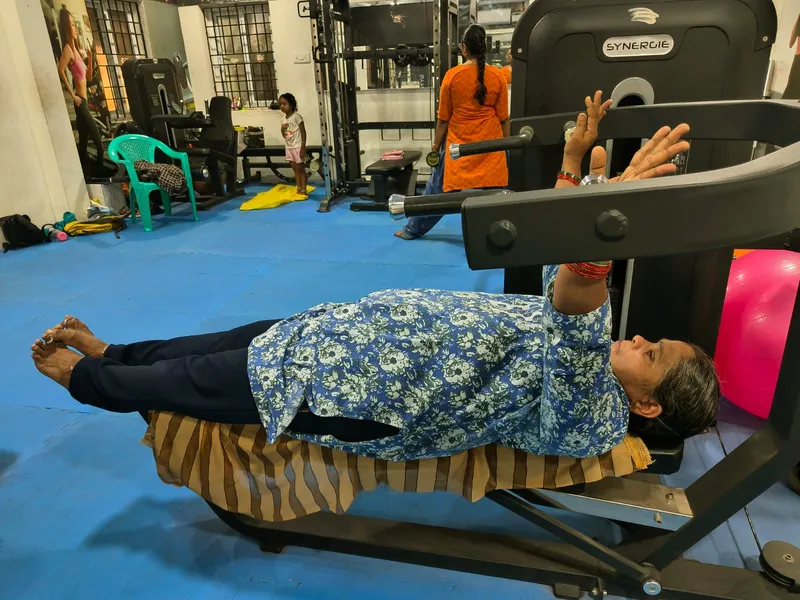
Fifty-seven-year-old Neela T is one of the oldest members and longest beneficiaries of the Saidapet gym. She works at a finance company, and in the last year-and-a-half, has hardly missed a day.
Neela says she has barely missed a couple of days in the last year-and-a-half. Like most others, she too wanted to lose weight. Now, she does the most chest presses on any given day, and has a core that is enviable for women younger than her.
Beyond fitness, the local women have found a community. They dressed up in silk sarees and priced jewellery on International Women’s Day this year, and hosted the area councillor with festivities at the gym.
They share their stories, challenges, and fitness milestones. They have been looking at YouTube Zumba tutorials and practising them at the gym. They encourage each other to push a little more than the previous day—one more push-up, one extra weight of dumbbells, one more leg press.
They have a WhatsApp group where they stay in touch, and some days, make potluck plans.
“Even on days I feel too unwell to open the gym and train, our women take care of me, allow me to rest, and get me food, while they come and finish their workouts. This is ultimately what brings me most joy,” says Malini.
Edited by Suman Singh