



No sponsors, no shortcuts: FC Garhwal’s girls are taking Indian Football somewhere new
In 2021, the club with a 67-year history of men’s football did something it hadn’t before. It began building a girls’ team from scratch. Today, those girls are lifting trophies, making national squads, and changing what football looks like from the grassroots up.

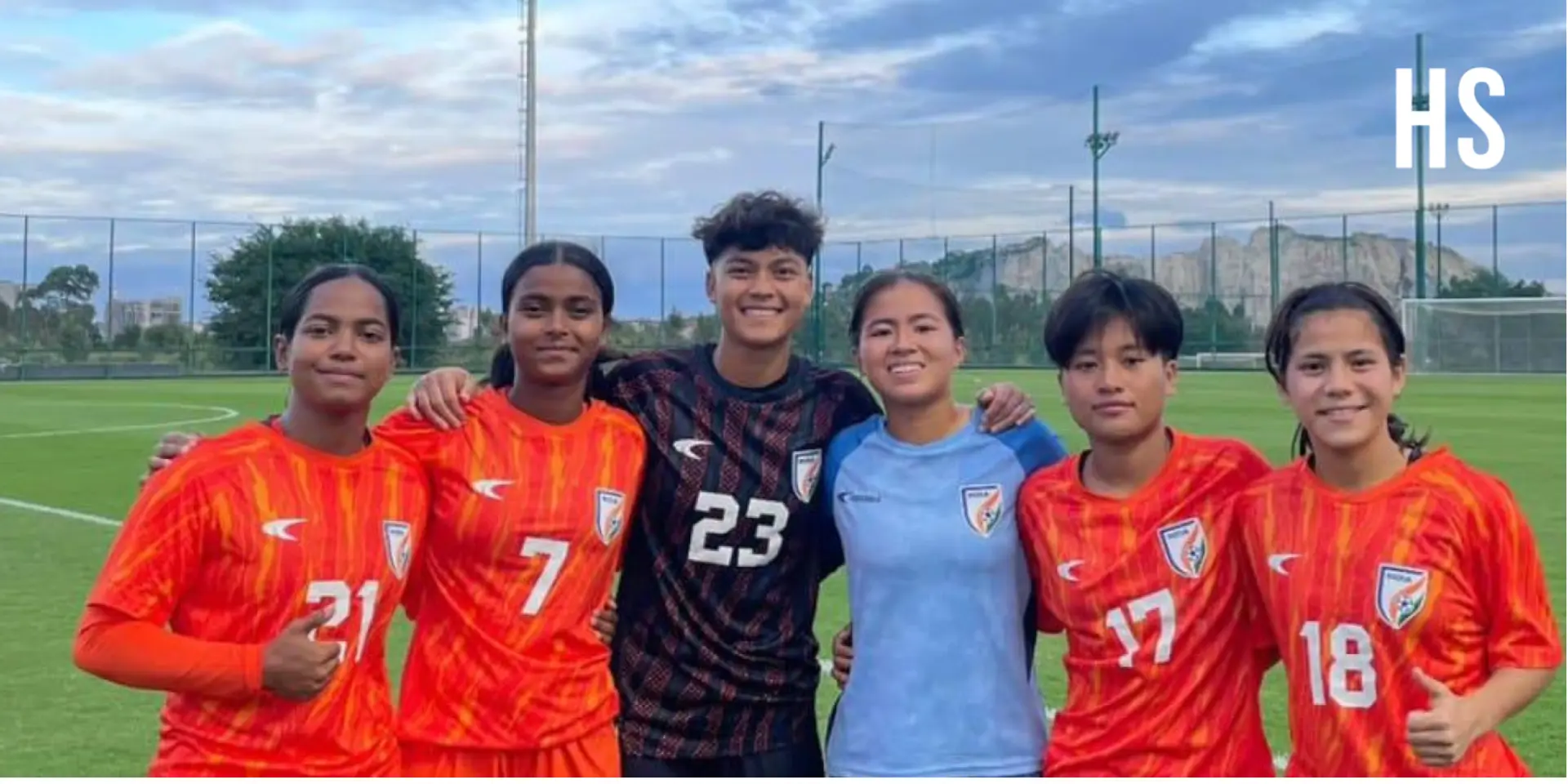

Garhwal FC was largely a men’s club. According to coach Akshay Menon, “They’d play one tournament a year with women just to tick a box.”
But in 2021, when the existing coach left, Menon—who had been training youth across Delhi with Bhaichung Bhutia Football Schools (BBFS), which are one of the country’s leading football development academies, founded by footballer Bhaichung Bhutia, Kishore Taid and Anurag Khilnani. Menon was asked to step in and build the club’s first all-girls team.
As he began scouting for players across the country, Menon chose to focus on Meghalaya in the northeast rather than Manipur or Mizoram (which are already known hubs for women’s football). He was also influenced by a friend in the Meghalaya Football Association, who recommended “some very talented girls” from disadvantaged backgrounds.
“He told me that there were four-five girls who were under 13 and came from very poor backgrounds. He said if we could just take care of their education and schooling, along with training, he would gladly send them to the residential setup we were building for our girls’ team in Nashik.
“And so we started with 26 girls from across India. In our first season, we finished 8th out of 9 teams. By 2025, I knew we could take this team to the Indian Women’s League,” says Menon.
Four of the girls he recruited that year are now in India’s U20 squad.
FC Garhwal’s women’s team began less like a sports project and more like a grassroots experiment in building infrastructure from the ground up. With no corporate backing or government funding, FC Garhwal’s women's team relied on the self-sustaining BBFS system—its fees, its coaching staff, and the commitment of its athletes.
The journey
In its early days, the team built identity, discipline, and something close to family in cramped rooms, homemade meals, and long commutes. In 2022, the girls—some as young as 14—shared a single room in Delhi’s Nangloi village, travelling nearly two hours daily in crowded buses to reach their training ground in Dwarka.
“They’d train hard, come home exhausted, cook their own food, and sleep without ACs. But we never let it feel like a problem. The camaraderie was high and the energy very competitive,” says Menon.
In 2023, FC Garhwal won the Delhi Women’s League, a first in the club’s history. They had moved into two flats in Noida by then, and Menon had brought in girl players from conflict-affected regions in Manipur, as well as rural Bihar—where picking up a game can sometimes open more doors to freedom than a college degree.
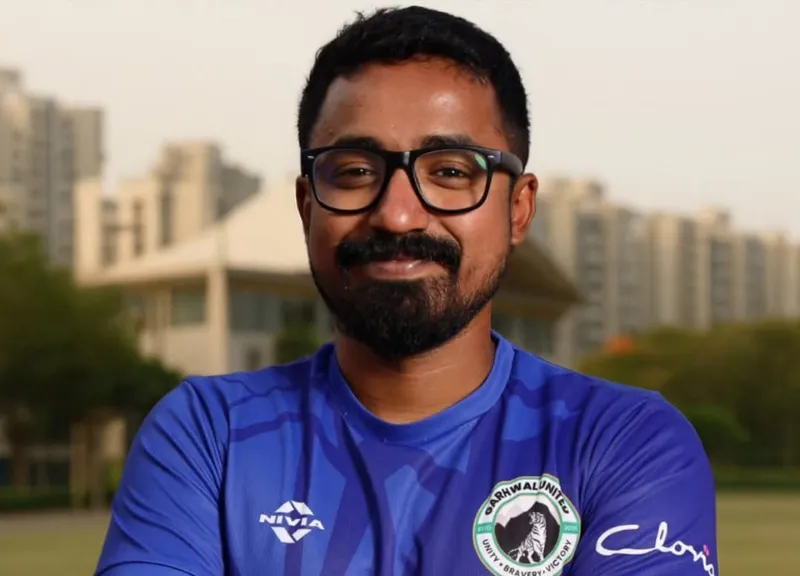
While for FC Garhwal, the infrastructure was evolving at a slow pace it did not deter them, says Akshay Menon, coach of the women's team. “What mattered was the heart these girls brought. They weren’t chasing fame—they just wanted a fair chance.”
“Many of these girls come from districts where early marriage and social invisibility are high,” says Menon. “One mother told me, ‘I want to send my daughter away because she is vulnerable to abuse here.’ Sports gave these girls a choice—to live on their own terms.”
For girls from rural India, sports is also a direct pathway to public sector jobs with the CRPF, Indian Railways, or state associations. While these positions are reserved for high-performing athletes, research supports what FC Garhwal’s story illustrates: sports have measurable benefits for young women.
A growing body of evidence from grassroots initiatives in India underscores how sport can be transformative for underprivileged girls. The Naandi Foundation’s ‘Sports for Life’ programme, which works with over 130,000 girls in six states, notes that it helps adolescent girls learn key life skills such as leadership, teamwork and critical thinking while also receiving sports kits and menstrual hygiene essentials to participate with dignity.
Programmes like Pro Sport Development in Odisha and Sangath’s MeWeSports in Goa show similar results, with Sportanddev.org highlighting that participants “reported improved emotional wellbeing, reduced anxiety, and enhanced social confidence through regular sports engagement.”
While for FC Garhwal, the infrastructure was evolving at a slow pace but did not deter us,” says Menon. “What mattered was the heart these girls brought. They weren’t chasing fame—they just wanted a fair chance.”
It’s been over a decade since Ruby Gangte, a 19-year-old Kuki girl from Manipur, first began playing football. The game held more sway than identity as she grew up sharing the field with boys from different tribes in her village.
But when the ethnic clashes between the Meitei and Kuki communities erupted in Manipur in 2023, that fragile space was not spared. The conflict, which displaced thousands and deepened mistrust between communities, seeped into everyday life—including the children’s game.
At FC Garhwal, Ruby has found in football a way to move beyond all that divides—language, background, even the weight of recent loss. She misses her family, but the game has become a kind of bridge: across homesickness, limited means, and unfamiliar tongues.
Likewise, Fragrancy Riwan, 18, grew up as the fifth of eight children in Meghalaya. Culturally, everyone played football, she says, but to take it up as a life goal would be rare where she comes from. “I would keep thinking, god has given me a gift, and it must be a part of who I am, who I become. FC Garhwal helped that happen, and I hope I continue playing and possibly coaching later in life,” says Riwan.
Future forward
Women’s football clubs in India are steadily growing, though they still operate in a landscape with limited funding, infrastructure, and visibility compared to the men’s game. At the top tier, clubs compete in the Indian Women’s League (IWL)—launched in 2016 by the All India Football Federation. Beyond this though, many women’s teams emerge from state leagues or community-driven setups, often run with minimal resources. Several professional men’s clubs, including Bengaluru FC and Odisha FC, have also launched women’s squads in recent years, signalling a slow shift toward integrated football programmes.
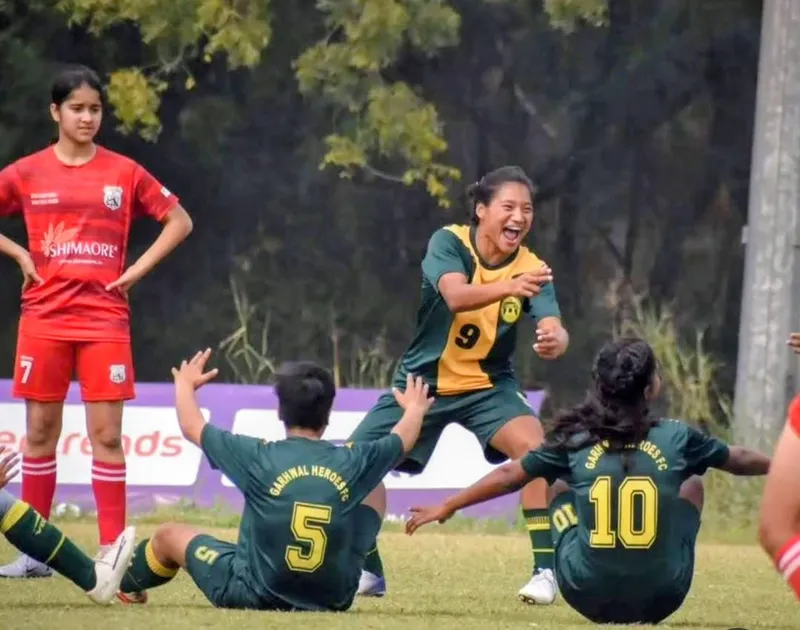
In 2023, FC Garhwal won the Delhi Women’s League, a first in the club’s history.
Now, with the IWL qualifications in hand, FC Garhwal faces a new challenge: travel, accommodation, and food for away matches across India. “We’ve shifted to a residential academy between Ambala and Chandigarh with better facilities,” says Menon. “But every match still involves five to six hours of travel, and we don’t have corporate sponsors yet. Most of our support comes through CSR and personal networks.”
Even as they reach the country’s biggest women’s football stage, FC Garhwal’s players stay grounded.
“They’d be happy to share a room with eight others, as long as there’s AC and decent food,” Menon laughs.
Their average age is just 17, but many have already represented India internationally. And for those who don’t make it to the national squad, Menon is ensuring pathways into coaching, employment, and long-term dignity.
“Female footballers in India often retire by 24. After that, what? That question needs to be answered too,” he says. Some go into coaching, though it's a struggle—especially in states where paying for training is culturally alien. Others seek stable government jobs or return to education. But all of them, says Menon, leave with what is most important to this story: choice.
Edited by Affirunisa Kankudti