



Mugdha Sinha on breaking barriers and building bridges in civil service
As part of our Women in Governance series, we feature IAS officer Mugdha Sinha who reflects on her 26-year career in the civil services, highlighting key milestones, challenges faced on the ground, and the perspective she brings to her current role as Managing Director of ITDC.

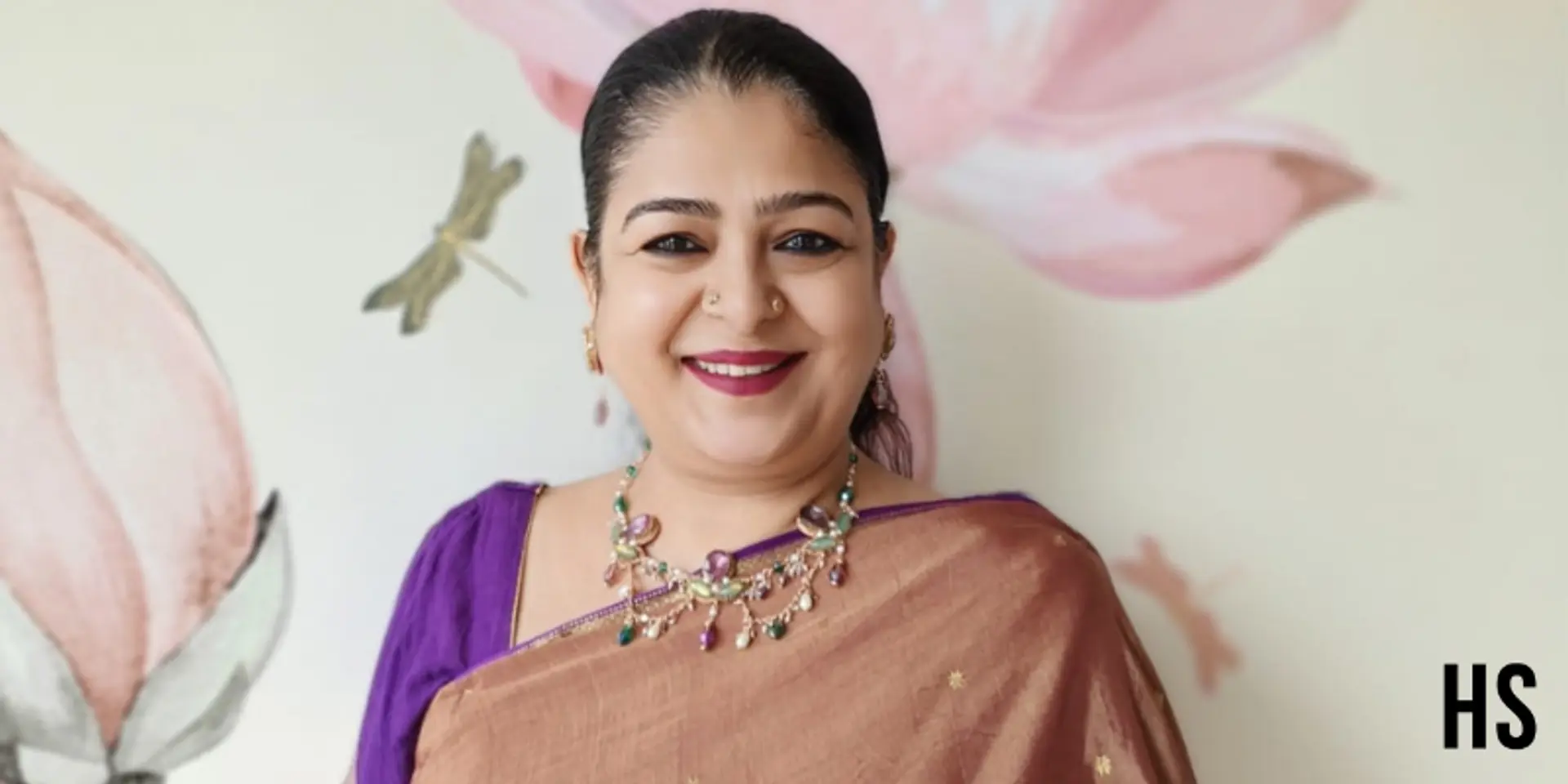

When Mugdha Sinha was in the fifth grade, she was tasked with a straight-forward summer assignment: she had to write about what she wanted to be in life. Sinha turned to her mother for guidance.
“My mother said, “Write that you want to be an IAS officer. I asked her ‘what is an IAS officer’? My grandfather wanted my mother to be a civil servant, but he passed away while she was still in school. The dream remained unfulfilled, so my mother had this vision that I should be able to carry forward my grandfather’s wish,” Sinha recalls.
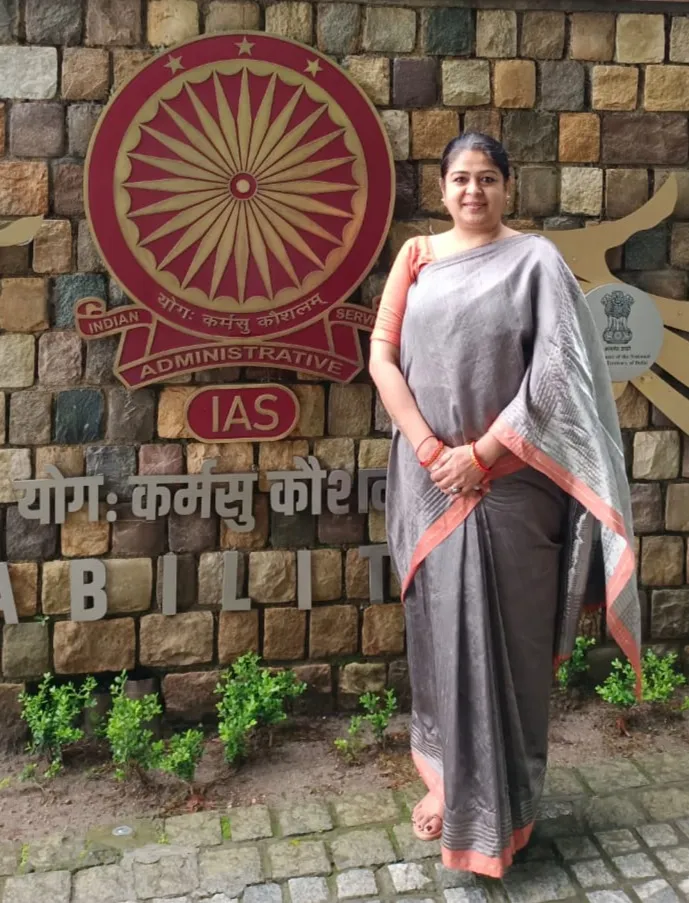
Mugdha Sinha, IAS & MD, ITDC
Sinha was the only one in her class who had set her sights on the civil services.
Her academic performance improved, and every time she won a competition, people around her would remark, “Oh! She's preparing to be an IAS officer.” It became an echo that kept coming back to her.
What began as a seemingly simple summer project would become a life-defining moment, shaping Sinha’s impressive 26-year career in the civil services—from the districts of Rajasthan to the corridors of India’s cultural and tourism ministries.
After completing her studies from Jawaharlal Nehru University, Sinha appeared for the civil services examination and ranked eighth, joining the Rajasthan cadre in 1999.
She realised one thing: “Cracking the exam is the easiest part. The real test begins afterward, when it’s just you, your choices, and the consequences that follow. That line about wanting to serve society? It only starts to mean something after you have cleared the exam.”
Huge learning lessons
After completing her training at The Lal Bahadur Shastri National Academy of Administration (LBSNAA), Mussoorie, Sinha moved to Udaipur as a probationer for a year, an experience that taught her some important life lessons.
Prem Singh Mehra, the district collector, though firm but also caring, gave her a “huge canvas and independent charges to flex my learning.”
Posted as the Block Development Officer (BDO) in Jhadol, a remote area, Sinha began learning from the ground up—writing Khasra Khatauni (land record documents) by hand and trekking across hillocks with junior and assistant engineers to measure school buildings under construction.
Sinha served in Bundi and Hanumangarh, before she moved to Jhunjhunu. Her tenure in Jhunjhunu was especially significant, as she became the first woman district collector there in 63 years.
The district was infamous for illegal mining, and soon, Sinha started fielding late-night anonymous calls and taking action. This created some tension with certain political elements, and led to her transfer to Ganganagar. Sinha, however, is grateful for the huge public support she received for her actions.
“The Bar Association issued a resolution supporting me, something they had never done for any officer. Traders shut their shops and the person who claimed credit for my transfer had to retract his statement,” she recalls.
Sinha has also led several key initiatives in the fields of culture and science and technology in Rajasthan. She pioneered the concept of Astro Night Sky Tourism, which not only inspired other states and private players to launch similar projects, but also played a role in the declaration of Hanle (Leh) as India’s first Dark Sky Reserve.
Heading the GLAM division as Joint Secretary at the Ministry of Culture, Sinha conceptualised three significant events in 2023 as part of the Azadi Ka Amrit Mahotsav—The Festival of Libraries, International Museum Expo, and the India Art, Architecture and Design Biennale at Red Fort.
Her approach was revolutionary in its simplicity and reach. For the Festival of Libraries, she personally wrote over 10,000 letters to libraries across the country. “We had people from Kerala to Kashmir attending,” she says. When her boss saw the crowds and asked if she had contacted political parties to mobilise people, her response was simple: “I said no! I wrote those letters, and people really wanted to come.”
The Museum Expo brought together 72 museums, participating voluntarily without asking for expenses. She shares that the events were so successful that Prime Minister Narendra Modi noted that India had created "a bouquet of global cultural initiatives" and that the Museum Expo would become "a turning point in the trajectory of museum development in the country."
Sinha’s team conducted the first comprehensive museum survey since 1959, discovering that India now has 1,201 museums compared to just 105 in 1934. They created an 800-page directory and developed India's first official museum map.
Today, as the Managing Director of India Tourism Development Corporation (ITDC), Sinha’s vision extends far beyond traditional hotel operations.
“ITDC has 17 verticals and five strategic business units—hotels division, Ashok Tours and Travels, Ashok Events, Ashok Corporate Office, and Ashok Consultancy and Engineering Services. Where else would you get this novel experience of managing all this in the corporate sector?” Sinha asks.
As a listed public sector undertaking with 8.5 crore shareholders, she is focussed on expanding and diversifying business opportunities using three tools: technology, data analytics, and corporate marketing.
ITDC is developing a comprehensive portal for all booking requirements, and converting their mascot "Adyant" (an ant symbolising "Adi to Anant"—beginning to end) into an AI-powered chatbot.
“We are also laying the foundation for big data analytics for ITDC, which will enable us to make good commercial decisions. We will also use the corporate marketing wing to enhance the kind of outreach to get more business and customers,” she elaborates.
Another innovation is what she calls “smart contracting”, creative partnerships that leverage property and shared resources rather than traditional financial exchanges.
“Ideas become business today, ideas fetch revenue and royalties. This is what IPR does, your idea becomes business,” she explains.
Gender realities in public service leadership
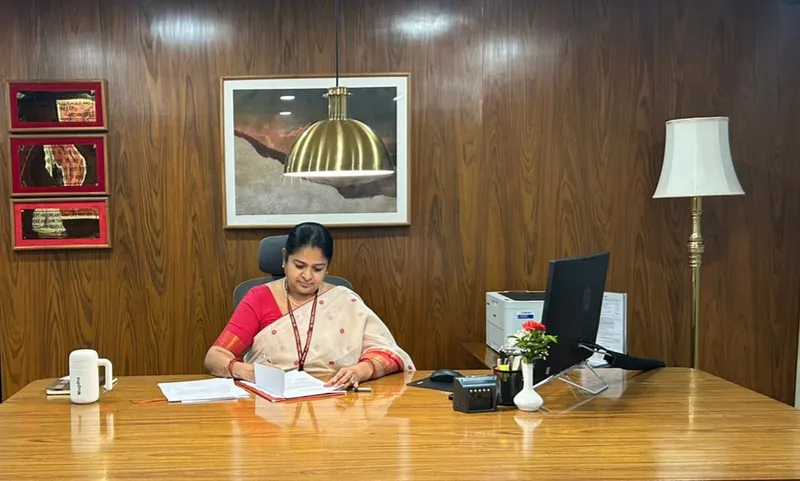
Sinha’s experiences as a woman in governance range from subtle biases to overt discrimination, but her response has been consistently principled.
When she joined the services, she was told that women usually get one district as “equality”, but getting two or three “is too much.”
“I never believed those stereotypes,” says Sinha who served in some of the most challenging districts in Rajasthan.
Early in her career, a senior officer defined good qualities for civil servants as "hardworking, sincere, obedient” for women; and “dynamic, outgoing and resourceful” for men.
When Sinha questioned why she couldn't embody all these qualities, the officer asked if she wanted to be a "home breaker or home maker". Years later, when the same officer became her senior in a different posting, he acknowledged: "These rules don't apply to you."
"It's not physicality that decides what we become, it's cranial matter," Sinha reflects. "We wield a pen, not a sword. Women might bring more compassion to decision-making, but these aren't gender-defining traits."
How does she balance bureaucratic constraints with innovation and agility?
“I believe there are no constraints in life except lack of imagination. Thinking out of the box while staying within the framework of rules is something I've taught myself over the years,” she says. Sinha also believes in letting the merit of the idea win and advocates flat offices where everyone with a great idea can contribute.
The daily labourer’s philosophy
Despite her many achievements, awards, and accolades, Sinha continues to see herself through the lens of humility and service, qualities that served her well throughout her journey as a civil servant.
"I'm a daily labourer who works on a daily basis. I don't know what will happen tomorrow. I take accountability for all my actions and am ready to face consequences because I have strong conviction in what I do,” she says.
"A daily labourer's only reward is the satisfaction at the end of the day, where you sleep well and you wake up well energised and you want to go back to the office and say, oh, yeah, I want to do this,” she adds.
This philosophy has offered her strength through some of the challenging moments of her career, whether it is facing political pressure in Jhunjhunu or pioneering new initiatives.
"My only ambition is to ensure that people who interact with me—because I'm a small cog in the wheel, face of the government—go back with a very good impression of interacting with the government,” she says.
"Kindness is an echo, it always comes back to you. I'm just being kind and compassionate. I want to be a bridge between the civil servant and civil society,” she adds.
Edited by Megha Reddy