


Beyond Barriers: Sasmita Panda on building a career in tech and leading with purpose
In our Women in Tech series, we feature Sasmita Panda, Consulting Tech Strategy & Transformation Architecture Leader at EY Global Delivery Services. She reflects on her journey in technology—tracing the milestones, challenges, and lessons learned.

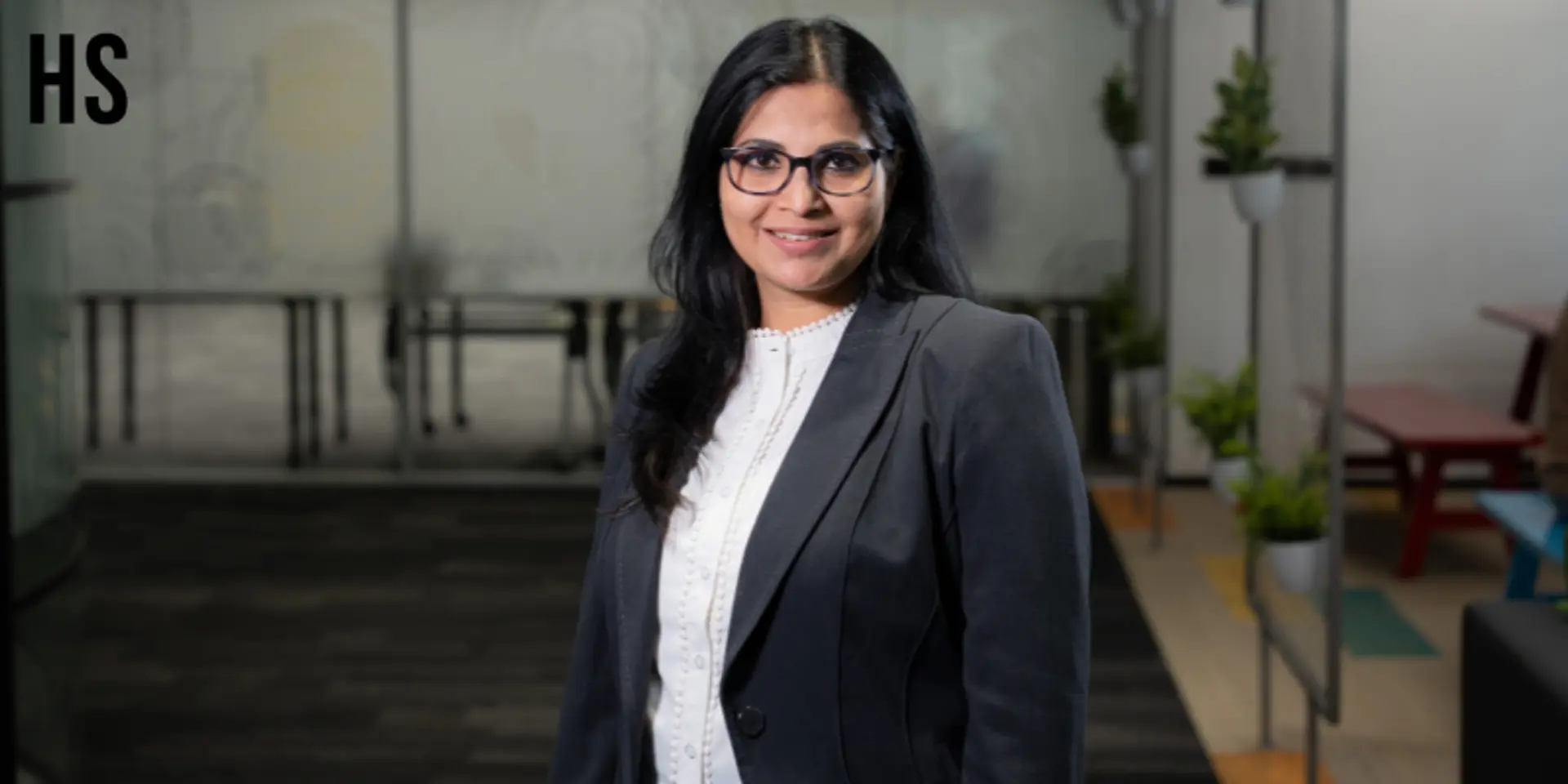

In 1998, on her first assignment with French multinational Alstom Transport, Sasmita Panda tested software for India’s first metro rail project in Kolkata.
Trained in Paris on Ada 95, one of the first object-oriented programming languages for mission-critical systems, Panda wrote programmes that still run successfully in the trains and central control system.
“It was an amazing journey. Imagine being a fresher, just two years into your career, getting to build mission-critical systems and test them on real trains at night. That experience is still very close to my heart,” Panda tells HerStory.
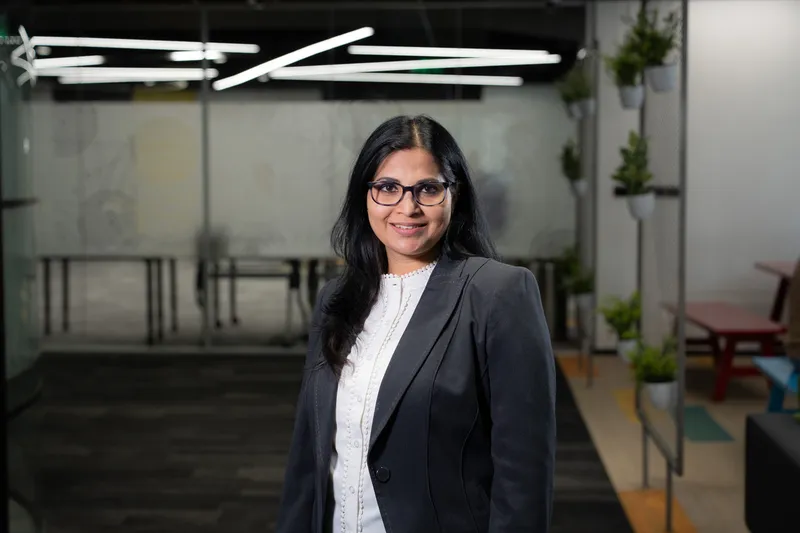
Sasmita Panda
More than two decades later, and after illustrious stints in multinational companies like Polaris, Hexaware, and Cognizant, Panda now leads Consulting Tech Strategy and serves as Transformation Architecture Leader at EY Global Delivery Services.
Born in a middle-class family in Odisha, Panda grew up with a strong interest in science and technology. While her family encouraged her to pursue medicine, following the path her brother had chosen, she decided to apply for both engineering and medicine. She ultimately enrolled in a BTech in Electrical and Electronics Engineering at the Orissa Institute of Agriculture and Technology.
“The course gave me the foundation to understand technologies like circuits, electronics, and even a bit of computer science. We had one computer for seven of us, learning Fortran and COBOL together,” she remembers.
Entering the world of computers and IT
In the final year of her engineering, Panda had a health issue that required immediate surgery, and a six-month break from her studies. She used this time to sharpen her skills, following which, she started work as a Research Associate at IIT-Kanpur.
This helped her transition from electrical and electronics into computer and IT domains. Panda learned Unix, the core operating system of that era, mastering kernels and operating systems. Two years later, she joined Alstom Transport, where she worked as Senior Software Engineer.
After three and a half years at Alstom, Panda got married and felt the need to be closer to her family. She got a transfer from Kolkata to Bengaluru, while her husband took up a job in Chennai. Since Alstom had no office in Chennai, and since they wanted to stay together, she chose to resign.
During the year-long break that followed, when she also had her daughter, Panda upskilled herself and learned Java, Spring, and other internet programming technologies. She also built a support system with extended family so her child wouldn't be neglected when she returned to work.
When her daughter was four months old, Panda joined Orbitech, Citibank’s IT arm.
From signalling software in Ada 95 to banking software in Java, Panda had to adapt to a new challenge.
“Orbitech had a two-year programme that got into trouble because of the old waterfall model. One year was spent defining requirements, and then the client said they weren’t aligned anymore. Suddenly, we had to deliver two years’ worth of work in one year,” she explains.
Starting as lead developer, Panda moved onto team lead.
“The program was very demanding. For seven months, I worked even on weekends. My husband brought my daughter to the office so I could spend a couple of hours with her. I sacrificed personal time but delivered all the modules committed in my scope,” she says.
Passion for technology and architecture
After brief stints at other companies, Panda joined Cognizant, where she spent 15 years of her prime career. The company offered her a crucial choice—project management or technology architecture.
“Everybody was telling me that project management would give me a better growth path than getting into a technology role. But I was very passionate about technology and architecture, so I chose to follow this career path,” she shares.
During her 15 years at Cognizant, she delivered large-scale transformation programmes across the globe, progressing from engineer to application architect to enterprise architect and consultant. She was instrumental in setting up an innovation centre and experience zone that hosted over 500 clients. She became the only woman architect and leader in her business unit’s core group and was involved in the company’s D&I charter.
A distinguished technologist
Panda joined EY Global Delivery Services about three and a half years ago, and today leads Tech Strategy and Transformation. The numbers tell part of her success story: she grew the architecture team from eight members to more than 90.
Her current responsibilities include leading the architecture competency, driving large-scale transformation programs, and providing technology governance to ensure scalability, performance, regulatory compliance, and security. She also mentors and coaches the next generation of technologists and architects.
In January 2025, Panda was named one of EY’s first Distinguished Technologists, a platform created to give deep technologists a clear path to leadership. “Leadership doesn’t only mean managing people. We want to show that being a technologist is equally valuable,” she explains.
Panda's journey, however, hasn't been without challenges and gender bias. During an eight-week consulting engagement in the US, she encountered a client VP who assumed she was the functional consultant, not the architect, simply because she was a woman.
“He never thought that a woman could also take up this architect role,” she recalls. Meeting after meeting, she had to repeatedly clarify her position while proving her technical depth.
“I worked hard and showed that female employees can also become architects. In his organisation, at that point, they only had male architects, no gender diversity,” she elaborates.
‘Don’t be a silent listener’
These experiences have influenced Panda’s approach to leadership. Today, she actively encourages women to pursue technology careers, provides visibility for their achievements in leadership forums, and serves as the Women in Tech champion for her competency area.
“Many women leaders are very good with great skills. The only part they lack is they don't give enough visibility and transparency. How do you brand yourself? Speak in different forums. Don't be a silent listener,” she advises.
Her solution to address the “missing middle”—women dropping off the workforce mid-career is multi-faceted.
For organisations, create robust return-to-work programs, provide mentorship platforms, and ensure visibility for women's achievements. For individuals, maintain continuous learning, build support ecosystems, and set clear expectations with stakeholders.
“Technology is not rocket science. If you put in a few weeks or a few months of effort, you can pick it up. But that attitude should be there, otherwise how can you stay relevant in the industry?" she emphasises.
Through EY's mentorship programmes, informal coffee sessions with women employees, and the EY Ripples corporate responsibility platform, she actively works to bridge this gap. Beyond the workplace, through EY’s NGO Connect initiative, she works closely with Makkala Jagriti, a non-profit that empowers underprivileged children and youth through holistic learning.
Panda acknowledges that success comes with its own personal sacrifices. “Sometimes I feel guilty that I did not spend enough time that I should have spent” with her daughter, she admits.
Her approach to work-life balance is to focus on quality over quantity. “I want to be fully with family and friends whenever I'm there, spending time, listening to even simple things, understanding their pain points.”
In her free time, Panda tends her kitchen garden, paints, cooks for her foodie family, and takes breaks twice a year to recharge.
As artificial intelligence (AI) reshapes the technology landscape, Panda sees both opportunity and responsibility. Her future plans centre on solving more client problems leveraging AI while continuing to mentor the next generation of technologists.
“I want to mentor and build more deep technologists in our organisation. I want to groom many more women leaders into this career path and help them get into leadership positions,” she says.
Her advice for aspiring women leaders is rooted in her own experience as a leader in tech.
“Assess your strengths, find passion-driven career paths, seek sponsorship and mentorship, create clear development plans, and most importantly, don't say no to every challenging opportunity,” she says.
Edited by Megha Reddy