



Deepti Nayak of Publicis Sapient on her two-decade journey in tech and leading with authenticity
In our Women in Tech series, we feature Deepti Nayak, Senior Director of Technology at Publicis Sapient, who shares insights from her two-decade career, her techno-functional role, and her commitment to continuous learning.

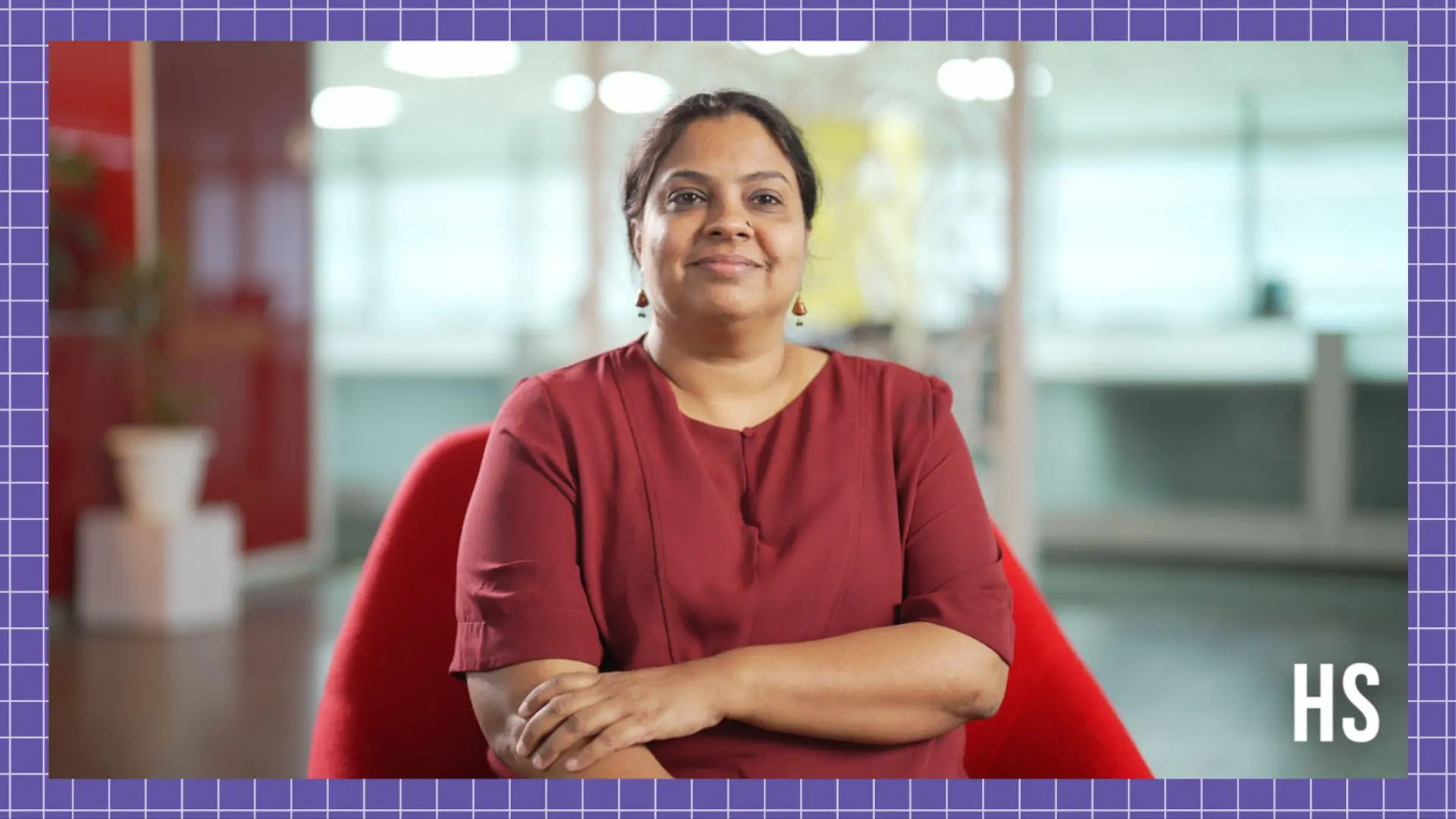

Right from her childhood, Deepti Nayak loved tinkering with small electrical and electronic DIY projects at home. Her biggest inspiration was her grandfather, who encouraged her to think beyond the usual and the conventional.
As a child, she would put up lights for Diwali, dismantle the television to see the picture tube, check how the microwave functioned, and was always exploring how things worked. This innate curiosity eventually led her to the next step: choosing electronics engineering over computers that was the preferred choice for girls during the time.
Today, as Senior Director - Technology at Publicis Sapient, Nayak brings over 20 years of experience in the industry, combining technical expertise with a people-first leadership, guiding teams while continuing to learn, adapt, and inspire the next generation of technologists.
Learning on the job at scale
After completing her engineering, Nayak joined Infosys, just a few years after the IT boom.
“My first job was about scale, because when you are just out of college, you have a lot of bookish knowledge, learning a bit of coding. Scale helps in building logical solutions for clients, and how to use technological concepts to solve problems,” she tells HerStory.
Two years later, she moved to Publicis Sapient, a journey that has now spanned 17 years across diverse domains, where she has grown to become a seasoned technology leader.
Starting as a senior associate, a module lead overseeing a small team while managing her own deliverables, she quickly found herself thrust into client-facing roles that would define her career trajectory.
“By the time I joined Publicis Sapient, I realised my passion was in coding. I understood that there is no problem that cannot be solved from a technological perspective. That’s the mantra I have worked with ever since,” she shares.
A couple of months after she joined the organisation, she was sent to a client site, and for a month, interacted with the client to deliver and build from a “solutions” perspective.
“It was my first entry into what a techno-functional role looks like. It’s more about talking to business users, talking to the end clients and understanding what they are looking for, going back, designing, and building them,” she explains.
Nayak’s evolution from a pure technologist to someone who could translate complex technical concepts into business language became her differentiating factor. Today, she holds dual roles: as an engineering lead designing and building technology solutions, and as a capability lead focused on internal improvement and skill development.
Nayak admits that serving clients for whom technology feels like a black box comes with its own set of challenges. Yet, she sees each hurdle as an opportunity to push herself further and deliver her best.
“How do you encapsulate what you are doing and put it in a terminology that they understand? Because that's the gap that is missing in a lot of industries. Why do a lot of programs fail? If you look at software programs, a lot of programs fail because they don't start right. This required me to learn and unlearn a lot of things that I've learned in the past,” she says.
So, Nayak took to doing what she does best, learning, acquiring certifications, reading and discussing with mentors on the right technology solutions, evolving in every role.
One of the key lessons Nayak picked up along the way was that it’s fine to acknowledge what you don’t know.
“As a technologist, no one expects you to solve all the problems on day one—it’s about being authentic and transparent that truly helps build trust,” she adds.
Gender dynamics in the tech industry
Nayak admits that there are certain levels of biases everyone goes through, whether they work or do not.
“I don’t let these biases stop me from my goals. It’s important to have people around you as sounding boards, able to talk through the situation with mentors and people you are comfortable with. However, if there are things I cannot control, I just leave them as they are, and don’t think about them anymore,” she shares.
She believes herself lucky to have had a “positive” experience throughout her career, and not been singled out because of her gender.
When her son was two or three years old, she found herself working on a demanding project that often kept her at the office until midnight. “There were discussions, and I definitely did think of leaving the job and taking up a less stressful role. That was the time where I was at the middle stage of my career journey,” she says.
What saved her career wasn't just personal determination, but a support system that recognised her value and adapted to her needs. Her mentors engaged in “long, long, long conversations” about why she shouldn't leave. More importantly, they provided practical solutions.
"They gave me the flexibility to work from home, pre-COVID, in 2010 when work from home wasn't prevalent in the industry. I could leave early if I had to pick my son from daycare and take calls in the evening,” she recalls.
This along with family support ensured that Nayak could navigate the missing middle: where women drop out of the workforce in the middle of their careers, unable to juggle the work-life balance.
An ecosystem that nurtures and supports
From an organisational perspective, Nayak believes that a supportive ecosystem can help women continue in their careers, or help them return after a break.
“At Publicis Sapient, we have the Spring initiative, where we especially look for women who have left, provide dedicated mentorship and help them return to their careers. We also have leadership programs for women at different career stages where they talk to the executive leaders across the company and showcase their capabilities,” she shares.
The company's "Enable Your Potential" framework gives individuals ownership of their career growth regardless of level.
"It is up to me to decide how I carve my path in the organisation, irrespective whether I'm the junior-most person or I'm the CEO," Nayak explains.
This individual agency matters because, as Nayak observes, "We are our best and worst critics. We judge ourselves the most. We feel a lot of times we don't deserve something."
Her own experience with mentors has ensured she pays it forward through formal mentorship programs and informal guidance.
"One thing that works best is sharing your journey. When people share their journeys, women who normally don't ask questions connect with those things. They connect that if you have gone through a journey, you'll be able to understand me better."
She emphasises that trust forms the foundation of effective mentoring relationships. "If I don't have that trusted relationship, it won't give the right result. And, trust comes with time. They need to see it to believe it,” she adds.
As the industry grapples with AI transformation and sustainability challenges, Nayak sees both opportunity and necessity for continued evolution. Working in the energy sector, she's helping clients navigate the transition to sustainable practices, work that connects to larger climate change solutions.
The rise of AI presents both challenges and opportunities for the workforce, something Nayak experiences directly in her capability lead role.
At Publicis Sapient, this philosophy translates into practical action. The company has set up a dedicated AI practice, where Nayak regularly participates in workshops designed not just for personal growth, but to understand “how concepts are being used to deliver work better and ensure we do better work with our clients.”
This reality reinforces her emphasis on continuous learning and adaptation. “The only way we can live through this boom is acknowledging that what we did will change. Whether you look at documentation, coding, or testing, everything is changing. Having the mindset to learn and unlearn is best,” she says.
Edited by Megha Reddy