



Wheels of change: This nonprofit is enabling women to conquer India’s roads
Through Azad Foundation’s Women with Wheels programme, thousands of women are breaking stereotypes, earning sustainable incomes, and reshaping how their communities see them.


For the past decade, Chennai resident Sivagami has painstakingly stitched a life of dignity and security. Having studied only till Class 10, and a single mother of two kids, Sivagami battled stigma for living without a male companion, and made barely enough by doing sewing and odd jobs to run the household. She lived with an inherent fear of public visibility.
Three years ago, she enrolled in a programme by Delhi-based nonprofit Azad Foundation, and this was the beginning of self-reclamation for her.
Women with Wheels (WWW) programme, a 17-year-long initiative by the Azad Foundation, is the brainchild of the organisation’s founder, Meenu Vadera, who had a simple but radical intent: turning driving into a dignified livelihood for women.
Historically, driving as a skill has given women across the world far more than the ability to move from one place to another. It has freed women from dependence on male relatives, rigid transport systems, and unsafe public travel. When Saudi Arabia lifted its ban on women driving in 2018, women described the experience as a rebirth, a tangible symbol of autonomy after decades of restriction.
In India, similar shifts are evident through initiatives like the Women with Wheels programme, which has enabled resource-poor women to become professional drivers, contribute to household incomes, and claim respect in their communities.
Through WWW, Sivagami not only secured a driving licence but also built the confidence to join an e-commerce company as a delivery partner. “It was not just about learning to ride,” she says. “It was like looking at myself with fresh eyes,” says Sivagami. “Stigma happens both inside us and outside. After learning how to drive, I no longer carried any shame, only confidence.”
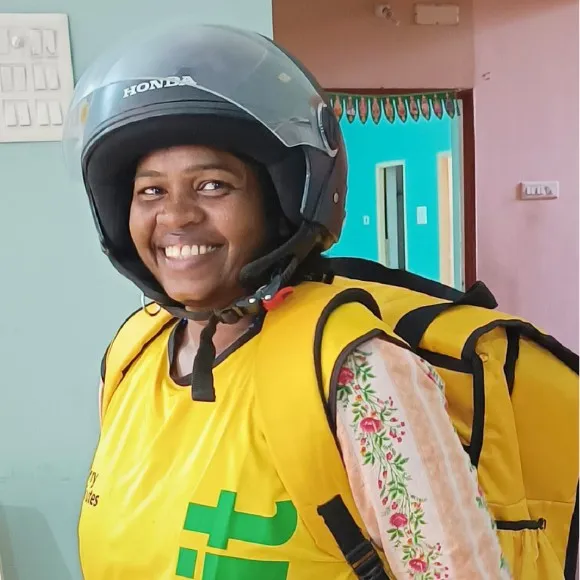
Chennai's Sivagami used to do odd jobs and tailoring to sustain as a single mom. After joining Women with Wheels programme, she has become more confident and is able to run the house more comfortably.
Sivagami’s story mirrors that of thousands of women across India whose lives have been empowered by Azad Foundation’s Women with Wheels programme.
Since its inception, WWW has enabled close to 5,000 women to secure permanent licences, with more than 3,000 now employed in the transport sector as chauffeurs, delivery riders, or bus drivers. In 2023–24 alone, 716 women enrolled across Azad’s centres in Jaipur, Kolkata, Delhi, and Chennai. Of these, 514 obtained licences, and 298 went on to secure paid roles, collectively earning more than Rs 1.76 crore in the past two years through partnerships with institutions like the Asian Development Bank and Energy Efficiency Services, the non-profit reveals.
The programme goes beyond just technical training. Alongside learning to handle vehicles, women undergo sessions in financial literacy, English communication, gender awareness, self-defence, and legal rights. This “toolkit of empowerment” recognises that women entering male-dominated spaces need a lot more than just professional skills. They need social and life skills as well.
“The idea was not just to provide jobs, but to expand women’s mobility itself,; because mobility is indeed power,” says Hari Sharma, head of Azad Foundation’s Rajasthan operations and thematic leader of its Men for Gender Justice programme. “Driving breaks the stereotype that women are only fit for indoor work or secondary incomes. Behind the wheel, they challenge patriarchy head-on, every day, while also earning a livelihood, which is a more practical benefit,” he adds.
Engaging men and families
Sharma stresses that resistance often begins at home. Families may permit women to work only if they continue to shoulder the full burden of unpaid care. To address this, Azad Foundation runs the Men for Gender Justice programme, engaging male relatives through workshops and dialogues. “We talk to fathers, brothers, husbands, helping them see why it matters to share domestic responsibilities,” he explains. “Unless men change, women’s double burden continues. After training with us, they go back to the same environments where they battle oppressive systems, on their own.”
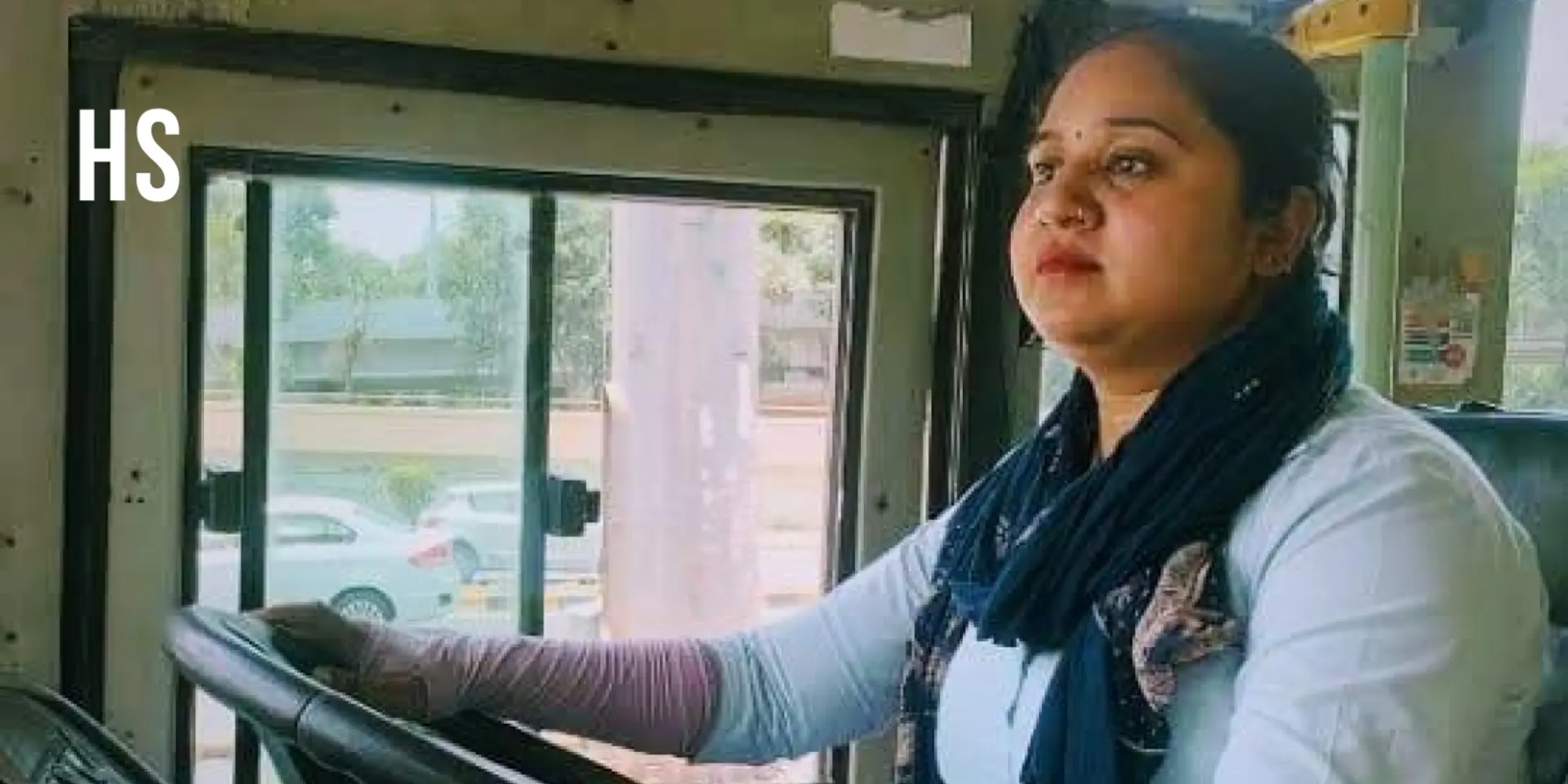
Financial support systems also underpin the model. The foundation’s Ram Mohan Scholarship provides a Rs 5,000 monthly stipend to widowed, separated, or single women. In Delhi, Seema once earned barely Rs 5,000 a month sewing at home. After joining WWW, she trained as a professional driver and is now one of 93 women employed with the Delhi Transport Corporation. Today, she earns more than Rs 26,000 a month, enough to support her daughters’’ education and secure her family’s future. Her shift from tailoring to bus driving is not only an economic transformation but also an important social one.
Safer roads, stronger communities
For decades, women drivers have been shadowed by a persistent stereotype—that they are somehow less skilled or more accident-prone behind the wheel.
Yet global and Indian studies have consistently shown that women tend to be more safety-conscious, less prone to risk-taking, and less represented in serious accidents. In Argentina, for instance, women drivers were found more likely to wear seatbelts, obey traffic lights and avoid distractions such as mobile phones. In India, Delhi Police data revealed that women accounted for less than 2% of fatal crashes. A recent analysis in Andhra Pradesh similarly noted that women constituted fewer than 4% of driver fatalities.
“These are not faceless numbers,” notes Sharma. “Every woman behind the wheel is a story of aspiration, and courage. She not only earns but reshapes how her daughters, neighbours, and entire community see women and what they are capable off. This cultural shift is critical to the work we do.”
The long road ahead
However, women drivers often face harassment, scepticism from passengers, and inadequate infrastructure, such as toilets and rest stops. Many continue to balance long work hours with unpaid household labour. Yet Azad’s integrated approach—combining skills training with empowerment, community advocacy, and policy dialogue—offers a pathway forward.
As India grapples with widening gender gaps in workforce participation— where only around 32% of women are economically active compared to the global average of nearly 49% (World Bank and UNFPA)—initiatives like Women with Wheels are driving systemic change by equipping thousands of marginalised women with professional driving skills, enabling economic independence and challenging social norms.
Edited by Megha Reddy