



From fresher to centre head: Shilpa Menon’s 25-year journey at digital transformation company UST
In our Women in Tech series, we feature Shilpa Menon, Centre Head at UST’s Thiruvananthapuram campus, the company’s largest development centre. She takes us through her 25-year journey in UST, and offers insights on facing unconscious biases and how AI can be beneficial for women.

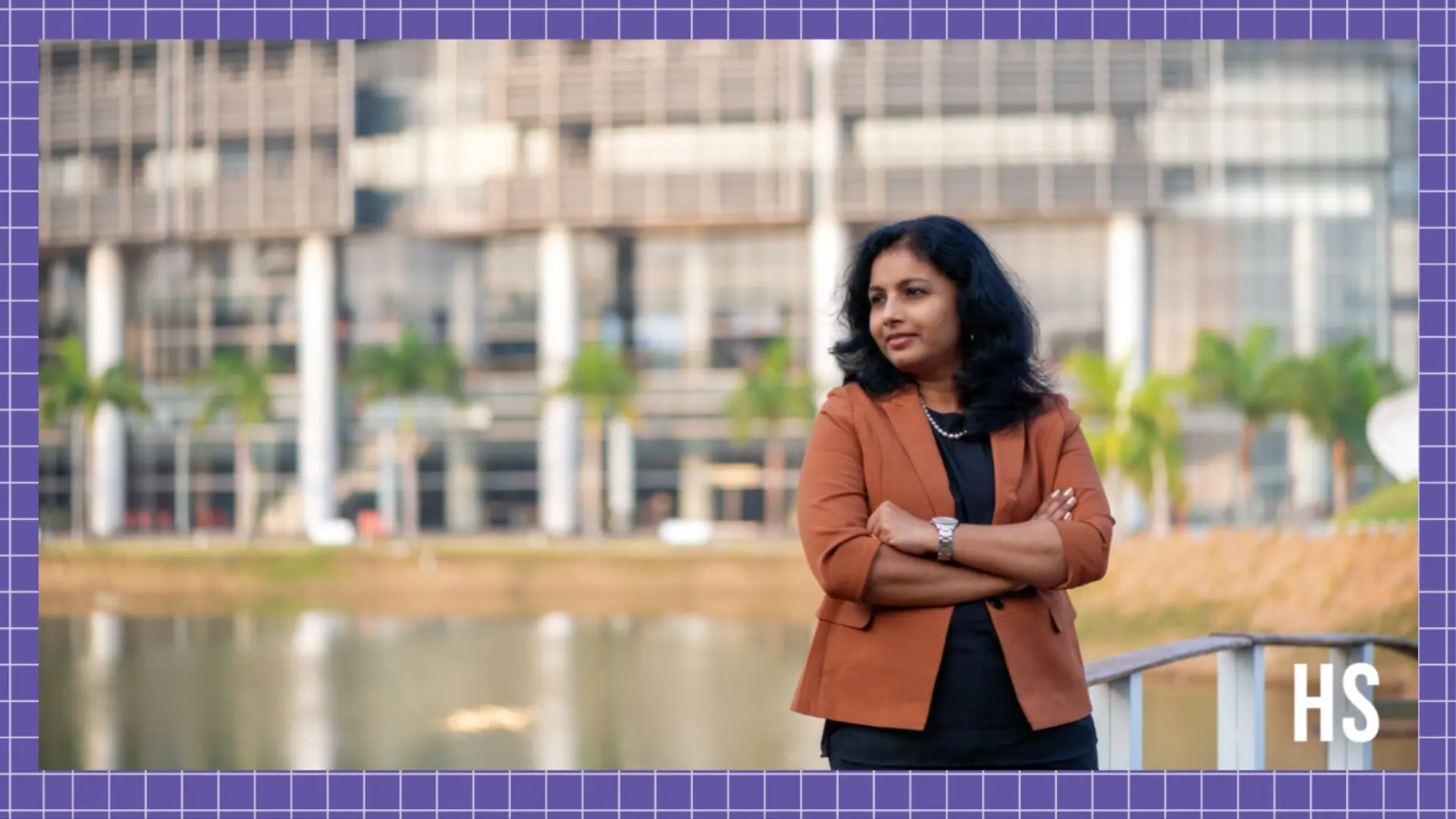

When Shilpa Menon joined UST (then US Software), a digital transformation solutions company, in 2000 at its Thiruvananthapuram campus as employee number 53, there weren’t many people or projects in the company.
But the team of 50-60 people learned and worked together, taking up every responsibility that came their way.
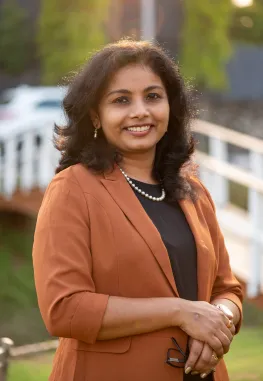
Shilpa Menon
“One day I was a developer, the next day, a tester, and the day after, I was analysing requirements. It was great exposure—not just focusing on one area but getting broad experience in different roles,” recalls Menon.
Today, 25 years later, Menon is a technology and delivery leader, serving as the centre head at UST’s Thiruvananthapuram campus, the company’s largest development centre with more than 7,500 employees. Menon oversees end-to-end centre operations, fosters employee engagement, and ensures delivery excellence for global clients.
As one of UST’s early employees, Menon has seen the organisation’s evolution from a small setup to a global leader with more than 30,000 employees.
Menon spent her early years in Rajasthan, where her father was posted, before moving back to Kerala in Class 10 to pursue higher education. At the time, students were largely expected to choose between two conventional career paths—engineering and medicine.
When she did not clear the medical entrance exam on her first attempt, Menon decided against waiting another year to try again.
Instead, she pursued a graduation in chemistry, mathematics, and physics, followed by a postgraduate diploma in computer science at the Indian Institute of Human Resources Development in Kerala. It was here that she discovered her passion for computers and coding. This led her to a three-year MCA.
Eight months before she joined UST, Menon taught at computer institutes to keep the momentum going. She also interned at National Informatics Centre for a few months.
Constant change for growth
“I started getting calls from companies in Technopark, Trivandrum. I ended up choosing UST as I was completely floored by the professionalism with which they handled freshers and the positive environment,” she remembers.
In her very first year at UST, Menon received the opportunity to work on-site in Dayton, Ohio for 10 months.
“This stint changed my perspective on customer relationships and how important it is to establish them,” she says.
Her progression was gradual; team lead responsibilities were added to her existing work, followed by project management roles. She found her niche in emerging accounts, a vertical where she would work with new customers for one to three years, establish major deliveries, and then hand them off to specialised clusters.
This also meant constant change.
“Technology changed, the nature of customers changed, your processes changed. Within the organisation itself, I was getting opportunities to learn new things, come across new things, and handle new customers. That kept me going,” Menon explains.
Most of her work centred on financial services, with a small stint in retail. She has worked with Fortune 100 customers on transformations, rationalisation projects, and Google Cloud migrations. She has also led build-operate-transfer initiatives, setting up global capability centres before handing them to clients.
For three-and-a-half years, Menon headed the Network of Women Associates, focusing on empowerment, training, and mentorship for women employees. In 2017, she was appointed as the centre head.
"I had no clue what the centre head responsibility was because I'd been in delivery for 20+ years," she says of her next role.
The centre head position came without giving up her delivery work. Her responsibilities now include growing the centre, employee retention, engagement activities, and maintaining the back-to-office rate—currently 80-87% at Thiruvananthapuram, one of UST's largest centres.
She liaises with external companies in Technopark, the largest IT park in Kerala, and government agencies. She oversees initiatives like the COLORS program, where employees are assigned colors tied to organisational goals—brain colours for productivity and growth, heart colours for engagement and community work. She launched marathons for the Kerala community. She runs Trailblazer, a leadership spotting program where 500 participants compete through rounds designed to identify future leaders.
Navigating gender dynamics in the tech industry
Taking UST and other companies in Technopark as examples, Menon says that the tech industry offers a positive environment for women. She says that she has never been denied a promotion at UST because she was a woman.
“Over the years we have seen more and more women participating in this industry, growing in their careers and responsibilities. Overall, I feel the tech industry is very aligned to welcoming women into the field,” she says.
"But there can be unconscious biases,” she points out.
According to Menon, these biases manifest in assumptions that women wouldn’t want additional responsibilities, they will be happy with their current roles, and they shouldn’t be offered night shifts because women shouldn’t be troubled.
"That's an excuse. Those unconscious biases have been there. You have to identify them and point them out. You cannot assume things and move ahead. You have to ask the person whether they’re ready or not,” she says.
Menon admits that she’s been both the person pointing out bias and the person realising she held them.
“I’ve also had the realisation that maybe I was having an unconscious bias within myself, that self-realisation is there,” she says.
Despite the tech industry’s relative openness to women, the missing middle remains, where women drop out of the workforce mid-career due to family responsibilities.
Menon says UST's approach is multi-pronged. There are no fixed clock-in times. The company offers programmes to bring back women after career breaks, with training and placement. There are also courses for all employees on recognising and eliminating bias.
But the less obvious issue is mentorship.
“It’s not that women don’t have mentorship, it’s because of their lifestyle. They are very busy, want to finish the job as early as possible, and have responsibilities at home. They don’t spend a lot of time networking or getting someone to mentor them,” she explains.
The solution includes formal programmes like WinIT (Women in IT) with one-on-one and group mentoring sessions, plus informal conversations when employees open up. There are sessions, talks, and conversations that help motivate and inspire women to be in the industry, and to be relevant.
“Women need to amplify their stories, talk about themselves, and be confident. The self-doubt ‘whether I can do the job or not’ is universal. I’ve faced it in my earlier career. It’s just that now we know how to handle it better,” she says.
Beyond UST, Menon mentors through eWIT (Empowering Women in Technology), the women’s forum for the entire Technopark community, participating in leadership courses, panels, and project guidance from inception to delivery.
Continuous learning is important
AI is now becoming both a buzzword and a perceived threat. How does Menon think it will affect women?
She rightly points out that technology will keep on changing, and “you have to always be on your toes, and be updated with the latest and the greatest.”
“I think AI is actually going to benefit women because it’s going to make your lives easier, simpler. You don’t have to slog too many hours in the office to finish your work. With AI you can finish your job and have more time to balance work and home. That’s one perspective I have,” she elaborates.
She also emphasises on continuous learning. “In the past, a person could be relevant by knowing a technology for maybe 5-6 years. Now, you have to always be on your toes, keep yourself updated.
“You have to learn the technology, but women have no problem with that. Women are always flexible, always adaptable.”
When Menon joined UST 25 years ago, she wanted to gain some experience and then move on. Twenty-five years later, she is still with UST, learning and growing.
What matters to her is the work itself.“Happiness is when I get to do a job that makes me happy, that helps me grow, helps me learn new things. That’s what matters. I will keep looking for newer and newer things that lift me, that help me grow,” she concludes.
Edited by Swetha Kannan