



How Arunima Kumar is using Kuchipudi to dissolve hierarchies
From prisons to palaces, the London-based Kuchipudi dancer has taken the centuries-old art form into spaces where joy, not perfection, is the goal. In doing so, she’s redefined what it means to be a classical dancer today.

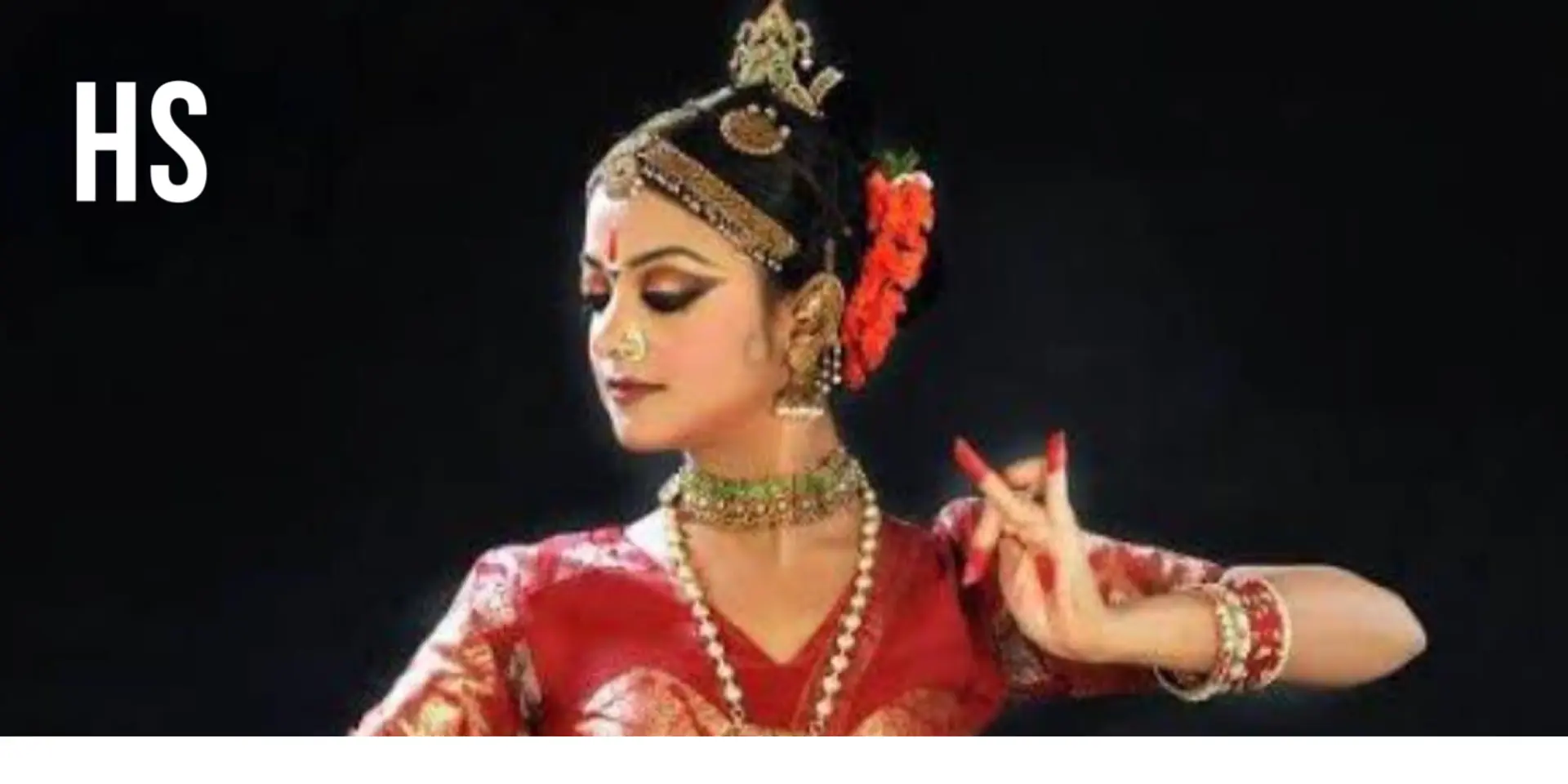

Kuchipudi dancer Arunima Kumar has stepped into all kinds of classrooms: Tihar Jail, an elderly care home, a London rehearsal studio with 11-year-olds, and a Parkinson’s centre. Over the years, she has learnt that the purpose of dance is not mastery but meeting — a place where hierarchy, tradition and difference dissolve, and everyone moves towards one goal: fun.
Over three decades, the award-winning dancer, teacher and choreographer has made the centuries-old dance form both global and refreshingly human — and therein lies her gift, say her students.
“When you’re performing on a dance floor, and you’re lost in the music, you look across the space and see a stranger lost in it too. And at that moment, you know you’re not all that different. That’s what dance for me is about,” says Kumar.
Kumar is among the few classical dancers to explore this sense of universality within a form so deeply bound by lineage, language and ritual. In a world where Indian classical arts are often seen as elite or exclusionary, her practice of Kuchipudi has been built on a shared human instinct — much like breath or laughter, she says. Kumar doesn’t go about declaring her radical stance in big words; instead, she gets right down to it, inviting bodies that don’t fit the traditional mould to find their own rhythm within it.
This determination has been her anchor, whether she’s performing before the late Queen Elizabeth II at Westminster Abbey or leading workshops for Parkinson’s patients. “I don’t dance to impress,” she says. “I dance to express, and to help others do the same at a human level.”
This philosophy has taken her to over 50 countries and brought Kuchipudi to audiences and dancers who might never have encountered it otherwise. Her company has performed more than 3,000 times, and she has trained students aged four to seventy-five across the UK, India and Poland. This month, she brings fifteen of her young students from London to New Delhi for a unique cultural exchange at the India Habitat Centre alongside their Indian counterparts. “For most of them, this is their first time in India,” says Kumar. “I see this as building cultural bridges — helping them see tradition not as something absolute and scrutinising, but something they can inhabit fluidly.”
Learning and unlearning
As with most children learning Indian classical arts, Kumar’s initiation into dance was less a choice than her mother’s instinct. “I didn’t decide to learn — my mother did,” she says. Her mother, a theatre artist, enrolled six-year-old Kumar in Padma Bhushan Swapna Sundari’s class after being mesmerised by her performance. The training was intimate and immersive — Kumar often spent her days at her guru’s home, dressing up, watching rehearsals, absorbing the realities of a dancer’s life.
It was this early exposure, she says, that planted the seed for how she would later teach. And yet, her own journey straddled multiple worlds. She studied economics and finance, performed at the London School of Economics, and eventually moved to the UK after marriage. There, a chance encounter with an Italian student who wanted to learn Kuchipudi led her to teaching — and to an unexpected revelation. “I realised dance wasn’t just performance. It was science, story, spirituality,” she says. “And it could be a form of healing.”
The shift came most dramatically during her collaboration with French choreographer Jérôme Bel for Gala at London’s Sadler’s Wells. The production featured a constellation of bodies and stories — dancers who were wheelchair users, cancer survivors, and ribbon skaters. “We were all given the same tasks — from pirouettes to somersaults,” Kumar recalls. “I was brilliant at some, ridiculous at others. It broke my ego.”
For a dancer trained in precision — the perfect mudra, the perfect balance — the experience was liberating. “You go on stage ready to fail, and you’re fine with it. That’s when I stopped dancing to prove anything.” Watching a wheelchair dancer execute a “somersault” with astonishing grace, she says, shattered her assumptions about ability and perfection. “It changed me as a person. From that moment, I knew I wanted to take dance everywhere — prisons, hospitals, care homes. Why should art belong only to a select few?”
Reclaiming the human in the classical
That conviction led to her most groundbreaking work — bringing Kuchipudi to Tihar Jail. Initially, only three women turned up. “They thought classical dance was boring — something you’d see on Doordarshan and switch channels,” she says. So Kumar began with a conversation. She explained the namaskar — how it draws energy from the universe, how touching the ground honours the space that holds you. The women began to move, stamping, hitting the floor, releasing anger through rhythm. “Their trauma found form through movement. It was somatic, almost,” she says.
The workshops grew, and soon, twenty women were performing Char Bwari, a piece about freedom and captivity. Eventually, the inmates received permission to perform outside the prison — a historic moment. “One woman told me, ‘The outside world was my prison. Here, I am free,’” Kumar recalls. That experience became Bandini, a dance work questioning who truly lives in captivity.
The same dancer who once entered Tihar’s corridors barefoot has also performed before the late Queen Elizabeth II at Westminster Abbey, for dignitaries at 10 Downing Street, and for audiences at Buckingham Palace and the European Parliament. “Whether it’s a prison or a palace,” she says, “dance reminds me how human we all are.”
Even as she works to make dance inclusive, Kumar continues to confront the hierarchies embedded within classical art. “I was once told I couldn’t go on stage because I wasn’t a Tamilian Brahmin,” she says. “But when I take Kuchipudi to a prison, no one asks my caste or language. They just dance — and really, what else is art about if not this?”
Kumar’s own students — British, Indian, Polish, Italian — often come to her with little cultural reference. “Some ask if Shiva is going to a Halloween party because of his snakes and blue skin,” she laughs. “But they learn to find relevance. That’s how you keep the form alive — not by guarding it, but by letting it breathe.”
To her, tradition isn’t a fixed structure but a living dialogue. “You don’t break away from tradition unless it clouds your thought,” she says. “If you look at it deeply, it’s already contemporary — it’s about transformation, balance, creation.”
Towards a global stage
At the upcoming Delhi performance, Kumar’s students — many of whom began learning at four — will train with Indian gurus, visit heritage sites, and perform with live musicians. Some are on scholarships, others are part of her bursary programme. “I want them to see that art is not just performance — it’s a way of being in the world,” she says.
For Kumar, who has danced at Downing Street and Westminster Abbey, the stage has always been a place of communion, not hierarchy. “Dance was never meant to be complicated,” she says. “It began as celebration — a harvest, a ritual, a way to connect. We’ve just forgotten that.”
Edited by Jyoti Narayan