



How Kulsum Shadab Wahab is giving acid attack survivors a second chance at life
Ara Lumiere, a fashion brand founded by Kulsum Shadab Wahab and supported by Hothur Foundation, supports acid attack survivors by providing them opportunities for economic independence and personal empowerment. It launched Phoenix Circle, a movement to help these survivors at Milan Fashion Week.

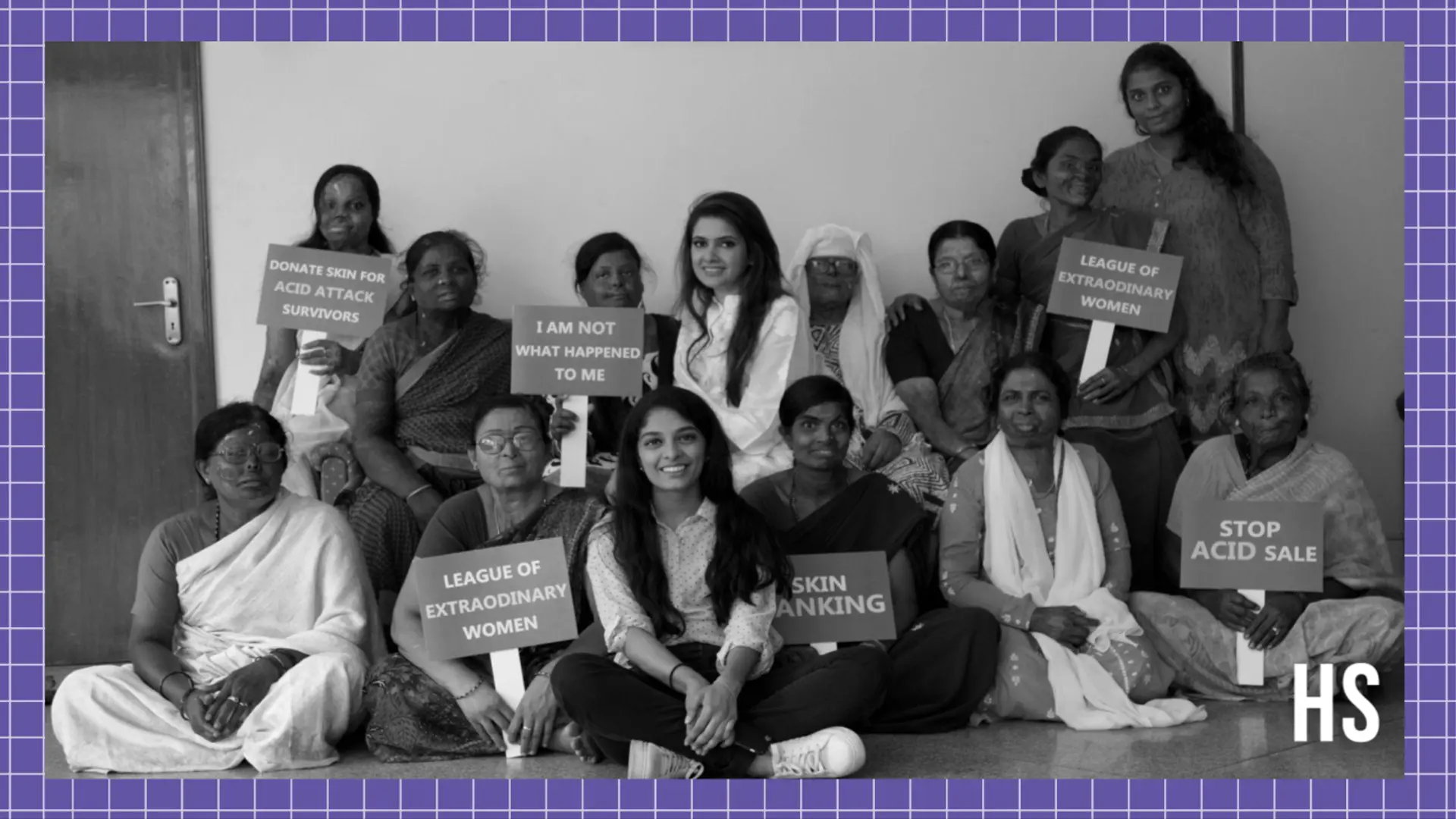

In 2009, in the corridors of Bengaluru's St John’s Hospital, while organising an art therapy session for disabled children, Kulsum Shadab Wahab came across a woman whose face told a story of horrific violence. She was an acid attack survivor, a term unfamiliar to Wahab at the time.
“I was so naive that I didn’t know what an acid attack was. I asked the nurse, ‘What is that? How does it happen?’ We are so privileged that it happens in our own backyard and we have no idea of what’s going on,” Wahab recounts to HerStory.
That encounter in the hospital ignited a movement that has now reached the runways of Milan Fashion Week, empowered over 123 survivors across India, and created a global community of allies fighting for justice and dignity for acid attack survivors.
Wahab’s husband had started the Hothur Foundation in the early 90s, focusing on education, medical aid, and infrastructure. After joining the Foundation, Wahab carved her own path, launching ‘Colors of Hope’ centres across India that uses art as a medium to empower children with disabilities and those from underprivileged backgrounds
While visiting hospitals, supporting surgeries, and being present in moments of vulnerability, Wahab met with the first survivor. The woman was so badly burned that she refused to meet anyone, convinced that nobody would help.
"She told me that there are many more survivors like that," Wahab recalls. That revelation was just the beginning of a lifelong mission.
Initially, Wahab started off by offering them financial support because the women didn’t have any means to live or sustain their families. But she soon realised that the money was taken by the women’s alcoholic husbands, and they were left with nothing.
She needed a different strategy.
"I realised there was a lack of self-worth. I needed to give them a platform where they understand and do things for themselves and in the process feel worthy,” she says.
Where fashion meets resilience
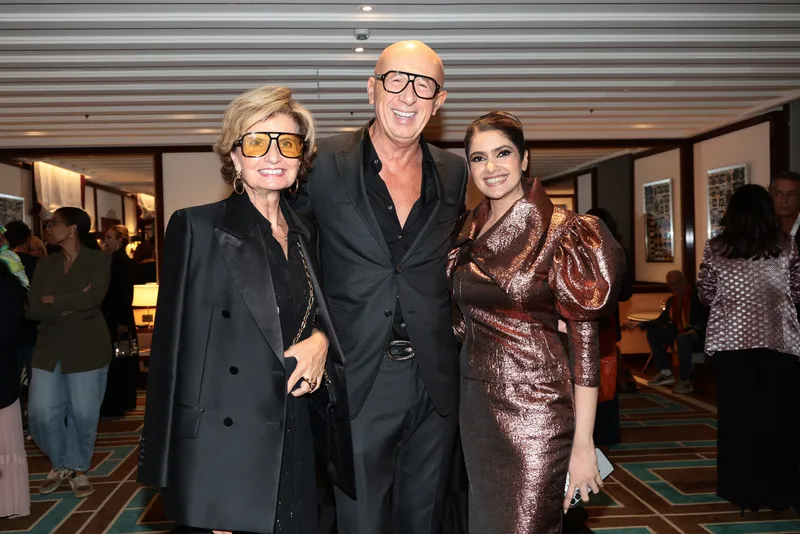
Sabina Belli, Marco Bizzarri and Kulsum Shadab Wahab
With a small group of five women, Wahab started small workshops to understand their skills. Some were good at bangle making, and others at basket weaving. But it was during work with a leprosy colony, making bags for employment, that she noticed several survivors excelled at stitching.
Once, Wahab left her headgear on a table with some scrap fabric. The women replicated it. An Italian visitor spotted it, and soon, she had an invitation to Camera Moda (for Milan Fashion Week) to showcase her first collection in 2019.
"I never had a plan. God conspired all of this,” she reflects.
In 2019, Ara Lumiere was born, a fashion brand where each collection tells a story, crafted by hands that have known terrible pain but refuse to be defined by it.
Its recent collection, "Rewoven Resilience," took heritage sarees that had survived over a hundred years and transformed them into stunning blazers. The collection sold out at Milan Fashion Week.
Wahab also launched Ara Pret this year, an affordable luxury brand, that makes the movement accessible to everyone. "I want every woman to feel that they can be a part of Ara Lumiere, a part of the movement, a part of humanity,” she says.
Last month, at Milan Fashion Week, Wahab unveiled the Phoenix Circle at an evening that brought together icons of the fashion industry like Angela Missoni (President of Missoni), Marco Bizzarri (Italian entrepreneur and former CEO of Gucci), major fashion house CEOs, and others to witness a powerful film about survival and resilience.
"Everyone said it was the most beautiful moment of Fashion Week because you are highlighting reality," she says.
Sabina Belli, CEO of Pomellato (a brand known for championing women's rights), spoke at the event. So did other industry leaders whose voices matter in Milan's fashion elite.
"Despite going through all this, they have come out so brave and so strong. It shows how victory over violence prevails over everything else,” she adds.
The stories of survival and transformation
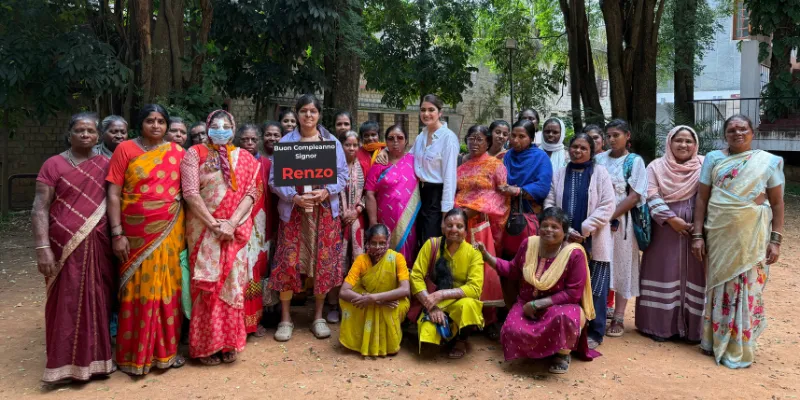
Kulsum (in white blouse) with the survivors
Today, 123 survivors work with Ara Lumiere across India. Some embroider, and others handle buttons or cutting. Many have melted hands, fingers without bones, yet they find ways to contribute. For those not allowed to leave their homes, Wahab brings machines to them.
"We have also started a block printing unit. We find different ways to empower them and make them active with whatever they are good at," she says.
The journey of survivors is often long and filled with pain, and one incident is more devastating than the other.
Wahab speaks of a woman whose entire face was burnt and one of her eyes gone completely.
“We were helping with the reconstructive surgeries and she spoke to us about her dream of becoming a beautician and a model.
“After her surgeries were done, we made her walk the ramp for a show in Mumbai. She is also a beautician now. In between she wanted to give up because it was very painful. But today, she runs a salon and we are supporting her,” she explains.
Another woman was attacked with acid twice by the same man, and yet another was locked up inside a room naked by her husband and in-laws for five days before throwing acid on her.
Through the Hothur Foundation, Wahab takes care of the survivors through a comprehensive, 360-degree approach. They focus on every aspect of recovery—her health, surgeries, and even the education of her children.
The team works to uncover the root causes of such violence, finding why it happens and what drives these men to commit it. Often, they find financial instability at the core, so they address those economic challenges as well, easing a major part of the burden.
Throughout the surgical process, they ensure that every survivor receives holistic care and the support needed to rebuild her life. It also emphasises on therapy because for survivors, the trauma is both of the body and the mind.
Beyond this, Wahab has also begun advocating for skin banking to aid in the recovery and rehabilitation of acid attack survivors.
According to National Crime Records Bureau’s (NCRB) Crime in India 2023 data published last month, the country recorded 207 cases of acid attacks in 2023 with West Bengal topping the list at 57 cases. The NCRB data also highlights delays in the judicial process. Of the 735 acid attack cases involving women that were up for trial in 2023, 649 were pending from previous years, while 86 were newly sent to trial during the year.
What’s heart-breaking is that the women rarely ever get justice. Some of them are forced to live with their perpetrators.
"The survivor who was attacked twice by the same man? She still lives with him, and is threatened that she'll lose her children if she leaves. The woman burned in front of her village? She died, and no one was held accountable,” Wahab says.
"By the time they go to courts and fight this, they don't have it in them. Will they go to the courts or go for the surgeries? Where is the money? There's no money to survive,” she adds.
Despite the challenges, Wahab is determined to continue her mission. Today, Ara Lumiere pieces are available on the brand's website, and at MODES, Milan.
Wahab wants the Phoenix Circle to grow as a movement and take it to London, the US, and “every place possible”.
"I don't want to put my energy anywhere else. I just want to build this bigger and stronger. I don't believe it's just my thing. I want more women to join the cause and call it their own. It's for every woman to fight for this,” she says.
Edited by Megha Reddy