



How rural women in Rajasthan turned a water crisis into a movement for empowerment
Trained as Sujal Sahelis, over 850 women across 18 villages in Rajasthan’s Alwar district are driving change in water management, farm productivity, hygiene, and sustainable livelihoods.

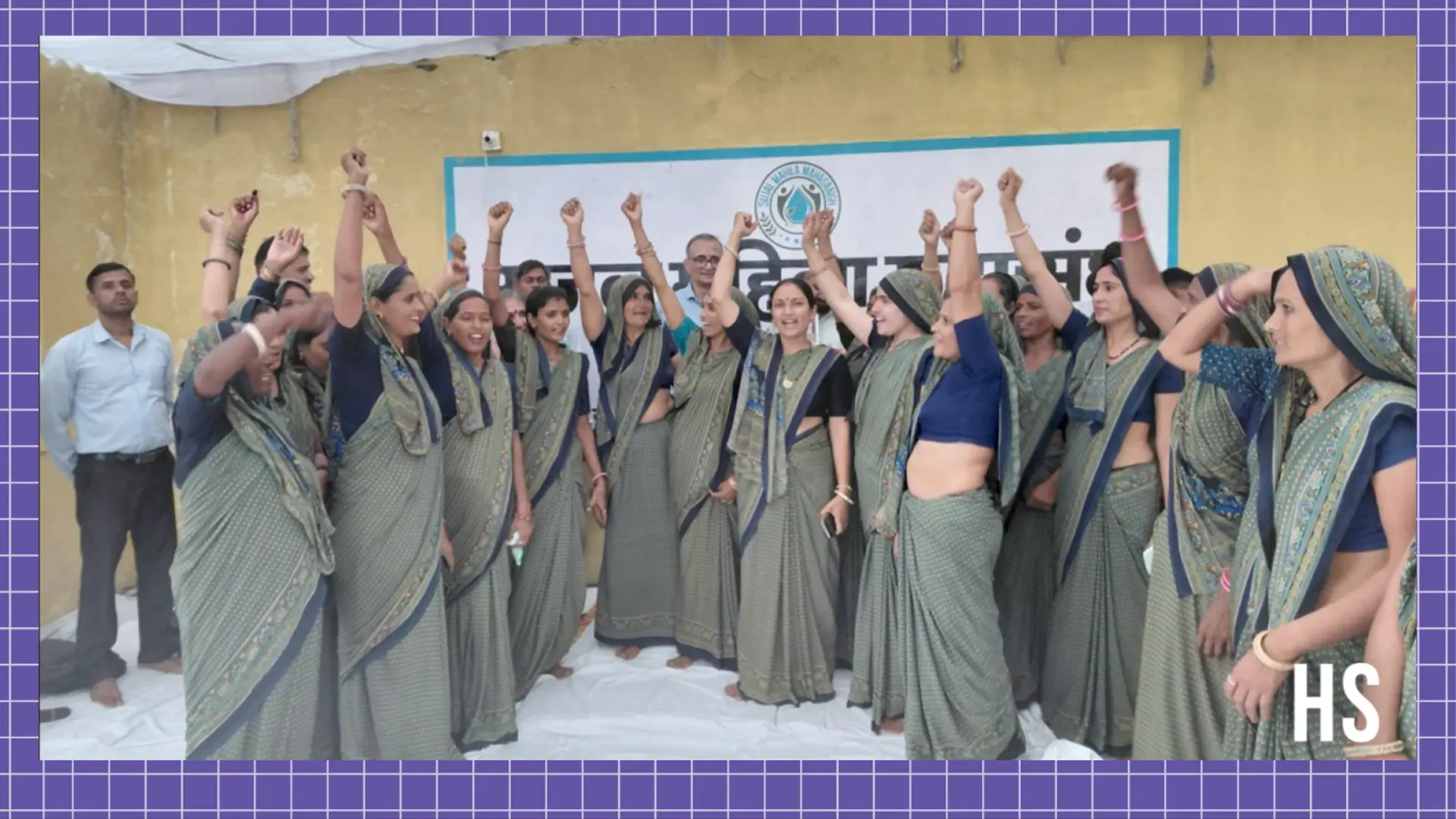

At the monthly meeting of the Sujal Saheli Maha Sangh in Kherli Saiyad village in Rajasthan’s Alwar district, a group of women, all dressed in similar printed sarees, break into song. The song talks of dreams, hope, and new beginnings.
The optimism of the Sujal Sahelis is infectious, as theirs is a story of transformation and triumph over diverse challenges. Hailing from one of India’s harshest water-stressed regions, these women once lived through the daily burden of walking miles for water, apart from bearing the weight of patriarchy, and access to livelihoods.
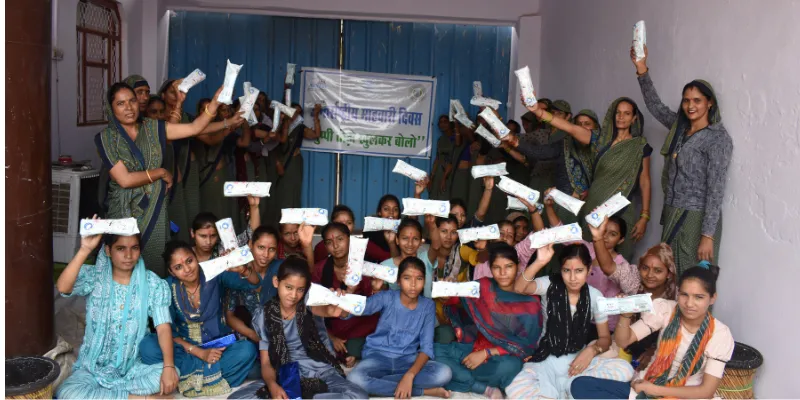
Sujal Sahelis organise a session on menstrual health
In 2018, the Hinduja Foundation, the philanthropic arm of the Hinduja Group launched its flagship Jal Jeevan initiative to address the country’s water crisis through conservation, rejuvenation, and community-led governance.
As part of this, the Sujal Saheli initiative was launched in Alwar, Rajasthan to empower women as leaders in water management, health, and livelihoods. In 2023, this gave rise to the Sujal Mahila Maha Sangh that has united over 850 women across 18 villages into a sustainable federation.
Women leading change
Thirty-five-year-old Rekha got married when she was seven years old and had only studied until Class 7 when duties at home took over. With an alcoholic for a husband, there were fights at home every day. Life passed by in despair until a few years ago, when Rekha heard of the Sujal Mahila Sangh and how it was giving a voice to women.
“I learnt that I could fulfil my dreams here. I organise training sessions on clean water. I offer advice on self-growth. My life is an example of this. I have studied further and completed my 12th grade and wish to study more. Now, I have become confident to face people and speak up,” she says.
Jyoti is among the first five who joined as a Sujal Saheli. She tells her story of transformation.
“We used to face a severe water shortage, and walked 3-4 kilometres just to get water. We had access only twice a day, and at the time, had to drop everything and rush to fetch water, even if the children demanded my attention at home. Sometimes, when we reached the place, there would be no electricity, and we had to wait for hours,” she recollects.
There would also be constant fights over the water at home, and the monsoon season was worse with the electricity cut off often, sometimes for more than three days. She had to face all this and then head to the fields for a day of gruelling physical labour.
Now things have improved. Rainwater is stored in a specially constructed tank at home and the family has water to drink and bathe. Jyoti also teaches the women and girls in the village the importance of cleanliness and conserving water.
“The work on access to drinking water involved restoring a traditional practice of building a tanka, for rainwater collected by rooftop rainwater harvesting. It rains about 400-500 mm, and this year it’s been much more. We said we would help build a tanka of 12,000-15,000 litres in the woman’s name by offering a subsidy of Rs 35,000 once it was built. She could then repay the loan. But we also realised we needed volunteers to talk about it and water conservation, and that’s how the Sujal Saheli Maha Sangha was formed,” explains Niyati Sareen, Project Director, Hinduja Foundation.
For Sangeeta, marriage at 15 years meant a battle to continue her education. Fighting against odds, she passed her 12th board exams, but was not allowed to study further. Her parents told her to work in the fields and look after the family.
“One day, I was leaving the village, and I saw a woman leading a rally. I asked my husband what she was doing and he replied that it was none of my business. But I was convinced that she was doing good. I stood there and listened to her speaking about water issues, and how they were encouraging women to pursue higher education,” she recollects.
Despite her husband’s objections, Sangeeta decided to attend a women’s meeting and became a member of the Sujal Mahila Maha Sangh. Determined to learn, she travelled three hours to Govardhan to take part in an accounting course, leaving her toddler in the care of her mother-in-law, who agreed only after much persuasion from other members of the Sangh. Today, Sangeetha is adept at using the computer, can speak English and works as an accountant for the Maha Sangh.
“I want other women to move forward and have dreams like I did,” Sangeeta says.
Challenges and opportunities
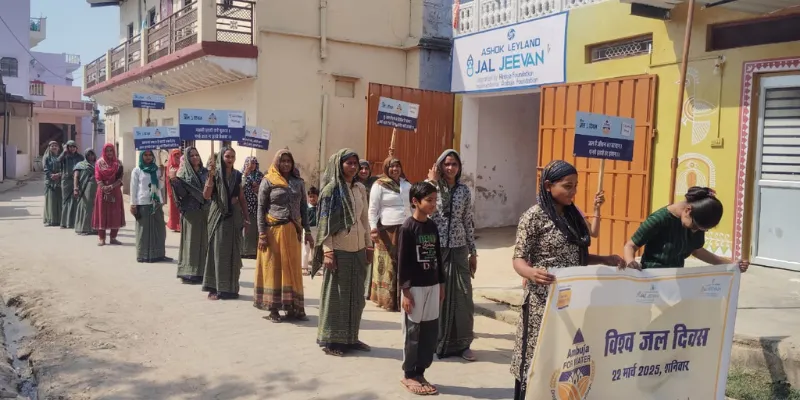
Sujal Sahelis hold a rally on World Water Day
Sumanlata and her family from Nithari have benefited from the tanka scheme. As a Sujal Saheli talks to other women across different villages about menstrual health and hygiene, water conservation and government schemes.
“Earlier women used to think that their lives were limited to farming, household chores, and children. We were all married early and our dreams were limited by our families. Now we have become aware of the opportunities available to us, are self-reliant and are confident in our ability to grow,” says Sumanlata.
Sumanlata was part of the group that visited Mumbai for the first time. It was her first time in an aeroplane and shares with awe how she clicked pictures in front of Shah Rukh Khan’s home.
“My family is happy. I am the first woman of our generation who has gone so far and even got to sit in a plane. I want to take this organisation forward, and support other women,” she adds.
One of the major challenges was to convince the women that there was a life beyond what they were doing, says Sareen.
“As they grow, there are other challenges. Their husbands were making snide remarks about how they were not earning anything. So, we have started with skilling and entrepreneurship,” she says.
Under the Mera Business Plan, 30 women have been trained in sewing and food processing. The Business Karenge Hero Banege project has created two active enterprise groups in food processing and stitching.
Far-reaching impact
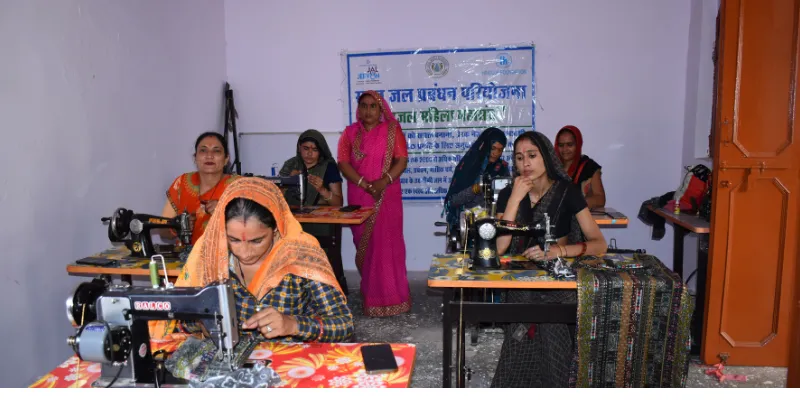
Women learning sewing so that they can start their own businesses
The Ambuja Foundation is an NGO partner in the Sujal Saheli initiative. When Vishnu Vaishnav, who works on-ground first arrived in the region, he found women living in deep social and cultural constraints, silent behind their ghunghats, hesitant to speak, and burdened by the daily struggle for water.
“I saw women waiting for hours just to fetch a pot of water, some with children in their arms. I realised that if anyone could solve this crisis, it was the women themselves, they are the best engineers of their homes,” he recalls.
Through patient dialogue and consistent engagement, door-to-door meetings, village committee sessions, rallies, and street plays, the team built trust and inspired participation. Gradually, more women joined and they were trained in water testing, accounting, and leadership.
“Earlier, we didn’t even step out without permission. Today, we run meetings, test water, manage accounts, and solve problems together,” says Sangeeta, the group’s president.
The impact is far-reaching: the Jal Jeevan Initiative now has 850+ Sujal Sahelis across 18 villages in Ajmer alone, and has expanded to Karauli, Hindaun, and Phalodi and a total of 1,350+ Sujal Sahelis in Rajasthan.
Over 600 individual RRWHS (Rainwater Harvesting System) and 43 community RRWHS have been built, 260+ hectares of land are under micro-irrigation. More than 2,511 training sessions on hygiene, leadership and governance have been conducted so far, more than 100 women have been enrolled in government schemes and 1,401 families have benefited.
There’s a quiet change happening in their households and villages.
“A lot of the abuse that was happening has stopped. They are ensuring their girls stay in school. They are availing of government schemes. Now that they are a formidable group, men are scared of them. They go and talk to the Panchayat sabha directly,” says Sareen.
Backed by the Hinduja Group companies, the Sujal Saheli initiative has not only addressed water and livelihood challenges but also sparked a quiet social revolution, encouraging women to study again, have bank accounts, access to livelihoods, lead discussions, and question long-held gender norms.
The Sujal Mahila Maha Sangh now stands as a powerful example of what women can achieve when they find their voice and collective strength.
(The story has been updated to change the year of Jal Jeevan Mission's inception.)
Edited by Affirunisa Kankudti