



Care has to be gender intelligent: Preetha Reddy on transforming women’s health in India
Preetha Reddy, Executive Vice Chairperson of Apollo Hospitals Group, discusses why women's health needs focus and precision and how India can lead the global conversation on gender-specific healthcare.

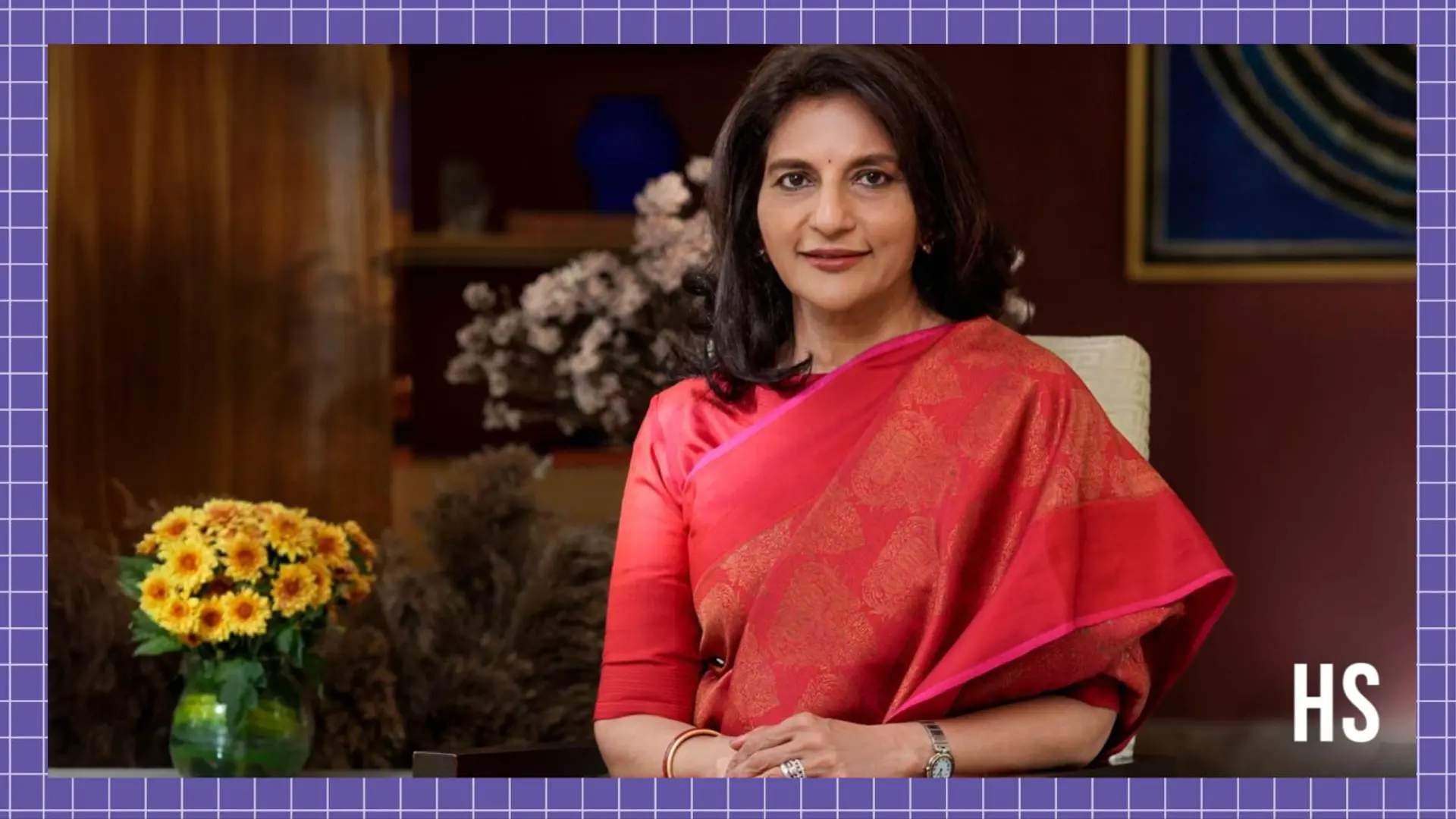

Healthcare has to be gender specific, focused and intelligent, says Preetha Reddy, Executive Vice Chairperson of Apollo Hospitals Group, one of the largest healthcare chains in the country.
“It’s really not one-size-fits-all,” Reddy says, in an interview to HerStory.
India—which is at the forefront of healthcare globally—has to show this aspect to the rest of the world, she adds.
Since its inception in 1983, the Apollo group has touched the lives of over 120 million individuals from 140 countries. Leading from the front, Reddy has been instrumental in making high-quality healthcare accessible to millions across India and beyond.
Working closely with over 9,000 clinicians, she has undertaken initiatives to enhance clinical outcomes, strengthen quality processes, and ensure the highest standards of patient satisfaction.
Beyond Apollo, Reddy plays a key role in shaping healthcare policy in India. She was the founding member of the Quality Council of India and contributed to the creation of the NABH (National Accreditation Board for Hospitals & Healthcare Providers) accreditation system.
Committed to social impact, Reddy also drives initiatives such as SACHi (Save a Child’s Heart Initiative), which provides life-saving treatment to underprivileged children.
Women’s healthcare must go beyond gynaecology and reproduction, and focus on fitness, overall health, and preventive healthcare, Reddy remarks in the interview.
She also talks about the gaps in addressing women’s health, the role of private-public collaborations, and striking a balance between technology and compassion in healthcare.
Edited excerpts:
HerStory (HS): How has women’s health evolved in India, especially when it comes to awareness and care delivery?
Preetha Reddy (PR): Healthcare in India has come a long way; we are really one of the best globally with the highest and most complicated surgeries and extensive work in cancer.
When we focus on women’s health per se, there’s a lovely term my team has been talking about, and we are committed to it: care has to be 'gender intelligent'. That's the difference we have to start thinking about.
India has been in the forefront of doing so many things so well for our population, that this aspect would be something we should teach the rest of the world. Recently, the Prime Minister, on his birthday, took up women's empowerment as a government initiative.
Science and communication should focus on the way women’s health has to be handled. It has to be precise, gender specific, focused and intelligent. It's really not one-size-fits-all.
When we talk about women’s health and women’s diseases, it’s always about gynaecology. I don’t think we are a reproductive machine. That is why the focus on gender matters. We have to exercise, we have to keep fit, we want to stay young as much as the male gender has a right to stay young or fit.
As Indian women, we want to be like soap opera stars and say, “I’m doing this for my family.” Why can’t that woman become responsible and say, “Listen, I’m holding all this together, I need to look after my health.” Not looking after yourself is silly and irresponsible.
HS: Gaps still exist in how India addresses women's health. How can we address these?
PR: A lot depends on communication because everything is really out there. For rural women or those from the economically lower sections of society, most government hospitals offer a decent standard of care.
In my father’s village near Chittoor in Andhra Pradesh, we started this programme called Total Health. We set up this centre to address nutrition for pregnant women, lactating mothers, elders, and geriatric care. We realised that the incidence of alcoholism, tobacco chewing, smoking, lung cancer and head and neck cancer was very high. We screened women for breast and uterine cancer and those who were diagnosed early were given timely treatment.
But the best thing that happened is that the women were actually taught skills. They do the back-end work for a lot of requirements in the hospital, whether it’s making bedsheets, stitching uniforms and scrubs. And because they take money home, they can actually tell the men, “Listen, these are the lifestyle changes you have to make.”
Post these efforts, data shows alcoholism has come down. Beedi smoking, tobacco chewing have come down. The women are eating better, and exercising because we run yoga classes. The level of health and happiness has gotten better.
HS: That's why collaborations between the private healthcare sector and governments to provide holistic care is important…
PR: The private sector always helps with training and skilling. Every year we skill about 40,000 healthcare workers in different parts of India. The government is engaging with the private sector much better than earlier. The partnerships are working—for tuberculosis, cancer screening, and diabetes.
But we still have a lot of work to do with regard to obesity and mental health. So it’s all about awareness and telling people that this is a better lifestyle, a better way to do things. We are working with them on whichever front we can.
HS: Tells us about Athenaa, your cancer centre for women.
PR: In September, Apollo started Athenaa, a cancer centre for women in Delhi. It is very significant with global training and collaborations for women's cancer. We want to be able to say that if women have breast or cervical or any other cancers, they can talk to us.
For us, Apollo Athenaa is a movement in women’s health, focused on cancer care right now, but will encompass the whole of women’s health. I'm committed to spending a lot of time on this because I think it’s necessary.
HS: Breast cancer is the most common cancer in Indian women. What more can be done to raise awareness?
PR: We need to target women in perimenopause to start screening for breast cancer. Before that, self-breast exams are important. Large corporations are encouraging women to screen for breast cancer. But there are large numbers of women who don’t have the resources. I think that the government should run more screening programmes for women.
HS: Preventive care is important for every aspect of health…
PR: Apollo has the ProHealth initiative—where we talk to corporations to encourage their staff to undergo early screening.
If we talk about it and gently try to mandate it wherever possible, the outcomes will be different. At Apollo, all our staff undergo a health check, and their yearly increment will be held up unless they do so. We found people with diabetes and hypertension.
(As a result of these efforts) the men have lost weight, and the women have become more confident. So it’s happening.
Can you imagine if all the corporations which employ lakhs of people and the government agencies make this mandatory, at least that population would have started on this journey.
Give your house help a health check for festivals. We can begin with that. A lot of CSR budgets maybe should go for screening.
Just imagine, there are 1.4 billion bank accounts in the country. People have two, three, some have just one. If you take one rupee a day from those bank accounts and just put it aside for health, in whichever fashion, even if it is only for screening, you have 1.4 billion rupees. If you do that for five years, can you imagine how much the disease burden will come down? These are the things which, as the private sector or corporates, we need to think about and act upon.
HS: As technology and artificial intelligence transform the way we detect diseases and make informed healthcare decisions, it’s equally important to ensure that we don’t lose sight of empathy—the human connection that lies at the heart of healing. How do we strike the right balance between innovation and compassion in healthcare?
PR: I always say that you need high tech, there’s no going away from it, but we need the high touch, human mind, the hands, and the way we have to process data. Where we combine both is where we are amazingly successful.
AI is not a bad thing. It’s just that sometimes you should not let the intelligence of AI, which is artificial, overtake human intelligence, because we were made intelligent as a race.
HS: As a woman leader in healthcare, what lessons have you learned at the intersection of gender, leadership and care?
PR: I’ve learned that gender should never be an excuse. I honestly dislike it when people ask, “How do you manage work-life balance?”—because everyone manages it differently.
It’s not a gender-specific issue. What truly matters is our mindset. We need to take ownership of our responsibilities as individuals, not as men or women.
It’s about understanding your priorities, knowing what needs your attention at a given time. Today, your focus might be on your home or children; tomorrow, it could be on urgent matters at work.
The key is to be intelligent about prioritising. That’s what effective leadership, whether by women or anyone else, is really about: staying focused and knowing what to prioritise.
(The story has been updated to correct a change in designation.)
Edited by Swetha Kannan