



Free bus travel under Shakti scheme redefines how women navigate Bengaluru: Report
A new report by Bengaluru-based Azim Premji University finds that free bus travel for women under the Shakti Scheme has significantly transformed gendered patterns of mobility and access across the city.

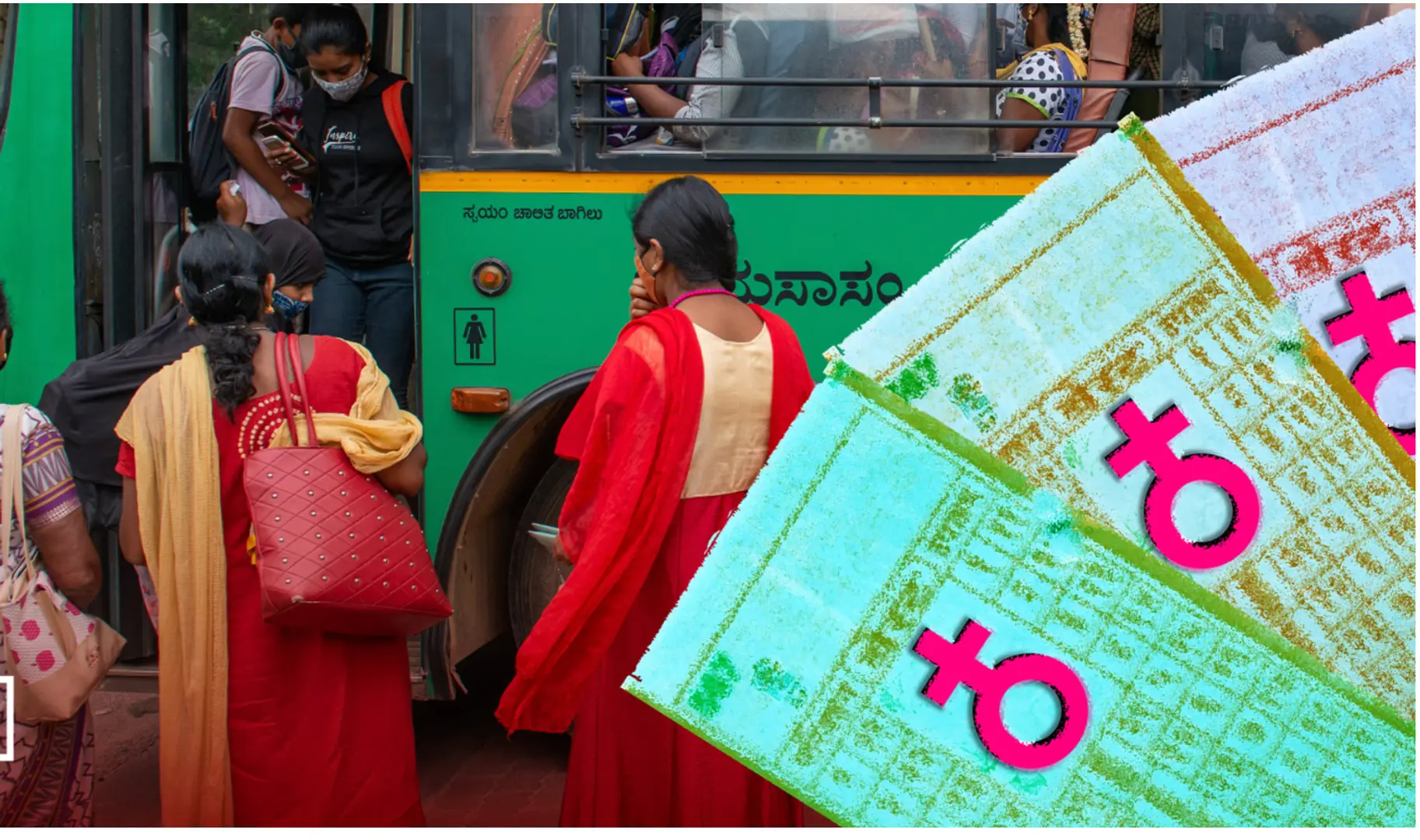

A report by Bengaluru-based Azim Premji University has revealed that free bus travel under the Shakti Scheme for women has reshaped the gendered patterns of access to the city.
Based on analysis of 2.89 crore trips made by BMTC operated buses between January 2023 and January 2025, the report titled, “Gender, Welfare, and Mobility: Impact of Shakti Scheme on BMTC Transport Transformation”, shows that women now form the majority on many of the city’s busiest routes, including its central business district.
The report has been authored by economists Tamoghna Halder and Arjun Jayadev from Azim Premji University’s Centre for the Study of the Indian Economy (CSIE), has analysed 2.89 crore trips made by BMTC operated buses between January 2023 and January 2025,
Some of the key findings of the report include:
After the scheme was launched in June 2023, women’s ridership spiked by 2.5 times and settled into a new level with women outnumbering men by 60:40 ratio on an average.
While the Shakti subsidy slightly exceeds fare revenue from non-beneficiaries, the overall gap is narrow relative to the scale of the scheme.
The highest uptake of the Shakti scheme is seen in northern, western, and central Bengaluru, while eastern peripheries and peri-urban, largely migrant neighbourhoods lag behind—likely due to weaker BMTC coverage and the exclusion of migrant women from the scheme. Metro feeder corridors have witnessed a sharp rise in women commuters. However, with the Purple Line extensions, some routes show a shift from bus to metro travel, even as many Shakti users continue to prefer buses for their zero-fare advantage.
The study did not find a significant difference in terms of the women’s ridership in the most and least SC-ST concentrated wards in Bengaluru, suggesting that access to Shakti scheme is not contingent on the caste profile of a neighbourhood.
Route-level analysis shows that affordable bus travel has widened women’s commuting zones, connecting them to areas with greater socio-economic opportunities—such as Bengaluru’s Central Business District, and improving access to jobs, education, and healthcare.
The authors stressed three key policy priorities. “There is a need to expand BMTC capacity in terms of its fleet size, frequency, and integration with metro to absorb demand and also improving last-mile connectivity to ensure universality”, said Arjun Jayadev.
Tamoghna Halder, added, “extending benefits to migrant women, who remain excluded despite being among the city’s most mobility-constrained groups, is key for fostering inclusive urban citizenship” .