


How India’s women Kho Kho World Cup champions are redefining the game
Meet Nirmala Bhati, Priyanka Ingle, and Magai Majhi, members of India’s women’s Kho Kho World Cup winning team. From humble beginnings to achieving global success, their stories reflect courage, determination, and change.

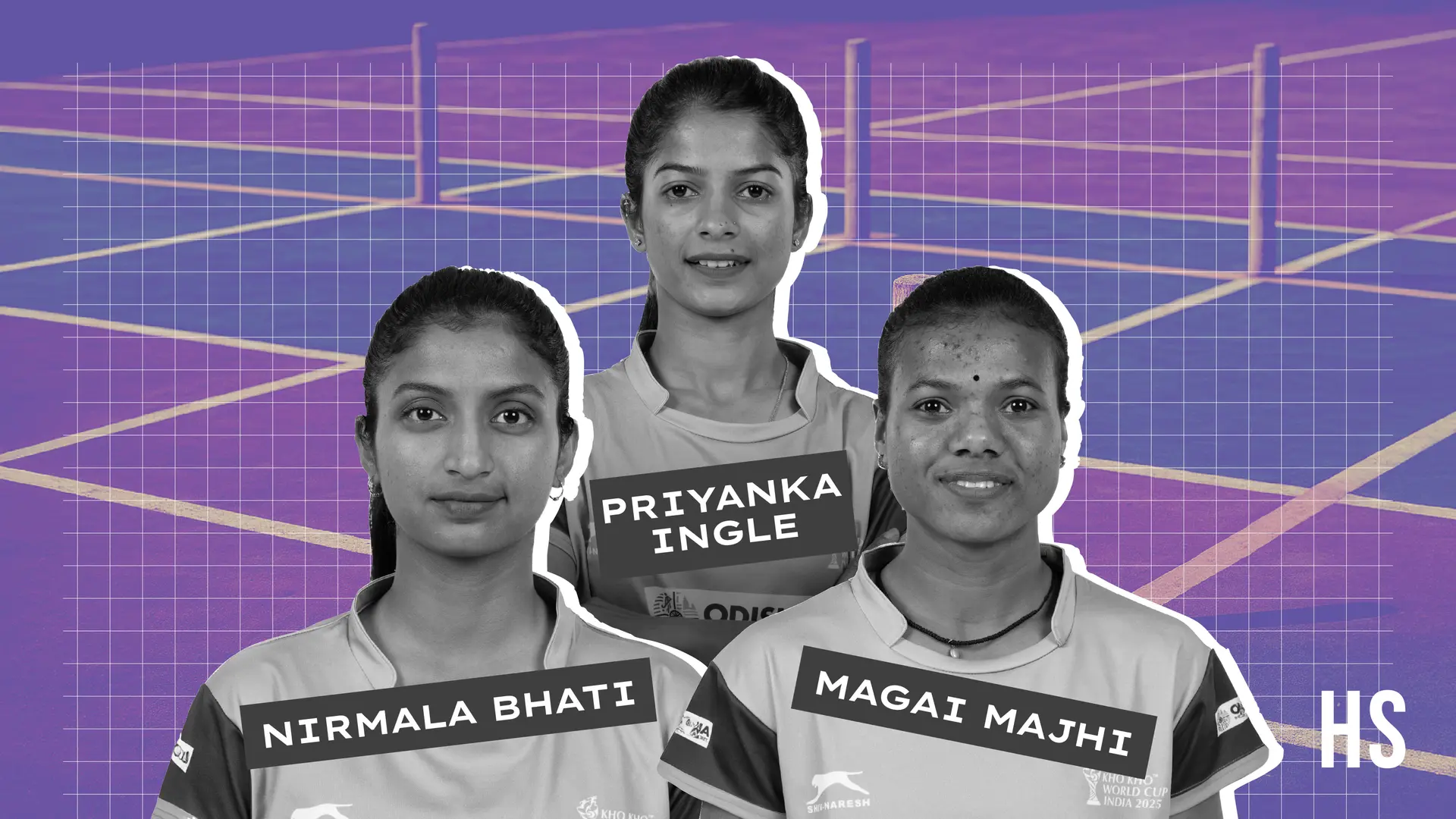

When India lifted the first-ever Women’s Kho Kho World Cup trophy in January this year, they didn’t just make sporting history, it was the fulfilment of a dream nurtured by countless women who believed in the game’s potential.
These women have defied patriarchal norms, battled gender biases, and turned a traditional sport into a symbol of empowerment and pride.
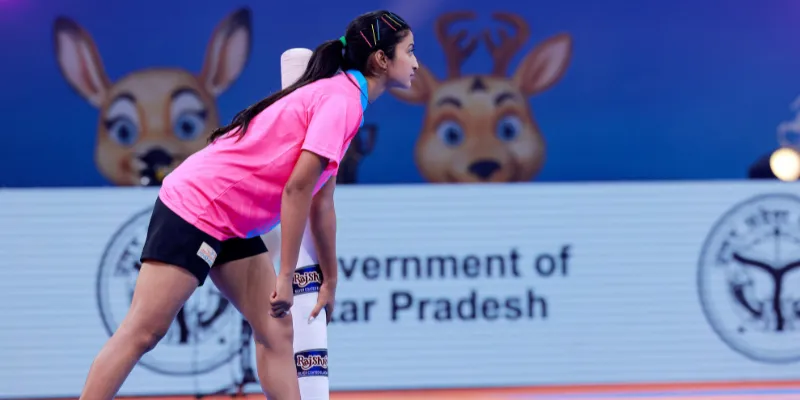
Nirmala Bhati
When Nirmala Bhati returned to Rajasthan after being crowned as the tournament’s best player, huge crowds thronged to welcome her home. The Chief Minister also called to congratulate her.
As the only woman from the state to play kho kho internationally, she represents the spirit of her sisters from other rural and tribal areas who are transforming this indigenous sport through their will and perseverance.
Born and raised in Parewadi, a small village in Rajasthan, Bhati has been playing kho kho since she was in the sixth grade. Interested in sports as a child, she ran and played kho kho and kabaddi.
“I liked kho kho because other games like cricket and football required equipment. I did not have to spend a single rupee to play kho kho. I didn’t have to buy expensive footwear,” Bhati says.
Approximately 1,600 kilometres away in Odisha’s Raigada district, Magai Majhi started playing kho-kho when she was 10 years old. Initially, she preferred athletics, but on the insistence of her coach, she chose kho kho. She was inspired by another girl who played the game on the ground she practiced on.
Priyanka Ingle, 26, who would become captain of the World Cup-winning team, discovered kho kho in her fifth grade. She came first in running during her school's annual sports day. Her coach chose her for kho kho. She's been playing for 16 years since.
Fighting for permission
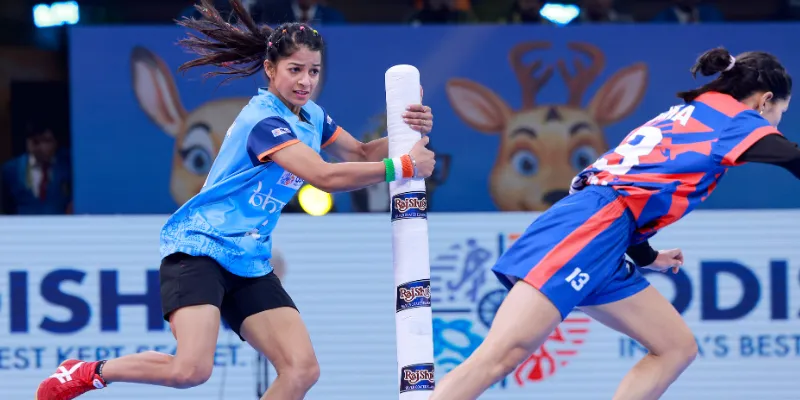
Priyanka Ingle
The women have had to face family resistance and taunts from outsiders on their way to becoming kho kho stars.
“When I started playing kho kho, people would ask my mother why she was allowing her daughter to roam around in shorts. They said I would be a bad influence on the other children,” Bhati recalls.
However, her parents’ support pulled her through. “They had 100% faith that I would do no wrong,” adds.
Magai had to lie to her mother initially.
“When my family found out that I was playing, they asked me not to. They said I had to focus on my studies. I lied to her that I had dropped the game but continued playing. When I got selected for the nationals, I told her and my coach also convinced her that I should play,” she says. Since then, she has had the unwavering support of her mother.
Ingle’s family too wanted her to concentrate on academics because she was a good student.
“My coach came home and convinced them. I played in under-14 junior nationals when I was in the eighth standard and won the best player award. Seeing my success and my determination, my family said I could continue to play. Since then, I have played in 26 national and two international tournaments,” she says.
World Cup glory

Magai Majhi
The first Kho Kho World Cup in New Delhi in January 2025 brought 23 countries together—19 women's teams and 20 men's teams.
"We never thought that there would be a women's Kho Kho World Cup. We used to watch other games like cricket and football that always had a World Cup. I used to feel sad that India's indigenous game was not getting the attention it deserves,” says Bhati.
For Ingle, captaining the team was "a good experience.”
“Our experience in 2023 in the 4th Asian Championship, where we played Nepal in the final, prepared us for the game. Our coaches told us how to play against Nepal. That's how we beat Nepal and won the Kho Kho World Cup,” she says.
At 20, Magai is the youngest of the three, and couldn't believe she would be selected. "It was my dream to play for India, and I was elated when I was chosen. I had never seen such a facility before. The ground was so good. I didn't even know what the Indian camp was like,” she says, in awe.
The welcome home matched the victory. In Maharashtra, dhol players accompanied Ingle’s team from the airport. In Rajasthan, Bhati saw the entire state unite in celebration.
The period between 2011-2017 marked a transformation for women’s kho kho in India. Bhati points out there weren’t enough opportunities for the players earlier.
“Since Sudhanshu Mittal took charge of the federation, the game has changed. Colleges offer admission to kho kho players and government departments have started offering jobs,” says Bhati.
She currently works in the Postal Department. Ingle works as a Class II sports officer with the state government. Magai hasn't completed her graduation yet, and doesn't have a job currently, but is focused on her playing career.
Training is rigorous, with kho kho demanding speed, stamina, and strength. Bhati, who fractured her leg in March, credits her quick recovery to her training.
Levelling the playing field
Around 32,000 women players are registered with the Kho Kho Federation of India (KKFI).
“The federation has made gender equality a priority. As far as Kho Kho is concerned, we place women and men on equal platforms. Teams now exist at every level—district, zonal, state. Every school, which has a boys team now also has a women’s team,” says a KKFI official.
Players now come from far-flung areas from rural and tribal backgrounds. Bhati is happy that there are more sponsorships for the players.
With a level playing field, women’s kho kho has received mainstream acceptance and is aiming for more visibility, investment, and respect.
Bhati dreams of kho kho making its way to the Olympics in the future. The team is currently preparing for the Commonwealth Championships next year.
Ingle says that kho kho has given her fame, recognition, and a career, and she plans to take it forward by teaching the sport to children.
“Today, kho kho has become a game for people around the world and it’s not inferior to any other game,” says Bhati.
Edited by Megha Reddy