



How Ladli Foundation Trust is empowering girls and transforming communities
Founded by Devendra Kumar, Delhi-based Ladli Foundation Trust focuses on women’s empowerment, girl-child education, health, hygiene, social protection, and youth rehabilitation.

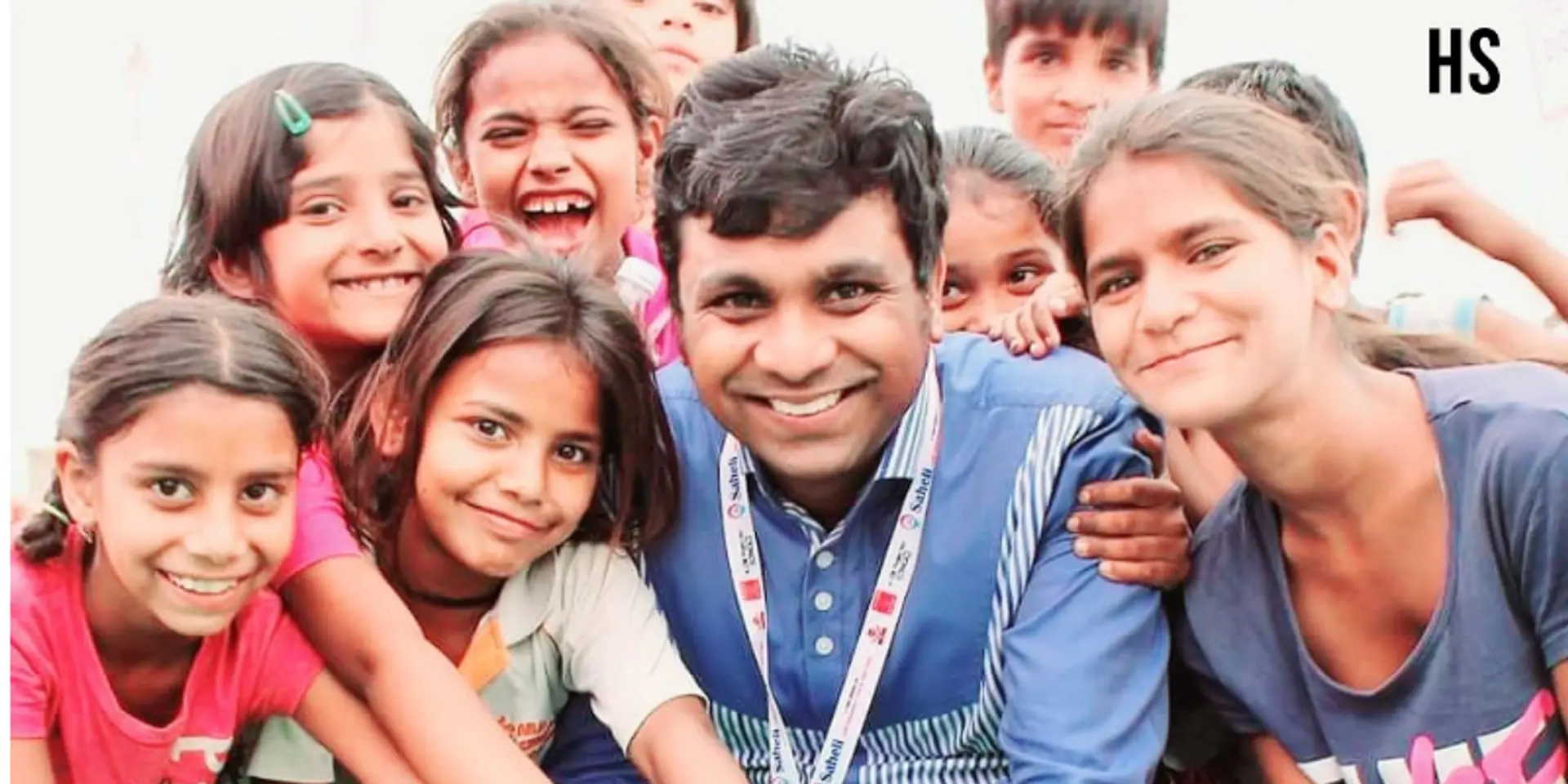

Devendra Kumar was abandoned by his parents at the age of two, while his sister was just three days old. Raised by his relatives in Dakshinpuri, a crime-prone slum in South Delhi, survival at the age of eight was a fight against circumstances for Kumar.
“Every third child in the slum was into drugs. So, my relatives started sending me out to work because if you are not engaged somewhere, you fall into the drug trap. I started selling balloons but used to be beaten by the Delhi gangs who snatched my money. After this happened two or three times, my relatives stopped sending me,” Kumar recalls.
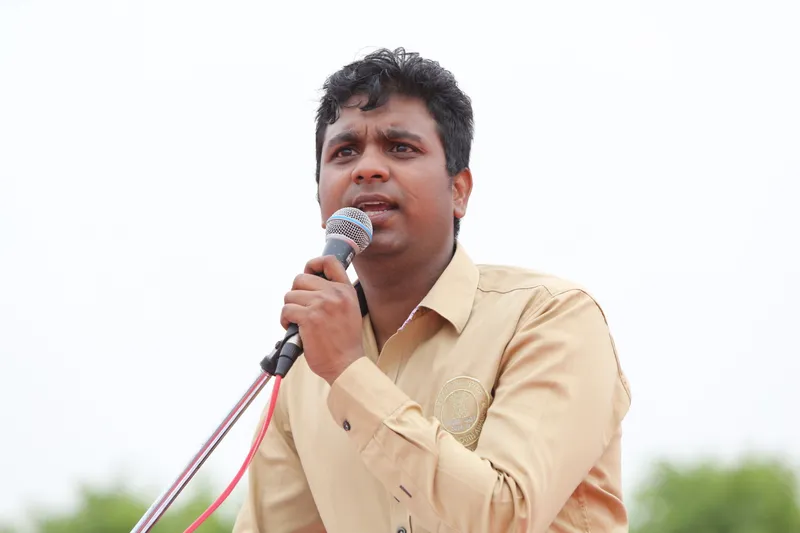
Devendra Kumar
He then started cleaning pharmacies and helping the chemists while dodging the gangs.
In this seemingly never-ending cycle of poverty and violence, the 10-year-old hit upon an unlikely idea, “What if the police could protect me?”
The start of a volunteering journey
Kumar began volunteering with the police in the hope of finding a safe place to stay. In the evenings, local police officers would gather the gang members and drug addicts and engage them in playing kabaddi and other sports to prevent crime.
“I started volunteering thinking that if I became friends with them, the beatings would stop. I had to save myself and my sister,” he says.
When the police learned that he was an orphan, they took him into their fold. He started organising the queues, arranging food for people, and gathering other boys to create a volunteer force.
Soon, he began volunteering in various capacities, first aid camps on Republic Day, in temples, and also took up security and medical duties. His dedication let him to become a commissioned officer in the Indian Red Cross Central Ambulance Wing. From then on, volunteering became a passion for the young Kumar. He also built a strong force of volunteers.
After completing his tenth standard, he couldn’t afford to continue school through the regular route, and so he took up distance learning. He also worked for minimum wage in contractual jobs.
“In 2003, during a major strike at Batra Hospital, the police reached out to me because I had a group of responsible volunteers. The owner offered me a contract to provide the resources. From an income of Rs 6,000 a month, it rose to lakhs. That’s when my journey changed from struggle to stability,” Kumar explains.
But before he became financially stable, Kumar had to protect his sister from a forced marriage. The same relatives who had taken them in now saw marriage as the only protection for an illiterate girl from the slums.
"She didn't go to school after 6th standard, they believed the biggest way to protect a girl at the social level was to get her married,” he shares.
He struggled through 2008 and 2009, working multiple jobs, saving every rupee. Finally, in 2010, with his new financial stability, he got her married into a good family where she could be safe.
Empowering young girls by making them self-reliant
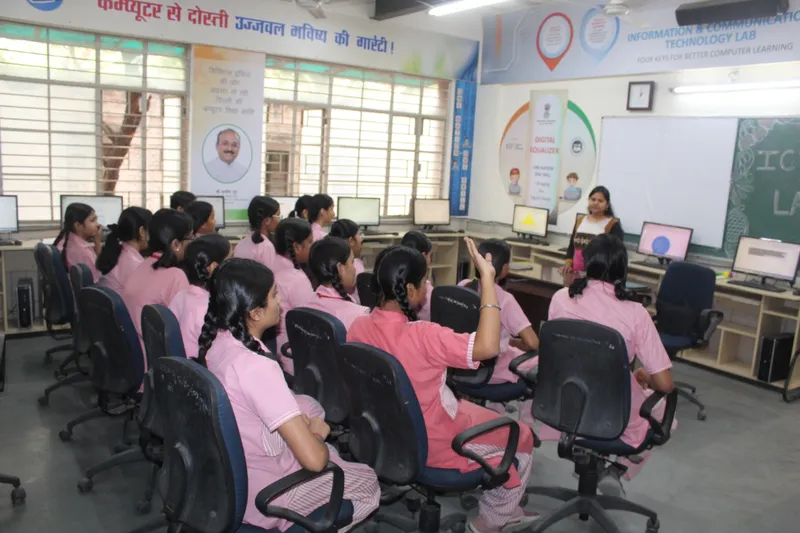
An educational session in progress
This is when Kumar realised this was not his story alone.
"The other volunteers who worked with me, because of whom I got the contract, all had the same problems,” he says.
Kumar started the Ladli Foundation Trust in 2012 to help girls who are victims of their circumstances.
The name itself, ladli, meaning “beloved daughter”, was the centre of Kumar’s vision: every girl deserves to be loved, not a burden to be married off, not a victim to be trafficked.
His first initiative, a mass wedding for 44 girls in Gurugram, was organised on a grand scale, but with one condition. "We said we will bear all the expenses of the girl's wedding, but we will check the background of the boy. Poor families don't have resources to do this. We had seen so many cases where, due to delay in marriage, families would marry girls to anyone—they never checked the boy's background,” he explains.
As the Ladli Foundation Trust grew, Kumar realised that true empowerment lay in helping girls become self-reliant. He set up a skill centre where more than 400 girls were trained in computer literacy and English proficiency, equipping them with tools to succeed in life.
But they also heard stories that would haunt anyone.
"We had cases where mothers, going to work, would lock their daughters inside. Some wouldn't allow their daughters to bathe for two months, so they would become dirty, smelly, and no one would attempt anything,” he recounts.
The skill centre also became a safe space where girls aged 16-17 could be protected, educated, skilled, and eventually supported through marriage, a continuous engagement that transformed vulnerability into agency. Soon, the organisation started healthcare and medical checkups, working on holistic development of girls.
Health and education through Kanya Poojan
In 2013, Kumar received the National Youth Award from the government. By 2018, he began receiving support from corporates and PSUs such as ONGC, Bharat Petroleum, and others. In 2019, before travelling to the United Nations in New York, Kumar launched the Sustainable Kanya Poojan.
During Navratri, many Hindu families perform Kanya Poojan, a ritual where young girls are invited into their homes for blessings, offered food, given gifts, and then sent away until the ceremony is repeated the following year.
Kumar thought of a sustainable idea focused on this religious practice. The solution was radical: 3,500 families, 3,500 girls. Each family would “adopt” a girl (socially, not legally) for nine years. That girl would visit the family for Kanya Poojan twice a year, and in return the family would commit to supporting her for nine years. It includes educational and health support and monthly check-ins to track progress.
The Ladli Foundation today works across multiple sectors such as health, nutrition, WASH (water, sanitation, and hygiene), education, social protection, livelihood, and prevention of drugs and crimes. In partnership with the Delhi Government, the organisation has donated laboratories to 100 schools, and helped establish smart classrooms in 200 schools.
Some of its initiatives include: The Navineekaran Project, which rehabilitates school sanitation systems, provides hygiene kits, and conducts awareness programmes for adolescent girls.
Pathanshala and E-Pathanshala provide digital classrooms, devices, and mentorship to underprivileged girls, to ensure continuity in education.
Shagun Mass Wedding Initiative organises weddings for the economically marginalised women, preventing exploitation and dowry-related abuse.
Project JOSH works with young men in slum areas to curb substance abuse and gender-based violence, creating a safer environment for women.
To date, the foundation has impacted over 2.9 million lives across 14 states through women-centered health, education, and protection programmes.
In Bijapur, Karnataka, 13-year-old Reshma carried a quiet pain with her. Her government school did not have a single functional toilet for girls. Every month, she and other classmates chose to stay at home during their periods.
“There were no toilets, so I used to go back home. Sometimes I sat the whole day without drinking water because I didn’t want to use the dirty bathroom. My stomach would hurt, but I stayed quiet,” Reshma says.
Everything changed when the Ladli Foundation Trust launched its WASH (Water, Sanitation, and Hygiene) initiative. When Reshma returned to school after the installation of AI-enabled Smart Toilets, it felt like someone had finally listened.
“The new toilets are clean, automatic, and smell good. There is even a pad vending machine and a place to dispose of them. For the first time, we feel our school cares for us,” she adds.
In addition, Ladli Foundation also organised hygiene workshops, parent meetings, and awareness sessions to break myths around menstruation. It has trained teachers to promote cleanliness and responsible use of the facilities, making the change sustainable and community-led.
Kumar is currently not reliant on CSR funding and depends on individual contributions to run the various initiatives.
His vision for Ladli is expansive: “I want to make Ladli a global voice for marginalised women not just in India but in all developing nations,” he says.
Edited by Megha Reddy