



Meet the women building India’s climate resilience from the ground up
Across cities and sectors, women-founded climate and circular-economy enterprises are making India’s sustainability movement more inclusive and practical.

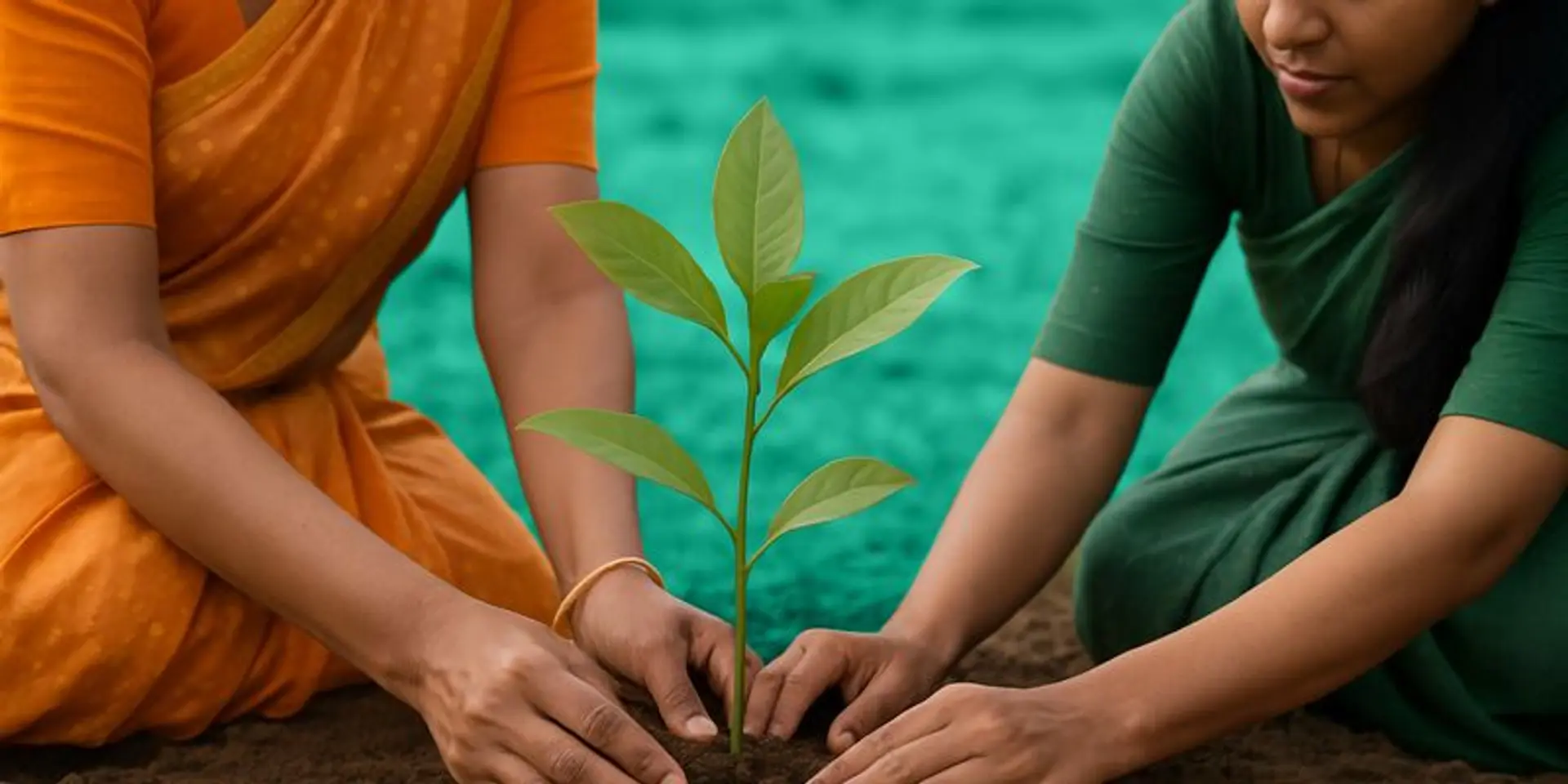

As the climate crisis deepens, women-led organisations are proving themselves to be critical responders.
In India’s climate-tech and circular economy space, women founders are rewriting the playbook, combining mission, impact, and gender inclusivity. The organisations they lead span app-based behaviour change, circular plastics, insect-biotech feed, zero-waste lifestyle, and grassroots climate resilience.
Prachi Shevgaonkar, Cool The Globe, Pune
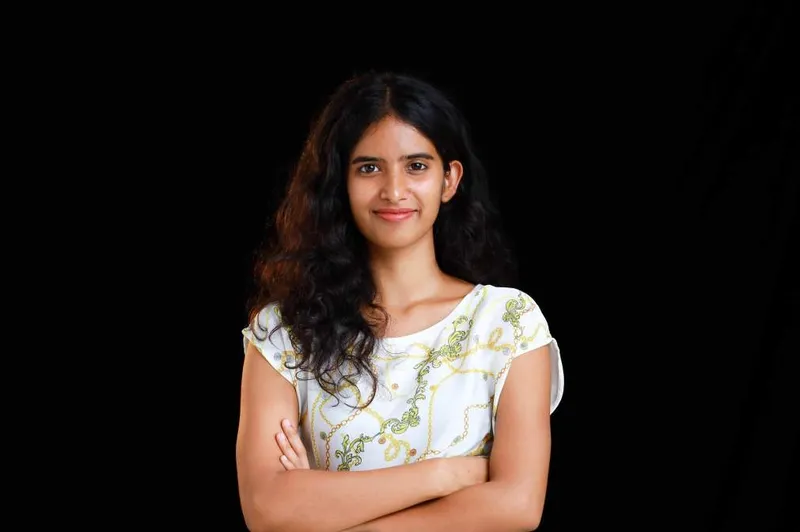
Prachi Shevgaonkar, a media graduate from the Symbiosis Centre for Mass Communication, Pune, began her climate journey while still in college, working with waste-picker communities and farmers before launching Cool The Globe in 2021.
Cool The Globe is a mobile app that helps individuals and organisations translate intent into measurable climate action—letting users set emission-reduction targets, log daily habits across energy, food, transport, and waste, and track avoided emissions in real time.
By merging technology with culture change and gamifying sustainability through leader boards and community challenges, Shevgaonkar has turned climate action into an everyday habit for thousands.
She also serves as a climate change advisor to Tata Power and is the youngest Indian on the advisory board of the Climate Leadership Coalition, a Finland-based global network advancing climate solutions. Cool The Globe has been featured in Google India’s #BolneSeSabHoga campaign, and Shevgaonkar was named Young Changemaker of the Year (2022) and recognised at COP 27.
Sonal Shukla, econscious, Delhi-NCR
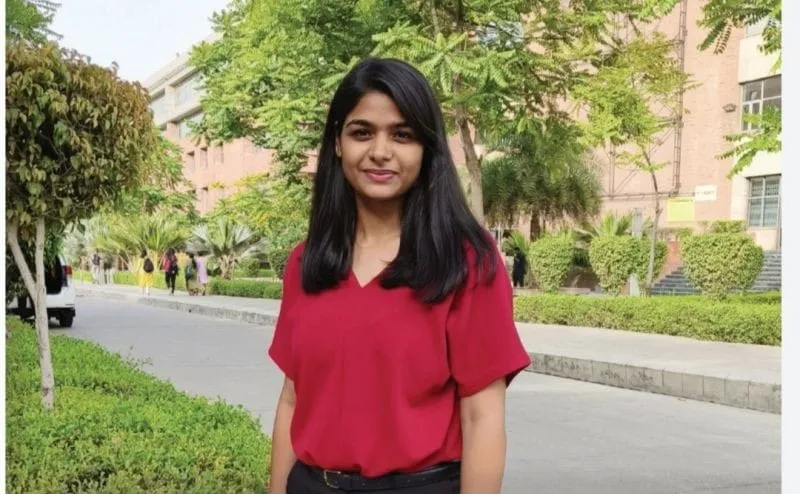
Sonal Shukla started her career in VLSI electronics engineering before switching paths to sustainability. In 2020, Shukla, who holds an M.Tech from NIT Kurukshetra, cofounded econscious with Vaibhav Verma, an initiative that merges engineering precision with circular-economy design.
The Delhi-based startup tackles plastic waste through door-to-door collection and recycling into home décor, corporate gifts, and public-utility products—keeping plastic in the loop instead of the landfill. According to the company, it has recycled over 6,50,000 kg of plastic and saved 750,000+ kg CO₂e. Its mission is to make sustainability a practical, everyday collaboration between consumers and corporate firms.
Recognised among India’s 75 Womenpreneurs by the Atal Innovation Mission (2022), Shukla brings a mix of technical expertise and environmental purpose to her work. By merging design, impact, and practicality, she is building a bridge between India’s waste problem and its creative economy, showing that climate responsibility can also be a lifestyle.
Richa Malik, The Happy Turtle, New Delhi
Richa Malik, an MBA graduate from XLRI, spent nearly a decade in marketing before going on a career detour. While working as a scuba-diving instructor in Indonesia, she witnessed the damage plastic pollution caused to marine life, an experience that led her to start The Happy Turtle in October 2017.
The New Delhi-based social enterprise promotes a plastic-free, circular lifestyle through reusable everyday products such as bamboo toothbrushes and steel straws. Malik also helps corporate firms reduce their plastic footprint.
Under Malik’s leadership, The Happy Turtle works with women’s self-help groups and rural artisans to produce handmade reusable goods, creating livelihoods alongside its circular-economy goals. It has grown through bootstrapped funding, was featured in academic case studies, and now runs workshops to help corporate women’s teams adopt zero-waste practices.
Trupti Jain, Naireeta Services, Gujarat
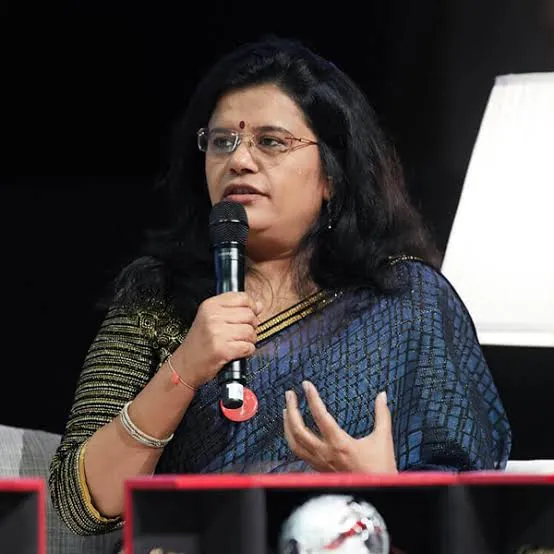
Trupti Jain, a trained environmental engineer from Gujarat, has spent over two decades designing water and climate-resilience solutions for smallholder farmers. Growing up in flood- and drought-prone western India, she saw firsthand how erratic rainfall pushed women to the brink of poverty. Their lived experiences shaped her belief that water security and gender equity are inseparable.
In 2011, Jain co-founded Naireeta Services with an all-women team to develop Bhungroo, a patented rainwater-harvesting and storage system that filters and injects excess monsoon water underground for reuse during dry spells. Each Bhungroo unit supports 15–20 farming families, turning wasted rainwater into year-round irrigation and livelihoods.
Today, the enterprise operates across Gujarat, Odisha, West Bengal and Bangladesh, empowering over 18,000 women farmers to become "water managers” in their communities.
Jain's model was recognised with the UNFCCC Momentum for Change Award (2015) and the UNDP Equator Prize (2019).
Ajaita Shah, Frontier Markets, Jaipur
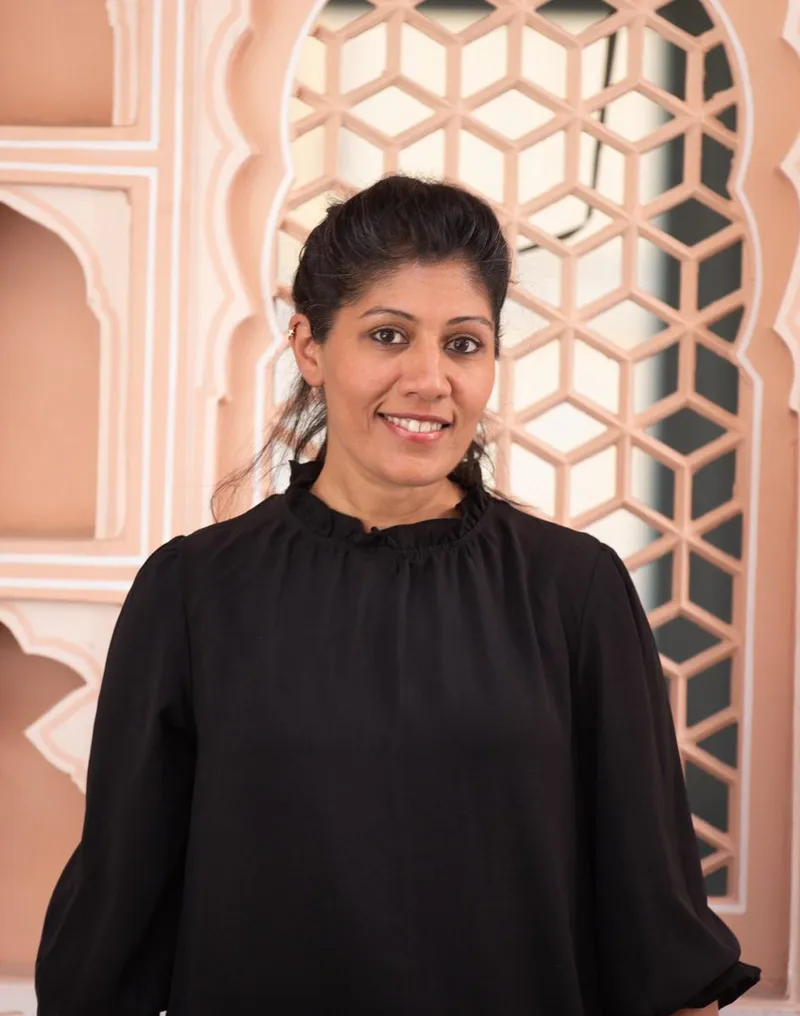
Ajaita Shah is the founder of Frontier Markets, a rural social-commerce platform. She also serves as the CEO and president of Frontier Innovations Foundation, a non-profit foundation that supports last-mile access solutions, especially women-led business models focused on gender, climate and financial inclusion.
With over 20 years’ experience in microfinance, rural distribution and gender-inclusive business models across India, Shah launched Frontier Markets in 2011 to bridge last-mile gaps in rural markets.
The Jaipur-based social-tech commerce enterprise empowers women entrepreneurs, called ‘Saral Jeevan Sahelis’, to deliver clean energy, digital services, agri solutions, and household appliances to over 7,00,000 rural households.
Frontier Markets operates in 2,000 villages, mobilising thousands of women entrepreneurs. It aims to reach 100 million households by 2030. It works with over 18,000 women entrepreneurs through the She-Leads Bharat: Udyam initiative, launched with Mastercard in 2025. The initiative aims to bring clean energy, agri and digital solutions to more than 1 lakh rural households across India.
Shah was named the Forbes 30 Under 30 Social Entrepreneur and the Schwab Social Entrepreneur of the Year. She has also spoken at UN forums and climate-tech summits globally.
Edited by Swetha Kannan