



Udaiti is reimagining women’s work as the missing link in India’s growth story
For Pooja Sharma Goyal, women’s work isn’t invisible—it’s undervalued. Through Udaiti, she is taking on India’s most persistent economic blind spot: making gender equity measurable, actionable, and central to growth.

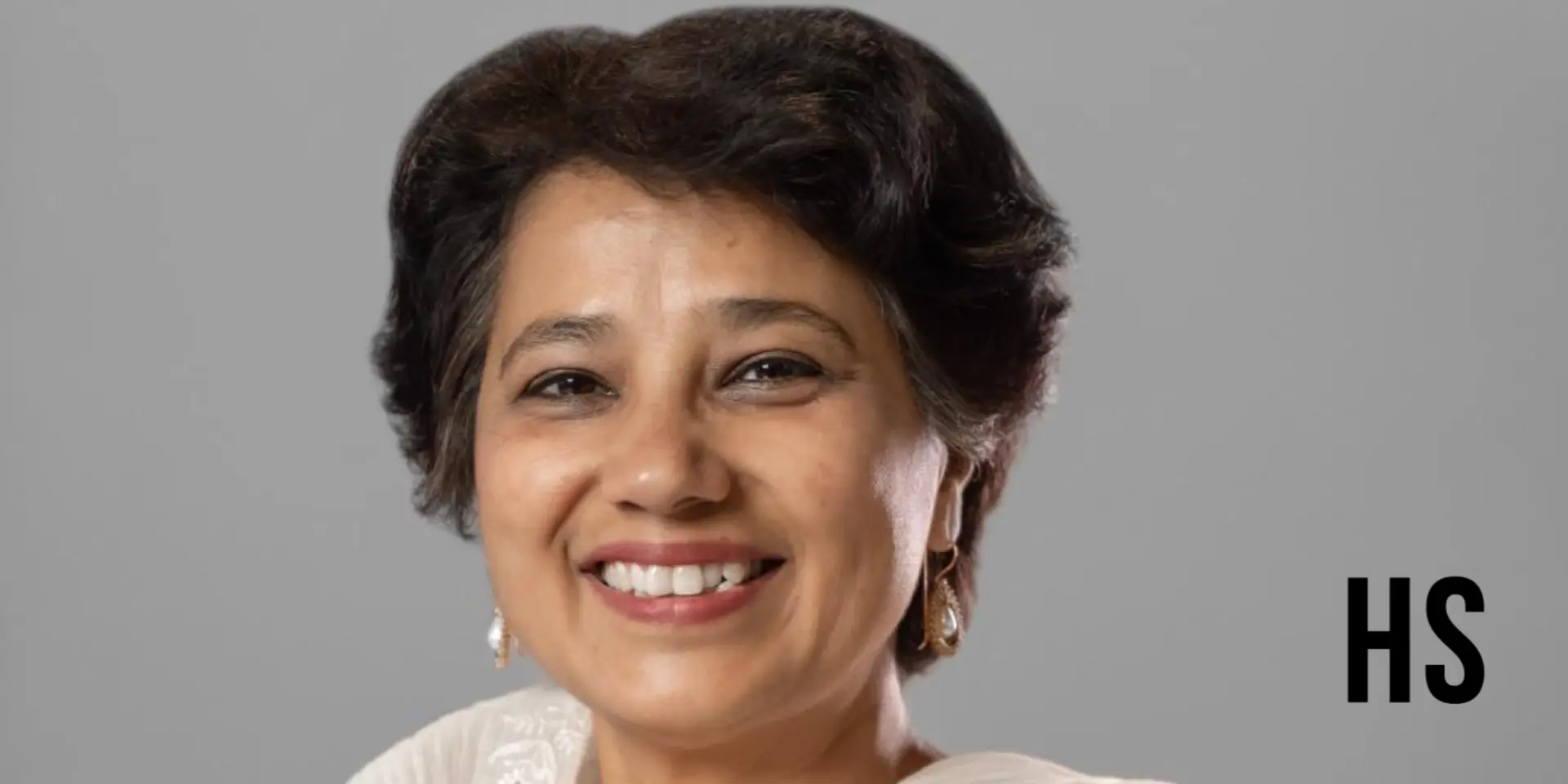

As India moves towards its Viksit Bharat@2047 vision of becoming a $30-trillion economy, Pooja Sharma Goyal says her goal is focused and sharp: “not just to get more women to work, but to make their work visible, valuable and secure.”
Goyal leads Udaiti, a data-driven initiative attempting to make gender equity measurable, actionable and economically indispensable. To do this, the Delhi-based organisation uses two flagship tools—the Close the Gender Gap (CGG) Data Hub, their data platform that tracks gender equity across more than 1,200 NSE-listed companies; and the Women’s Economic Empowerment (WEE) Index, a state-level diagnostic and action tool that helps governments assess how their policies, infrastructure, and labour ecosystems are enabling or constraining women’s economic participation.
And in doing so, Goyal says they are trying to turn India’s gender gap from a social issue into a growth question.
While women now account for over half of the country’s graduates, only 18% participate in the formal workforce, according to Udaiti’s CGG Data Hub, which analyses Business Responsibility and Sustainability Report (BRSR) filings from NSE-listed companies. The rest, says Goyal, are locked out not by lack of capability but by design flaws in policy, infrastructure and corporate imagination.
“Economic empowerment isn’t just a moral imperative. If, as a nation, we want optimal talent allocation, we have to dismantle the barriers that stop women from working formally,” she says.
Not just participation, but power
Udaiti’s mission, says Goyal, is to shift the quality of women’s work. “We would like to move the formal workforce share from 18 per cent to 30 per cent by 2030, and to help women entrepreneurs become job creators rather than self-employed survivors.”
Of India’s 49 million women entrepreneurs, barely 600,000 employ even one additional person, says Goyal, calling this “the most under-discussed indicator of unrealised potential.”
Udaiti works with the Ministry of Labour and Employment on this very agenda, grounded in three key pillars: bridging the mismatch of supply and demand in jobs, building infrastructure that can help bridge these gaps, and scaling women’s entrepreneurship.
On the first, Goyal says corporates complain of “no talent pipeline”—a scenario where they can’t find enough women with the skills or experience to fill roles. But she adds that while this may be partly true, it is often self-fulfilling. “Companies say, ‘We want to hire women but can’t find them.’ The problem is not the pipeline — it’s their ability to access it. Hiring systems are gender-biased, and lack of flexible roles and rigid evaluation systems narrow that talent pool.”
Unpacking sectoral disparities
Udaiti’s data shows how uneven India’s gender map is. Across 23 NSE-listed sectors, more than half record under 12% women’s representation. Healthcare leads at 44%, followed by textiles and consumer services at 34% each, and IT and banking in the mid-20s. At the bottom: pharmaceuticals stand at 11%, while construction and chemicals are as low as 2–3%.
Goyal points to pharma as an important paradox. “We’re the world’s third-largest producer of drugs, yet only 11% of the workforce in this sector is women — and that hasn’t changed in nearly a decade.”
Within that, however, companies like Biocon Biologics and Dr Reddy’s Laboratories have outperformed the sector’s average, reaching 29% and 24% respectively. Udaiti is studying them closely to identify what works — from leadership commitment to infrastructure tweaks.
“It’s rarely just a company problem,” she says. “It’s an ecosystem problem. Growth enables diversity, and the commitment of the leadership sustains it. When gender goals are part of the performance scorecard, progress will follow; otherwise it’s just tokenism,” she adds.
The CGG Data Hub, now in its fourth year, uses BRSR filings from companies to reveal such contrasts. “Visibility in itself creates accountability,” says Goyal. “When companies see how they compare with others, it prompts them to reflect and act.”
The infrastructure gap
If data diagnoses inequality, infrastructure entrenches it. Goyal points out how housing, transport and childcare form the invisible architecture of women’s work.
“When we speak to parents in rural UP or Bihar, they’re willing to let their daughters work in cities. So, the problem isn’t intent, it’s safety. There’s nowhere safe or affordable for them to stay.”
Udaiti is working with governments to operationalise schemes like Sakhi Nivas, which funds women’s hostels in urban clusters, and to develop public-private models where the state provides land or viability-gap funding (a form of financial support provided by the government to make projects that are socially or economically important but not financially viable on their own more attractive to private investors), while private players run facilities.
Tamil Nadu’s State Industries Promotion Corporation of Tamil Nadu Limited (Sipcot) women’s hostels, built through a three-way partnership between state, centre and private operators, are an example she swears by. “Ninety per cent of employees in those factories are women because the ecosystem works for them,” she says.
Mobility and childcare are the other missing legs. Without these, says Goyal, “we are designing the economy around men’s lives and calling it gender-neutral.”
Re-entry, not just entry
Goyal emphasises that India’s workforce crisis is less about entry and more about re-entry. “Women don’t stop having ambition; they in fact vanish from being discovered.”
Udaiti is exploring returnship programmes with corporates to rebuild that “lost pipeline” of experienced professionals. Within the entrepreneurship pillar, the organisation distinguishes between women who lack asfpiration, those who aspire but lack skills, and those who possess both but lack markets or capital.
“It’s not one problem to solve,” she says. “Capital without skills or market linkages doesn’t change anything. There needs to be a convergence.”
In Uttar Pradesh, for instance, Udaiti has mapped artisans who produce export-ready craft but lack marketing networks. In such clusters, it partners with state agencies to connect skill development with market access and finance.
Navigating corporate defensiveness
Transparency can make companies uneasy. Goyal admits to initial resistance when data exposes disparities. “The first response is often: pipeline problem. The second: leaky bucket — we hire at 50% from campuses but women drop off mid-career.”
Rather than contesting these, Goyal ensures that Udaiti uses them as entry points. “We work only with organisations where the leadership is genuinely committed towards our mission. Otherwise, it’s like pushing water uphill,” she says.
Dr Reddy’s Laboratories, for instance, collaborated with Udaiti to improve conditions for women in sales roles. “When we interviewed women medical representatives, they spoke of headaches because their helmets didn’t fit. Now the company supplies ergonomically sized helmets and wellness kits,” she says.
Udaiti’s analysis also helped identify Tier II and III towns with zero women leaders, prompting targeted hiring drives. In another case, an insurance firm used Udaiti’s assessment to establish its first Diversity, Equity and Inclusion Council.
Such interventions, says Goyal, place firms along a spectrum: “gender-aware–gender-tactical – gender-intentional – gender-transformative.”
Policy, data and the long game
Udaiti’s partnerships with state governments in Uttar Pradesh, Odisha and Maharashtra are helping build gender-disaggregated indices to monitor schemes and employment patterns. At the national level, the goal is to extend mandatory gender data disclosure beyond NSE-listed firms to the top 10,000 companies, without creating red tape.
“We’ve seen how a well-intentioned policy like the Maternity Benefit Act backfired by pushing employers to avoid hiring women,” points out Goyal. “Regulation must balance accountability with incentive if it really has to work.”
With Udaiti, Goyal is now working towards an ambitious goal: to attain a formal workforce participation rate of 30% by 2030, an entrepreneurial ecosystem where women are employers as well as earners, and making gender data as integral to business performance as financial metrics.
As Goyal puts it, “The gender gap is no longer invisible—it’s measurable. Now the challenge is to make it unmissable.”