


There's no reason for you to doubt that you cannot learn, Resham Sahi of A.P. Moller-Maersk tells women
In our Women in Tech series, Resham Sahi of A.P. Moller-Maersk talks of her long and diverse journey in tech, her current role, and navigating gender dynamics.

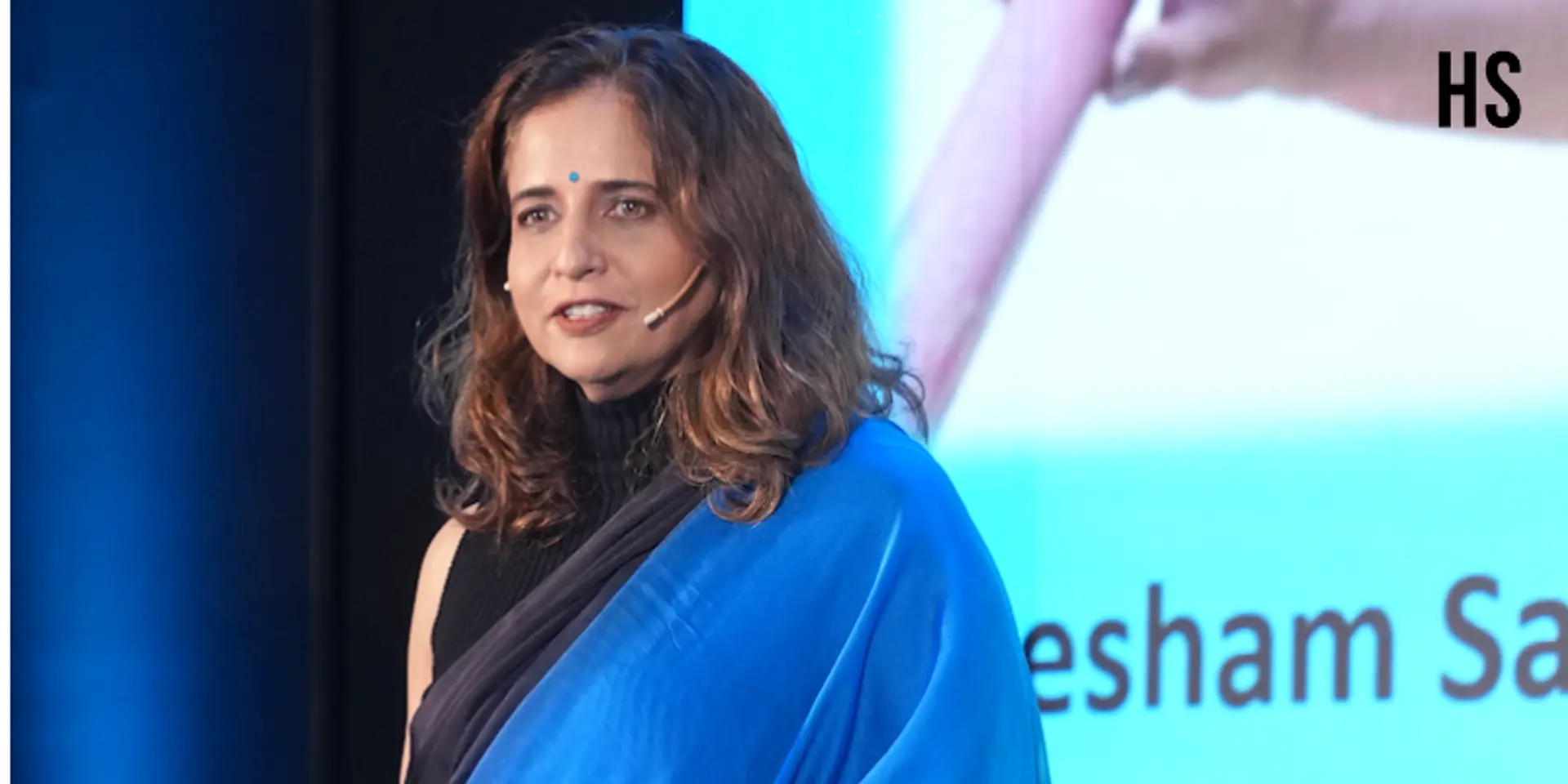

When Resham Sahi got married and moved to California in 1998, she had a bachelor’s degree in business administration, a love for art, and absolutely no computer education.
Born and raised in Indore, Sahi carried with her a lesson from her mother—if you decide to do something, there will be naysayers; it’s up to you to find a way to get there.
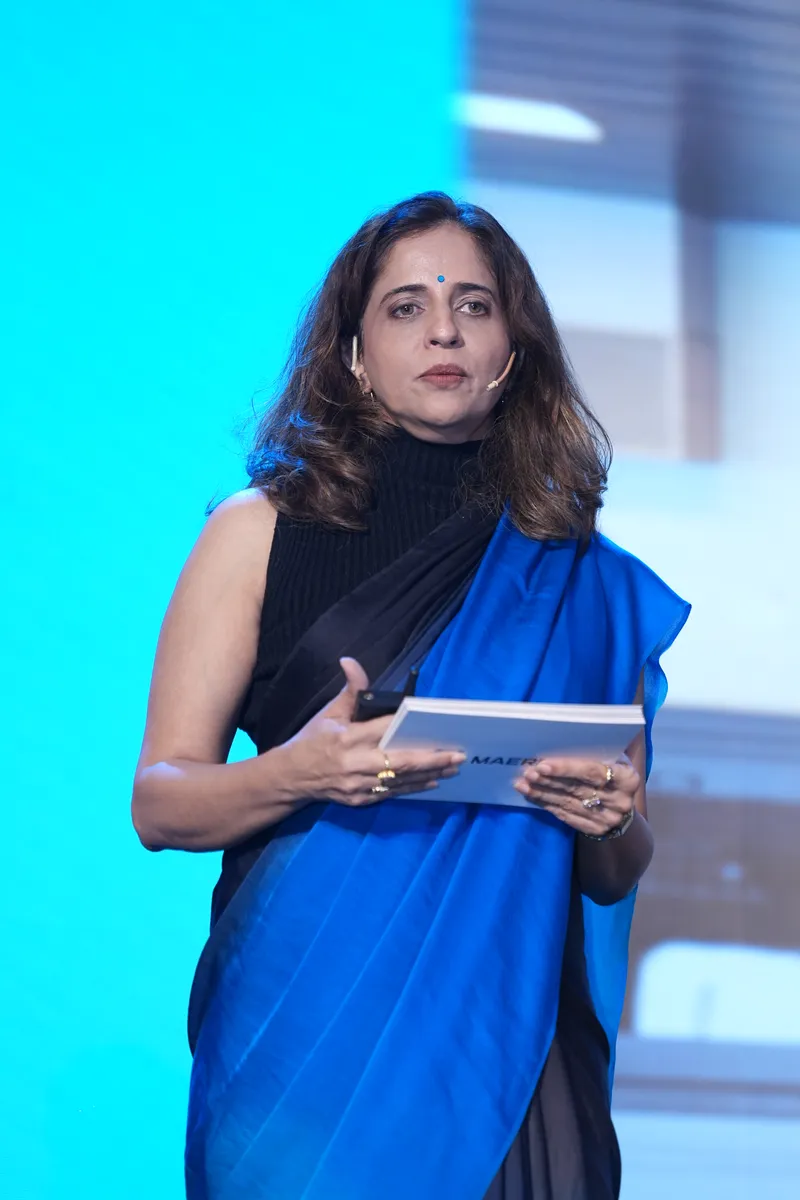
Resham Sahi
Twenty-five years later, Sahi has traversed diverse organisations and roles as a woman leader in technology and is now the Senior Vice President, Technology, and Head of Maersk Technology Center, Bangalore, at A. P. Moller-Maersk.
During her time in California, Sahi’s inherent nature to solve problems led her to plunge right into the technology boom the world was witnessing at the time. She attended various classes and schools and started her career at Siebel Systems as a tech support engineer.
“It was the start of something which told me that you will never know everything, and you always have a situation where there is something to learn. But at the end of the day, if you are determined and clear that this is what you want to do, and if you put in the effort, you will figure out a way to do it,” Sahi says.
This thought process reflects in the way she has grown in her tech career, with every job bringing in “a new flavour and a new challenge with evolving technology.”
After Siebel, Sahi joined 3Com, and moved to India in 2004 to join Infosys.
“Here, I started to pivot a bit more into project management or business problem-solving along with technology. My first role at Infosys was as a project manager for Bank of America, which was a very large account for the company at the time,” she recalls.
Her first Global Capability Center (GCC) foray was at ANZ in retail banking and prior to joining Maersk, Sahi worked with JCPenney and Target.
At Target, as director of engineering she witnessed the pace of technological transformation. When she joined the mobile group, less than 5% of customers used mobile. Four years later, mobile sales had equalled, and then surpassed website sales.
“The pace of change and the pace of technology has constantly been faster than the previous one," she observes.
At A.P. Moller-Maersk, Sahi leads the technology for its customer-facing platforms.
A global leader in logistics services, the company has 100,000+ customers, operates in almost 130 countries and employs 100,000+ people.
At Maersk, she oversees two critical channels: direct platforms like Maersk.com and mobile apps where customers can book, track shipments, and manage payments; and agent-facing channels serving B2B customers who need contracts, pricing, and order handling support. Her portfolio spans everything from pricing and sales management to customer support, invoicing, and disputes.
“I think my biggest success has been the ability to adapt. Even if I look back at my role in Maersk, how I started and where I am, the pace and change have almost been constant, and it’s become faster as years have passed by. My success has been the ability to keep up with the times and the pace of change in technology,” she says.
Gender dynamics in technology
Sahi has an interesting take on navigating gender dynamics in technology. She believes there is no profession today that says you cannot do this because you are of a particular gender. If you are determined about what you want to do, you’ll find a way to do it, she says.
“The challenge with gender is more about how you balance the expectations of the role with what is going on at home, because that doesn't change. Unfortunately, for women, the primary caregiver responsibility remains constant. You can be an aeronautical engineer, a technologist, or an HR professional, but you will have to do what it takes to get the job done, both at work and at home,” she explains.
In technology, Sahi points out, the expectations intensify.
"If the customer is not able to resolve the issue in 24 hours, it starts to escalate. Then came ecommerce and mobile commerce, where you literally need to wake up in the middle of the night or do whatever it takes to actually get the systems back up,” she says of her early days.
She admits she has had her share of difficult days, too.
"What made the difference was a support system; household help that's more accessible in India, family, spouse, neighbours, and friends. With this kind of support, you are able to push through the hard days where you feel like it's just getting too much,” she acknowledges.
Throughout her career, Sahi has often found herself as the sole woman in technology leadership. At Maersk, in her previous roles at Target and JCPenney, she's been in the minority or completely alone in terms of gender.
How does she tackle unconscious bias?
“First, not letting the demons in my head get to me, everything is not about gender. Sometimes it is also about overthinking. I don't want to think of everything being said to me as because of my gender,” she says.
“Second, I also feel the responsibility of raising empathy is a lot on me. I have had instances where the home needed me and the work needed me as well. I found men to be actually very supportive if they understood what to do. You have to speak up and you have to communicate clearly as to what you want,” she adds.
A mantra that has worked for her is whenever she sees something she didn’t agree with, she calls it out.
“I'm very ambitious, very aspirational, and hence also now very vocal about it so that nobody has to interpret what I'm thinking. Everybody should know what I'm thinking because that's probably where it starts and where it's helpful,” she says.
Organisational support for women in tech
Sahi identifies four critical phases in women's technology careers and how organisations can support at each stage:
Phase 1: Fresh graduates - Actively recruit from women's colleges and ensure diverse hiring from all institutions.
Phase 2: Finding or having a partner - A "very tricky time" when many Indian women relocate with spouses. Mentors, coaches, and managers must help them navigate career choices during transitions.
Phase 3: Raising children - The most overwhelming phase. “Maersk provides caregiving facilities near the office. Just the comfort of having or knowing that your child is somewhere around and you can go see them during lunch breaks—it goes a long way,” she says.
Phase 4: Career advancement - A lot of times, women get stuck because they never knew what they wanted or asked for it. This phase requires mentorship and coaching. But it also demands returning to the learning phase.
"Some of us struggle, especially as we get into later parts of our career where it gets a little bit harder to learn something new. But I tell all the women I know: if you can raise children, you are learning every day. There is no reason for you to doubt that you cannot learn. The question is: do you want to learn?” she explains.
Beyond work, Sahi also calls herself “a full-time artist and painter.”
“I tell people: if you really want to do something, you will figure out the time to do it. There are times when after dinner, I will start to paint and continue till I am dead to sleep,” she says.
As AI transforms the technology landscape, Sahi believes women may actually have an edge. "We are more emotional beings, we have higher EQ. And EQ is harder for AI to get than IQ."
She illustrates with an example: "If I go to a doctor, I may not go because I want to know the symptoms, but I want someone who's going to tell me I'll be fine and things will be okay. I would probably go to a woman more than a man."
Her vision for the future is switching off completely, to paint.
“I think I'll probably feel a lot more fulfilled by doing something which is giving back to society,” she concludes.
Edited by Megha Reddy