


What the women’s World Cup win means for every girl dreaming to be a Jemimah or a Shafali
The World Cup triumph is a vindication of the efforts, grit, and determination of the Women in Blue who never gave up, even as inequality, misogyny, and derision tried to slow their progress.

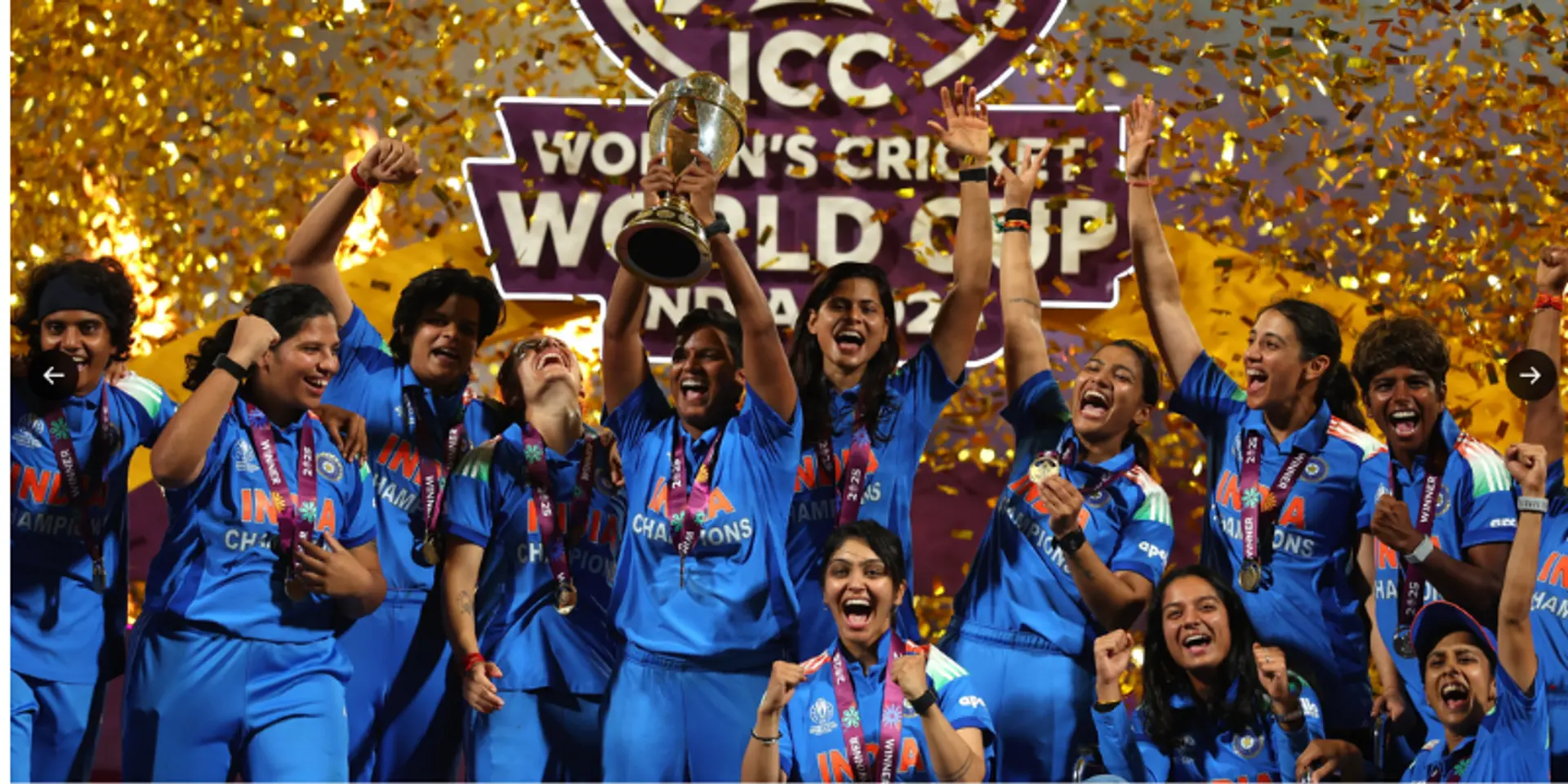

When the India women’s cricket team lifted the ICC Women’s Cricket World Cup trophy last night, it wasn’t just a sporting triumph—it was a rewriting of history—a history so used to celebrating the exploits of the Men in Blue.
For a long time, women’s cricket had been relegated to the shadows of its male counterpart, celebrated only in fleeting moments.
So the World Cup triumph was a vindication of the efforts, grit, and progress of the Women in Blue who never gave up, even as inequality, misogyny, and derision tried to slow their progress.
The win on November 2, 2025 by the women is not a consolation prize for the men’s World Cup loss on November 19, 2023. This win is rightfully theirs, and theirs alone, and this World Cup is as significant, if not more, as the men’s edition.
When the BCCI took over the women’s game in 2006, it marked a turning point, bringing in funding, infrastructure, and access to the same opportunities that the men’s team enjoyed. And, of course, pay parity.
A lot has changed since then, and for the better—slowly and steadily.
In the 2017 World Cup final at Lord’s, the Indian women’s team narrowly lost to England. But, for the first time, players like Mithali Raj and Harmanpreet Kaur started gaining mainstream interest and attention, and women’s cricket started receiving the recognition it deserved. Then the Women’s Premier League (WPL) brought in a lot of money, glamour, and brand endorsements.
And cricket suddenly became a visible pathway to girls choosing the game over other sports like hockey and athletics.
This World Cup has not just come with a high prize money of $4.48 million (Rs 39 crore) but it has also brought more recognition to women in the game. Additionally, the BCCI has announced a Rs 51-crore cash reward for the team.
However, the run-up to the World Cup title has not been a canter for the girls who were tested on and off the field.
The team stumbled in the earlier matches, and also faced a heart-breaking loss to England by a mere four runs.
This led to social media posts telling women to “go back to the kitchen”. People even asked whether “the investment in them was worth it”, and young players like Pratika Rawal were accused of using her “connections” to be in the team. Harmanpreet Kaur’s captaincy was questioned consistently, even as the team grappled with selection issues.
It was not until the semi-final match when India recorded a thumping win against Australia that many changed their perception and began to believe that the girls could do it.
Physically, mentally, and emotionally, it has been one gruelling journey for the girls.
Jemimah Rodrigues, who scored an unbeaten 129 in the match, spoke of anxiety, self-doubt, and sleepless nights, bringing into focus the role of mental health and the gendered nature of pressure in women’s sport.
Women's cricket has come into its own
Women’s cricket may have arrived late to the party—long after athletics, boxing, and badminton brought more women into the fold—but the impact it has created is not something that can be ignored.
PT Usha who stood tall as the queen of track and field, Mary Kom with her world titles, and PV Sindhu with her Olympic flourishes not only made their mark on the global stage, but also inspired many young women to enter the arena. And now it’s the turn of women cricketers to lay the foundation for more to follow.
This World Cup win will definitely lead to an immediate rise in girls wanting to take up cricket. In fact, one saw sparks of this when the Indian women’s under-19 team lifted the inaugural U-19 T20 World Cup in 2023.
However, a long-term vision is needed to make sure the momentum is sustained, long after the World-Cup high.
In an interview with former England captain Nasser Hussain, Jemimah talks about visiting her school in Mumbai where everyone follows women’s cricket and her club where there’s now a special net only for girls—a remarkable change from the time when she was the only girl playing cricket among 500 boys.
More of this needs to happen across the country.
It’s important to take cricket to the grassroots and ensure that every girl who decides to play the game, from every part of the country, is encouraged, and not derided, for her choice.
But for now, it’s time to savour and celebrate the moment of victory. For the girls have done much more than level the playing field. They have changed the course of India’s sporting history and inspired millions of young girls to dream without fear or limits.
(Picture credit: ICC on 'X')
Edited by Swetha Kannan