



Boxing champion Preeti Pawar on fighting her way back into the ring after hepatitis A and setting her sights higher
Preeti Pawar, who clinched gold in the 54 kg category at the World Boxing Cup last month, had to fight her way back from ill health to strengthen herself, physically and mentally.

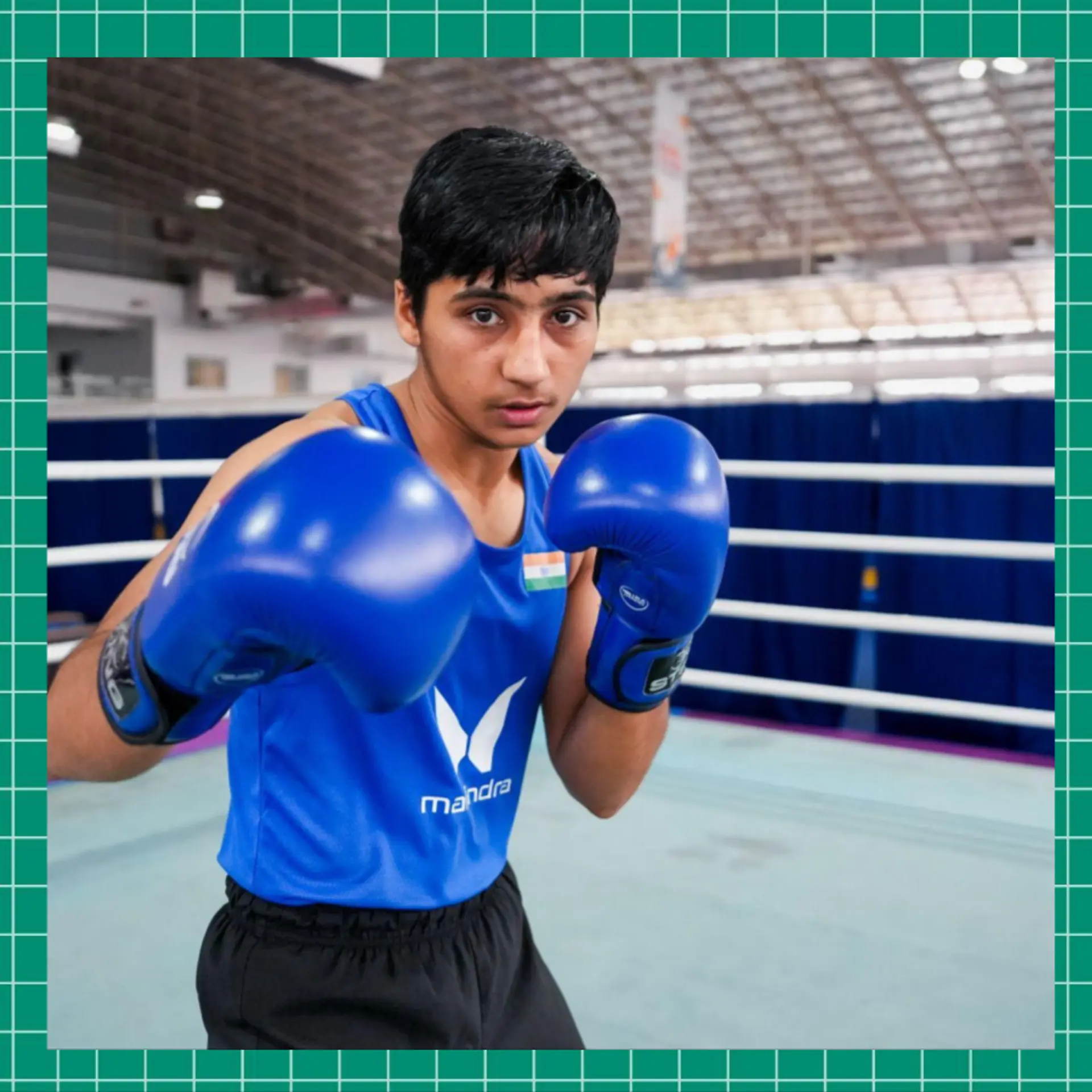

When Preeti Pawar toppled Olympic medallist and three-time world champion Huang Hsiao-wen of Chinese Taipei in the semifinal of the World Boxing Cup in Delhi last month, she marked her international return with a bang.
Pawar, who had been away from the ring for a long period of time, went on to win the gold in the 54 kg category, beating Sirine Charrabi of Italy in the final.
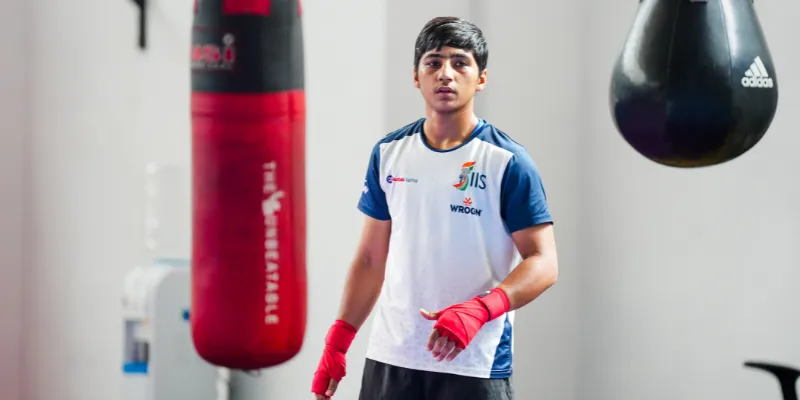
Preeti Pawar
The 22-year-old boxer was hospitalised in Germany during the pre-Olympics training camp ahead of Paris 2024, where she was diagnosed with hepatitis A.
Battling illness, Pawar pushed through the Olympics, exiting only after a hard-fought round-of-16 bout against Colombia’s Yeni Arias, the world championships silver medallist.
“This gold is very special for me because I was back in the ring and in international competition after a long period. I was feeling the pressure and was also a little scared. But I was in my own country, and that boosted my confidence as everyone was cheering for me,” she tells HerStory.
Her defining moment in the tournament was the win against Hsiao-wen.
Pawar admits she was nervous before the bout. “She is quite tall compared to me. In my mind, I was wondering whether I would be able to cover the distance.”
She constantly reminded herself that her training would hold her in good stead. Detailed analyses with the coaches on her opponents’ game also played a key role in her preparation.
Working on physical and mental strength
Looking back, what was the toughest part of staying away from boxing?
“When I started training again, I realised how tough it was going to be physically. I had to work on my body from the beginning as even the easy drills were difficult for me,” she shares.
However, Pawar’s hard work and persistence paid off. She also made some changes in her approach.
“Earlier, my game was more on the attacking front. I started focusing more on counter-boxing because I can’t play forward all the time. For example, if my opponent was an ‘attacking’ boxer, I had to try counter-boxing,” she explains.
During the recuperative period, Pawar took to strengthening herself mentally.
“I kept telling myself, ‘I am fine, nothing has happened to me. I will go back to the ring with the same energy.’”
She would run entire sessions in her mind—track drills, sparring rounds, everything. For three minutes, she would visualise every move: the attack, the defence, how she would respond. That mental rehearsal helped her tremendously.
When negative thoughts threatened her confidence, Pawar leaned on breathing exercises and journalling to steady herself.
The support from her family and friends helped her pull her through this difficult period. She credits JSW Sports for being with her, every step of the way, while she navigated her comeback.
Despite the growing prominence of boxing in recent years, young girls in India continue to shy away from combat sports. What barriers does she identify, and what shifts does she think are necessary?
“It’s heartening to see girls taking up combat sports. But some of them are scared of injuries and that they will not be able to make a comeback if they are injured,” Pawar points out. She emphasises that injuries are a part of sports, and one has to be mentally tough.
“Please take up combat sports because it’s also important for self-defence. It pushes us to be independent and strong,” she advises.
Pawar notes that support and infrastructure for athletes have improved significantly, with government programmes and sponsors such as JSW and the Inspire Institute of Sports playing a key role.
With many young girls already training at these centres, she believes the next step is to encourage more girls to step forward and choose boxing as a sport.
As for Pawar’s own sporting career, her sights are set on the Los Angeles Olympics in 2028. But first, she will take on the Asian and Commonwealth Games next year.
Reflecting upon her journey, Pawar reminisces about her early years in the sport.
“I didn’t like the idea of boxing or any other sport. I just wanted to study. My parents encouraged me to try (sports), but those initial sessions were so painful that I wanted to quit,” she recalls.
Around that time, wrestling was in the spotlight, with Sakshi Malik winning an Olympic medal at the 2016 Rio Olympics. This prompted Pawar's parents to think seriously about introducing their daughter to sports. With her uncle being a trained boxer and a qualified coach, boxing felt like the natural choice.
Pawar's first game didn’t go well when she lost her opening bout. But instead of walking away, she became determined to return stronger the next time.
“Looking back now, I believe my parents made the right decision in steering me toward the sport,” she says.
(Images credit: JSW Sports /Inspire Institute of Sports)
Edited by Swetha Kannan