



How this innovation uses period blood to make screening of cervical cancer easier
The M-Strip developed by IOTA Diagnostic uses period blood to screen for high-risk HPV, the main cause of cervical cancer.

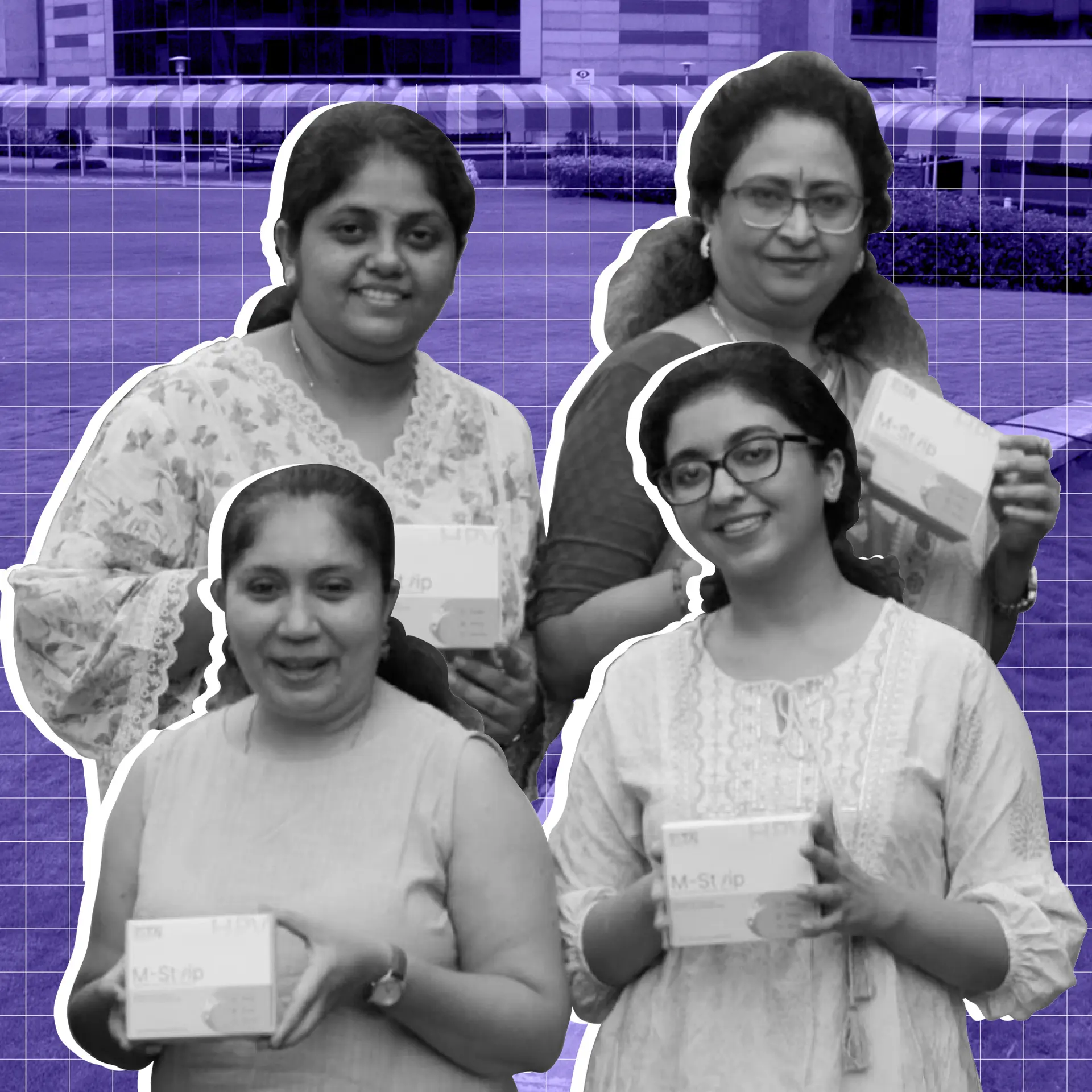

When Vaibhav Shitole moved to Ahmedabad for an MS in pharmaceutical science from the National Institute of Pharmaceutical Education and Research, little did he know that a few years later, he would lay the foundation to develop M-Strip, India’s first patented innovative cervical cancer screening test that uses menstrual blood as a biospecimen.
After completing his MS programme in 2020, Shitole teamed with Pradeep Kumar and Prasoon Kumar, IIT graduates, to start IOTA Design and Innovations to bring innovation in diagnostics through advanced technology and frugal innovation.
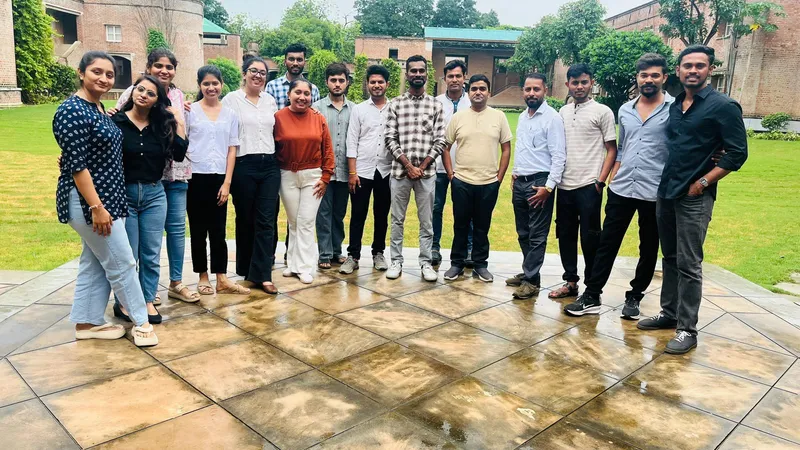
The team
Working on blood diagnosis as the first problem statement, the company received Rs 65 lakh funding from BIRAC (Biotechnology Industry Research Assistance Council) to support initial R&D activity.
“Our first project was the biosampler device. In India around 70% of people live in remote locations where accessing advanced diagnostic testing is challenging. For tests like vitamin tests or cancer screenings, they need to travel to Tier I or Tier II cities, or diagnostic laboratories need to bring samples from remote locations in cold storage, which is expensive,” explains Shitole.
From a technical perspective, once biological fluids like blood, saliva, or urine samples are collected, they need to be preserved in a cold environment during transport; otherwise they degrade. Additionally, from the collected sample, only a few drops are actually used for analysis; 90-95% is wasted.
IOTA developed an innovative biosampler device that can collect any biological fluid and keep the sample stable for longer durations, even delivered after seven days, without requiring cold storage. The device allows anyone to collect samples at home through finger pricking, similar to a diabetic meter, and deliver it to the laboratory for any diagnostic need.
Development of M-Strip
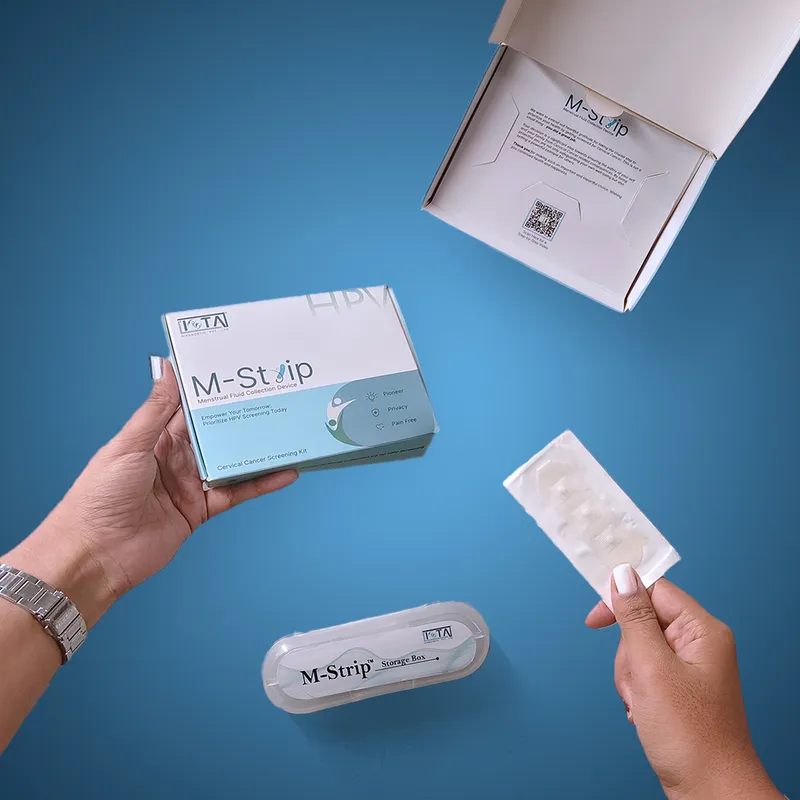
The M-Strip
When the Sterling Group approached the company to address sample collection for HPV DNA testing, it led to a ground-breaking innovation—the M-Strip, which addresses cervical cancer screening.
Shitole shares some important numbers. Cervical cancer is the leading cause of cancer after breast cancer in India. Around 80,000 women die from cervical cancer annually.
Yet it’s among the most preventable and curable cancers if caught early. It is caused by HPV (human papillomavirus), and WHO recommends every woman to get screened every three years. However, in India less than 2% of women undergo screening.
The traditional method explains the low participation rate. Women must visit gynaecologists who use a speculum to collect samples from the cervix, a procedure many find painful, invasive, and embarrassing. The samples then require cold storage and specialised transport to laboratories.
"Around 50% of women simply say no when doctors propose the examination. Due to privacy concerns and the complicated nature of sample collection, they avoid it entirely,” says Shitole.
Academic studies by Tata Memorial Centre and Stanford University showed that menstrual blood could be an alternative source for detecting HPV virus. Shitole and his team saw the connection and integrated it with IOTA’s biosampling material. They developed a strip that women can simply place on their sanitary pad to collect menstrual blood for diagnostic testing.
Dr Somesh Chandra, who was a senior onco-surgeon at Sterling Hospital, Ahmedabad developed the concept for M-Strip. Chandra, Shitole and Sterling Accuris Diagnostic are listed as co-inventors of the technology.
The method is simple and convenient. It does not require medical professionals to administer the test; there are no invasive procedures or the need for cold storage. Women can collect samples at home and mail them to the laboratory, where they remain viable for analysis even after seven to fifteen days.
“In our proof of concept study with 77 women, we found 100% concordance with conventional cervical smear sampling methods. A subsequent Clinical Trials Registry-approved study with 150 women showed consistent results with our earlier observation,” Dr Chandra and Shitole reveal.
Interestingly, a few women who tested negative through traditional cervical smear methods tested positive with M-Strip, suggesting accuracy and reliability of M-Strip, especially in settings where sample collection skills vary or access to well-equipped clinical infrastructure, particularly in rural areas is limited. “Around 96% of women who tried both methods preferred M-Strip over the traditional way,” Shitole adds.
In 2022, Shitole started the IOTA Diagnostic Private Limited to develop M-Strip and launch it commercially. Kaushik Chaudhary, a physicist, joined as co- founder.
M-Strip received Central Drugs Standard Control Organisation approval in 2024 and launched commercially four months ago. It has an Indian patent and has applied for global patents in the United States and Europe.
He reiterates that M-Strip is the first regulatory-approved kit of its kind, both in India and globally. The product is now available on Tata 1mg, Amazon, and through select hospitals that prescribe it as an OPD test. It is priced at Rs 1,800 that covers kit, pickup, testing, report and consultation.
IOTA has a NABL-accredited laboratory in Ahmedabad where samples are processed. It plans to set up laboratories in each Tier I city to reduce turnaround time to same-day or next-day reporting.
Beyond the BIRAC grant, IIM Ahmedabad is IOTA’s institutional investor, providing both financial backing and guidance on implementation models. It has also received support from the Department of Science and Technology and the Gujarat government. Recently, a Mumbai-based VC also invested in it.
Need for awareness and education
The response has been encouraging, with inquiries coming in from women across age groups—from 17-year-olds to those in their mid-forties.
However, awareness remains their biggest challenge. "Very few women understand the importance of HPV screening and regular cervical cancer examination. When they hear ‘cancer’, they panic. We need education,” says Shitole.
IOTA's strategy includes partnering with doctors for community sessions, leveraging social media for digital awareness, and working with media outlets.
Shitole also points out that due to its prohibitive costs, the HPV vaccination has its limitations in India.
“Ideally, the vaccination should be done before the age of 15 years. Also, the Gardasil 9 vaccine costs around Rs 25,000 for three shots and covers nine variants of HPV. However, there are 200 types of HPV viruses, with 14 high-risk oncogenic variants,” he elaborates.
For women, who have passed the age of vaccination or were not vaccinated, he reiterates that regular screening remains essential, and products like M-Strip are crucial to detect cervical cancer in its early stages.
The company has partnered with Tata Institute for Genetics and Society to expand the applications of the biosampler and M-Strip
IOTA’s plan is to partner with institutions and corporations to scale. It is in talks with state governments to deploy the product at the mass level for screening, “The government is addressing cervical cancer due to its high mortality rate,” says Shitole.
The plan is to start with Tier I cities like Mumbai, Bengaluru and Hyderabad where adoption will be easier and then move on to Tier II cities.
“In rural markets, we plan to work through government projects and CSR initiatives. We are also open to establishing public-private partnership models to handle government projects alongside corporate initiatives,” says Shitole.
Edited by Swetha Kannan