



The canvas of resilience: How former IRS officer Neena Singh found expression in art
From the discipline of the Indian Revenue Service to the freedom of the canvas, Neena Singh’s story is one of resilience finding its voice through art.

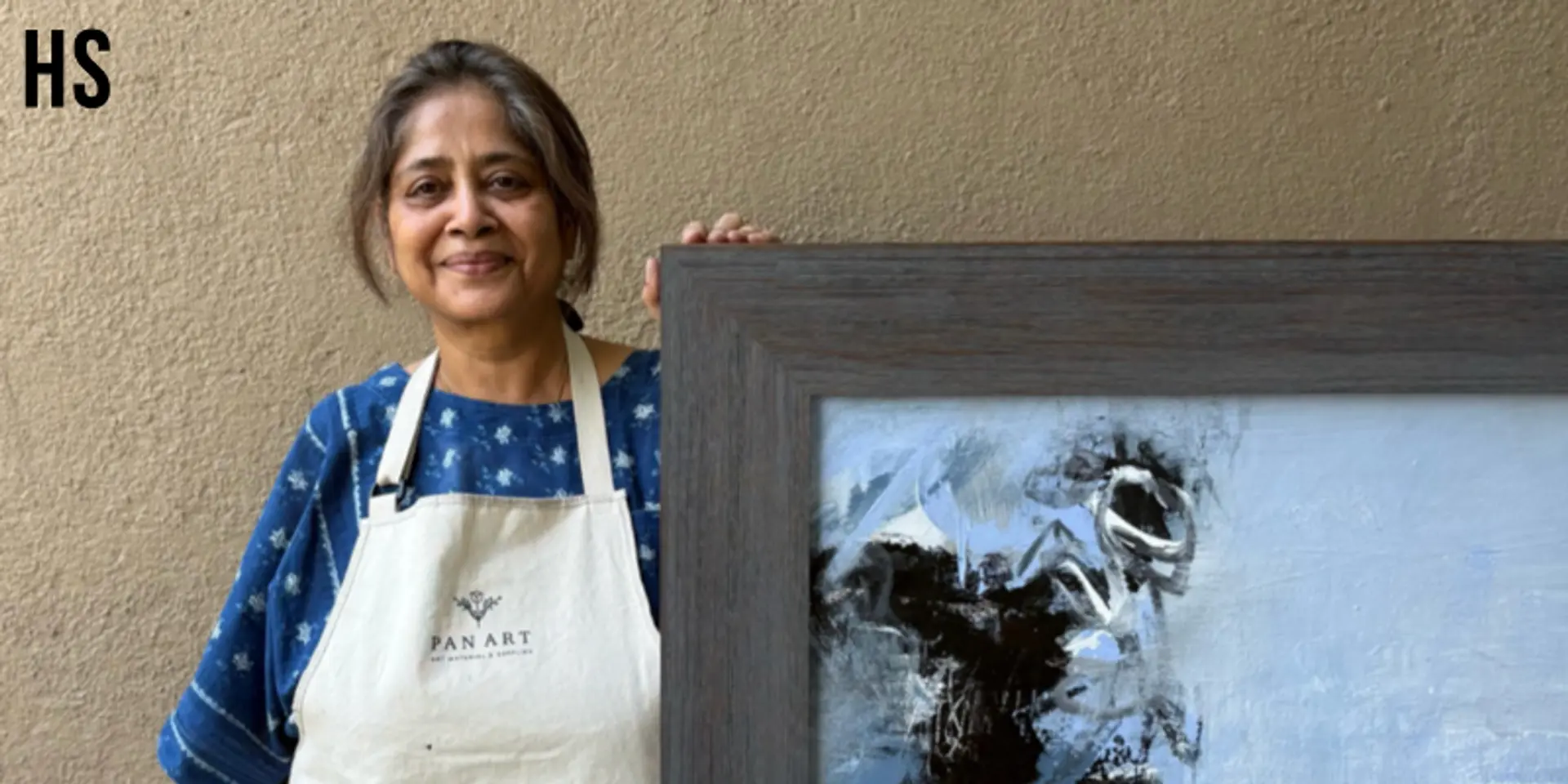

For over three decades, Neena Singh has balanced two remarkable worlds—as a dedicated Indian Revenue Service officer and a self-taught artist—reflecting a life with a remarkable capacity to endure, adapt, and rise above all odds.
Singh’s journey as an artist began with Serendipity, an exhibition at Mumbai’s Jehangir Art Gallery in 2006. She has since become a gallery-represented, full-time artist engaging audiences in India and abroad.
Her family moved along with her father wherever canal construction projects took him. That meant changing schools often and spending childhood in remote townships of Uttar Pradesh, some places that didn’t even have high schools for girls.
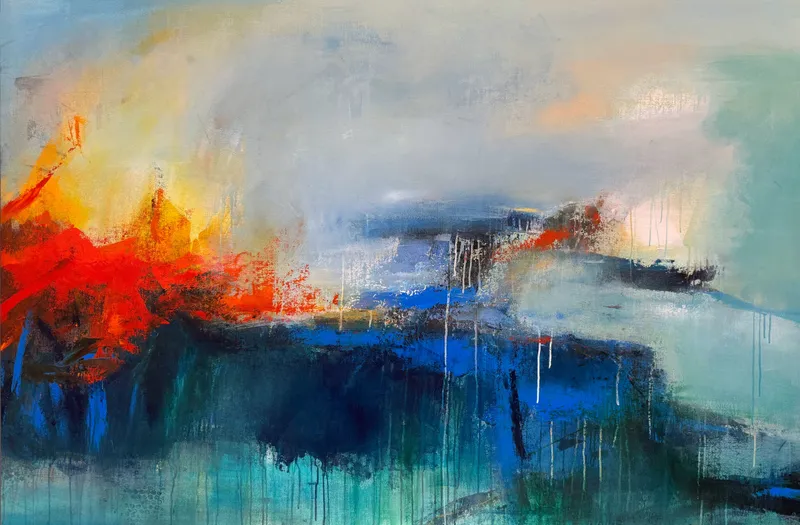
Colour is the "main vehicle" for artist Neena Gupta
Singh excelled despite this fractured education. After she finished Class 10, nobody bothered about her higher education.
“One day, my father met my school principal in the market. She told him that I had stood first in the entire state. He came home and told my mother, who said, “We have to educate her," she recalls.
Her mother wrote to her grandfather, who took her to Agra for Class 12 studies. After completing that, the same story repeated. This time, too, her mother insisted she be sent to a college—even if it meant she had to stay in a hostel.
“I was sent with the instruction that I was a Rajput, the family’s honour rested on my shoulders, and I had to focus only on my studies,” Singh recalls.
After completing her graduation, an arranged marriage was decided for her that fell apart after two years. Singh returned to her parental home, “a failure in the eyes of society.”
At the time, a former professor suggested to her father that she attempt the civil services examination, with Jawaharlal Nehru University serving as the ideal stepping stone. Singh moved to Delhi, and for the first time realised she had something she never thought was important before: her own space.
While pursuing her doctorate at JNU, she appeared for the civil services exam, cleared the prelims on her first try but failed the interview. Her confidence, she admits, was at an all-time low. But circumstances, rather than aspiration, pushed her forward. In 1988, she joined the Indian Revenue Service.
Singh built a remarkable career and came to be known as the officer who was polite but principled, low-profile but unyielding.
Just six months into her posting in Mumbai, she was transferred to handle tax assessments in the film industry—a minefield of power, celebrity, and connections. Major stars of the era were under scrutiny.
"I never got any phone call asking me for favours. I did not face a single incident where I was asked to do something against the law. I did my work the right way,” she recalls.
She carried this integrity through to her retirement in February 2022, ending her career as Director General of Vigilance at the Central Board of Direct Taxes.
When colours spoke
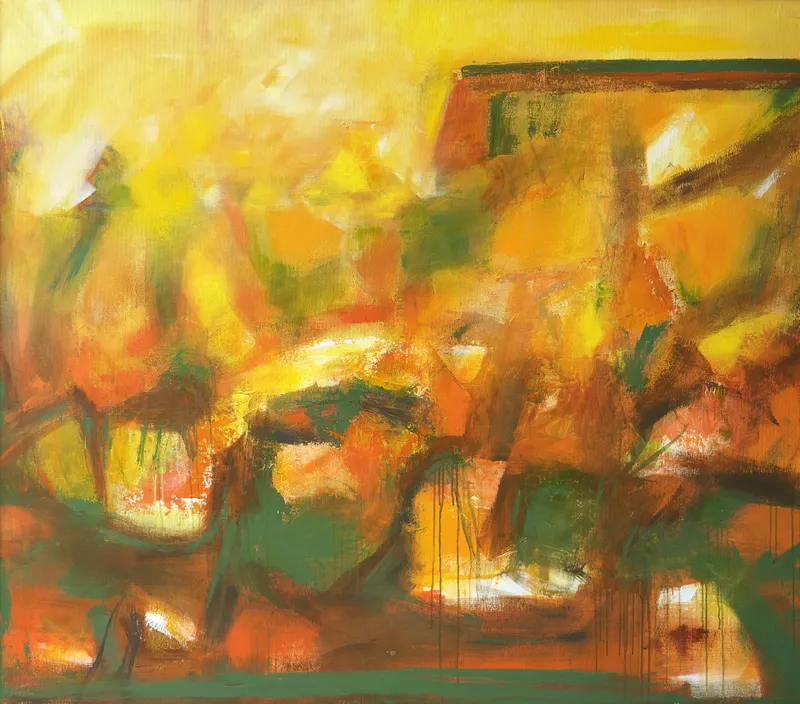
Singh had always loved art, an inheritance from her mother, who sketched and drew but never had the opportunity to pursue it. As a student of English literature, she also expressed herself through words.
But after her second marriage—a happy one that unfortunately ended with her husband's early death, leaving her a single parent to two young daughters—words began to feel inadequate.
"I was getting very disillusioned with words. It's easy to be dishonest with words. You can say something and not mean anything. I was not able to express what I was going through,” she says. When her daughters would study late into the night, Singh also stayed awake to paint in those quiet hours.
"I didn't consciously decide to start painting; it just happened. A painting came to me at that moment, and once it came, it was like lava. Whatever was inside came out,” she says.
She was astonished by the force of her expressions, shifting to acrylic paint from oils, and the growth, evolution, and change all reflected on canvas. When she looks back at her early work—dominated by black and red—Singh sees what she couldn’t articulate then: rage, grief, and survival.
Painting became therapeutic and essential. Her daughters understood her and her art. They would accompany her to galleries on weekends—Jehangir Art Gallery became their second home, and they learned to identify works by Raza, Ram Kumar, and Akbar Padamsee.
Finding her voice
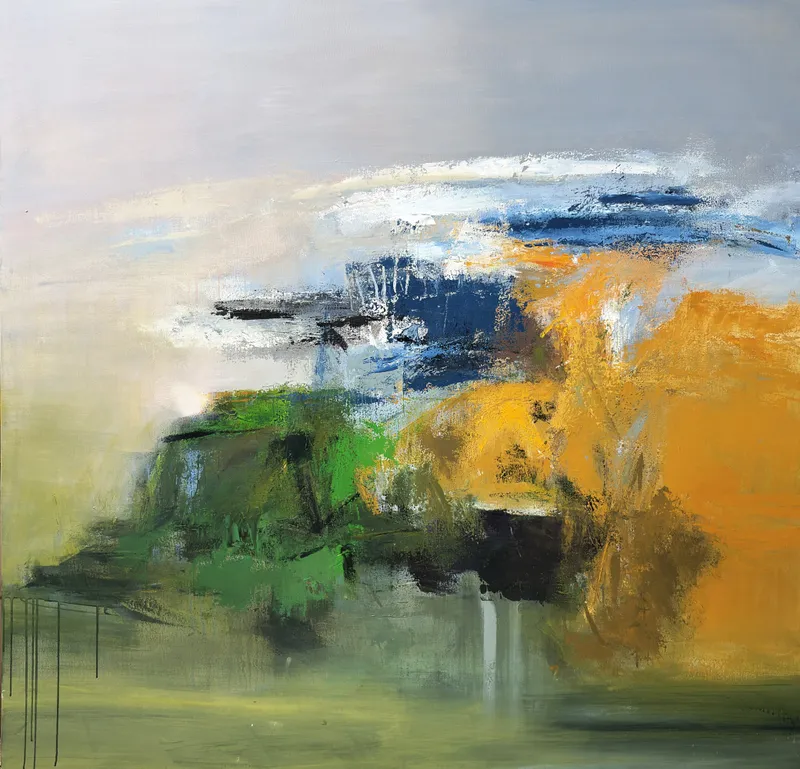
Five years after she began painting, Singh held her first exhibition, Serendipity, in 2006. It was the beginning of what would become 15 solo shows, with her most recent, Echoes of Becoming, held at Bikaner House in Delhi in November 2025. Her titles Serendipity, Revelations, and Gratitude all hint at an inner journey.
While Singh would not like to label her work as abstract, she believes it could be “an abstraction of nature or feelings.”
In her paintings, there are suggestions of clouds, water, mountains, and lakes. Blues dominate, offering what she calls "a sense of expanse." Light emerges from contrast, intentionally placed.
"Colour is the main vehicle for me. I'm a colourist. Different colours have different impacts on my psyche. When I start a painting, all I have in mind is: ‘today it's blue.’ Then everything else follows,” she explains.
She has witnessed contrasting responses to her work because, as she points out, ‘you have to take time to experience the art.’ The same painting has been described as “beautiful and hopeful” by one person and “violent” by another.
"That's how an artwork grows. It's not just what's on the canvas. What you are carrying within brings it out. Even the same person will see it differently after six months,” she says.
Her daughter once advised her not to over-explain her work. "She told me, “Mama, you are limiting viewers because then they see from your lens. Let them interpret."
Now, in retirement, Singh continues to paint compulsively from her studio in Pune. Soon, she has group shows coming up in Mumbai and Jaipur.
When asked about success at this stage of her journey, she speaks not of commercial galleries or prestigious collections, but of visibility and accessibility.
"I really wish my art could be visible in a cafe, in a restaurant, where people can just look at it while having their meal. Even if for two minutes, they get to see it. That makes me very happy,” she says.
She remembers the quiet magic of Mumbai’s Jehangir Art Gallery, a space that felt truly open. She recalls scenes of office-goers wandering in during lunch breaks, elderly women pausing to look around, and children drifting through. Many of them would never call themselves “art people,” yet they entered, lingered, and engaged.
“It’s not that people don’t care about art. The problem is access. There are very few public spaces where people can simply walk in and experience art. But when they do get that chance, it moves them, maybe it brings a moment of joy, maybe curiosity. They leave carrying something with them,” she elaborates.
"I'm not interested in money beyond what I need to keep painting and buy books without thinking twice. But if my art is visible, if people can see it, that's what success means to me,” she concludes.
Edited by Suman Singh