



How VigyanShaala is expanding STEM access for girls in rural India
VigyanShaala is a non-profit opening STEM pathways to youth in rural India with a particular focus on girls.

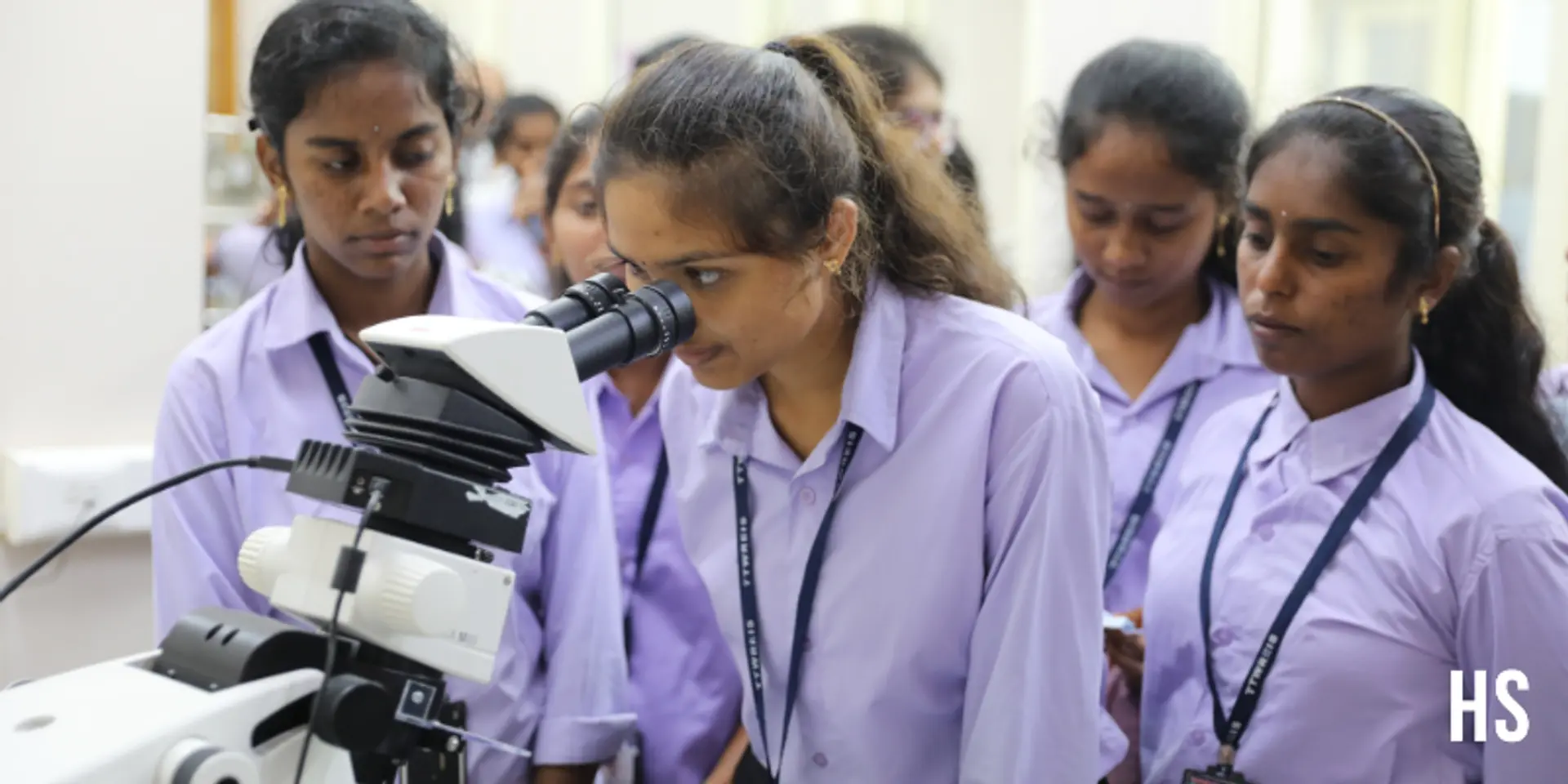

The story of VigyanShaala began with a simple idea: two physicists driven by a shared love for science and a desire to pass that curiosity on to young minds.
This personal passion evolved into a larger mission—to make science engaging, accessible, and meaningful for students who are often excluded from mainstream STEM learning.
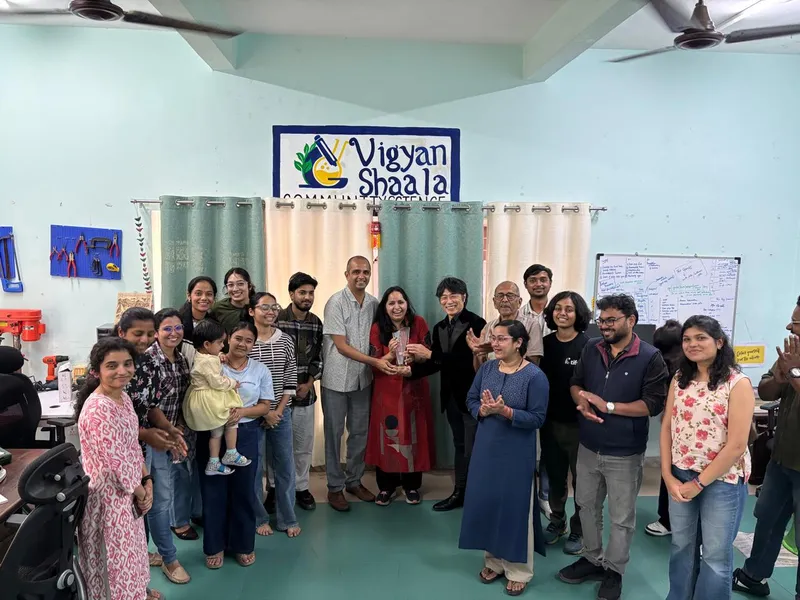
Vijay Venugopalan and Darshana Joshi (in the middle) with the VigyanShaala team
Founded by Darshana Joshi and Vijay Venugopalan, the non-profit is working to expand access to STEM education for underprivileged youth in rural India, with a particular focus on girls. In December 2025, VigyanShaala won the prestigious Nikkei Asia Award by Nikkei Inc.
Joshi grew up in a family of migrant farmers from Uttarakhand. Her parents moved to Delhi in search of livelihoods—her father worked as an electrician, while her mother was a homemaker. She attended a government school, and an NGO called Udayan Care supported her education. Meeting Professor Shobhana Narasimhan, one of India’s leading female scientists, changed her perspective. Her mentoring and support pushed Joshi’s dreams forward.
Venugopalan was raised in Pune in a DRDO colony, in what he describes as a relatively privileged environment with a strong focus on academics.
When Joshi and Venugopalan met at Jawaharlal Nehru Centre for Advanced Scientific Research (JNCASR), Bengaluru, in the early 2010s, they saw a similar problem: young people in India weren’t pursuing science for the love of it.
When they went abroad for their PhDs—Joshi to Cambridge and Venugopalan to Italy- they witnessed a stark contrast.
“Children as young as eight and nine walk into labs, talk to researchers, and ask what’s happening. They get scientific aspiration from an early age,” says Joshi.
With the thought of simplifying science for Indian classrooms, and while still pursuing their PhDs, they started VigyanShaala as a volunteer group in 2015.
During their winter breaks in India, they would travel all over the country—from Agartala and West Bengal in the east to Puducherry and Kanchipuram in South India.
The "egg and shock" experiment
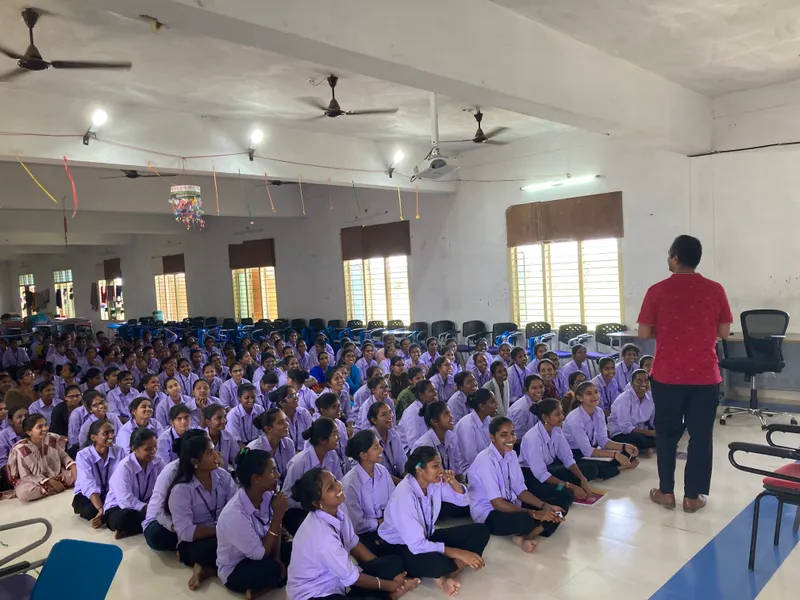
Through VigyanShaala, girls in rural colleges are offered new pathways in STEM education
Joshi recalls the tone of their early workshops. She would show an egg and ask students, “Can I cook this without a flame?” When most said no, she would pour some liquid, perform what seemed like magic, and present a cooked egg. The shock and awe on students’ faces was exactly what they were aiming for.
The experiment demonstrates protein denaturation, the same process that cooks an egg over a flame. Instead of heat, alcohol breaks the bonds in egg proteins, causing the egg white to solidify. This helps students link a simple experiment to real-world conditions like cataracts and understand the need for interdisciplinary science.
Between 2015 and 2018, they engaged 10,000 students across 10 states.
They established a volunteer network comprising over 250 people across India and abroad. Each workshop hosted around 300 students for a full day, into groups at multiple stations—all at no cost.
The work was funded through grants from Cambridge, the Royal Society of Chemistry, the Institute of Physics, and partnerships with local institutions.
Meanwhile, Venugopalan moved to Cambridge, and the two got married. Something momentous also happened during this time—Joshi became the first South Asian woman to win a student union election in the university’s 800-year history.
“When I got a seat on the university’s board of trustees, I saw how people think about education 50–100 years in advance. We realised we were creating a spark, but sustaining it would be a long journey,” says Joshi.
Reaching girls in rural colleges
In December 2018, they returned to India with their savings and no clear roadmap. They registered a charitable trust in Delhi. Their backup plan was the UK Exceptional Talent visa. If things didn’t work out, they could go back.
Until February 2020, they travelled deep into rural India, organised workshops, and mapped the science engagement landscape. They spoke with educators and studied the need on the ground.
In Uttarakhand, Joshi’s home state, they visited 150 last-mile schools and around 30 colleges across three districts. What they found was shocking.
“Around 75% of girls were dropping out of mathematics in Class 9. They are given an exit door—home science versus maths. They take home science and exit,” she explains.
Without Class 9 mathematics, these girls lost the foundation required for a STEM career, even if they later opted for science or engineering.
By late 2020, they had burned through most of their savings and were down to their last Rs 2–3 lakh.
That’s when The/Nudge Institute and NSRCEL–IIM Bangalore stepped in, helping them with the basics of building an organisation.
From their research, Joshi and Venugopalan realised that everyone was focusing on schools, while the biggest dropout was happening in rural colleges.
Joshi points out that India has 43% women STEM undergraduates, with the majority enrolled in science programmes. After undergraduate studies, participation drops sharply. Postgraduate ratios fall to around 15%, and workforce participation drops below 14%.
“This 14% is also skewed because IT has 30% women at the entry level, which masks how poorly physics, maths, and pure sciences are doing,” she adds.
Their insight was radical: what if India’s remote colleges could become research hubs? What if they could be as rooted in their societies as prestigious institutions abroad?
They designed two interconnected programmes.
Transforming from within
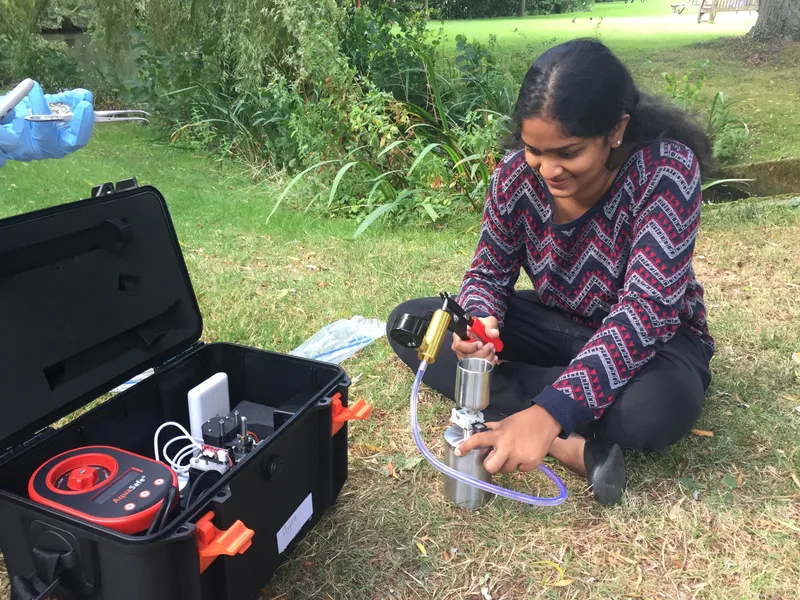
A student working on an experiment
The rural STEM Champions Programme operates in three colleges in Uttarakhand.
The programme selects high-performing college students as fellows, sets up innovation spaces, connects them to global mentors, and provides training in advanced mathematics, computers, English, and science communication.
Four times a month, these fellows visit local schools to conduct hands-on science activities.
“When they go to schools and communities and conduct experiments, it’s much more effective. They are not outsiders like us. They know people personally—they become bhaiyas, didis, annas, and akkas. It builds inspiration from the school level,” explains Venugopalan.
Bringing girls to the forefront
Whenever they conducted workshops in diverse locations such as Dehradun, Purnea, and Kanchipuram, they noticed that women’s voices were often absent in mixed rooms.
A teacher in Purnea near Darjeeling pointed out, “How do you expect girls to talk in mixed rooms when, at home, their fathers or brothers speak for them?”
The next day, the groups were separated, and the energy shift was remarkable.
This realisation led to Kalpana She For Stem—named after Indian-American astronaut and aerospace engineer Kalpana Chawla, while also invoking kalpana, or imagination.
When COVID-19 hit, and physical programmes came to a halt, they pivoted Kalpana She For Stem online, allowing the programme to scale faster.
Today, 14,000 girls from 330 districts and over 500 colleges have participated in the initiative.
The programme has three components. Girls learn about career exploration, scientific thinking, and networking. About 20% of participants are paired with individual mentors who provide in-depth feedback on statements of purpose, career pathways, and CVs. The third component involves sessions led by exceptional women role models. Jaya Jagadish, head of AMD India, and Nivruti Rai, former head of Intel India, participated in these sessions.
A turning point came when they received 1,500 applications from Telangana Social and Tribal Welfare Residential Institutions—students from the very bottom of the achievement pyramid.
“The programme fell flat for them. In the first three weeks, we knew they weren’t getting anything. The assignments were too difficult,” admits Joshi.
The team spent a year completely redesigning the programme, bringing in faculty mentors from the colleges, training them, adding physical elements to the digital model, expanding the programme from 12 to 22 weeks, and creating tailored workbooks.
In the first year, 1,800 girls enrolled from 40 colleges. Only 150 from 18 colleges qualified for the advanced stages.
In the second year, out of 1,900 girls, 600 qualified from 33 colleges.
“Colleges that were at the bottom came to the top. It shifted from being an individually driven programme to a systemic one,” says Joshi.
Today, VigyanShaala has state partnerships with both Telangana and Uttarakhand. In Telangana, 52 colleges participate, reaching 2,000 girls annually. In Uttarakhand, 43 colleges are on board, with plans to reach 100 this year.
Support from The/Nudge Institute also gave the organisation visibility and institutional backing.
“When VigyanShaala joined The/Nudge Incubator in 2020, it was a two-member team focused on expanding access to STEM education for students from underserved communities. Early on, the team demonstrated an emphasis on building durable STEM pathways rather than stand-alone programmes. VigyanShaala later joined The/Nudge Accelerator cohort in 2023. Since then, the organisation has scaled, reaching over 30,000 students,” says Subhashree Dutta, Managing Partner, Livelihoods Ecosystem, The/Nudge Institute.
Operating like a startup
For these scientists-turned-social entrepreneurs, technology is crucial to their theory of change.
“We are not a typical non-profit,” emphasises Joshi. “We operate like a startup.”
They are launching Curie Bot this month—named after Marie Curie and “curiosity”. It is an AI-powered career guidance tool for girls (and boys) that actively eliminates bias through built-in guardrails. They are also integrating AI and ML for effective mentor–mentee matching.
VigyanShaala collaborates with other organisations to train its fellows, while its curriculum and platform are available free of cost.
Diksha Nagarkoti, a fellow from LSM PG College, Pithoragarh, Uttarakhand, first joined VigyanShaala in 2020. An ecology enthusiast, she was selected for a year-long internship with D-time.ai, a London-based think tank, last year. She worked with Dr Hemant Tripathi from UNEP-WCMC, Cambridge, to harness data for developing a forecast tool to mitigate ecological and environmental shocks. She has since joined ATREE, Bengaluru, for an MSc in Environmental Studies (Conservation Practice).
Currently, VigyanShaala has impacted over 30,000 students across India, with 14,000 girls pursuing STEM at the undergraduate level in 28 states, a mentor collective of 1,000+ global mentors in 10+ countries, and operates with a team of 23 full-time members. It has set up four remote Himalayan innovation spaces in border district colleges and has partnerships with top institutions.
“We want to touch a million lives by 2030 through our students and the girls they work with. We want to inspire our Kalpana She For Stem girls to take up local leadership. It’s a lofty goal, but we think it’s doable,” Joshi signs off.
Edited by Affirunisa Kankudti