



In focus: How Ramya Sriram's Theyyam photograph won national recognition from Nat Geo
For Chennai photographer Ramya Sriram, patience has always been part of the process. After waiting nearly ten hours in a Kerala temple courtyard, she was pushed into burning coals. Without thinking, she clicked away to capture a ‘movement’ that’s now part of the National Geographic 2026 calendar.

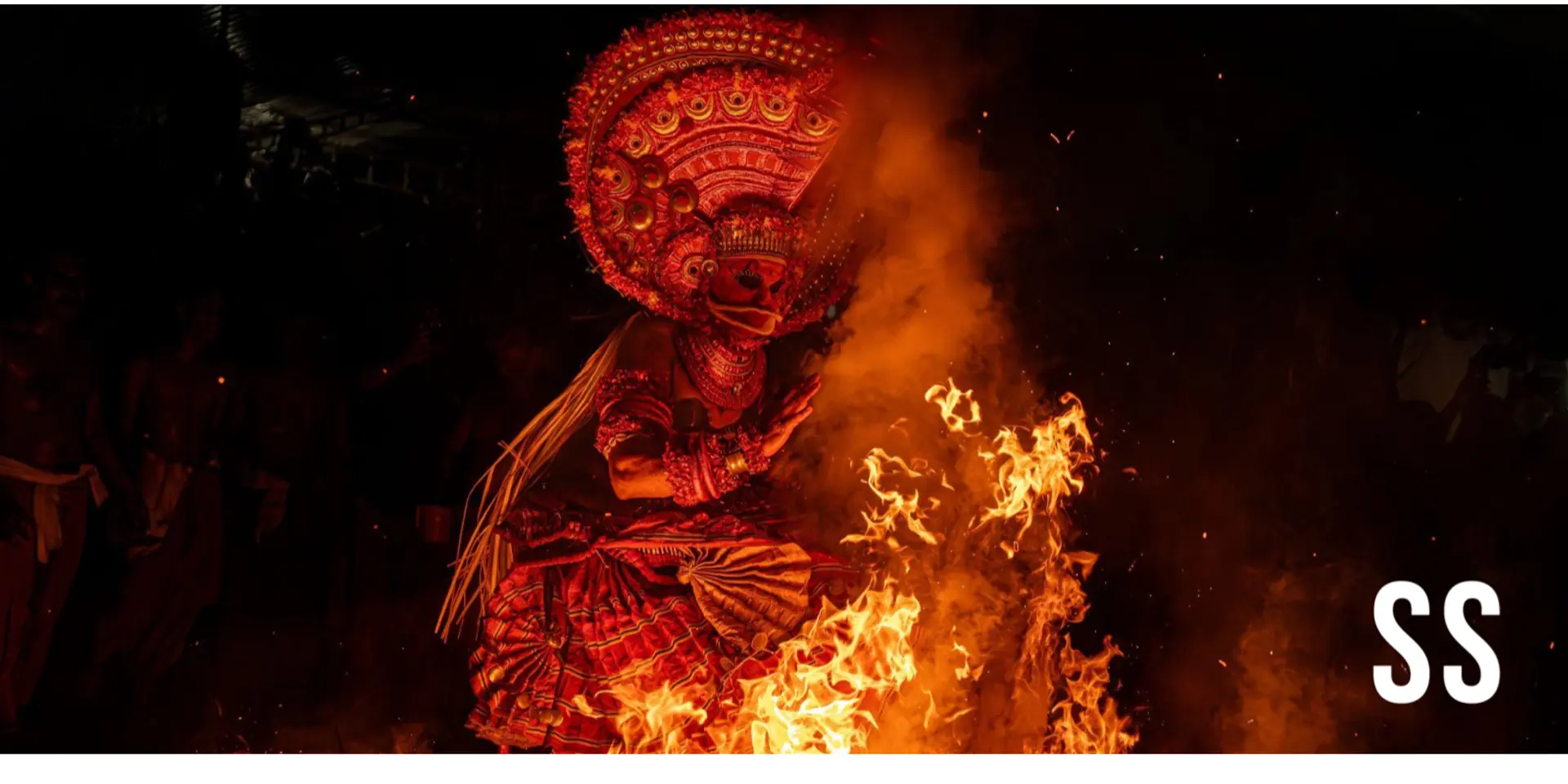

Ramya Sriram was in northern Kerala’s Kannur to experience the folk ritual of Theyyam for the fourth consecutive year since 2021. The Chennai-based photographer sat watching patiently for close to 10 hours, when she finally experienced the most electric moment of the ritual close to midnight.
The Theyyam performer, dressed in elaborate costume and face paint, was preparing for the final part of the ritual: the run through fire. Ramya had positioned herself carefully in the crowd. But then, in the surge of people pressing forward, she was pushed to the ground. The coals started burning her hand, her clothes, and her camera. She couldn’t get up; so lying there, she just clicked away.
“I lost hope and thought I could not have gotten anything more than a few out-of-focus shots,” she says.
Upon returning home with burn wounds, she reviewed the shots to realise that, out of four images, three were blurred—but one was sharp and fully in focus.
She was overcome with joy that all that effort had paid off.
Theyyam is a centuries-old ritual tradition from northern Kerala, practised especially in Kannur and Kasaragod, in which performers are believed to embody deities or ancestral spirits. Held in village shrines and sacred groves, the ceremony combines elaborate face painting, towering headgear, rhythmic drumming, and acts of devotion including dancing through fire.
Unlike staged performances, Theyyam is a living religious practice. During the ritual, the performer is treated as a divine presence, with devotees seeking blessings, guidance, and healing.
That single photograph by Ramya capturing the performer mid-stride, framed by fire, has been chosen for the National Geographic Calendar under the theme ‘Capture in Motion’. It is also part of the National Geographic 2026 calendar.
The ‘Capture in Motion’ campaign is a National Geographic initiative launched to celebrate World Photography Day on August 19, inviting photographers to share a powerful image from their archive that captures the essence of movement.
For Ramya, the recognition came as a surprise. “Generally, I send my photos and forget about them.”
Her love for photography grew gradually out of a life shaped by travel, social work, and an interest in people’s lived realities. She calls herself “a traveller and people lover”.
Before turning to photography more seriously, Ramya worked in corporate roles at L&T, Blue Star, and Sutherland. In 2007, she stepped away to focus on family, and began volunteering for social causes.
What started as informal work became a long-term engagement. For nearly two decades, she worked with children who had experienced sexual abuse and with HIV-affected single mothers and their families.
It was through travel linked to this work that festivals began to draw her attention. For her, ritual spaces offer a way to understand culture from within.
“I love festivals,” she says. “Let it be any festival. Culture is the core of anything.”
Over the years, she has documented rituals across northern Kerala, Bhutan, Malaysia, northeastern India, and Varanasi.
Theyyam, in particular, became an annual journey for her. Year after year, she returns to Kannur district to observe and photograph the ritual from beginning to end.
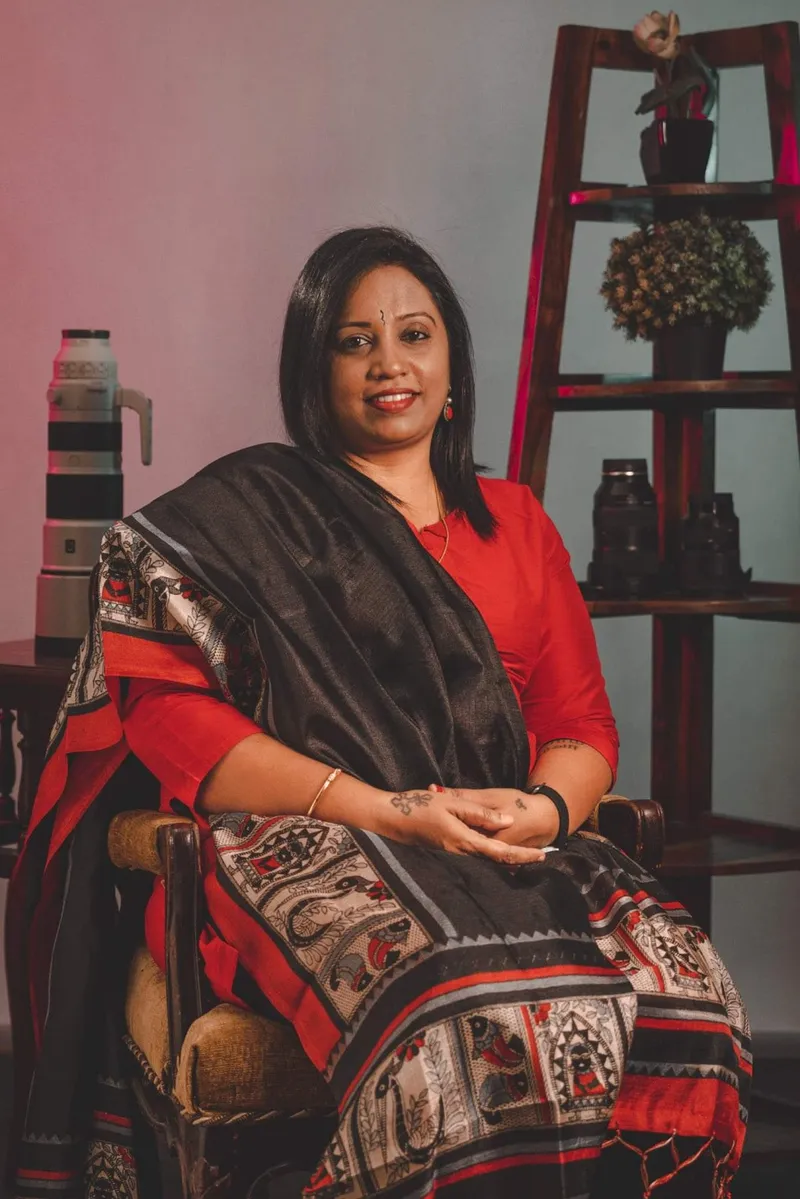
Ramya Sriram
“It’s a festival of god, and that’s fascinating,” she says.
“The performer is treated as a living deity, and the fire walk is an act of devotion. So I wait and watch, and allow myself to be immersed and amazed. Whatever I can observe and capture I do, but the performers are at the centre of everything. I do not interfere or decide anything.”
The image that won her the National Geographic honour captures movement at its most intense moment, but it is also grounded in patience and hours of observation.
Ramya had studied the rhythm of the ritual, the direction of movement, the light from the flames… And when the performer ran, she pressed the shutter instinctively.
While the entire process involved risk, discomfort, and long waits, she does not romanticise it.
“It also required trust from communities who allow me to return and photograph them year after year. I am careful not to pedestalise myself in this process, because I am the learner and the observer.”
Whether she’s documenting a ritual, travelling through remote regions, or supporting families through social work, Ramya approaches each space with the same clarity: by showing up fully and staying long enough to understand.
“My work always remains local, patient, and rooted in people.”
Edited by Swetha Kannan