


How stroke survivor Jayashree Mohan became the fastest woman to ascend and descend Mount Kilimanjaro
Stroke survivor Jayashree Vijay Mohan has set a record for the fastest female ascent and descent of Mount Kilimanjaro in the CIH (Coordination impairment – hemiplegia) category. Her journey from recovery to becoming a record-breaking mountaineer is a tale of grit and endurance.

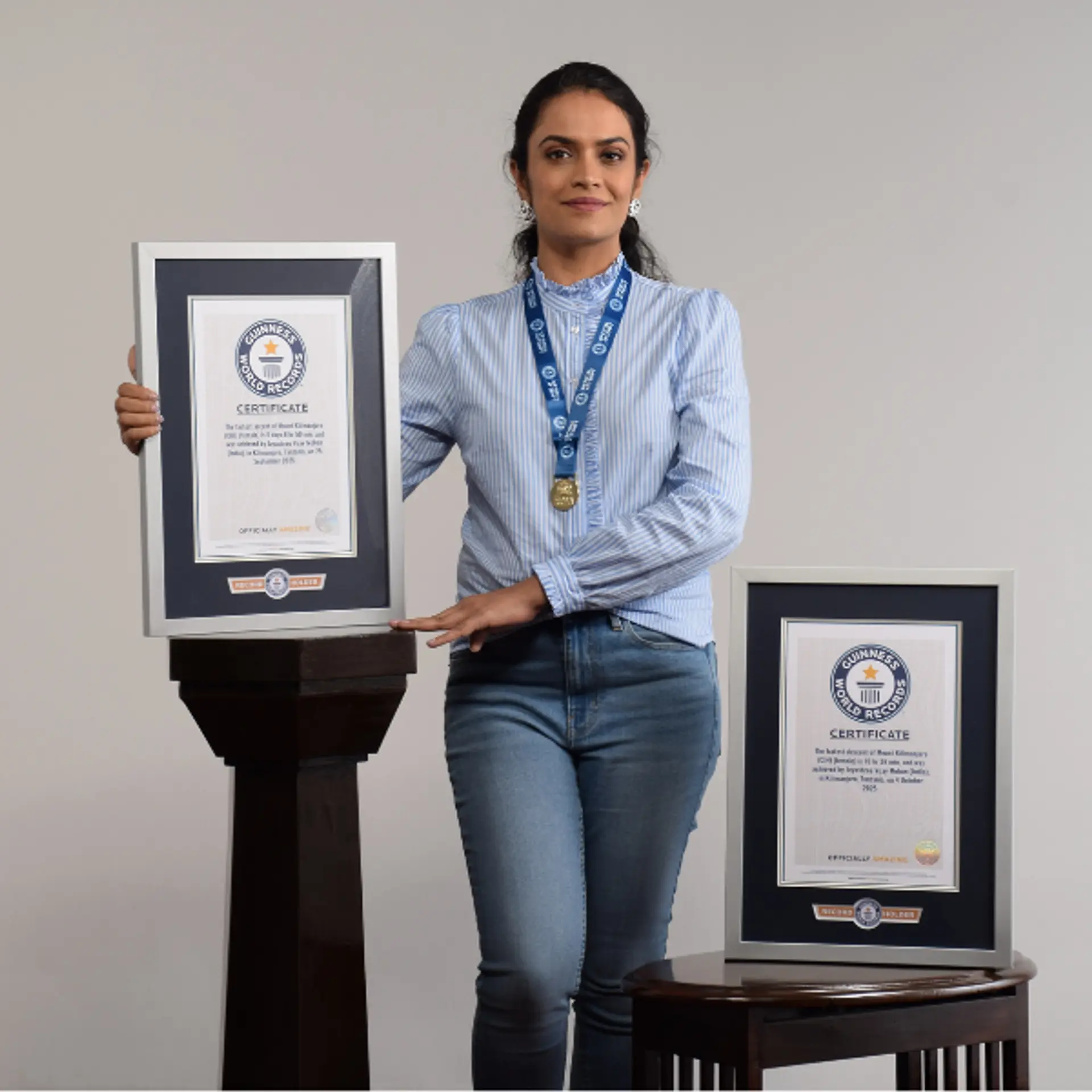

In October last year, Jayashree Vijay Mohan achieved two Guinness World Records in the CIH (Coordination impairment – hemiplegia) category—for the fastest ascent and descent of Mount Kilimanjaro by a female climber.
Behind this remarkable achievement lies a story of grit, resilience, and quiet determination. It is, in many ways, a triumph of mind and body, and of a spirit that refuses to surrender.
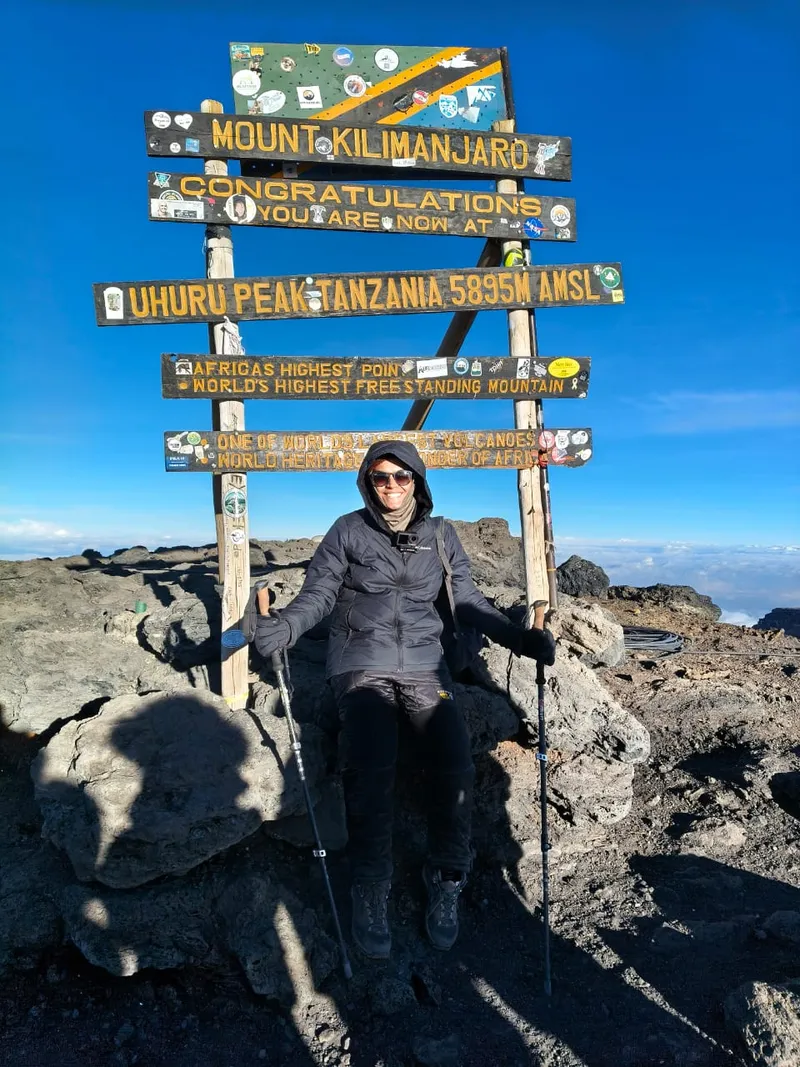
On top of the world - Jayashree summits Mount Kilimanjaro
Four years earlier, Jayashree suffered a stroke, and what followed was not a dramatic comeback, but months of slow, uncertain rebuilding. She had to relearn simple movements, including standing up, walking unaided, and trusting her own balance.
Her battle, fought in hospital corridors and physiotherapy rooms, reached its peak with a 7,895m climb to the summit of Mount Kilimanjaro.
In October 2021, Chennai-based Jayashree was happily juggling her roles as a partner in her financial advisory firm and as a mother to two daughters.
On a family road trip from Trichy to Chennai, she found the left side of her body going numb. “I couldn’t feel my entire left side. That’s when I called a doctor, and he told me it could be a stroke and asked if there was a hospital nearby. I was on the highway and in the middle of nowhere. I was responsible for my family, so I reached the hospital only at night,” she recalls.
The doctor said that the stroke had not caused irreversible damage. It wasn’t so severe that she couldn’t be saved.
The rehabilitation took months, during which even the smallest tasks, like lifting a cup or washing her hair, became extremely difficult. “You are constantly asked to settle down and accept the new reality without even being given a chance to say what you want to accept. That was the first challenge,” she shares.
Accept and keep moving forward
Jayashree was determined not to accept a “new me”, which meant she had to train to be mentally tough every day. And one day, she accepted a philosophy she still lives by—Avlo daan—to accept and keep moving forward, which also became her strength to battle the constant war inside her head.
The minute she accepted this, she began to look beyond rehabilitation and towards a vision board for the future. It began with a tall, lofty goal—Everest Base Camp in 2023.
“My doctor was shocked. Someone who suffered a stroke would not even think of running, but here I was talking about Everest Base Camp,” she says.
Without any prior experience in climbing, she spent three months working hard to build endurance and strength, along with rehabilitation for the stroke. She kept this goal at the centre, training morning, noon, and night.
Eight days into the nine-day trek to Everest Base Camp, Jayashree couldn't breathe. Her oxygen levels had dropped dangerously low, and she needed to be airlifted.
By chance, she had a phone signal in one of the rare spots on the mountain. Her doctor stayed up the entire night talking her through positions, checking she didn't pass out. She recorded voice messages for her husband and children and left her phone password written on a piece of paper beside it.
At 4:30 AM, she was still alive. "I decided, anyway, last night, I knew I might pass out. I've come so far. Let me try going as much as I can. If I have to pass out, let me pass out at the base camp."
She reached base camp around noon and broke down. It wasn't about the mountain. "I felt I could be something that I dream of being. It's like life didn't give up on me."
Onwards and upwards
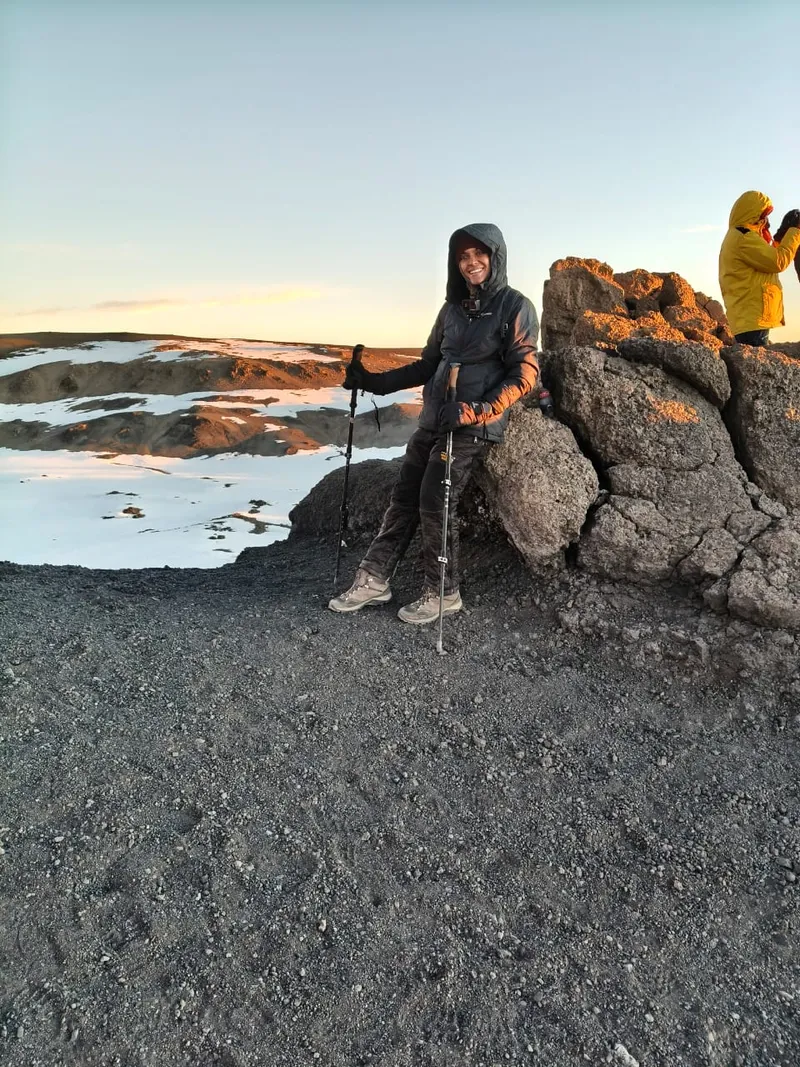
The trek to Everest Base Camp only steeled her resolve. But she spent a year of setbacks—multiple recurring episodes that took a month-and-a-half each time to recover. An L4-L5 back problem meant she needed help picking up her phone or drinking from a water bottle.
Her goal for 2025 was Kilimanjaro—the tallest freestanding mountain—because it represented strength and power, which she wished to see within herself.
By June, her back was functional. She approached her new training team at Primal Patterns with September as the target month, but they settled on October instead.
“I was very excited because October is also Stroke Month. If I can do this, then it will give me hope. It was also the month when I suffered my first attack,” she says.
Her trainer requested a VO2 evaluation (an indicator of cardiovascular fitness), and the results showed poor lung function. Her cardiopulmonologist warned of complications. Undeterred, she took the report from doctor to doctor until she found one willing to work with her. With a team comprising a cardiologist, pulmonologist, neurologist, and her trainers, she trained, submitted, and learnt from data.
Her non-climbing partner and close friend, Sai, provided her much-needed support. She made weekly trips to Nandi Hills in Bengaluru and trained in Leh.
Somewhere in between the preparation, Jayashree researched the Guinness World Records and spent days figuring out which category fit. While they approved her application, the uphill task was to find an operator to take her. A few hours before her flight, the only operator who had agreed wanted to back out.
“Knowing me, I was not going to give up. I asked them ‘what can I do to take me up? They asked me to take an MRI, and two hours before I left for the airport, I took an MRI and gave them all the results before the flight,” she says.
Once in Tanzania, after a night’s rest, a group of doctors and a guide try to convince her to attempt a smaller mountain and go back home.
At that moment, she felt rage. She showed them her last climb, just a week before, which was close to 5,000 metres. She showed them all her other climbs and the speed she was building.
At her own speed
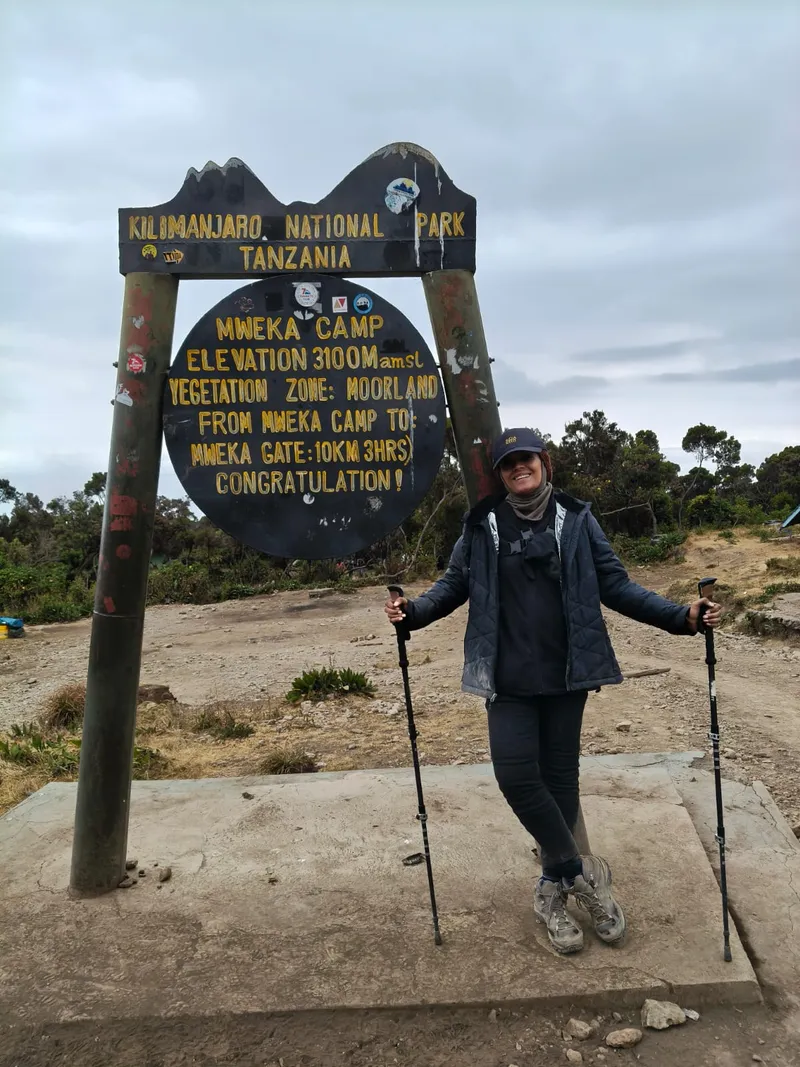
After a round of deliberations, she was allowed to climb. But on the mountain, she needed help from people around her, and she was okay with that. But what they were not okay with was that she wanted to do the ascent in two-and-a-half days.
“I countered with, if you let me do the ascent at your speed, will you let me descend at my speed?” Jayashree says. They agreed.
With a solo porter, she was climbing way ahead of her group and reached the summit in 5 days and 6.5 hours.
“There was a point where my eyes and my left side started to twitch. But I kept pushing and pushing. I even needed somebody’s help to unzip the pockets in my jacket,” she adds.
At the peak, most climbers spend an hour watching the sunrise, taking photos and embracing the moment. Jayashree took five minutes, clicked photos and videos, and immediately started her descent.
She ran, fell at least 25 times, didn’t stop for meals and sipped water from a tube. She went on all four limbs to climb the Barranco Wall, pushing her strength at every step.
“There were a lot of people who gave up. But there was no way I was going to,” says Jayashree. Dragging herself through the last section, a rainforest, she completed the descent in just 10 hours 26 minutes, making the record both ways.
“Immediately, a question popped into my head: Will I do this again? 100% yes,” she says.
Right now, she is in recovery, rebuilding her endurance.
But for Jayashree, the mountains are not a closed chapter. There are still the Seven Summits to pursue, and the dormant volcanoes are waiting.
She hopes her record is beaten as fast as possible. Hers is also the voice of hope.
“I want to be that voice who can give hope to another survivor who can think, ‘maybe tomorrow will also be like today, but it will be a different day. All of us have mountains in our lives to summit. If I can do it with my fragile body and my non-reliable mind, I think anybody else can do it too,” says Jayashree.
(The story has been updated to include additional details on her recovery.)
Edited by Suman Singh