



How CanAssist Breast test uses AI to determine treatment for early-stage breast cancer
Founded by IISc scientist Manjiri Bakre, OncoStem Diagnostics has developed CanAssist Breast (CAB), an AI-powered test to identify which early-stage breast cancer patients need chemotherapy and who can safely avoid it.

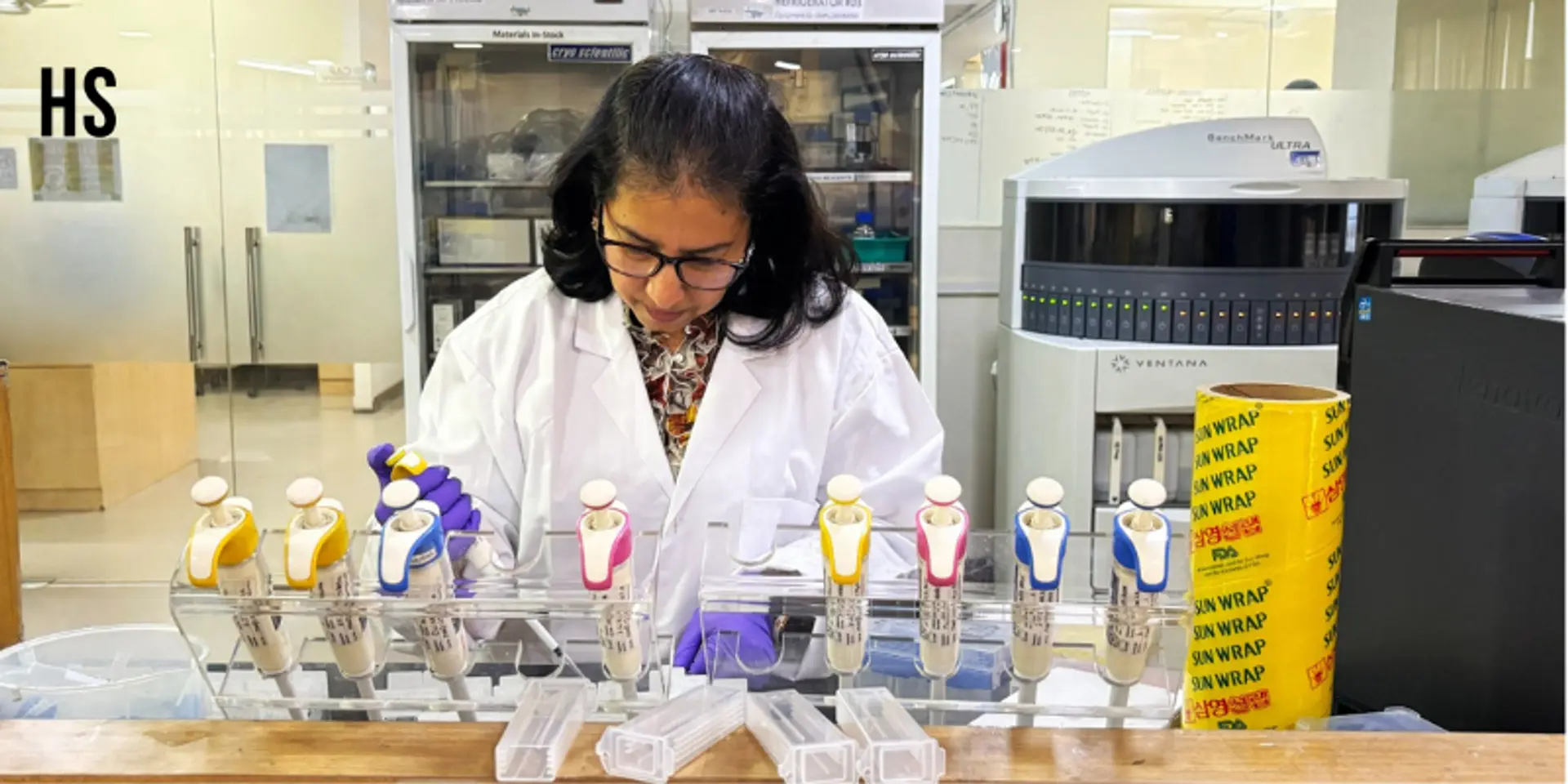

In the late 1990s, when Manjiri Bakre was doing her PhD at the Indian Institute of Science, Bengaluru, a close friend of hers discovered a lump in her breast and was diagnosed with breast cancer.
“It was a small tumour, and we all thought since it was caught early, it would be fine. The tumour was removed, she underwent therapies, and was so positive that she left for a postdoctoral fellowship in another country. But things went south, the cancer came back aggressively, and she passed away,” Bakre shares.
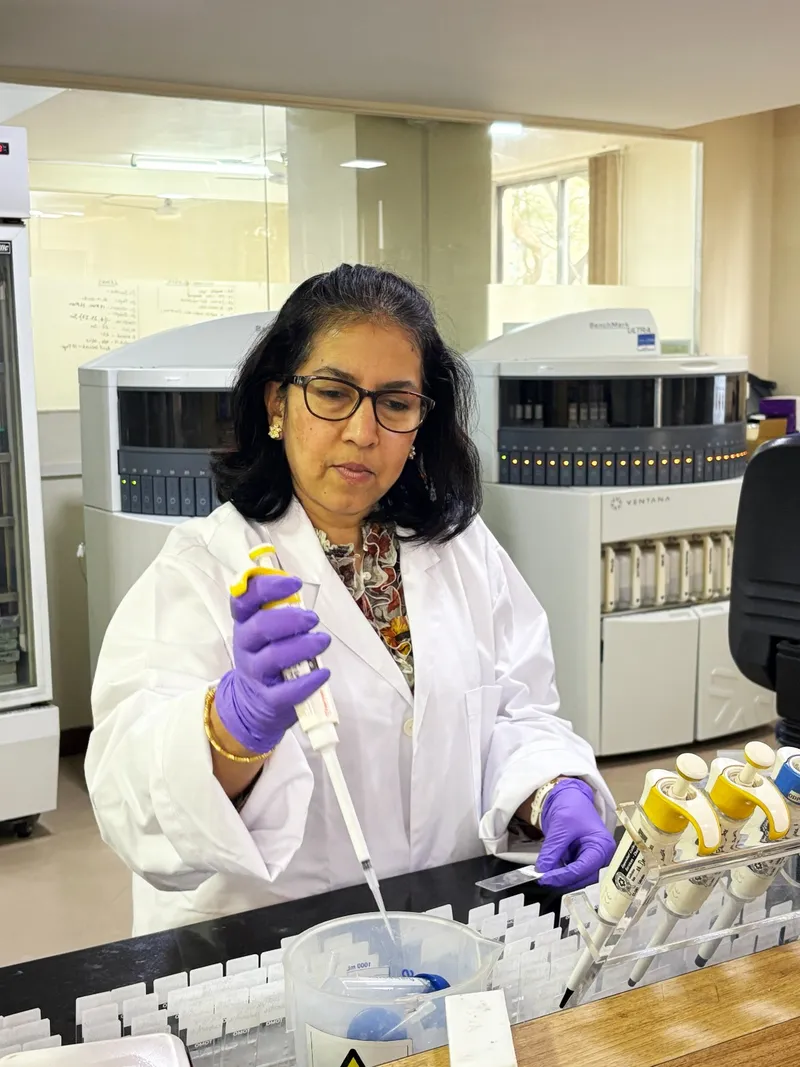
Manjiri Bakre, Founder, OncoStem
The death refused to make sense scientifically. A 15-centimetre, late-stage tumour is a death sentence anyone can read on a scan. But a small, surgically removed tumour that then metastasises to kill a young woman in months — what did that mean? What had they all missed?
"That's what really made me think: can we not assess the tumour biology of a small tumour and tell a patient whether it is aggressive or not so that the patient is prepared,” Bakre says.
For early-stage breast cancer patients
That question would take her more than a decade to answer. The answer is called CanAssistBreast from OncoStem Diagnostics.
“Prognostic tests place patients into two buckets: low risk of breast cancer recurrence or high risk. Those at high risk need aggressive therapy, chemotherapy, and additional targeted drugs. The important point is that a large number of breast cancer patients actually don't need chemotherapy because their tumours are not aggressive. Doctors understand this broadly, but without a prognostic test, they have no way to identify which specific patients are low-risk versus high-risk,” Bakre explains.
She cites landmark clinical trials like TAILORx (organised in the United States, Australia, Canada, Ireland, New Zealand, and Peru), which found that nearly 70% of patients with early-stage HR+/HER2– breast cancer gain little to no benefit from chemotherapy, underscoring increasing concerns about overtreatment in such cases.
Researchers in the US launched Oncotype DX in 2006-07, but it came at Rs 3.4 lakh per test. In India, this sum is unaffordable for the vast majority of patients.
Breast cancer is the most common cancer in women in India. According to the National Cancer Registry Programme, breast cancer cases in India rose from 2.13 lakh in 2021 to nearly 2.4 lakh in 2025.
This made Bakre think—can we develop something like this in India, built on our patients' tumour samples, that represents their tumour biology?
“This matters because our patients most commonly develop breast cancer before and around the age of 50 — perimenopausal — whereas in the West, the age of the typical breast cancer patient is around 60. When a woman is perimenopausal, the disease is more aggressive, the biology is different, and drug metabolism, liver function, heart function, and body metabolism all differ. So a test built on Western data may not fully represent our patients,” she adds.
Bakre points out that today, 95% of patients with a two-centimetre tumour are getting chemotherapy, but its benefit is only for patients who are at risk of metastasis, which is under 30% of those patients; the majority are being over-treated.
“When a patient has a two-centimetre tumour, the standard path is surgery, then radiotherapy, then chemotherapy, which can take up to a year depending on how the patient tolerates it, how often infections arise, and so on. After that, hormone therapy for five to ten years (one tablet a day). For patients whose tumours are hormone receptor-positive, the added benefit of chemotherapy is very minimal. By segregating patients with our test, we spare 70% of patients from chemotherapy,” she elaborates.
And for the 30% who are high-risk, even chemotherapy may not be enough on its own — targeted drugs are available. But with CanAssist Breast, a patient is identified as high-risk early, and she can be put on additional therapies immediately after chemotherapy rather than waiting for metastasis to declare itself.
Bakre started OncoStem Diagnostics in 2011, whose flagship test, CanAssist Breast (CAB), analyses a panel of protein biomarkers from a patient’s tumour sample and combines this with clinical factors such as tumour size, grade, and lymph node involvement. Using an AI-driven algorithm, the test generates a risk score from 1 to 100, categorising patients as low or high risk of cancer recurrence over 5 years.
Bakre says they were fortunate to have Oncotype DX before them. Indian doctors knew it existed, but they were expensive. When she approached them wanting to develop something similar, they were receptive. Their only ask? Could you keep the cost low?
CanAssist Breast costs Rs 63,000, much lower than Oncotype DX.
The big challenge was clinical evidence. India had no precedent for developing this test, and OncoStem couldn’t just walk in and start selling. They spent five years, from 2011-2016, working with hospitals such as Manipal Hospital, Rajiv Gandhi Cancer Centre, Jaslok Hospital, Apollo, and others, collecting tumour samples and follow-up data, and developing and validating the test. They became the first customers. In parallel, word spread at national conferences and through scientific publications.
How the CanAssist Breast works
When a patient comes to the hospital with a lump, the doctor performs a biopsy to confirm it is a tumour. Once confirmed by pathology, the tumour is removed surgically and preserved in the hospital's pathology lab. The pathology lab then maps the tumour's biomarkers — confirming hormone receptors are present and HER2 is absent. This can be early-stage breast cancer: stage 1, 2, or up to stage 3A.
After the patient has recovered from surgery, which typically takes two to three weeks, she returns to the doctor to discuss next steps. At that point, if the tumour is small enough (up to about five centimetres), the doctor can suggest CanAssist Breast to guide treatment planning.
“Once the patient agrees, the tumour sample is couriered to our central laboratory in Bengaluru, where all testing is performed. Our lab is accredited by NABL, ISO, and CAP (USA). Within eight days of receiving the sample, we issue a report indicating whether the patient's tumour biology is aggressive and carries a high risk of breast cancer recurrence, or whether it is low risk,” Bakre says.
The doctor and patient then meet to review the report. The doctor also considers the patient's age, family history, comorbidities, and prior cancer history before making a final treatment decision.
At launch, the predicted accuracy was 95%. As they accumulated real-world data, the observed accuracy has reached nearly 98%, shares Bakre.
A ray of hope
In OncoStem's initial years of commercial operations, a 31-year-old patient, recently married and hoping to start a family, was diagnosed with early-stage breast cancer. At her age and stage, the standard of care was clear: surgery, radiation, then a year of chemotherapy, then five to ten years of hormone therapy.
Running the numbers, she was looking at finishing treatment around age 37. And the treatments themselves — chemotherapy, especially, with its toxicity to the ovaries, would make conception significantly harder.
Her oncologist suggested CanAssist Breast. The result came back low risk.
"The doctor said, ' Let's complete your surgery and radiation. Then I'll allow you to have your baby first, because we can remove chemotherapy from your plan. After the baby is born, we'll put you on hormone therapy,” Bakre recounts.
The patient did exactly that. She had no recurrence or metastasis. Her child is now over five years old.
CanAssist Breast is now prescribed by more than 800 oncologists across India — virtually every state, with limited coverage only in parts of the northeast. It has been used on more than 10,000 patients. Internationally, the test is sold in Bangladesh, Sri Lanka, Turkey, the UAE, Saudi Arabia, and Iran.
Currently, many private health insurance companies reimburse the cost of CanAssist Breast. Public and government schemes reimbursing it include CGHS, ECHS, State Bank of India's health scheme, Delhi State Health Insurance, Rajasthan's RGHS, and Gujarat's Bhavishya Arogya Yojana. It is working to have CanAssist Breast included in the Ayshman Bharat breast cancer treatment package.
OncoStem first raised funds in November 2011, when the Indian startup ecosystem was fairly new and lacked a rich history of product-driven healthcare companies. It raised its second round of funding in 2017.
“The broader challenge with biotech and life science companies is that development takes years. Clinical trials take time. Our test predicts events, such as metastasis, that happen over a five-year horizon. Investors need the patience to wait that long. Healthcare companies don't scale as fast as IT companies, and Indian investors historically haven't had that patience. It becomes a vicious cycle—few big successes in Indian healthcare mean fewer investors willing to try,” says Bakre.
A positive development, she adds, is that the government is beginning to step in, with deeptech funds and matching grant programmes.
With CanAssist Breast’s success, oncologists are asking for similar prognostic tests for 2-3 other cancer types, says Bakre.
“We would love to do that, we just need to raise a new round of funding to make it possible,” she adds.
(The story has been updated to correct typos and include accreditations.)
Edited by Affirunisa Kankudti