



UK women entrepreneurs will drive 1,000 km from Chennai to Goa to fund vaccines and classrooms
This Chennai-to-Goa rally blends endurance travel with philanthropy, turning the road into a cross-border campaign for education and women’s empowerment.

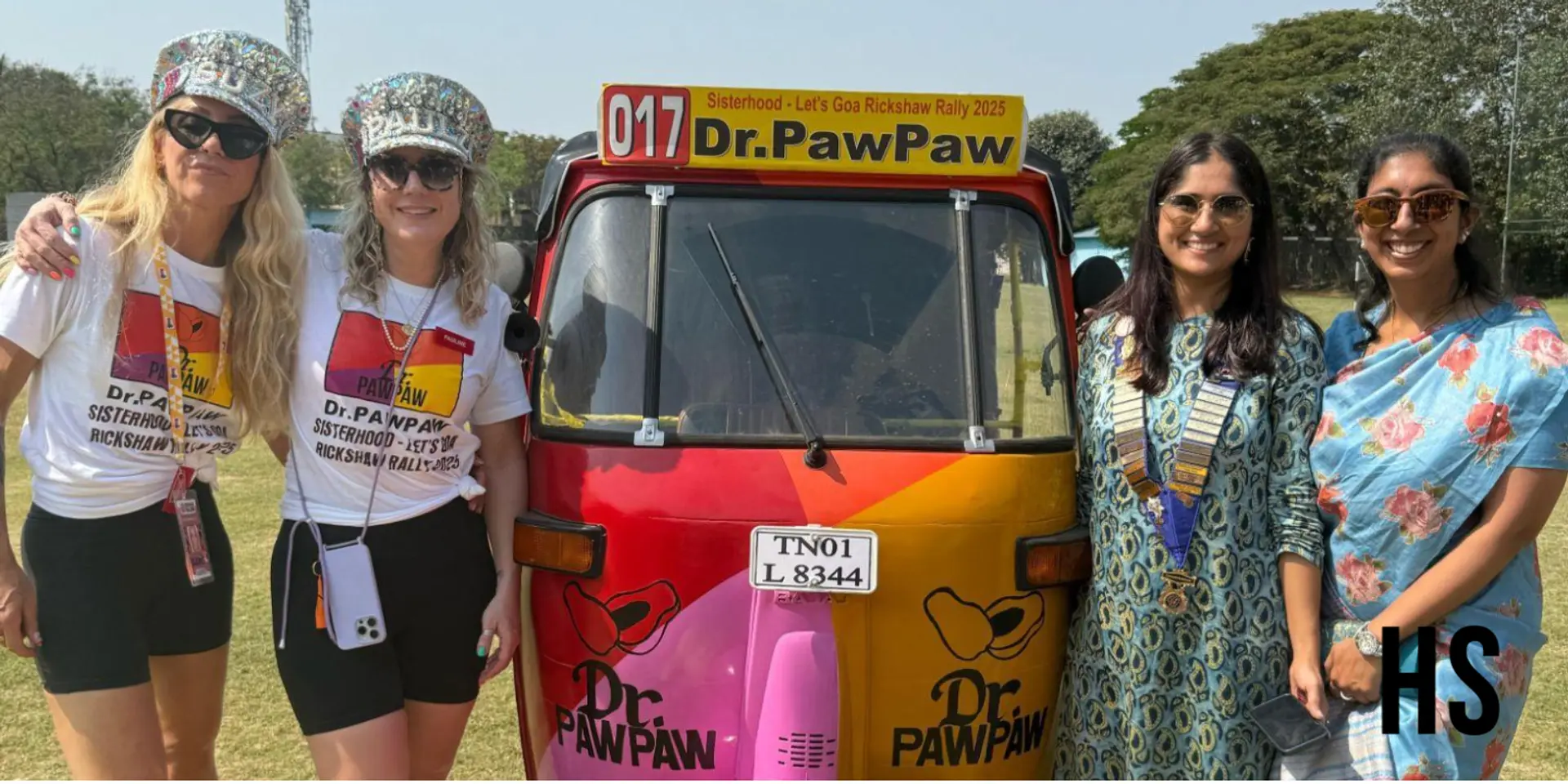

On March 3, a convoy of auto rickshaws will start from the Chennai suburb of West Tambaram, with 35 women entrepreneurs from the United Kingdom, embarking on a 1,000-kilometre journey to Goa. Its mission: women steering their own three-wheelers across Indian cities and highways to raise funds.
The ‘Let’s Goa 2026 Rickshaw Rally’ marks the second collaboration between Madras Midtown Round Table 42 (MMRT42), Madras Midtown Ladies Circle 7 (MMLC7), and the UK-based Sisterhood Group—a collective founded in 2006 that has raised over £1 million through endurance challenges ranging from dragon-boating across the English Channel to desert marathons, for various charitable causes.
According to Siddharth Shankar, Chairman of MMRT42, the rally is a continuation of a model that has evolved over decades. “This auto rickshaw challenge is not something new,” he says, explaining that international travellers have long participated in such rides to experience India while supporting social projects.
The organisation partners with a tour operator that manages routes, accommodation, orientation, on-road support, and even travelling mechanics for repairs.
Meanwhile, MMRT42 takes participants to see schools and facilities built through its initiatives for them to understand where funds are used and why they matter.
Shankar says travellers, who are also donors, first review the proposed projects, study the needs, and then visit sites to see conditions firsthand before contributing. “It’s a bit of both research-based planning and experiential learning.”
Last year’s edition drew 70 women entrepreneurs and raised more than Rs 1 crore.
This year, the group is smaller, with 35 women entrepreneurs—and largely new ones—led by Sisterhood Founder Emma Sayle. When these participants document visits and share them across their social platforms and international media, it helps potential donors see how funds are utilised.
Sayle says the mission is about a lot of adventure but also about getting firsthand experience of the causes they support. “It’s about building networks and plans, and ultimately, about empowering women and children.”
The rally’s route will pass through multiple cities before concluding in Goa on International Women’s Day on March 8.
Much of this rally’s mission centres on education infrastructure. Shankar says MMRT42 has built more than 75 classrooms, impacting over 3,000 students, alongside smart classrooms, science labs and computer labs in Chennai-area schools.
Across the broader Round Table network, Shankar estimates his chapter alone has helped construct over 150 classrooms in the past two decades. “Better facilities reduce dropouts. In one partner school, pass rates rose from roughly 60–70% to nearly 100% after infrastructure improvements,” he says.
Education, however, is only one part of the picture. Funds from previous rallies have supported a dedicated women’s skilling unit that trains participants in vocational skills and financial literacy, as well as specially designed classrooms for differently-abled students.
The team’s future plans extend further into women’s health and livelihood support. Among projects under discussion are vocational training centres for young women after schooling, maternal health support through postnatal nutrition initiatives, and awareness programmes around HPV vaccination to prevent cervical cancer.
“We don’t look at small projects; it’s always a long-term goal,” says Shankar.
Funds raised abroad are channelled through established NGOs and agreements to ensure they reach intended projects, with decisions taken jointly after needs assessments.
Participants will visit two or three project sites during the rally—a number limited by travel time and the physical demands of driving autos across states in India. But the organisers believe even brief visits can be transformative. Seeing facilities, meeting students, and witnessing change on the ground often reshapes how donors understand development needs, says Shankar.
“Our visitors frequently realise that while India is rapidly developing, there are still certain pockets where funds could be utilised,” he says.
For MMRT42 and its partners, the journey’s goal is to create networks of solidarity that extend beyond borders through a model that combines adventure, advocacy, and philanthropy.
“Collaborations like these show that meaningful change becomes possible when strong-willed, like-minded women come together,” says Ladies Circle 7 Chairperson Nanditha Vikram.
Edited by Suman Singh