



These women entrepreneurs are building livelihoods, not just businesses
From supporting mothers returning to work to building livelihoods for rural and tribal women, these women entrepreneurs are quietly redefining what entrepreneurship looks like.

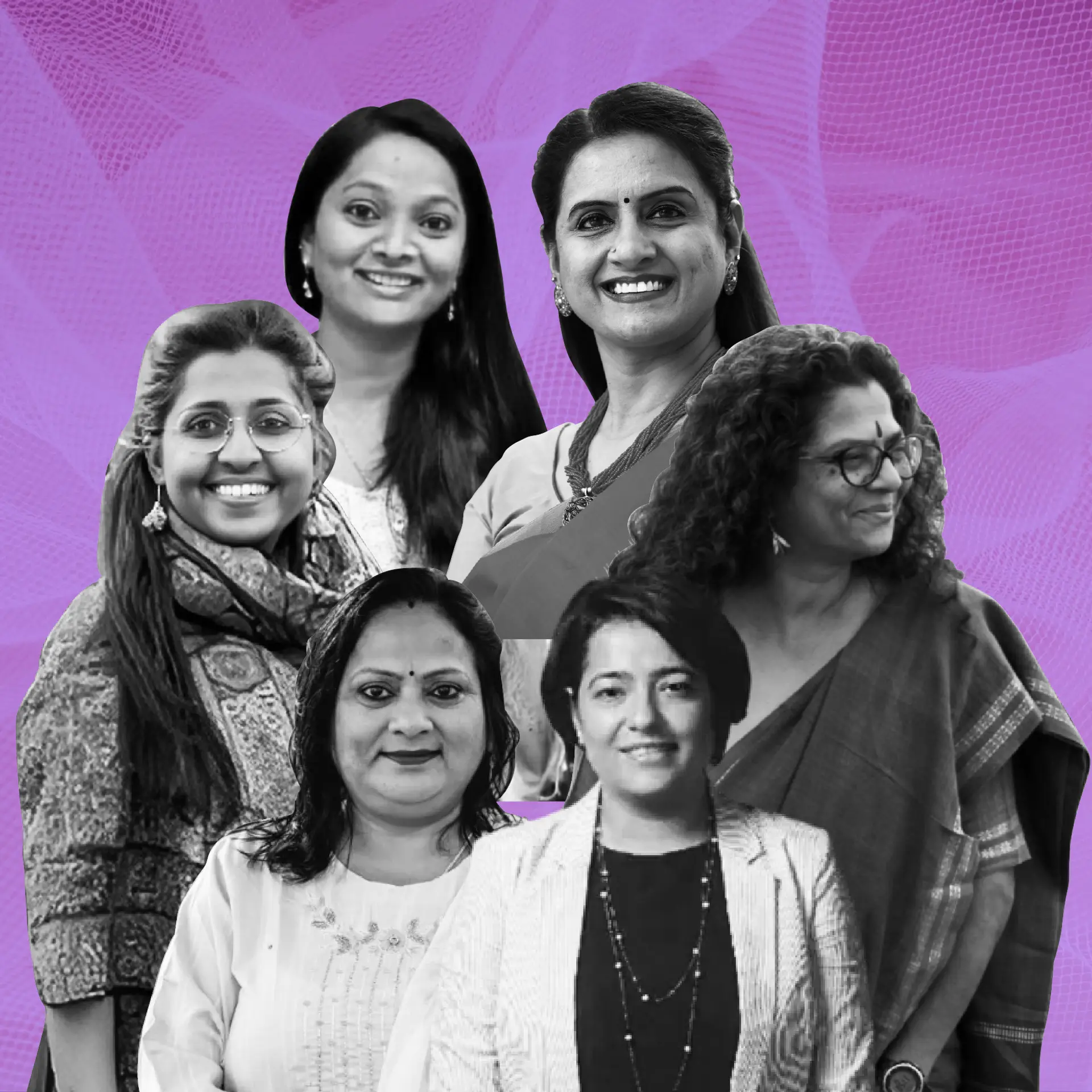

Across India, women are building enterprises that create impact and market opportunities for countless women, both in urban and rural areas. From supporting mothers returning to work to creating reliable sources of income for rural and tribal women, these women entrepreneurs are quietly redefining what entrepreneurship looks like.
Here are six women entrepreneurs who are building livelihoods, not just businesses, and whose success is measured not just by profit but by participation and community development.
Anita Gupta, Bhojpur Mahila Kala Kendra
In rural Bihar, Anita Gupta saw a pattern: women worked endlessly, but their labour rarely translated to financial independence. While these women were highly skilled in tailoring, embroidery, and handicrafts, they lacked access to the markets.
Recognising this gap, Gupta decided to help rural women gain access to credit, buyers, and the power of collective enterprise. Her work began with a strong conviction that economic participation changes how women are seen within their families and the community at large.
This belief led to the founding of Bhojpur Mahila Kala Kendra in 1993. Over the years, the organisation has trained tens of thousands of women through self-help groups, enabling them to build micro-enterprises, access credit linkages, and negotiate collectively.
Operating across Bhojpur, Madhubani, and Darbhanga districts of Bihar, today, the kendra’s impact is visible across households where women are economically independent and no longer silent partners in decision-making.
Shaikh Razia, Bastar Foods
Growing up in Chhattisgarh, Shaikh Razia saw how tribal communities depended on forest produce, not just for sustenance, but also as part of their identity and culture.
Razia was struck by the paradox of how indigenous food systems were deeply sustainable, nutritionally valuable, and full of knowledge, yet economically undervalued. She believed that livelihood creation did not mean abandoning tradition but instead respecting it.
Razia started Bastar Foods with this conviction. Working with tribal women, the enterprise processes and markets forest produce such as mahua flowers, ensuring fair sourcing and income opportunities. Today, hundreds of women are connected to Bastar Foods’ value chain, earning beyond seasonal labour while preserving the local food heritage.
Saloni Malhotra, DesiCrew
Saloni Malhotra saw a structural inequality in society that few dared to question. Young people from rural India, especially women, were often excluded from formal employment simply because of where they were born.
Rather than encouraging migration as the only pathway to progress, Malhotra asked a different question: what if meaningful work could move closer to where people already lived? Her vision was not charity-driven; it was pragmatic. Talent existed in rural India. But the infrastructure did not. DesiCrew emerged as a bridge between the two.
By setting up rural BPO centres providing back-office and data services, Malhotra has created salaried, formal employment for young people, especially women, across several states. DesiCrew gives many young employees the experience of structured professional work without leaving their homes.
Saundarya Rajesh, Avtar Group
Saundarya Rajesh noticed a recurring story in corporate India: many talented women stepped away from careers for caregiving responsibilities, but the doors were quietly shut when they tried to return.
Rajesh wondered why caregiving was treated as a disqualification. Why were capable professionals rendered invisible after a pause? She believed the real gap was not in talent but in intent and institutional structure.
Through Avtar Group, she has created pathways for women returning to the workforce: job fairs, skill development programmes, and corporate partnerships. Over the years, Avtar has influenced how companies approach gender inclusivity, reframing returnship not as an accommodation but as a viable strategy to retain talent.
Surabhi Yadhav, Sajhe Sapne
Surabhi Yadhav’s work began with the realisation that rural women are often prepared for survival but not ambition. Access to higher education, professional networks, and non-traditional careers is limited for rural women, not because of a lack of ability but due to lack of exposure and infrastructure.
Yadhav’s response to this challenge was long-term and deliberate. She understood that confidence and career-readiness cannot be built at a weekend workshop. They require sustained mentorship and structured teaching. And Sajhe Sapne offers these.
The organisation runs a year-long job training programme that launches rural women into non-traditional domains. Through its Mini-MBA curriculum, participants develop entrepreneurial mindsets alongside technical skills. The programme is designed not merely to place women in jobs but also to expand opportunities for them in the economy.
Nivedita Banerji, Kumbaya Producer Company Ltd
In the early nineties, employment for marginalised rural women was irregular. Nivedita Banerji was determined to offer them stability and guaranteed work. She did not want to provide seasonal scraps of income but wanted to create a reliable source of livelihood.
In 1994, in a remote village in Dewas district of Madhya Pradesh, Banerji started something small: a stitching centre.
Over three decades later, the small centre has evolved into a large organisation. Kumbaya Producer Company Ltd employs over 100 women from marginalised communities, guaranteeing work for nearly 300 days a year.
In an ecosystem that rewards speed and scale, Banerji’s Kumbaya stands tall for endurance and sustainability.
Edited by Swetha Kannan