



You can't have a more democratic sector than travel, tourism, and hospitality: Mugdha Sinha
At SheSparks 2026, Mugdha Sinha, Managing Director, ITDC, said that globally, the travel and tourism sector employs 40% women.

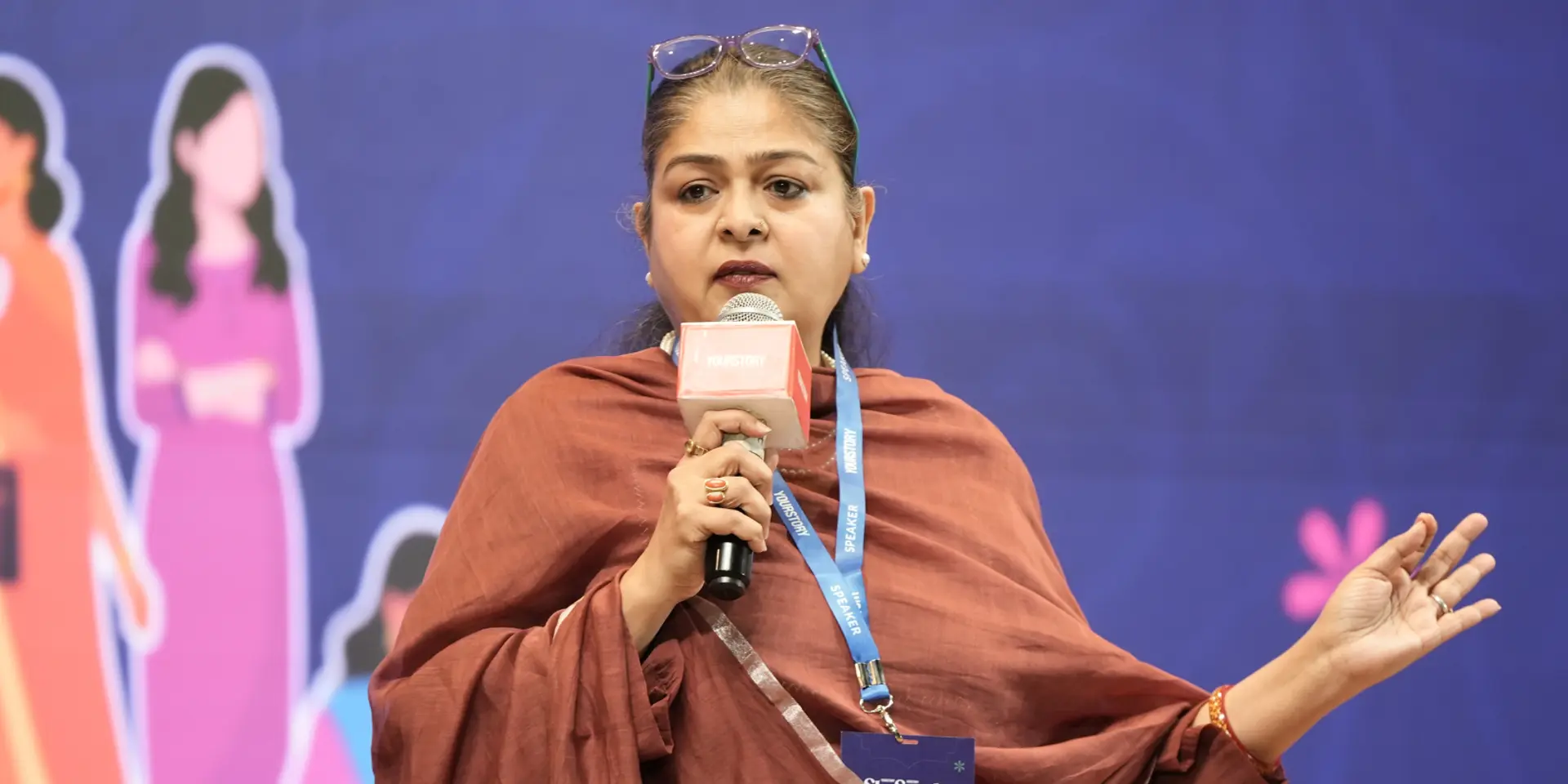

While beginning her TransformHERS talk on Moments, monuments, markets: India's plan for women-first tourism at SheSparks 2026, Mugdha Sinha, Managing Director of ITDC, quoted a Sanskrit shloka, Yatra Naari Pujyate, Tatra Devata Ramante, which translates to: "Where women are respected, gods reside."
“This is not just a slogan. This is at the heart of what it means to be a woman. Simply by existing, by being female, you deserve all the veneration, because you carry the divine Shakti in you,” she said.
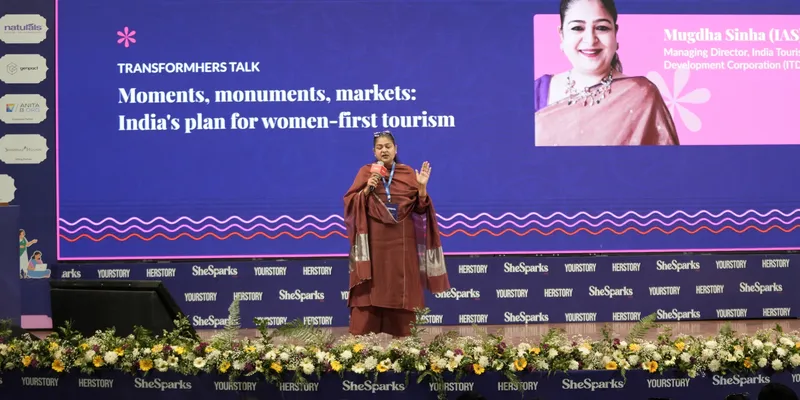
Sinha points to tourism as a democratic force with extraordinary leverage.
Globally, the sector employs 40% women, according to the World Travel and Tourism Council. Within her own organisation, ITDC, 34% of senior leadership positions are held by women. The Ashok Hotel, the 70-year-old jewel in ITDC's portfolio, has 52% of its hospitality workforce made up of women. Its General Manager is a woman.
She wants her audience to feel the weight of the numbers she carries.
According to UN Tourism, in 2024, 1.465 billion people travelled across international borders. The number for domestic travel within India alone was 2,900 million—more than double the global figure, within a single country.
India, she reminded the room, is not a nation in the conventional sense. It is a continent: 1.5 billion people, 65% of them under 35, a middle class currently at 310 million that is on track to reach 600 million by 2047, powered in part by the 240 million people lifted out of multidimensional poverty in the last decade. According to her, India is a potential storehouse for tourism and a major market in itself.
Each of those people, Sinha implies, is a potential traveller. Each represents a story of mobility—literal and aspirational. And each, right now, is largely uncounted in the gender-disaggregated way that would allow policy to serve them well.
“We have 43 UNESCO World Heritage Sites. We have a huge number of intangible fairs and festivals. We have five UNESCO Creative Cities—a Craft City, a Literature City, and a Gastronomy City. Awadhi cuisine has just been inscribed on the UNESCO intangible heritage list, as have Diwali and Durga Puja. That is the legacy of this rich country, this rich tapestry,” she said.
What tourism rides on
Sinha believes that tourism is a sector that doesn’t own anything.
“All the assets in tourism—the monuments, fairs, and festivals—are owned by the Department of Culture. All the logistics—the flights, the roads, the cruises—go to the transport ministry, the roads ministry, and so on. It's pretty much like the Amazon or Flipkart model: not owning any inventory but selling everyone else's. That is tourism,” she said. And, the four factors that affect tourism are technology, data, marketing, and climate change.
Apart from cultural assets, she also highlights that tourism rides not only on culture and commerce but also on perception.
“When you talk of perception, there are five S’s riding on it—safety, security, solo travel, sanitation, and sensitivity, which is a feedback mechanism,” she said.
Near the end of her address, Sinha calls upon the audience to be demanders. “If you will demand, if you will do advocacy,” she says, “I, as a policymaker, will be able to hear your voices and write the things that you need into policy—and then get it implemented on the ground,” she said.
To make women’s voices heard and be more visible, she believes social media helps.
“The government has started gender budgeting. Please collect statistics, conduct surveys on issues specific to women and get women-specific responses,” she says.
Gender-specific responses help raise the bar on safety, security, and sanitation, and to understand specifically where to implement changes and how to get better facilities.
She exhorts women to engage with the Ministry of Statistics and Programme Implementation so that data will enable evidence-based policy-making.
“This is the way your voices are heard through numbers coming to us, and it becomes instrumental in women-focused tourism policies,” she adds.
Edited by Megha Reddy