


International Women’s Day: Meet the women powering Indian hockey’s rise
As the Indian women’s hockey team begins its FIH Women’s Hockey World Cup qualifiers in Hyderabad today, four players talk about grit, dreams, and what it means to wear the Indian jersey.

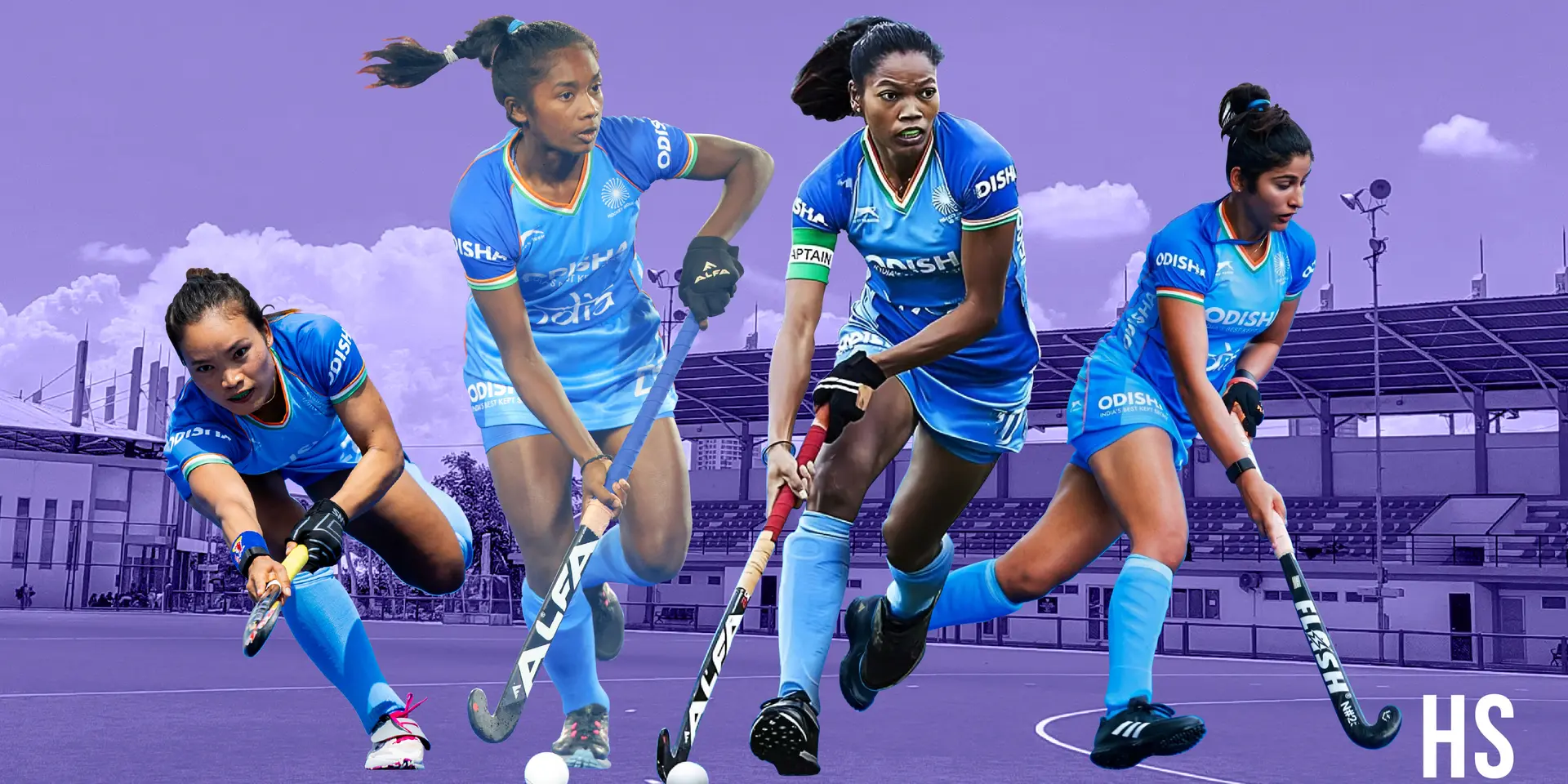

Across the red-soil fields of Jharkhand, the bamboo-lined lanes of Odisha, and the quiet hills of Mizoram, young women hockey players have risen through adversities to become champions on the world stage.
It began with a particular kind of hunger, the kind that encourages you to dream big.
As they watched their fathers play, they dreamed of one day wearing the Indian jersey themselves. Through relentless hard work and fierce determination, they learned to carry their country’s hopes on their shoulders.
Ahead of the FIH World Cup Qualifiers beginning on March 8, four players of the Indian women’s hockey team tell HerStory how they arrived here and where they intend to go next.
What emerges is an inspiring story of how a young generation of women is driving India’s national sport.
Salima Tete (captain, midfielder)
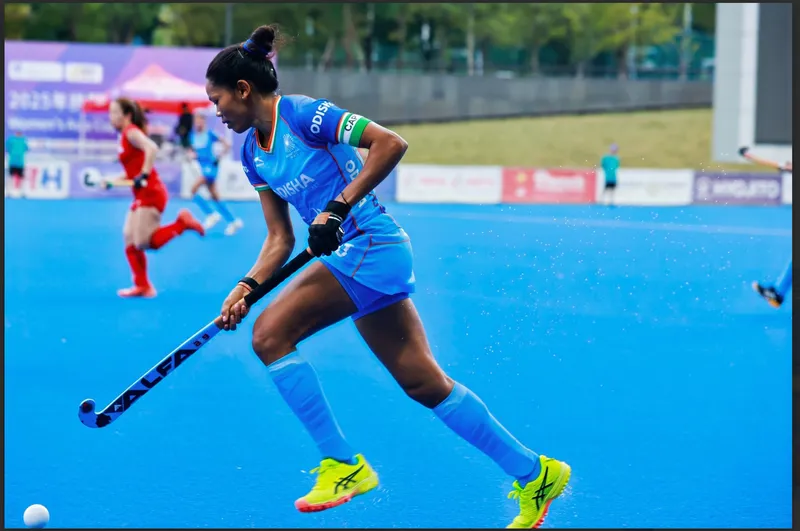
Known as the ‘Ferrari of Indian hockey’, Salima Tete (24) has sprinted her way from the red-soil fields of Simdega district in Jharkhand to become the youngest captain of the national team. The Olympian and Arjuna awardee was born to farmer parents in extreme poverty in Barki Chhapar village.
She played local tournaments where the prizes were goats and chickens—rewards she often won to help feed her family.
Salima’s father played the game, and she would accompany him to matches. She remembers playing with other girls on the grass and dreaming of an astroturf.
By 2016, when she made her senior debut with a strong showing against Australia, the sacrifice started to pay off. She still remembers the feeling. “After coming from a hostel in Simdega, I was getting a chance here as a senior. No one would want to lose that chance,” she recalls.
In 2018, she was appointed captain of the junior side, and in 2024, she became captain of the senior team.
Salima has grown into the responsibility. “As I started learning, I improved a lot. It is such a big responsibility. I was a little nervous,” she says.
Tokyo 2020, where India finished fourth and stunned the world, remains her most defining and formative moment. “We tried our best. Winning and losing are part of the game. We leave the past behind and focus on the present.”
She has been part of many big wins: gold at the Women’s Asian Champions Trophy, bronze at the Asian Games (Hangzhou 2022), bronze at the Commonwealth Games (Birmingham 2022), and silver at the Youth Olympics when she was the captain (2018).
Focusing on the World Cup qualifier, Salima says, We are training hard and supporting each other on the ground. Our players are highly skilled, and if we use our strengths well, we will come out as winners.”
She has big dreams for the future. “I want the team to qualify and win a medal in the Olympics. I want to win a medal for India.”
Her message to girls from villages like hers is simple: “If you do it with discipline and hard work, you can achieve anything in life.”
Navneet Kaur, (Forward)
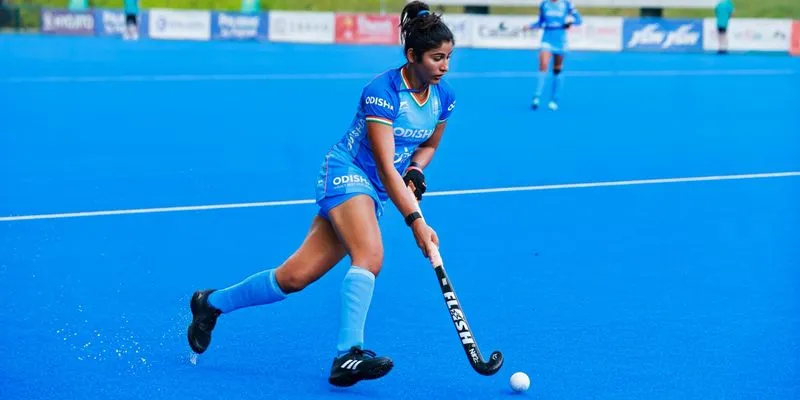
The 29-year-old forward from Shahabad Markanda in Haryana started playing hockey when she was nine. Her town is known for producing international players, including Rani Rampal, Navjot Kaur, and Jasjeet Kaur Handa. Like many before her, Navneet Kaur was drawn to the sport with fierce passion.
“From a very young age, I knew I wanted to be a sportsperson, though my father thought I should take up cricket. My parents have supported me, but many of the other girls didn’t have the same support. There would always be some talk from outsiders about letting us out of the house to play. It was difficult, but things have changed now,” she says.
When Navneet entered the junior camp, she had no idea what was in store or whether she would make it to the national team. But a visit from senior players pushed the dream forward. She was selected for the senior team and has since played in the Asian Games, the Asia Cup, and other tournaments. But the defining moment was in Tokyo.
Navneet says there is no individual pressure; it’s on everyone. After all, hockey is a team sport.
“I like the fact that the team believes if Navneet gets the ball, we will get a shot on the goal. I enjoy that,” she laughs.
Her biggest personal challenge, she says, was not skill but fitness. “When I joined the team, I was not fit to play at that level. I faced that first. Since then, I have been thinking that I have to stay fit. Fitness is the most important thing,” she says.
Navneet is enthusiastic about the women’s hockey league, now in its second year.
“We learn a lot from players from other countries. It’s a good experience for the junior players. It will be beneficial for upcoming tournaments.”
Training for the World Cup qualifiers began in January, and since then, the girls have practised with a positive attitude.
“The best thing is that all the players have a great learning attitude, which is good for the team. We practise with the mindset that we have to qualify,” she says.
Navneet is happy about the evolution of women’s hockey over the years. “When I joined the team, no one knew what was going on in women’s hockey. But after Tokyo, we realised how much people loved us and recognised our efforts,” she says.
She tells young girls who want to take up hockey to play with all heart and passion. “Don’t think everything will happen in a year. It takes a lot of hard work. In the end, you will get what you want. Just believe in yourself.”
Lalremsiami Hmarzote (Forward)
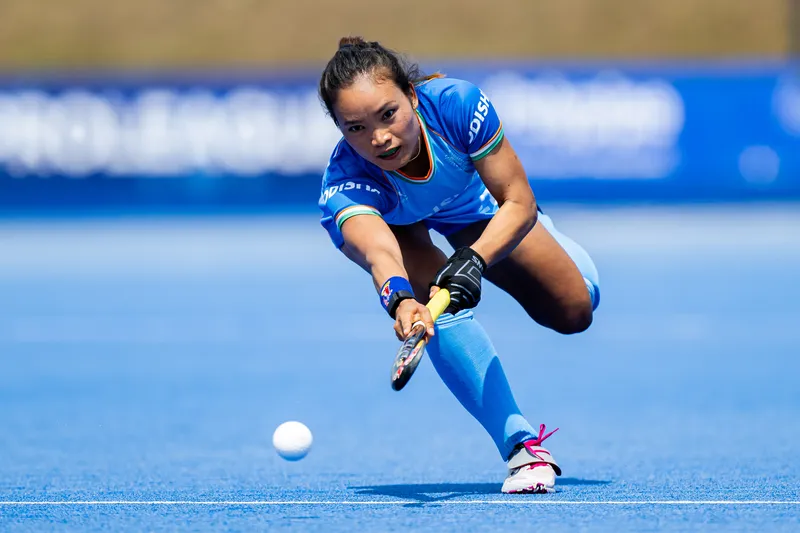
Lalremsiami Hmarzote’s sporting journey began in Kolasib district, Mizoram, when her school introduced hockey as part of its sports programme, and teachers encouraged interested students to try it.
“I didn’t know much about hockey when I started. Our teacher selected students who wanted to play. Since then, I have liked it,” says the 25-year-old forward.
Lalremsiami joined the Thenzawl Hockey Academy, and between 2011 and 2016, the academy shaped her into a disciplined forward with speed, stamina, and an instinct for attacking play.
In November 2016, Lalremsiami joined the National Hockey Academy in Delhi.
But the transition from Mizoram to the national training setup was not easy.
She did not speak Hindi, the language most coaches and teammates used. Communication was difficult in training sessions and team discussions.
But she didn't let this deter her. She persisted, observed, and gradually adapted to the new environment. Over time, she learned the language and earned her coaches' trust. Within months, her performances caught the attention of selectors.
In December 2016, she was picked for the junior national team. A year later, she made her debut for the senior Indian women’s team.
One of the most defining moments of Lalremsiami’s career came during the FIH Women's Series Finals in 2019.
In the middle of the tournament, she received devastating news—her father had passed away. But instead of returning home immediately, Lalremsiami chose to stay and play for India, a decision that stunned her teammates and coaches.
“My father was my biggest support,” she recalls. “He always told me to keep my country first.”
A year later, Lalremsiami became the youngest member of the squad for the Tokyo Olympics.
“I was young and inexperienced. But I felt proud to represent my country at such a big stage,” she says.
Though India narrowly missed a medal, the tournament brought unprecedented attention to Indian women’s hockey.
She is the first sportsperson from Mizoram to win an Asian Games medal, inspiring a new generation of athletes from the northeastern region.
Her performances also earned her international recognition, including the FIH Rising Star of the Year Award, given to the world’s most promising young hockey player.
Despite all the recognition and accolades, Lalremsiami remains deeply aware of the challenges athletes from Mizoram face.
“There are only two hockey turfs in Mizoram. If we get better facilities and support, we can produce many more players at the international level,” she says.
Today, Lalremsiami is known as one of India’s most dependable forwards—an attacker who combines pace with relentless work rate.
To young girls who want to follow their passion, she offers some pragmatic advice: “Hard work is very important. Consistency is important. Focus on your goals and your dreams.”
Sunelita Toppo (Midfielder)
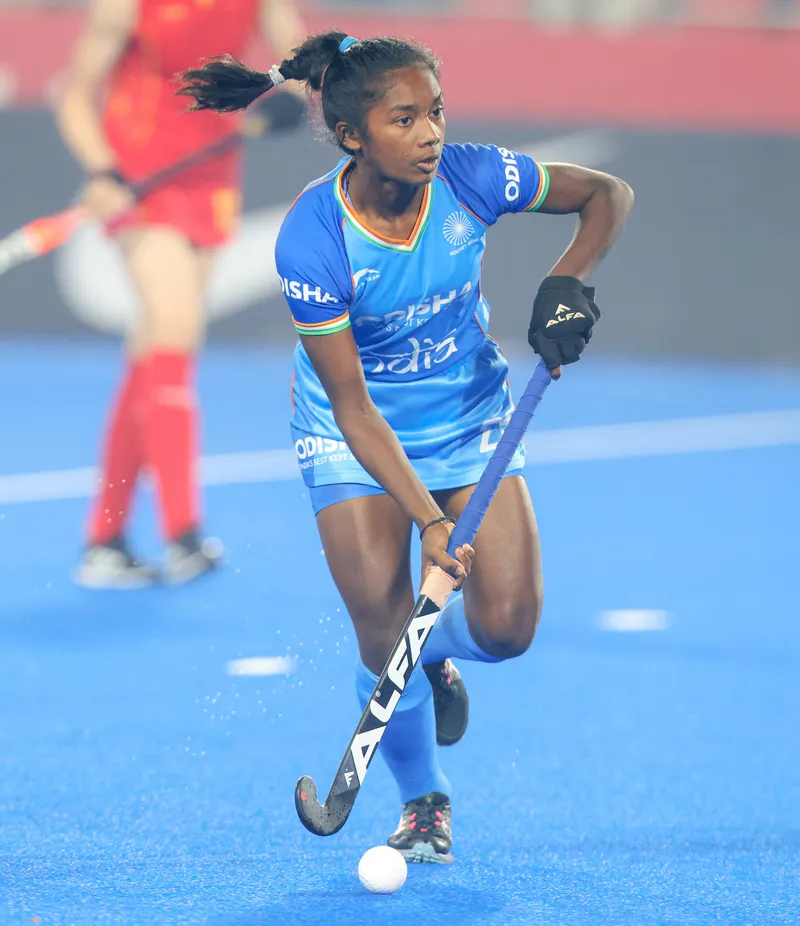
At just 18 years, Sunelita Toppo has already emerged as one of the most exciting young faces in Indian women’s hockey. From playing with a bamboo stick in a small village in Odisha to becoming a Rs 24-lakh pick at the Hockey India League, her journey reflects the powerful pipeline of hockey talent coming from eastern India.
Sunelita grew up in Kukuda village in Rajgangpur block of Sundargarh district, a region often called the nursery of Indian hockey. The daughter of a farmer, she began playing the sport at the age of nine, long before she had access to proper equipment.
Sunelita’s first brush with hockey as an organised sport came during an event at her village.
“In our village, there was a tournament called Kisan Mela,” she recalls. “I saw girls playing hockey for the first time there.”
Among the players was her aunt, Anupa Barla, a former Indian international who became her biggest inspiration. “My mother told me to play like my aunt. Since then, I became interested in hockey,” says Sunelita.
In 2018, she joined the Sports Authority of India Centre (SAI) in Sundargarh, where structured coaching helped refine her natural speed and playmaking ability.
She rose steadily through the ranks—first playing for her state team, then representing India at the junior level in 2022. By 2023, she was part of India’s junior squad that won gold at the Women's Junior Asia Cup.
In February 2024, when she was just 16, Sunelita made her senior debut for India in the FIH Pro League.
“I had joined the senior team only a few months after playing with the juniors. I was thinking about how I would play with the seniors. But I tried to play my best,” she says, adding, “My strength is my speed. As a side midfielder, if I can intercept the ball and pass it quickly to the striker, it can turn into a goal.”
During the 2024 Hero Hockey India League auction, Sunelita was acquired by SG Pipers, a Hockey India League franchise, for Rs 24 lakh.
“When the league started, we didn’t know what it would be like. But we got the chance to play with international players and understand how they think and handle pressure,” she says.
Sunelita’s immediate focus is on helping India qualify for the next FIH Hockey Women's World Cup.
But her long-term dream is naturally the Olympics. “Personally, I want to play in the Olympics,” she says.
She tells young girls who dream of wearing the India jersey to work hard and enjoy the game.
Edited by Swetha Kannan