



Microsoft’s Sukhmani Lamba on how AI will change the way we work
As part of our Women in Tech series, we talk to Sukhmani Lamba, a senior product manager at Microsoft, who holds multiple patents in conversational AI. Her work focuses on agent memory, agent intelligence, and agent context at Microsoft Teams.

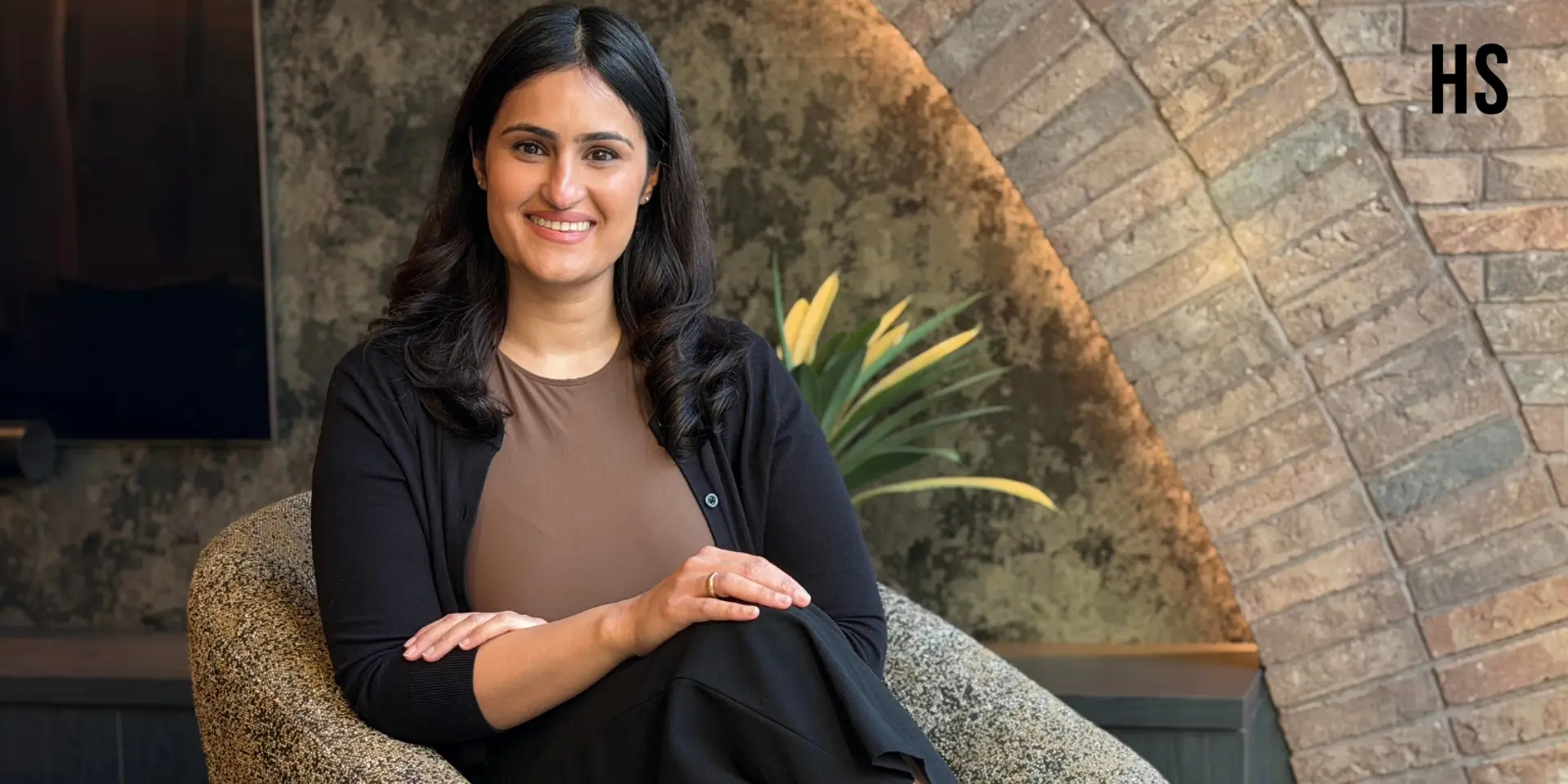

While growing up in Nigeria and later in Bahrain as the child of expatriate parents, Sukhmani Lamba recalls her father bringing home the first laptop. Soon her world opened up to Microsoft Word and Paint. She also remembers the oversized, clunky mobile phone. But what was deeply imprinted on her young mind weren’t the gadgets but the innumerable ways in which technology could empower people.

“Technology was empowering both in the physical barriers it was dissolving and the opportunities it was creating,” she says.
Now a senior product manager on the AI Agents Platform at Microsoft Teams, with three patents to her name, Lamba is part of the new wave shaping the future of work—building at the intersection of enterprise software and conversational AI.
The early belief and conviction that technology would change lives helped chart the course of her entire career.
After completing her degree in electronics and electrical engineering from Punjab Engineering College, Lamba joined Deloitte to work on digital transformation projects for enterprise clients.
But consulting, she discovered, was like advising from a distance.
“It’s a lot about processes; you are suggesting improvements and the technology that can be used, but there is less control over the actual core product you are building,” she explains.
This restlessness pushed her towards product management.
Lamba left for the United States to pursue a master’s in engineering management at Duke University, specialising in product management. The programme introduced her to Pendo, a startup where she worked under a work-study arrangement. Here, she got a taste of building from the inside.
After graduating, she joined Wayfair in Boston, a Fortune 500 ecommerce giant, as a product manager. But her ambition was always to break into the world of communication software.
At that time, Slack was flourishing, and Microsoft Teams was rising. When the Covid-19 pandemic, it changed the way the world communicated.
The inflection point
As the world rushed online, overnight, platforms like Zoom, Slack, and Teams went from productivity tools to lifelines. For Lamba, it was a signal she had been waiting for.
She joined Microsoft Teams during the height of the pandemic — a platform now used by approximately 320 million people worldwide.
Lamba explains what she does here.
“When you think about how work happens in enterprises, Teams is one place where people come to communicate. But realistically, you might be going to Word for a document, to another system for your timesheet, to a project board for your weekly metrics, and to a separate system for your bugs. There's a lot of different software.
“My job was: when people are in Teams, how can we make sure they can actually complete whatever they are trying to do right from within Teams?”
This understanding led to three patents in her name—innovations centred on how shared links are interpreted, understood, and made immediately actionable inside Teams, so users can close the loop on a task without ever leaving the platform.
These are important tasks—a contract that needs signing, a document shared for review, or a link pasted in a chat. All these moved from a state of friction to free flow.
The results were far-reaching. By enabling users to interact with shared content directly within Teams, Lamba’s innovations helped tens of millions of people work more seamlessly without disrupting their workflows, influencing how billions of links are handled on the platform.
The standards she helped develop are now used by major global technology companies, as well as hospitals and educational institutions.
Advent of ChatGPT and its impact
In late 2022, ChatGPT arrived. Within Microsoft, an early investment in OpenAI had already been made.
A small group within the company understood that the enterprise world was about to be transformed. Lamba was one of the earliest people working on the enterprise story.
When ChatGPT launched its plugins, a system that allows users to bring external software directly into their AI conversations, Lamba was already building the Microsoft equivalent.
“I'd worked on a company-wide strategy for Copilot plugins. It started from me, from Teams, and became a Microsoft-wide adopted standard,” she shares.
The work was significant enough to be featured in the keynote of Microsoft’s executive vice president.
From there, Lamba moved on to agentic AI. She led the platform strategy for Microsoft's flagship collaborative agents for Teams—Facilitator Agent and Channel Agent. One was announced in 2023 and the other in 2024.
Today, Lamba is working on something she describes as the “agent brain”.
Her current work focuses on agent memory, agent intelligence, and agent context in Microsoft Teams. This is the infrastructure that determines what an AI agent knows about you, your preferences, your personality, your projects, and your organisation, and how it uses that information to serve you most effectively.
AI and the fear of losing jobs
While Lamba acknowledges that the engineer’s coding role has largely transformed due to AI, she insists that the human aspects of work, such as strategic thinking, alignment, persuasion, and driving, are not going anywhere.
“You are focusing more on thinking. The actual sitting down to do it is where AI is taking over,” she says.
Will AI disproportionately affect women, particularly those who take a break from their careers? Lamba admits the acceleration is real.
“For anybody who has been out for even six months, the industry has moved light years ahead. But many people have been able to upskill very easily with AI. Even if I’m returning after leave, I can quickly understand what decisions have been made, what my manager is focused on, and what the market is doing. It's almost like having a personal assistant,” she says.
Beyond her role at Microsoft, Lamba sits on the Advisory Council for Products That Count, a prestigious, invite-only group of over 500,000 product managers, CPOs, and industry leaders from top firms like Google, Amazon, and Meta, helping shape best practices for product management in an AI-first era.
As an executive in Residence at Mighty Capital, a San Francisco-based VC fund, Lamba advises Series A and Series B enterprise startups. She is also involved with Products by Women, a community focused on upskilling women in the field.
In the academic world, she reviews papers and conferences at the intersection of AI, human-computer interaction, and the future of collaboration.
Lamba is candid about what it still feels like to walk into a room where the majority are men.
“It used to be very intimidating at the start. Even now, there is a little bit of impostor syndrome. But I just put it aside. It’s there. My advice to anyone would be: just own what you know and speak about it,” she says.
On where she sees herself in five years, Lamba does not hesitate to proclaim her love for what she’s doing.
“I am 100% going to still be doing AI. I feel very passionately about enterprise productivity—but human productivity is the other thing. And collaboration. That's exactly what I do right now, and I love it,” she says.
(This story has been updated to correct a typo.)
Edited by Swetha Kannan