



This woman entrepreneur is developing a fully flushable sanitary pad
With Flawsome, a fully flushable sanitary pad, Ranu Khade aims to address one of menstrual hygiene’s most overlooked challenges: dignified disposal of products.

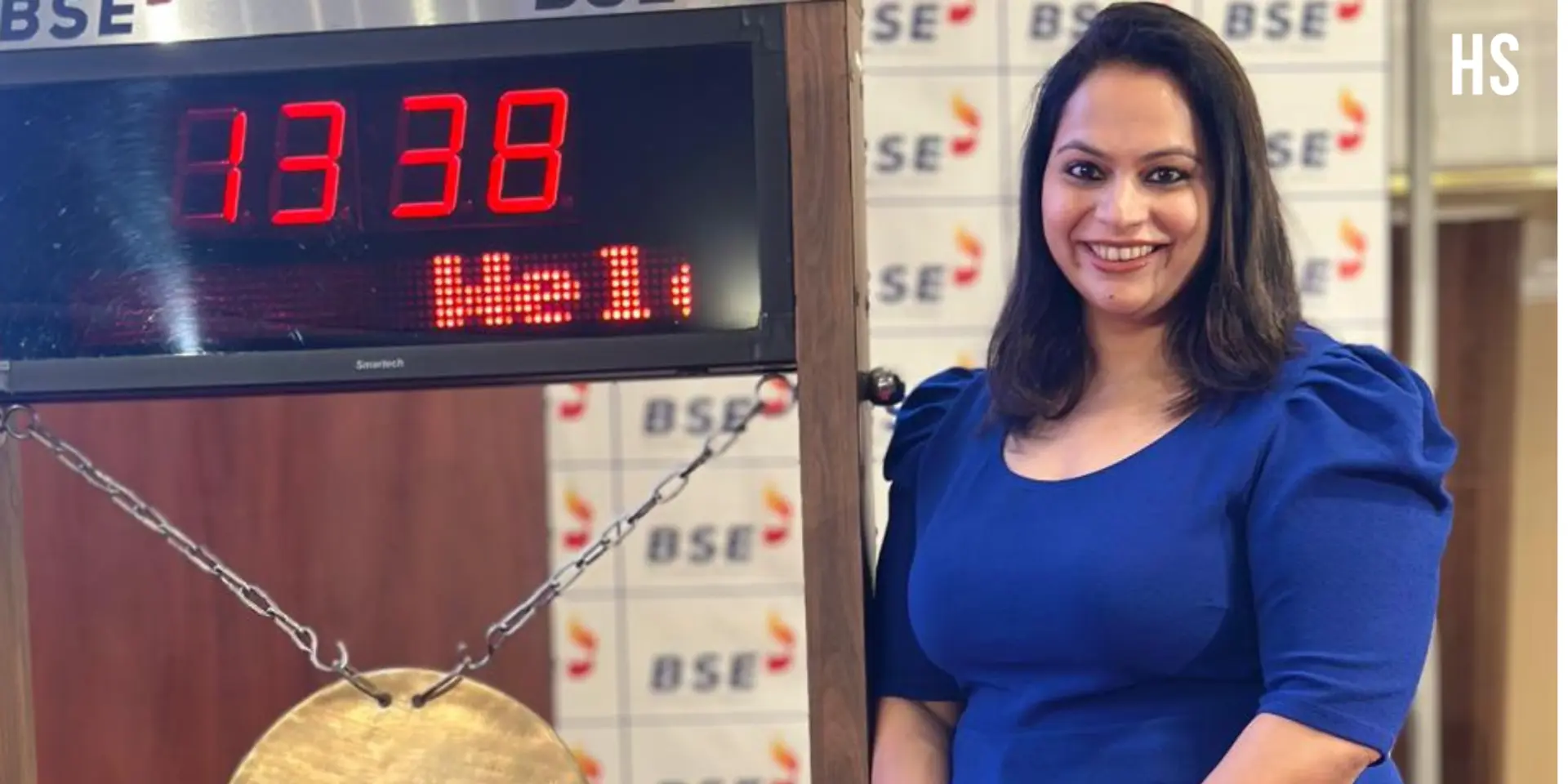

Ranu Khade has spent over two decades thinking about a problem most people don’t talk about: dignified disposal of menstrual hygiene products.
Today, that thought has taken shape as Flawsome, a menstrual hygiene brand preparing to launch a fully flushable, biodegradable sanitary pad. The journey has taken her from Sangli, a small town in Maharashtra, to a newly opened office in Noida, from lived experience to category creation.
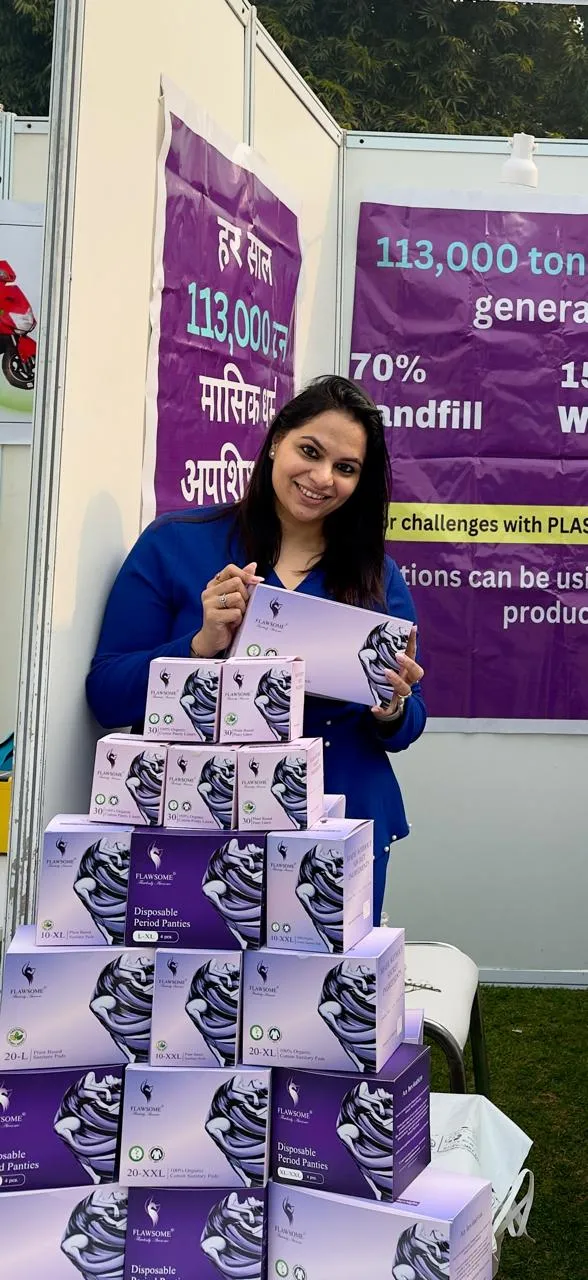
Ranu Khade with Flawsome products
Set to launch in the coming months, the product brings Khade back to a simple philosophy her mother taught her early on: if there is a problem, work around it.
As a high-achieving student, both academically and in sports, Khade’s life shifted when she got her first period. Her parents had moved to a one-room setup, and money was tight.
Access to necessities was limited, and so she and her brother pursued scholarships. Khade was on the merit list and went on to complete B. Tech in Computer Science Engineering from COEP, Pune.
During her engineering years, she ran free sanitary pad campaigns while simultaneously building a strong technical profile through projects with Tata Research Development and Design Centre and global research collaborations. The intent was clear, even then—she was preparing for something bigger.
After completing her MBA from IIM Bangalore, majoring in finance, Khade had the opportunity to intern at RBS Hong Kong, but she declined the pre-placement offer to join Procter & Gamble.
“I chose P&G because it gave me access to the product categories I had always dreamed of working on, Whisper, Pamper and Gillette manufacturing plants, and the customer, business development, and finance functions,” she says.
This stint helped her understand FMCG distribution at its deepest level.
After P&G, she moved to Snapdeal, where she worked across supply chain and category building. Then she worked at the Max Group of Hospitals, specifically on building Antara, the assisted care business, from a concept on an Excel sheet into a hard asset.
Her last role before founding Flawsome was at Shiprocket, where Khade led India fulfilment, expanding from one warehouse to 40.
Six years before joining Shiprocket, Khade had a small team of analysts researching the menstrual hygiene sector in remote parts of India, analysing category gaps: why was the government distributing pads, but people weren’t using them? Was it affordability, accessibility, or awareness?
“We drilled into each bucket, and the most critical one turned out to be disposal,” she says.
A single sanitary pad takes 500 to 800 years to decompose, she notes. But despite the rise of new-age brands, the fundamental pain point remains unaddressed—most brands still offer variations of the same product.
“We have normalised using tissue paper in the washroom and flushing it away. But a woman’s reality during menstruation is very different. She changes her pad, wraps it in newspaper, walks to a dustbin—which 99% of the time is not in the washroom—walks back, and washes her hands. She has implicitly announced to everyone around her that she is on her period. It happens three or four times a day, for four to five days a cycle. It is exhausting and deeply inconvenient,” elaborates Khade.
In rural India, the problem is even more stark. With little disposal infrastructure, women often burn pads, damaging the environment, or resort to unsafe alternatives like tree bark or cardboard.
The insight reframed the problem entirely for Khade and her co-founder, Hitesh Narula: menstrual hygiene was not just about access. It was about disposal with dignity. They needed to create a flushable sanitary pad, one that disintegrates in any setup, whether a rural squat toilet or a western-style flush toilet.
The beginning was rustic. Khade and Narula, her friend of 12 years, started ordering different pad layers, stitching them by hand, and flushing them down washroom drains, using a drainage powder to clear blockages. They travelled to different countries, attended lectures on technical textiles, visited various textile research associations, and were eventually incubated at NITRA (Northern India Textile Research Association).
The prototype was ready in March 2025.
When they had the idea of a flushable pad in place, a problem appeared. For it to enter the sewage system, it also had to be biodegradable. All layers had to be plant-based and indigenous, and the absorbent material had to be non-polymer.
While R&D for a flushable pad was underway, they realised that commercialisation could take time. They also had to understand customers’ psyches around organic, biodegradable, and plant-based products. Finally, they launched Flawsome in December last year. The product is 80% biodegradable and is available in 11+ marketplaces and in offline stores like Tata MG, Apollo Pharmacy, and universities across Delhi-NCR.
The making of Flawsome Flushable
According to Khade, India has not seen a fully flushable pad. The UK had one, a brand called Wearefluss. India had seen Cresa, which had to be dissolved in hot water before disposal.
Flawsome built a pad that could be flushed in any plumbing setup in a rural squat toilet or an urban western flush, and would auto-disintegrate within 28 days even if simply thrown away. The latter point mattered: behavioural change cannot be forced. If a woman was not ready to flush, the pad would still disappear on its own.
One of Flawsome’s investors validated the 28-day certification by placing the pad in a plant environment. Before the next month was up, the pad had vanished completely.
Currently, the Flawsome Flushable pad has an Indian patent, and the team has applied for a PCT (Patent Cooperation Treaty) patent, an international patent system.
But there was one obstacle: India had no legal standard for flushable menstrual products. Without a Bureau of Indian Standards guideline, a company could not responsibly launch a product and make verifiable claims about its flushability.
So Khade, Hitesh, and Kritika S (Strategist and Cost Manager, Flawsome) set about writing one.
Drawing on the EDANA guidelines from the UK, which specify how flushable products must behave across various drain configurations, through 20+ metres of sewage treatment pipeline, and under sewer conditions, they adapted the framework for India. They built a testing rig in their Delhi office.
They submitted the draft policy to the Bureau of Indian Standards about a month ago. It is now in draft form, and the world’s largest FMCG companies and manufacturers are on the review board to discuss the parameters. Once a policy rolls out, Khade will be able to launch Flawsome Flushable.
Raising funds
Khade used her savings from her corporate stints to develop the first Flawsome product. The company in the process of closing its seed round. It also received a Rs 50-lakh grant from the Ministry of Textiles.
“We chose these two geographies because they are progressive on sustainability and have actively worked towards plastic eradication. The goal before a full social launch is to build 25,000 loyal customers who can vouch for the product,” says Khade.
Khade plans to bank on social media and influencer collaborations as part of the brand’s go-to-market strategy.
“The product has an inherent hook: is there a pad that can be flushed in under 10 seconds? That curiosity alone can drive massive organic interest. The pan-India reach can happen instantly through the right creator collaborations,” she explains.
The next product on Flawsome’s table is Utsav, a sanitary pad targeting Tier II and III markets.
“As a child, I had no menstrual hygiene access. As a mother, I watched my son go through infinite wet wipes and diapers. When I worked in assisted care at Antara, I saw adults using diapers. All of these are disposal-with-dignity problems.”
To tackle this challenge, Khade and her team are conducting R&D on the country’s first flushable, biodegradable diapers for both babies and adults.
(The story has been updated to correct typos.)
Edited by Swetha Kannan