



‘If the idli is soft, the rest will fall in place’: Beena Gandhi’s simple success mantra for Dakshinayan
Two decades ago, Beena Gandhi started a small home venture selling idli-dosa batter, which has today grown into Dakshinayan, a six-outlet South Indian restaurant chain in Ahmedabad and Mumbai.



Beena Gandhi begins every day at the Dakshinayan outlet in Ahmedabad, tasting a single piece of idli with sambar.
“If the idli is good and soft, then the rest of the things go well,” she says.
In the 21 years of running Dakshinayan, a South Indian restaurant chain, Beena’s focus on quality and simplicity has remained unchanged. This is how she continues to maintain high standards across the six Dakshinayan outlets in Mumbai and Ahmedabad.
She does not have a casual approach to idlis. Or masalas for that matter. She heads to the factory to supervise the production of the Dakshinayan range of masalas and ready-to-eat products launched six months ago.
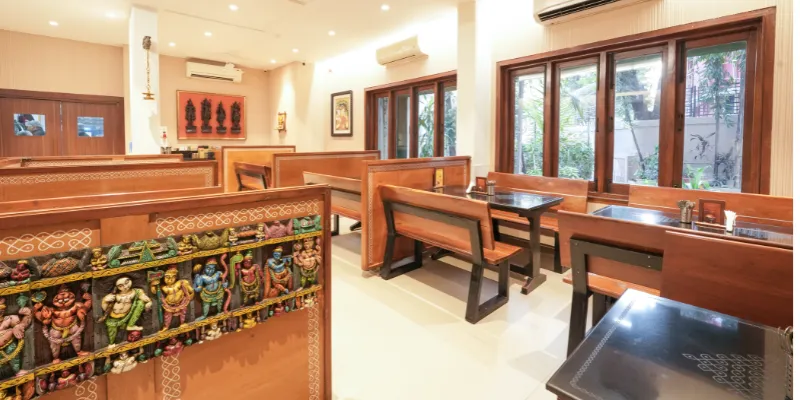
Dakshinayan's Juhu outlet
Beena grew up in Coimbatore, where idlis, dosas, and other South Indian dishes are staples. When she got married and moved to Mumbai in 1993 at the age of 24, she missed her mother’s food.
While there were South Indian restaurants in Mumbai, for her, the food did not taste of “home”.
“I asked my father to send me rice from Coimbatore because the difference it made to the batter was noticeable. I ground the batter at home using an Ultra (a brand) grinder. The idlis and dosas from that rice were very different from what anyone was used to in Mumbai,” she recalls.
She introduced her family in Mumbai to more South Indian food:” sambar rice, rasam rice, poriyal, and aviyal.
“I was the only daughter-in-law in the family from the ‘South’, so my father-in-law would often invite guests over for what he called a ‘South Indian festival’. Everyone appreciated the food immensely, and they particularly noticed that my idlis and dosas—made with rice from Coimbatore—tasted very different from what they were used to,” she says.
One day, an idea struck Beena: if people appreciated the batter so much, why not sell it? Her father-in-law spread the word among friends and family, and in 1997, she started selling batter at Rs 25 per kilogram. Soon, people started asking her to make sambar, chutney, lemon rice, and rasam.
Building a restaurant chain
In 2000, when her husband took over a new business in Ahmedabad, she moved with him and their two children. Gradually, she started catering for events, serving different kinds of dosa and uttapam. This picked up, and her family encouraged her to start a restaurant.
The first Dakshinayan outlet, a 20-seater, opened in Ahmedabad in 2005.
“Making people aware of a new South Indian restaurant at the time was a challenge. Staffing was another hurdle; we didn’t want chefs to cook in their own way. We needed them to follow our recipes with precision. We made all our masalas in-house from day one, all freshly ground. I would cook, and my husband would deliver orders. Initially, we just had 3-4 people working with us,” she says.
Three years later, they opened their first restaurant in Mumbai at Walkeshwar, which she calls a “big breakthrough.” Dakshinayan now has three restaurants in Mumbai—Walkeshwar, Juhu, and Thane — and three in Ahmedabad—Satellite, Navrangpura, and Shehla.
In 2024, Bollywood actress Zeenat Aman wrote about visiting Dakshinayan, one of many acknowledgements the brand has earned over two decades.
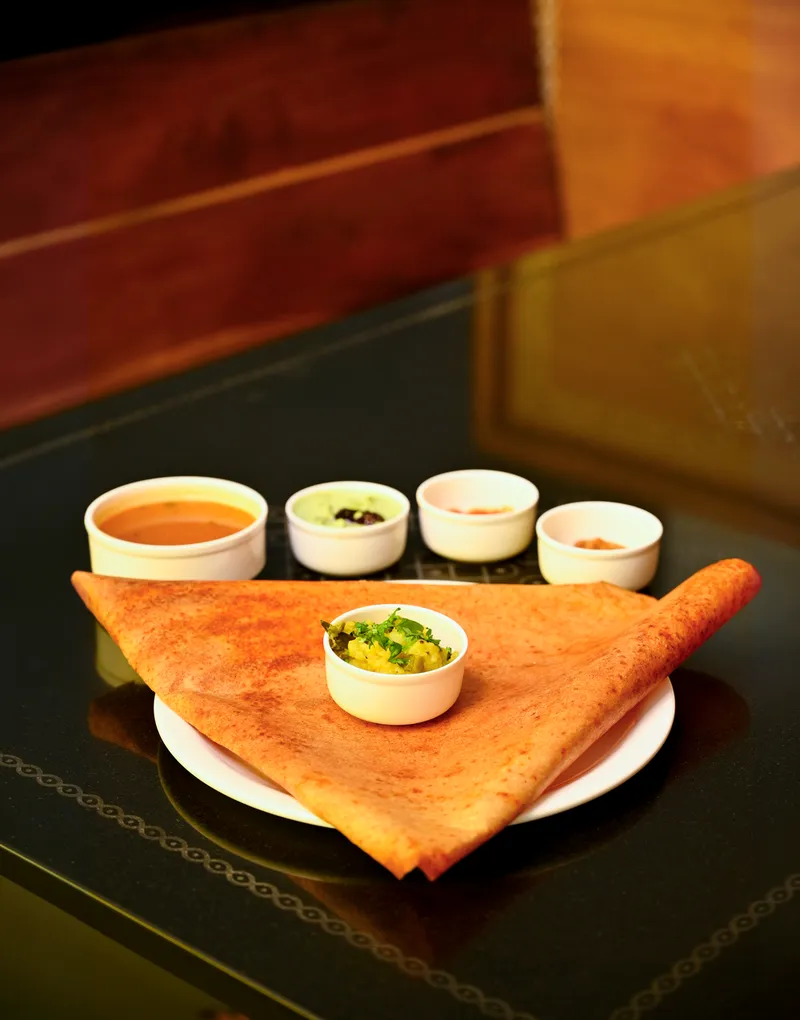
The menu has not chased trends. There is no fusion, no seasonal reinvention. The bestsellers include molagapodi idli and rasa vada—both made with masalas ground fresh to Beena’s own recipes. The restaurants are decorated with kolam (a traditional South Indian art form somewhat similar to rangoli), giving them, she says, a “homely atmosphere”.
“We stuck to our traditional recipes and basics,” she says. “Simplicity—that is what brings people back.”
Six months ago, Dakshinayan branched out into retail with a range of masalas and ready-to-eat products, including molaga podi, rasam powder, instant rava upma, instant tomato chutney, and more.
“Customers kept asking for the molagapodi they enjoyed in the restaurant. We have now set up a factory in Ahmedabad, which gives us the capacity to produce at scale, so we decided to make it available to people,” she says.
Way forward
Beena’s son, Vir, who grew up with Dakshinayan, is now taking the business forward.
“He has brought a lot of change. My husband and I were always focused on running the day-to-day operations, but he thinks in terms of new ideas and promotions,” she says.
In January, they ran a Pongal festival; right now, they are celebrating a ‘Vango with Mango’ festival.
“He’s also transformed the technology side of the business—systems that my husband and I honestly neglected. He now oversees all three Mumbai outlets while I remain more stationed in Ahmedabad, managing the factory and the Ahmedabad restaurants,” says Beena.
With many South Indian restaurant chains entering Mumbai, how does she view the competition?
“Everyone is doing well in their own way. Every restaurant has a special offering, and customers like to explore. We do our best; that’s all that matters,” she says.
Beena says turning her passion into a profession has been deeply fulfilling.
“The business runs on family support. We’ve always worked together, and that encouragement helped us through tough days. Whenever things went wrong, someone would say, ‘It’s just today; tomorrow will be better.’ That has become my business philosophy,” she says.
Seeing all six restaurants do well, and customers leave with a smile, has been her biggest win.
“We have had celebrities visit, especially at our Juhu branch, and that feels special. But what matters most to me is our repeat customers.”
Edited by Swetha Kannan