



How FRHS India is advancing women’s reproductive rights and healthcare access
Foundation for Reproductive Health Services India (FRHS) works to improve access and ensure women can make informed choices about their reproductive health.

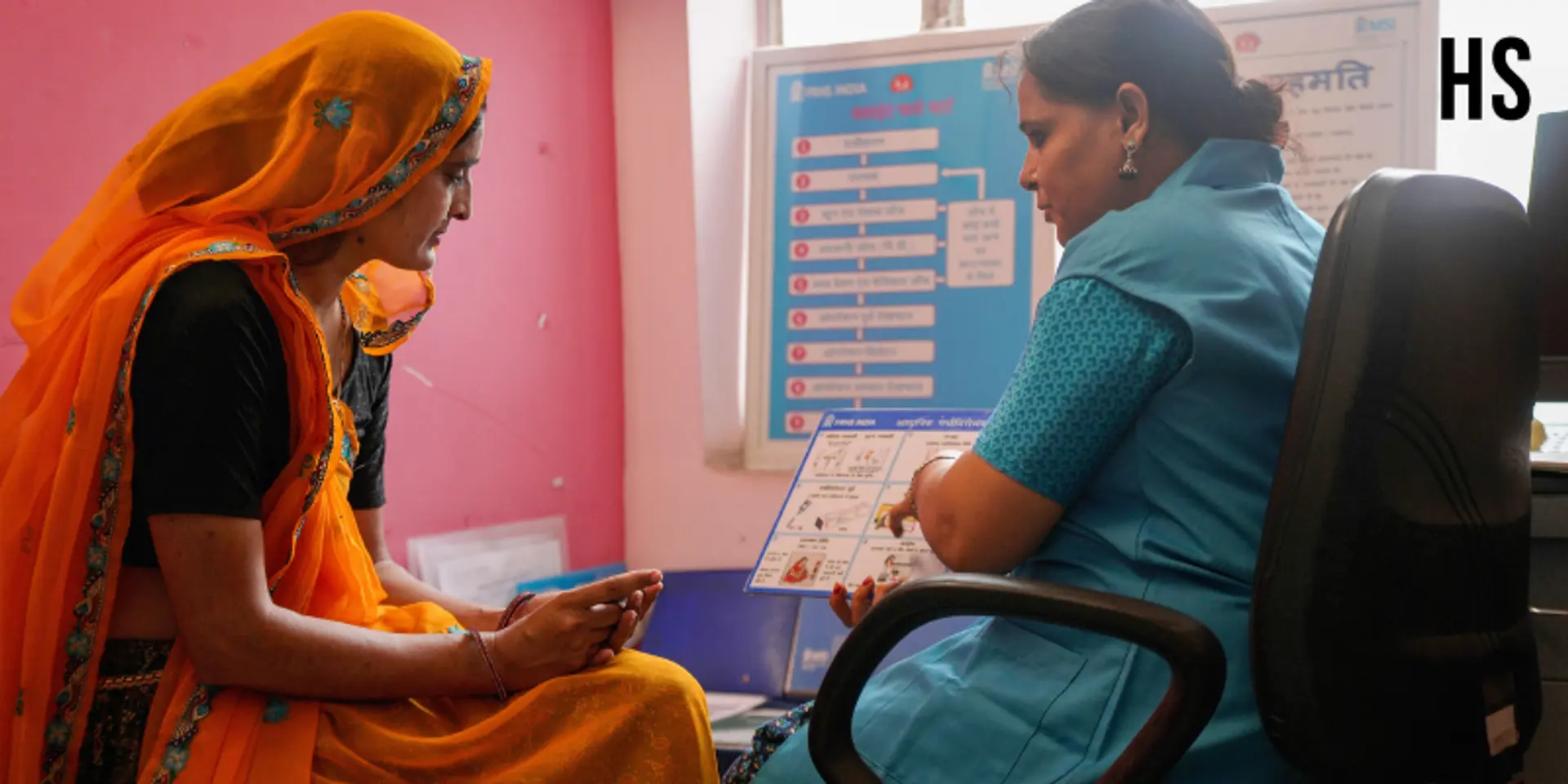

The reproductive health landscape in India reflects a paradox: strong policy progress but unequal access.
Over the past decade, the maternal mortality rate in India has decreased and institutional deliveries have increased, driven by public health programmes and a more progressive legal framework, such as the amendment of the Medical Termination of Pregnancy Act 1971.
However, the situation on the ground remains uneven. There are limited informed choices surrounding contraception. Access to safe abortion, though legal, is often constrained by stigma, provider shortages and low awareness, especially in rural and underserved regions.
Young women continue to face significant barriers when it comes to reproductive health information and services, leading to systemic and social inequities.
Advocacy with service delivery
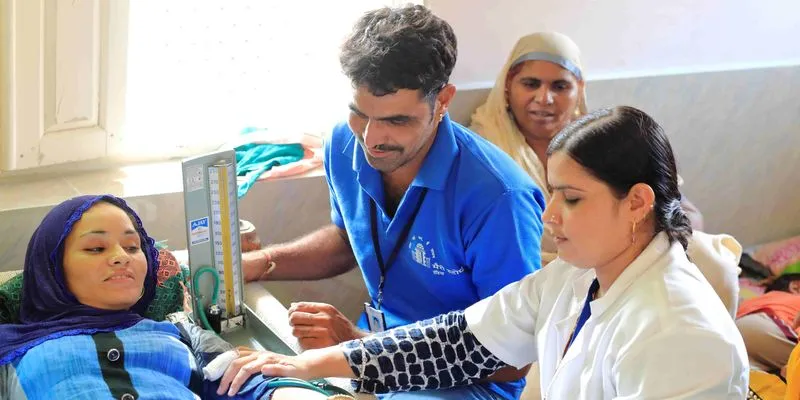
The FRHS India team providing services at a government hospital
It is within this context that organisations like the Foundation for Reproductive Health Services India (FRHS) play an important role by combining advocacy with service delivery.
It works to bridge the gap between rights and access, expanding contraceptive choices, improving the availability of safe abortion services, and strengthening public health systems in partnership with governments.
Founded in 2009 as an NGO, FRHS India is an affiliate of the global not-for-profit MSI Reproductive Choices, which operates in 37 countries. It primarily operates in Rajasthan and Madhya Pradesh, with earlier operations in Bihar, Jharkhand, and Uttar Pradesh.
FRHS works in two modes. Its mobile teams visit government PHCs and district hospitals on scheduled days to provide family planning services—filling gaps in a public system that is often stretched thin. It also runs its own chain of clinics offering both contraception and safe abortion.
It has also moved into advocacy, pushing for policy changes and training pharmacists. Through its role as secretariat of the Pratigya campaign, it is trying to shift the broader national conversation.
“When we started, family planning was a top priority because India’s maternal health and other indicators were not where they should have been. Initially, we provided more technical support, helping government doctors and health systems improve quality and ensure compliance with the required standards. We then moved into direct service provision and, subsequently, into policy advocacy, because we realised that on-the-ground service delivery needs to be complemented by work at the policy level,” says Neha Srivastava, Manager-Program Operations & Communications.
Safe abortion is one of FRHS India’s key impact areas. Dr Abbha Dhuriya, Clinical Director, illustrates the organisation’s impact, specifically around abortion services and how family planning has contributed to reducing unintended pregnancies.
“Looking at our 2025 data alone, we have served more than 1,17,000 women, generating 1.5 million (15 lakh) Couple Years of Protection (CYP). With that level of protection, we have averted 9.3 lakh unintended pregnancies. Since data suggests that close to 50% of unintended pregnancies lead to abortion, this means we also averted approximately 5.64 lakh unsafe abortions, which in turn contributed to saving an estimated 136 maternal deaths,” she explains.
Between 2013 and 2025, FRHS India has reached over 2.3 million people with family planning and safe abortion services, translating into 20 million Couple Years of Protection (CYP) and advancing women’s long-term reproductive autonomy. This impact helped avert over 12.73 million unintended pregnancies, 7.70 million unsafe abortions, and 1,880 maternal deaths—driving measurable gains in maternal health and gender equity.
CYP is an indicator that measures the estimated contraceptive protection provided by family planning programmes, calculated by dividing the total volume of contraceptives distributed by the quantity required to protect a couple for one year.
Dr Abbha notes that while medical abortion is available within the public healthcare system, gaps in service delivery persist, despite the presence of trained doctors; many women are still unable to access these services.
“On safe abortion services specifically, we continue to work closely with state governments. Medical abortion is available on the government side, but service delivery gaps remain—trained doctors exist, but women are still not being served,” she says.
She cites a case in point. “Among women who come to us for permanent family planning methods, around 10% are turned away because they are already pregnant. When we send them back, we are failing them twice: first, by not being available when they needed contraception, and second, by being unable to serve them now. We have proposed to the state governments that such women who fall within the medical abortion eligibility criteria should be allowed to access those services through us.
The biggest challenge, she admits, is that various departments and laws are not always aligned. Some rules, while well-intentioned, create barriers to service delivery.
“For example, the PCPNDT Act (Pre-Conception and Pre-Natal Diagnostic Techniques Act 1994) was designed to prevent sex determination during the antenatal period. But its implementation has become so stringent that clinics are afraid to maintain ultrasound machines due to difficulties with licensing renewal and the risk of harassment by officials, even when they are fully compliant,” she says.
“If we cannot have an ultrasound machine, we cannot confirm gestational age before providing abortion services, so we have to refer women elsewhere, which creates another barrier,” she adds.
Then there is the POCSO Act. If an adolescent girl comes to them for abortion services, the law requires them to inform the police, even if she or her accompanying person is unwilling.
“There is a direct conflict here with the MTP Act’s requirement to maintain a woman’s confidentiality. These intersecting laws create very real hurdles when our goal is simply to provide safe services to all women,” she points out.
Women’s right to safe and legal abortion services
Launched in 2013, the Pratigya Campaign for Gender Equality and Safe Abortion is a network of over 120 individuals and organisations working towards protecting and advancing women’s rights and their access to safe abortion care.
The campaign, managed by the Secretariat, hosted by FRHS India, with guidance from the Campaign Advisory Group (CAG) works with governments, organisations and media to challenge stigma, advocate for policy change and ensure that women can make informed decisions about their reproductive health.
“The 2011 census revealed deeply alarming data on the sex ratio, largely due to sex-selective abortions. The government, rightly, began taking stringent action. But in that process, access to abortion overall became quite restricted; women who needed abortion for entirely different reasons found it increasingly difficult to access safe services,” says Neha.
The Pratigya Campaign is focused on two main areas—strengthening the social media presence to anchor safe abortion as essential healthcare—a rights-based health service—rather than framing it through the lens of morality or legality.
The second is media engagement. Safe abortion is either not covered in mainstream media, or when it is, the language used tends to criminalise or stigmatise it.
“We are working to change that narrative and encourage more sensitive, informed reporting,” Neha adds.
As the secretariat, FRHS India coordinates partners, brings voices together on one platform, and amplifies their work, particularly that of smaller grassroots organisations whose work might otherwise go unnoticed. It also facilitates knowledge sharing across the coalition. The campaign has played a key advocacy role in advancing the landmark amendment to India’s 50-year-old abortion law, the MTP Act, helping expand access to safe abortion services and making the legal framework more inclusive and rights-based for women.

Neha Srivastava and Dr Abbha Dhuriya
Neha notes that while the MTP Act looks good on paper, it exists alongside other laws that sometimes conflict with it, and the legal complexity creates bottlenecks.
“From the provider's side, there are instances of doctors and clinics being harassed. From the patient side, medical abortion (through pills), is becoming more common, but chemists are afraid to stock MA kits. When they do sell them, they do so informally—under the counter, undocumented—without providing women with adequate information on dosage, side effects, and warning signs. That absence of guidance creates real health risks,” she adds.
Added to all this is stigma. Field teams report that it is often the woman’s male relative who goes to the pharmacy to buy the medication.
Why are young people still largely invisible in conversations on reproductive health? Neha attributes our cultural reluctance to acknowledge that young people are sexually active.
“There is a persistent belief that if you talk to young people about sex, you are encouraging them to engage in it. So, we collectively pretend that young people are not having sex, and if they are not having sex, they don't need safe abortion services, and therefore don't need to be included in the conversation.”
Dr Abbha believes abortion services need to be integrated into the routine reproductive health system, not treated as a standalone service.
“They should be an essential part of comprehensive reproductive healthcare. We also need to work on provider attitudes. Being in service delivery, I can see that there are many providers who are reluctant to offer abortion services because they equate it with killing. We need to address those attitudes through open conversation and training. We are not encouraging young people to engage in sexual activity early—but if they require services, those services should be available to them, and they should have access to correct, non-judgmental information.”
While the amendment to the MTP Act in 2021 was a landmark achievement, Neha believes that government guidance is needed to ensure that the MTP Act, the PCPNDT Act, and the POCSO Act can be implemented without one blocking access under the others.
“Second is the social stigma around abortion. Things become much easier for everyone—people know the right questions to ask, they find reliable information, and they get directed to the right services,” she adds.
Edited by Megha Reddy