



How Tocco is turning home chefs into women entrepreneurs
Tocco is a platform helping home chefs, especially women, turn their cooking into income. With micro-production hubs and a standardised model, it is scaling traditional food into a growing business.



After completing her engineering degree in Keralam 14 years ago, Reshma Suresh moved to Mumbai to begin her career in the healthtech sector.
Working at the intersection of artificial intelligence and radiology, she served stints at companies such as Biosense and Qure.ai.
Despite her professional success in Mumbai, Suresh was homesick for food.

Annu and Reshma
“I was working 16-hour days and relying heavily on food delivery apps. As I got older, I realised it wasn’t great for my gut. I started developing lifestyle conditions, and I started to think a lot about food and health,” she recalls.
Suresh decided to take a break from Qure.ai and started figuring out what to do next. A simple, personal problem was at the back of her mind. Though Mumbai had many Keralam restaurants, she craved the kind of food she grew up eating at home.
She wasn't looking for just any food, but for the dishes made in specific kitchens. She longed for her mother's mango pickle, her aunt's masalas, the banana chips her grandmother used to prepare during Onam.
“I thought about my mum and my aunts who were in their 50s, homemakers and incredible cooks whose culinary skills never went beyond their homes or the occasional family gatherings. They had the passion and the knowledge, but there was no one to take it to a product format and get it to the market,” she explains.
In 2023, she co-founded Tocco along with her sister Annu, who is based in Singapore and works part-time for the company.
The idea, however, had taken root earlier. In 2020, during the peak of the COVID pandemic, while still working at Cure.ai, Suresh started frying banana chips in her Mumbai kitchen. It was her grandmother's recipe without preservatives or shortcuts.
Friends tried them first, and then friends of friends. A WhatsApp community was formed. People started asking: Can you make prawn pickle? Can you make murukku? Can you make sambar masala?
A market for nostalgia via home chefs
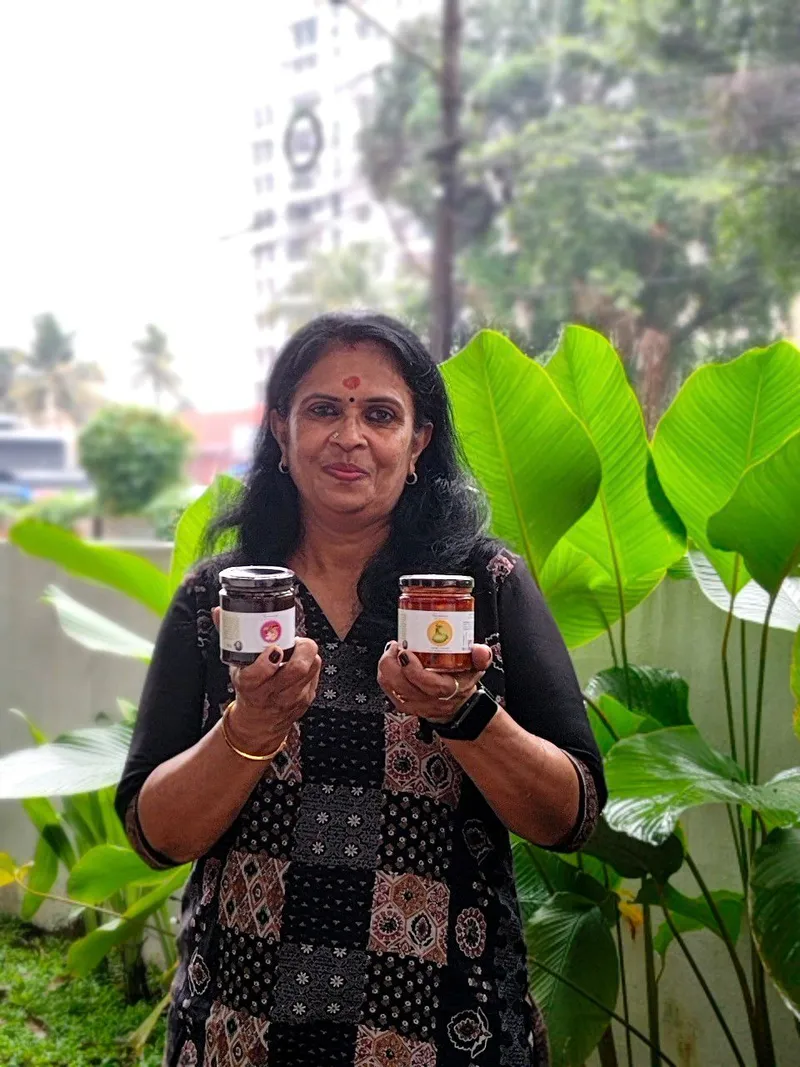
Uma Suresh, Tocco's first home chef
What began as nostalgia now looked like a market.
Suresh started reaching out to people like her retired parents, whose children had moved away, had free time, and wanted engagement. But the challenge with homemade food sold through WhatsApp groups was the trust factor.
“You don't know what kind of home it's coming from. You would be surprised how many home-cooked products don't even have an FSSAI licence,” she points out.
So Tocco built a vetting process. Prospective chefs sign up on the website, often through a son or daughter registering their parent. Suresh’s team reviews the products they already make, conducts video calls to inspect kitchens, checks hygiene conditions and ingredient lists, and conducts sample tastings.
Starting with just four, including Suresh’s mother, Tocco currently has 33 chefs on the platform, with around 45 products. Every product must have a shelf life of at least 30 days, which means Tocco also trains chefs in packaging methods that preserve freshness for 30 days or more without preservatives.
These home chefs are mostly based in Keralam, while it has also onboarded people from Karnataka, Tamil Nadu, and Maharashtra. All sales happen only through the Tocco website.
Orders are batched twice a week and either shipped from the chef's location to a Tocco hub in Kochi or Mumbai, or, for high-volume products, dispatched directly to customers.
Some of Tocco’s homechefs are earning more than one lakh every month. But there’s always a ceiling for a home chef, admits Suresh.
“So the question arose, how do we increase supply without compromising our USP—fresh, small-batch, no reuse of oil and whole ingredients?”
They took their best-selling recipes out of home kitchens and moved production to rural Keralam, working directly with farmers. The first such kitchen was in Kottarakara, Keralam’s Kollam district, in partnership with the Kerala Startup Mission, which provided initial funding.
The second and third came up in Attapadi, a tribal region in the Palakkad hills known for its extraordinary produce and its distance from almost everything else.
"Attapadi was a real challenge logistically. But the soil there is gold. The crops are so fresh and remarkable. How could we leave that out?” Suresh says.
The model is designed to remove every barrier to participation. Women don't need to travel far, find buyers or manage customer relationships. Tocco trains them at its Kochi kitchen, provides the recipes, specifies the ingredients (sourced directly from nearby farmers), handles logistics, and, most importantly, guarantees a purchase order from day one.
"They start earning from the first month. Whatever capital they put in for the kitchen infrastructure, they recover it in month one,” Suresh says.
Each kitchen has about 6 to 10 women.
There are now four micro-production hubs—Kottarakkara for jackfruit chips, two in Attapadi for banana chips and nuts, and one in Kochi. The Attapadi kitchens have been running for just three and a half months and have already crossed Rs 10 lakh in combined sales. The products are priced between Rs 250 and Rs 990.
Interestingly, the products carry the chefs’ brand names with labelling help for Tocco. For example, it has a Makai Chivda by Mona.
Why Tocco’s model made it to Keralam’s budget
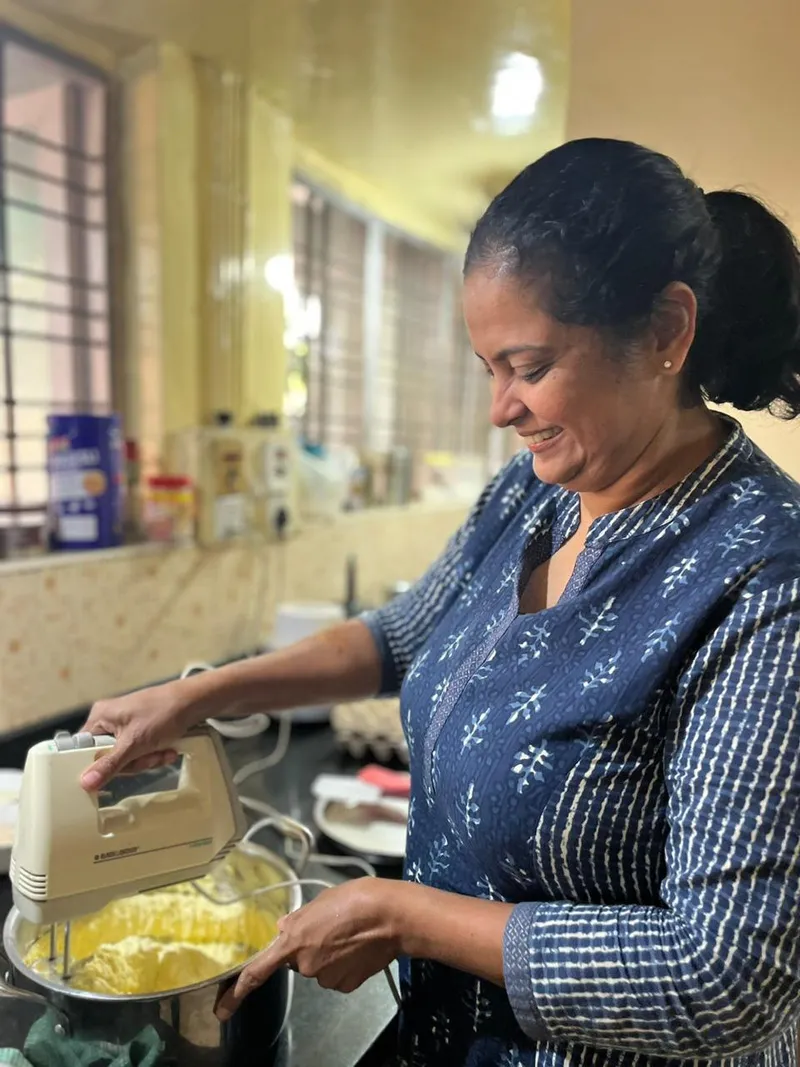
Annie Philip bakes cakes
In Keralam’s 2026 budget, Finance Minister KN Balagopal referenced a pilot Tocco had executed with the Kerala Startup Mission. It showed that women-led self-help groups can run structured, quality-controlled food production units when given the right training, systems, and access to markets.
Suresh reveals that the challenge women's collectives in Kerala face is that even when they produce high-quality goods, cheaper versions from neighbouring states flood the supermarkets, returns pile up, and fair pricing is never assured. The retail model simply doesn't work for them.
“We filled those gaps, we standardised ingredient sourcing, telling them which farmers and vendors to buy from. We trained them completely. And we ensured they could work close to their homes, which matters enormously for women in rural Kerala who would otherwise be intimidated by long commutes or unfamiliar workplaces,” she explains.
Challenges in the journey
While word about the quality of the first product, banana chips, had already spread, an interesting conversation emerged during Tocco’s first pop-up event. A customer walked in and said it didn’t look like a homemade product because the packaging was too polished.
“That hit me—there’s an ingrained assumption that homemade food must look rough. So, our first challenge was making packaging elegant enough to compete on the shelf with mass-produced brands, because that's really who we're up against,” she says.
The second challenge was education. Getting people to understand that homemade, traditionally processed food is the most sustainable way to eat well took time. Once they tried the product and felt the difference, the quality did the work.
The average age of a Tocco chef is 52. That number is not incidental—it's intentional.
About 98% of the chefs are women. Most of them had spent decades as homemakers, with their cooking skills admired within their families and social circles, but never beyond.
Uma Suresh, Reshma’s mother, is Tocco’s first home chef and specialises in puli inji, prawn pickle, and mango pickle. A homemaker for most of her life, Uma always dreamed of doing something in food but never had the confidence or the platform to make it happen. After joining Tocco, she is financially independent, travels on her own, and does everything she once only wished for—proof that it's never too late to start.
Annie Philip, a 53-year-old homemaker from Bengaluru, has been selling Christmas cakes through Tocco for the past two years.
“My Christmas cakes were always a hit with family and friends. With Tocco, I have been able to reach customers across India. I began earning my own money in my 50s. It makes me feel proud of myself,” she says.
Annie sees Tocco’s strict quality standards as its biggest strength. “I use the best ingredients, especially dry fruits, without cutting corners. Profit should never come at the cost of quality,” she says. Annie made a profit of Rs 2 lakh last year during the Christmas season.
Tocco’s top seller remains its banana chips. Its pickles—especially mango, puli inji, and lemon—see strong repeat demand. Spice mixes like mulga podi, sambar masala, and moringa chutney powder are also popular, along with their ready-to-use chutney and podi blends.
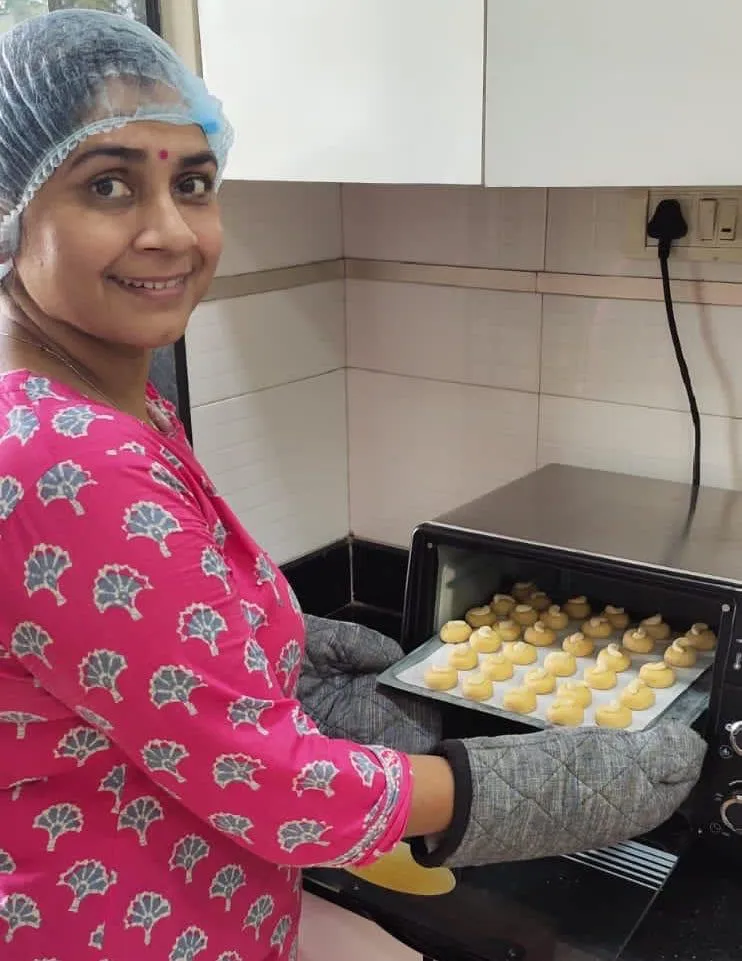
Bhavana makes poha chivda and nankhatai
Tocco does take a commission, like any other platform, but what sets it apart is how closely it works with its producers. The team understands that many of them are new to structured selling and may not fully grasp their cost of goods (COGS). So, they guide them in calculating costs and adding a sustainable margin before pricing their products for Tocco.
The platform’s margins vary by product—some items have thin margins, while others offer higher margins, depending on market dynamics. Ultimately, Tocco ensures that producers receive a price that covers their costs and a margin they are comfortable operating with.
Tocco is at a break-even stage right now, but Suresh believes several milestones lie ahead.
“We want to increase our chef count, SKU count, and have more kitchens in place with consistent quality—before we raise funding,” she says.
Looking ahead, she hopes some home chefs will evolve into independent sub-brands under Tocco. Exports are the next phase of growth. The company also plans to scale to 10–12 micro-production hubs across India, aligned with region-specific crops.
“We are already working with self-help groups and now have a replicable template. The goal is to reach 100 home chefs by next quarter,” she says.
Edited by Megha Reddy