


Visually impaired para-athlete Komal Tyagi is sprinting to new heights
Komal Tyagi, a visually impaired athlete from a small village in Madhya Pradesh, outran financial hardship, pressure to get married, and self-doubt to become a national champion.

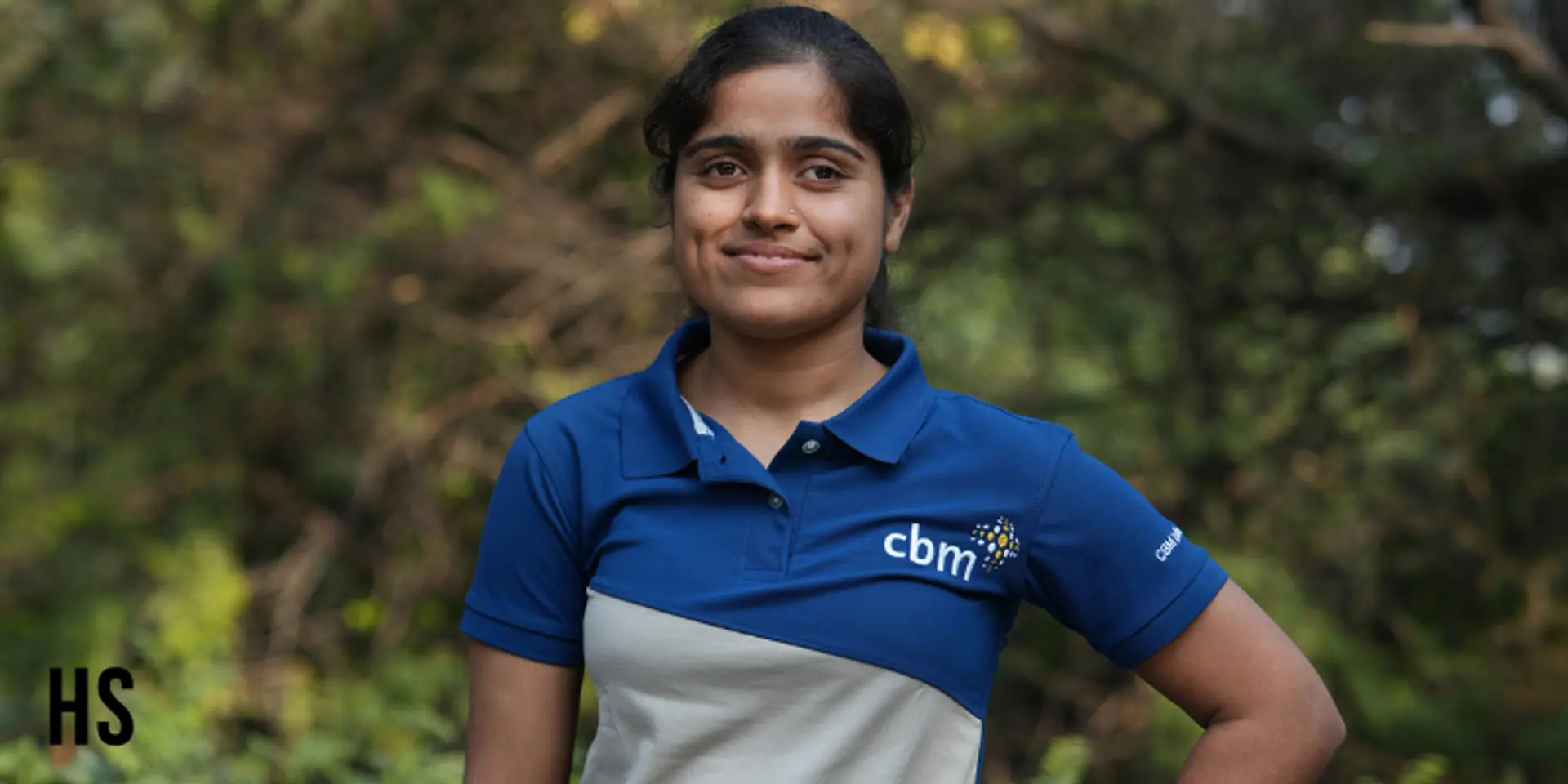

She cannot see the track that stretches before her, the finish line, or the crowd cheering her on. But she runs with all her strength, her heart pounding against her chest. There is fierce determination, not just to win, but to see how far she can push herself.
At 23, Komal Tyagi is one of India’s most promising visually impaired para-athletes. She is a national champion in both 100 m and 200 m sprints, and was a bronze medallist at the Khelo India Para Games held earlier this year. She has also won several medals in shot put and discus throw since 2016.
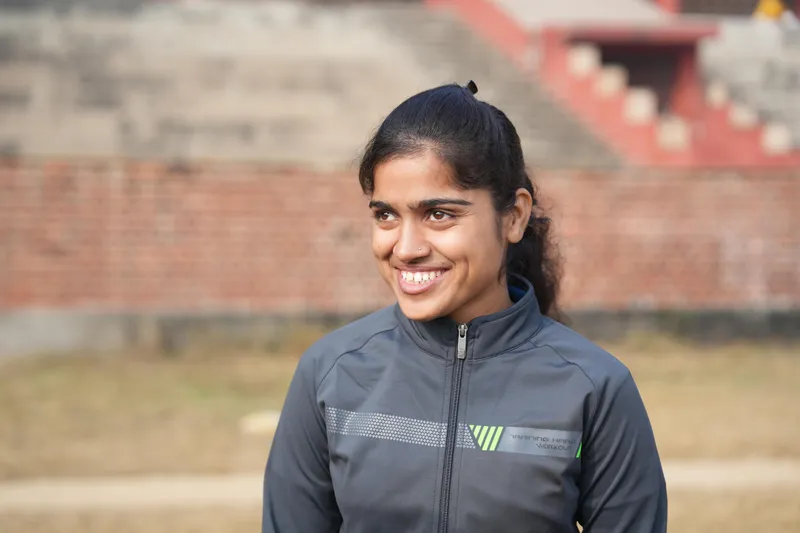
Komal, who was visually impaired from birth, grew up in a small village in Madhya Pradesh’s Morena district.
“I went to a regular school like everyone else, along with my two blind siblings. But problems arose in school because I couldn’t keep up. Since my family members were not well-educated, they didn’t think of enrolling us in a school for the blind,” she recalls.
When the children told their parents of a school for the blind in Gwalior, they made a calculated decision. They decided to send their two younger children to the school. Komal was older, and they felt it was too late for her.
But Komal pushed back, advocated for herself, and eventually joined her sister at the residential school in 2015. She was 14 years old and had never lived away from home.
"It was good there. Everyone was like us. Everything was made for us. It didn't feel like I was less than anyone,” she says.
Persistence pays
Till then, Komal had not considered taking up any sport. But the director of the new school noticed her strong physical stride and encouraged her to take up sports.
At a small event on December 3, on International Day of Persons with Disabilities, she stepped into a shot put competition and won a medal on her very first attempt. Encouraged, she took to training, which soon led her to a national-level competition in Delhi.
Her teacher advised her to focus on the experience rather than the outcome. But Komal went on to win gold in both shot put and discus throw, becoming one of the first visually impaired women athletes from Madhya Pradesh to secure a national IBSA (International Blind Sports Federation) medal.
“When I won the medals, I got covered in the media. My family also saw this. I realised that I could do better in the future,” she says.
She continued training, but the pandemic hit after her twelfth grade, and she had to return home from Gwalior.
Eventually, the conversation at home turned to her marriage. But Komal was determined to study further, and she somehow convinced her parents to let her. She enrolled at Miranda House, Delhi University, and after a year of online classes, she moved to the campus.
The new environment and support from her seniors helped her return to sports. She began competing at national-level events and won several medals at the National Paraathletics Championships and Khelo India Para Games.
“I definitely didn’t want to get married. By this time, I knew that there were a lot of opportunities for people like me,” she says.
But she also realised that pursuing athletics professionally came at a high cost. Living in Delhi was expensive, and the training costs added up. So she moved to Gwalior to train at the Atal Behari Vajpayee Training Centre for Disability Sports.
When she almost quit
By 2024, Komal was close to walking away from the sport entirely. The training centre provided a ground, a coach, and accommodation, but there was an additional financial burden. She needed specialised running spikes, high-protein nutrition, and travel costs.
As a competitor in the T11 category, for athletes with no light perception, she also needed a guide runner to train alongside her.
In 2024, she was almost ready to quit when help arrived from the CBM India Trust, an NGO working for disability inclusion. They selected her for their Para Athlete Support Program. The organisation covers all her expenses: from nutrition and equipment to coaching, travel, and competition fees.
“CBM India supported me at the exact moment I had lost hope,” she says.
Sony Thomas, Executive Director, CBM India Trust, says when Komal first came to them, she had already defied every stereotype that society placed on her, as a woman, as a person with disabilities, as someone from a rural village.
“Sport has this unique power to cut through all stereotypes and make the case, loudly, for a more inclusive society. But we need to give talent the chance to break through. That is what our Para Athlete Support Program is here to do. Based on athletes’ needs, we cover expenses ranging from coaching and nutrition to equipment and competition fees, so financial hardship never stands in the way of a sportsperson's potential. There are many more Komals out there, waiting. That's what keeps us going,” she adds.
At the recent Khelo India Para Games, Komal switched to the 100- and 200-m sprint events.
“Many coaches told me that my body weight and height were not well-suited to discus throw and shot put. I trained for sprint, competed and won,” she says.
How does she prepare mentally and physically for a demanding sport like sprinting?
She admits to having pre-race jitters and doubting herself at times.
“Sometimes I think: maybe this isn't for me. Maybe something is not going right.” She pauses before continuing. “Then I talk to my coach. Or I hear about someone who struggled more than I did. And I remember: struggle is in everyone's life. You just keep going.”
“I never think I have to play for a medal,” she adds.
Back in her village, people still ask her when she is getting married. She is aware that they are not educated about para-athletics or what it can bring about.
“They just see that the girl has grown up and is still not married,” she says.
Komal has completed her BEd and is currently pursuing a master’s in political science. She has set her sights high. She wants to compete in the Asian Games and Paralympics.
“Every player dreams of playing for India. I have the same dream,” she says, simply.
Edited by Swetha Kannan