



Graamya is taking indigenous spices from Kerala’s remote villages to the world
Based in Idukki, Kerala, Graamya, a for-profit social enterprise founded by Annu Sunny and Bhavesh Sawariya, is proving that sustainable farming can be profitable by helping rural farmers add value to indigenous spices and access better markets.


Annu Sunny grew up in Nedumkandam panchayat, in the high ranges of Kerala’s Idukki district, amidst a tea factory and spice farm her parents owned. After completing her graduate degree in science, Sunny spent a year-and-a-half reading, exploring, and travelling.
During this time, she applied to the India Fellow social leadership programme, and entered the development sector. During her fellowship, she realised that what mattered most to her was livelihoods—improving the quality of life in communities.
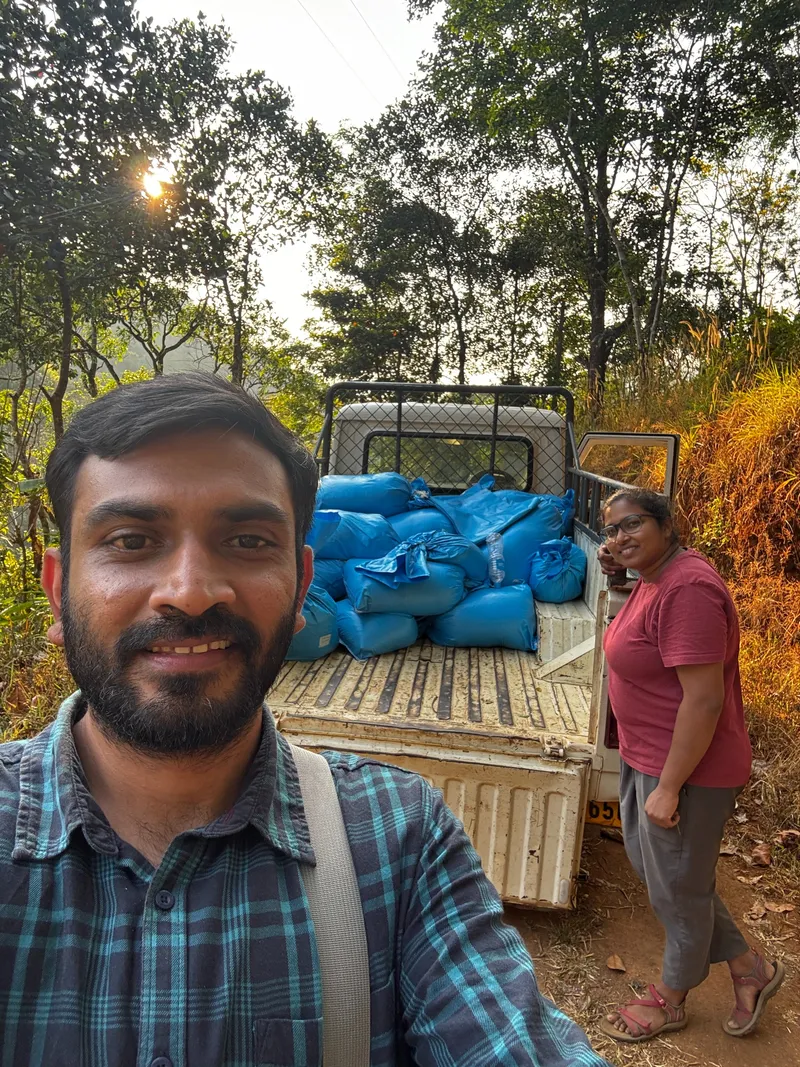
Annu Sunny and Bhavesh Sawariya
She joined Grassroutes Journeys, an organisation that works on alternative livelihoods in tribal areas around Bhandardara, around 180 km from Mumbai.
Working here for a few years reinforced her belief that cash flow in rural areas is critical to development.
“It also proved that improving or creating alternative livelihood options, tailored to local situations, was the right approach,” she tells HerStory.
In 2018, Sunny returned to Idukki because her parents needed help with the tea factory. Soon, Sunny got busy with sales and brand development, but she did not let go of her mission to uplift communities. She and her business partner Bhavesh Sawariya, also a former India Fellow, started Graamya to take steps in this direction.
The initial idea for Graamya was community-based rural tourism, since Idukki lies along the scenic Munnar-Thekkady route.
Through the High Range Development Society, a church-based NGO in Idukki, they were introduced to Kanjikuzhi and then to Makkuvally, a remote, tranquil village in the panchayat. The community was excited about the idea.
Graamya ran training sessions. But floods hit Kerala in 2018 and 2019, and tourism across the state was affected in villages not directly hit. Then the Covid-19 pandemic arrived.
Along this journey, Sunny understood that Idukki remained one of the most backward districts in Kerala, even though farmers here grow some of the most expensive crops.
“When I started working with my parents, I saw that the spice farm was making a loss, even though they were practising zero-budget farming. Green cardamom is grown in the Cardamom Hill reserve, with pepper as an intercrop. Despite cardamom fetching Rs 2,500 a kg in the market, it was still loss-making because of the high costs involved,” she explains.
Interestingly, the Kanjikuzhi panchayat they were introduced to was notable for organic farming. And Makkuvally (8 km from Kanjikuzhy town), which has three contiguous villages, produced excellent export-quality pepper. But these areas were quite removed from civilisation in terms of amenities.
“Until 2020, there was no proper road or electricity. When we arrived in 2018, you either needed a jeep or had to walk 5 km to enter the village. Kanjikuzhi Panchayat is, in fact, the poorest panchayat in Idukki district—though I didn’t know that initially. I just found it a beautiful place with very warm people. Here, farmers were getting only Rs 350 per kg for it at the time we started,” she says.
The pivot
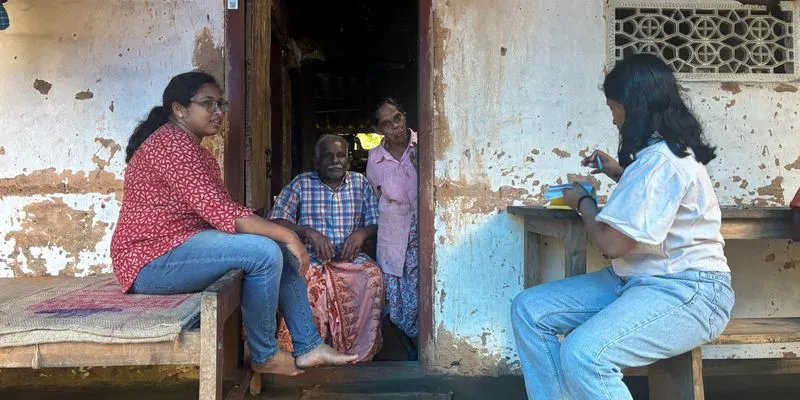
Visiting a farmer household
In 2019, after the plans for rural tourism were derailed, Graamya was incubated at the Indian Institute of Rural Management. Professor Shambu Prasad from the institution encouraged the team to think beyond tourism and look at agriculture, and that’s when Graamya too shape in its current form.
Graamya works with farmers who are either practising organic farming by tradition or consciously follow it. It buys the produce at 30 to 50 per cent above market value. The crops include black pepper, white pepper, green cardamom, clove, nutmeg and Malabar tamarind.
Graamya trains farmers to harvest selectively, only the mature peppercorns, and not everything at once, which improves quality. It also introduced white pepper processing, which gives farmers an additional Rs 300 per kg over black pepper. It is building a buyer base in Europe and the United States, specifically seeking indigenous varieties, those that Gramaya is likely the only brand selling separately.
The social enterprise has also started procuring minor crops that previously had no value: bird’s eye chilli, curry leaves, and Malabar tamarind. Malabar tamarind powder became fish curry masala when the team noticed farmers also had excess bird’s eye chilli and curry leaves. Graamya now works with chefs to develop and co-brand spice blends—including chai masala and fish curry masala.
This resulted in two distinct lines. For B2B exports to Europe and the US, Graamya sells white pepper, black pepper, cardamom, cloves, and nutmeg in bulk. For direct-to-consumer sales through its own website, there are more than 25 products.
Graamya recently became the first brand to sell ICRI-10, a new green cardamom variety from the Cardamom Research Institute, as a packaged D2C product and as an export item.
Graamya operates two facilities: a primary processing and drying facility managed by a village coordinator, and a main unit for final sorting, grading, and cleaning. The core team includes a food technologist, an agricultural expert, and a marketing team led by Bhavesh. Daily-wage workers, a large number of them women, handle sorting and grading of the species.
The enterprise currently works with 155 farmers in Nedumkandam, Udumbanchola, Kanjikuzhy, Vazhathope, Murickassery, Thodupuzha, and Rajakadu in Idukki, and Manjeri in Malappuram district.
“Training is mostly on-ground, not just group meetings. An agriculture graduate on the team regularly visits farms to help with disease management, soil conditions, and variety selection suited to specific conditions. “
We partner with the Spices Board of India for technical training, the Cardamom Research Institute in Kadamum, IASR, and occasionally the Coffee Board. Farmers are trained on plant propagation methods (including multiple vegetative methods for pepper), post-harvest processing, and selective harvesting,” explains Sunny.
Graamya is profitable, and its revenue model is based on adding a margin to procurement while factoring in processing costs.
The company has not raised VC funding, choosing instead to rely on grants and institutional financing to support its growth. It received seed funding through the RKVY RAFTAAR Seed Fund via incubator CCS NIAM, Jaipur.
For its capital investment and working capital needs, it has tapped into multiple government-backed financing schemes, including the Chief Minister’s Entrepreneurship Development Programme in Kerala through the Kerala Financial Corporation, as well as loans from the Pradhan Mantri Formalisation of Micro Food Processing Enterprises and MUDRA through Union Bank of India.
The startup has also been selected by the Kerala Industries Department under the Mission 1000 scheme, which provides access to soft loans of up to Rs 10 crore for expansion, along with marketing support.
Women take the lead
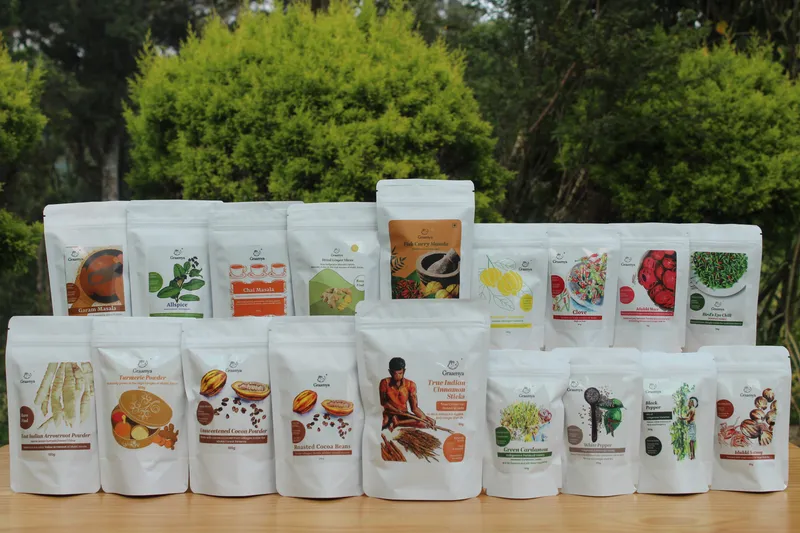
The range of products
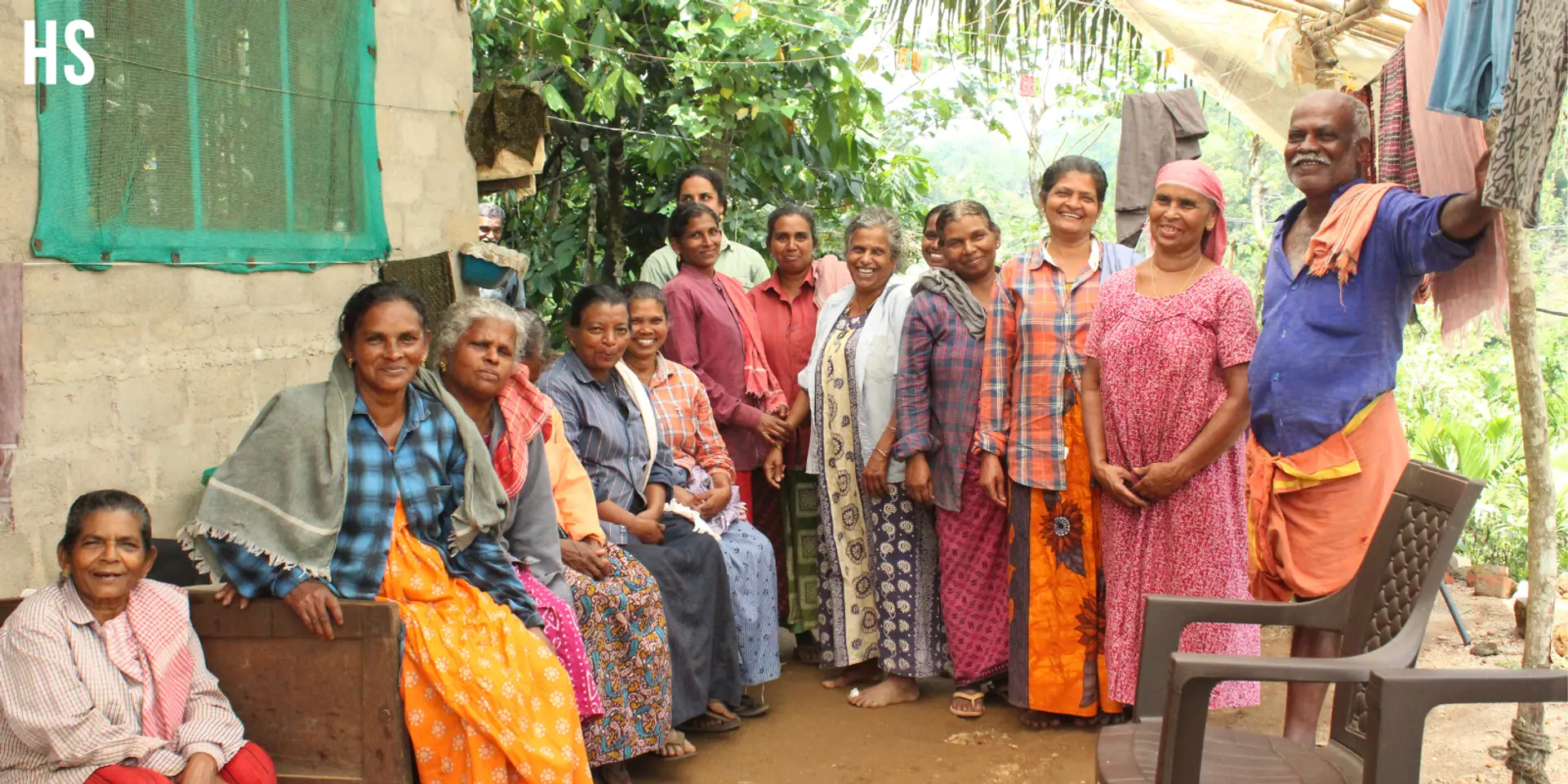
At Graamya, women handle the post-harvesting process, and, Sunny says, precision is noticeably higher when they do. Also, the income is paid directly to women in the family via bank transfer.
When international buyers visit, women host them and are paid for it. Most of the Graamya team comprises women, though not by deliberate design.
Sunny points out a positive shift in attitude. When the team first arrived, the community was excited about tourism as a way out of agriculture.
“Now they believe: let’s continue agriculture because there’s money in it. ‘The youngest farmer Gramya works with is 23 years old.
“If the next generation sees value in the agricultural practices they have grown up with and recognises that they can build a sustainable livelihood from what they cultivate, that, to me, is the biggest social change,” says Sunny.
In the early years, people assumed Graamya was a side project she would eventually leave. Once it became clear to them that she was serious and the primary buyer for farmers, the scepticism faded.
“I don’t think gender is a problem. Banks now have better schemes for women. Government programmes have expanded.”
Graamya plans to expand to two more villages this year; one of them is a nutmeg cluster. Eventually, the enterprise wants to cover all of Idukki. In the past six months, domestic B2B demand for pesticide-residue-free spices has grown noticeably.
“There are too many B2B players who are really interested in our products and willing to pay for them. So there is no harm in expanding,” says Sunny, with optimism.
Edited by Swetha Kannan