



How women fared in the 2026 assembly elections
Of the 1019 women who contested assembly elections in West Bengal, Kerala, Tamil Nadu, Puducherry, and Assam, only 78 won.

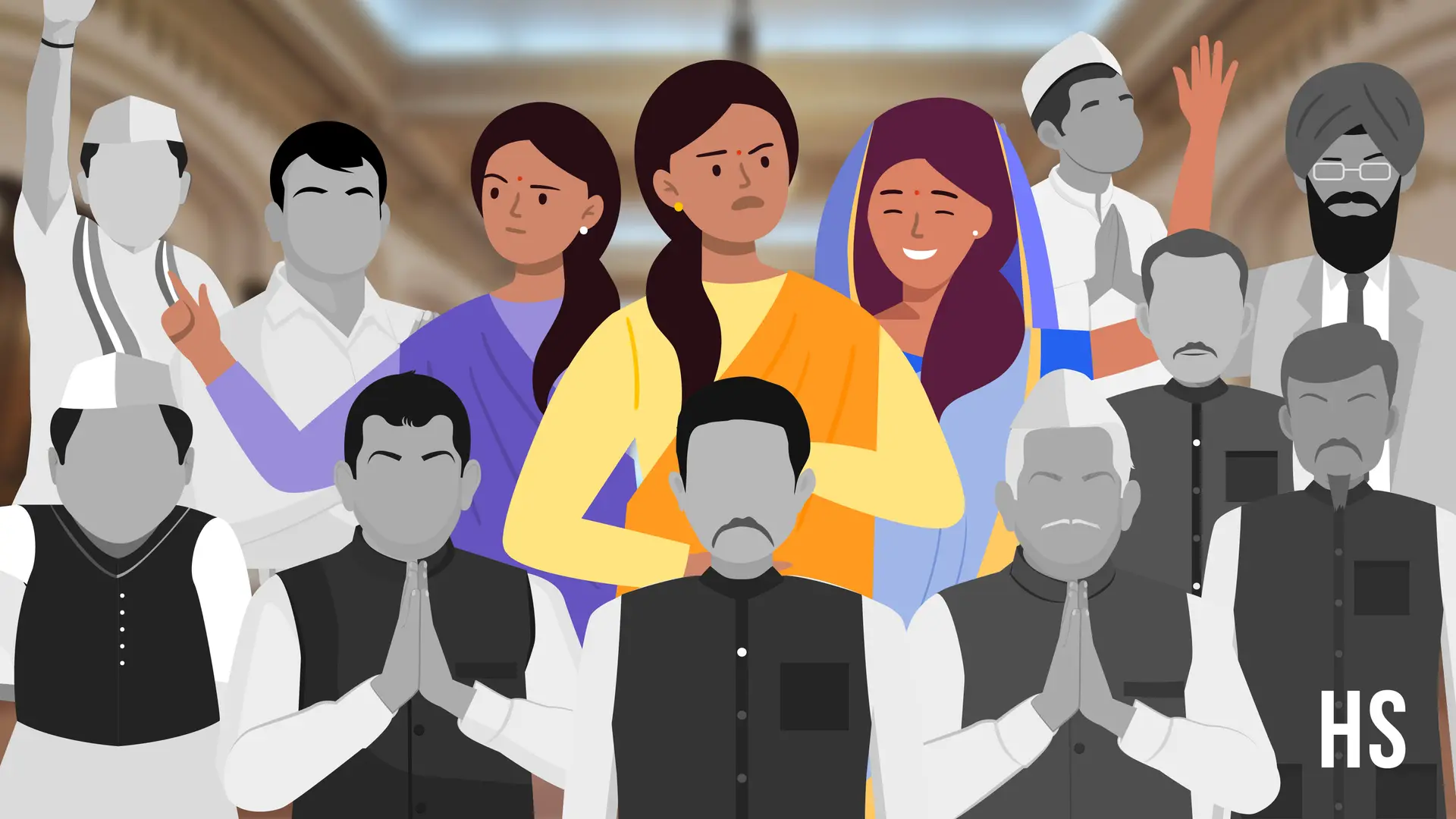

Even as political parties woo women voters with promises of welfare, safety, and empowerment, the results of the 2026 assembly elections across five states tell a different story. When it comes to political power, women’s representation still remains low.
After decades of women’s political mobilisation and the strong case for the Women’s Reservation Bill, few women actually made it to power in the recently concluded assembly elections in Kerala, Tamil Nadu, Assam, Puducherry and West Bengal.
Across these five states, 1019 women contested for 824 assembly seats and only 78 won.
Tamil Nadu sent 23 women to the Assembly, including 13 from actor C. Joseph Vijay’s two-year-old Tamilaga Vettri Kazhagam (TVK), out of the 443 women who contested the elections.
West Bengal, historically among the better-performing states on women’s representation, elected 37 women this year. With 385 women candidates, it had the second-highest number of women contesting the elections.
Kerala, despite its strong social development indicators, sent only 11 women out of 92 who contested the elections, while Assam elected seven.
Puducherry stood out for a different reason altogether: despite 40 women contesting, not one made it to the Assembly. In 2021, it elected one woman.
However, the numbers point to modest gains in women’s representation in Tamil Nadu, where the number increased from 12 to 23; in Assam, the number of women MLAs remained the same as in 2021. Kerala saw a decrease of one. West Bengal, meanwhile, moved in the opposite direction, electing fewer women this time despite having more seats, down from 40 to 37.
Women turned out in greater numbers than men across all five assembly elections in 2026, reinforcing their growing electoral clout even as their representation in legislatures remains limited.
In West Bengal, 93.8% of women voted compared with 92.06% of men, the highest turnout among the five states. Tamil Nadu saw 86.2% female turnout, compared with 83.77% for men, while in Assam, 86.53% of women cast ballots, compared with 84.95% for men. Kerala recorded one of the widest gender gaps, with 81.17% of women voting compared with 74.9% of men. In Puducherry, too, women outpaced men at the ballot box.
The numbers once again prove that women are indispensable as voters but remain marginal in political power.
Even after decades of debate around women’s reservation, why are most state assemblies still stuck below the 10% mark for women MLAs?
“Our study shows that ticket distribution to women itself is less than 10% both for state and general elections. Therefore, the final figure reflects issues within the parties that prevent them from distributing tickets to women. This is indeed regrettable because while reservation in the legislature needs an amendment, if parties are sincere about women's reservation, they can at least give more tickets to women candidates,” says Aparajita Bharti, political analyst and founding partner, The Quantum Hub.
In 2023, a record 19 women were elected to a 90-member Assembly in Chhattisgarh, representing 21% of the total, the largest percentage of women MLAs in the country. Why are larger and more politically influential states lagging behind?
“Tribal states often have slightly different gender norms, which lead to women taking more leadership. At the panchayati raj level, both Jharkhand and Chhattisgarh have more than 50% women panchayat leaders, meaning women win more seats than the number reserved for them. This is perhaps reflective of that at the state legislature as well,” says Bharti.
On the other hand, Kerala, often held up for its high literacy rates, strong social development, and comparatively better gender indicators, continues to have women making up less than 9% of its Assembly, exposing a striking contradiction between social progress and political representation.
“Kerala is an interesting state in this regard, showing that empowerment doesn't automatically translate into political representation for women unless a specific policy nudge is provided. This is because politics, by its very nature, has high entry barriers coming from non-political families. Women, especially, often lack the financial and social capital to navigate the space. They are also more concerned about their safety in political spaces,” she points out.
The success of women candidates in India continues to depend heavily on leadership decisions rather than on systemic political reform, reflecting the highly centralised, personality-driven nature of most political parties.
“All Indian political parties are quite centralised and personality-driven. We don't have a lot of democracy within our political parties, unfortunately, at this point,” Bharti noted, pointing out that while the Congress briefly experimented with primaries in 2014 to democratise candidate selection, the effort was not sustained.
Against that backdrop, TVK sending 13 women to the Tamil Nadu Assembly in its very first election suggests that parties can significantly improve women’s representation when they choose to.
“Political parties should make internal reservations in ticket distribution if they are serious about increasing women's representation. Our studies show that women have the same or more win rate as male candidates,” she says.
Ashweetha S, a member of TVK, says, “One aspect we should consider is what kind of women contested - they did not mostly come from legacy political parties. They are also young and will bring the much-needed women's perspective to the Assembly. Appointing S Keerthana as a minister is symbolic of its belief that young women can contribute to the development of the state.”
In this scenario, should parties voluntarily implement a 33% internal ticket quota before the reservation act becomes law?
“The law has already been passed. But for the reservations to come into effect, a census and delimitation are required. Yes, political parties should walk the talk on women's representation through internal ticket quotas, rather than wait for the census and delimitation,” Bharti adds.
(The story has been updated to mention Chhattisgarh and to reflect a comparison with the previous election)
Edited by Affirunisa Kankudti