



This girls-first hackathon is empowering the next generation of innovators
Organised by HopeWorks Foundation, in partnership with AI4India and Karnataka Digital Economy Mission, WitchHunt 2026 is India’s first AI-powered hackathon designed specifically to put girls and young women at the centre of innovation.

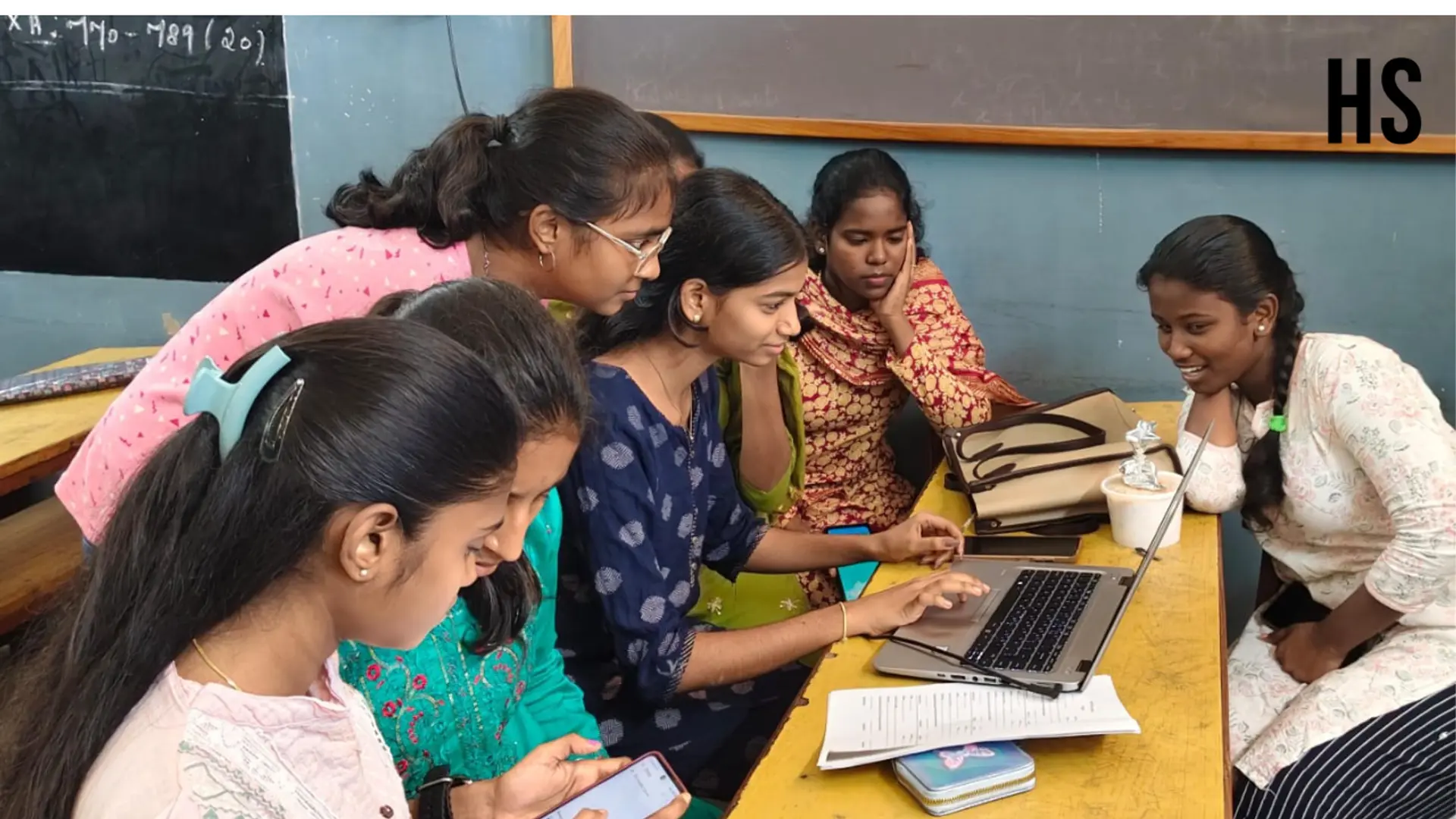

In a remote village in North Karnataka, Pallavi faces a challenge familiar to many in rural India—the nearest pharmacy is 20 kilometres away. The problem of access sows the seed of curiosity in the young girl’s mind. She wonders if medicines could be dispensed through an ATM-like machine.
It may seem like a simple idea, but for young girls like her, who often have limited access to resources, mentorship, and platforms to experiment, it is a radical act of imagination.
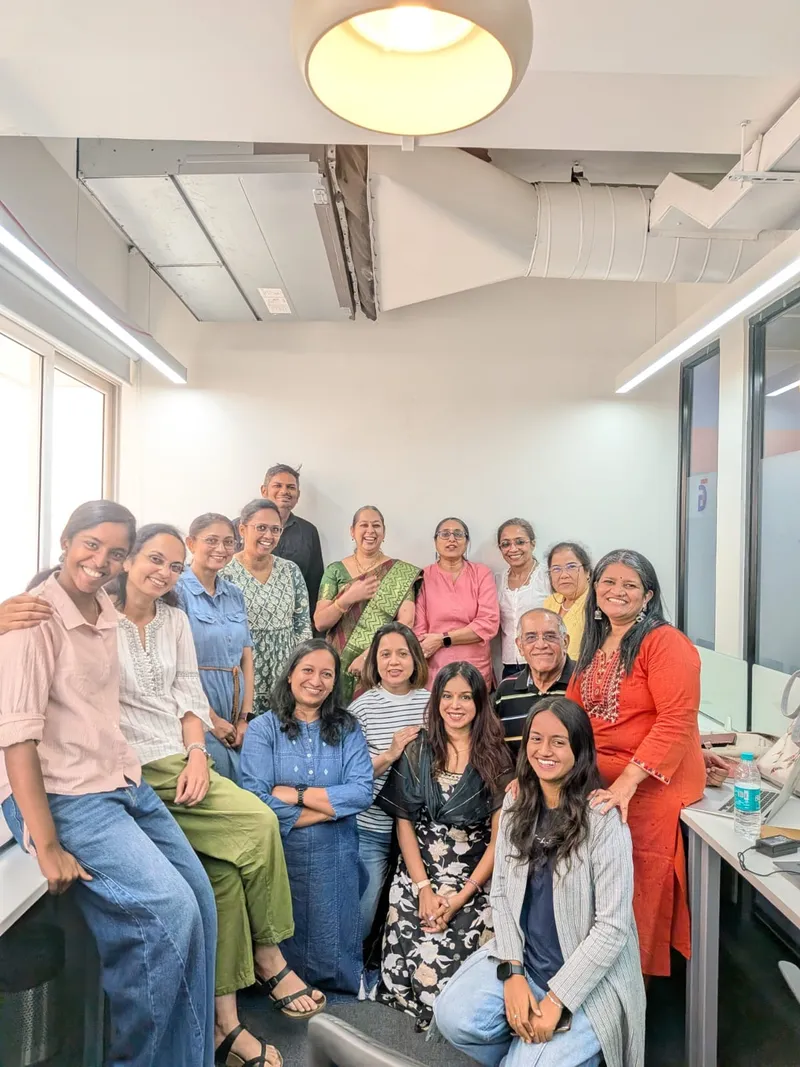
HopeWorks Foundation team
It is this kind of thinking that has led to 373 real-world solutions being submitted by young women from 668 cities across 23 states through WitchHunt, a large-scale AI hackathon organised by HopeWorks Foundation in partnership with AI4India, an initiative to democratise AI access across India, and the Karnataka Digital Economy Mission, which acts as the knowledge bridge between the Government of Karnataka and the tech industry.
WitchHunt 2026 is designed to bring women from underserved regions into the country’s innovation conversation.
Forty teams have secured a spot in the grand finale.
The top five winners will be announced at the grand finale to be held at Jyoti Nivas College, Bengaluru, on June 14. The jury will assess the finalists on June 13.
The grand finale will be attended by Karnataka state ministers Priyank M. Kharge and Ramalinga Reddy, along with Intel India President Gokul V Subramaniam and NITI Aayog Fellow Debjani Ghosh.
WitchHunt 2026 drew 6,151 participants; women made up 73% of the participant pool, while 98% were between the ages of 18 and 30.
Enabling girls in the age of AI
To understand why WitchHunt exists, it’s important to understand what HopeWorks Foundation has been doing for the past six years. The organisation is committed to getting one million girls from underserved communities into college, and then into employment.
Jacintha Jayachandran, Founder Trustee of HopeWorks Foundation, says, “We have recognised the barriers that stop a young girl from being aspirational—education, skills, mentors, menstrual health, and other indices of health. What we discovered last year, with the advent of AI, was that it was shaking our girls’ confidence, who were thinking, ‘Is this one more barrier?’”
Jayachandran’s diverse career spans leadership roles at Infosys and OnMobile. She is an adviser for People, Culture, and Employee Experience at Calfus Inc.
Apart from education, employment, skills, and other key indices, the foundation, under Jayachandran’s leadership, also sought to provide the girls with access to AI literacy.
It first tried AI master classes, and then realised the technology was moving too fast for periodic sessions.
What these young women needed was not to be told about AI—they needed to use it, on real problems that mattered to them. This led to the idea of the WitchHunt hackathon, which invites young girls to submit their ideas across areas such as healthcare, smart cities, education, and climate action.
A multi-stage innovation journey
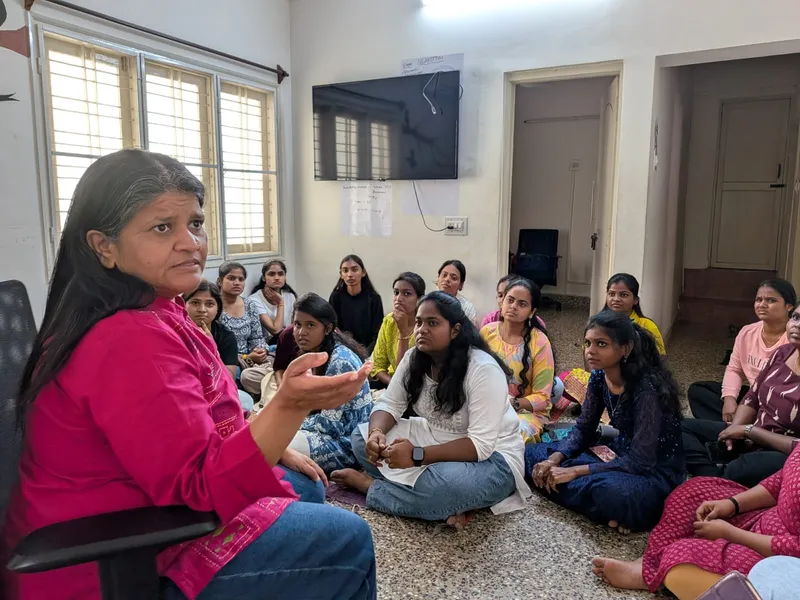
Jacintha Jayachandran, Founder of HopeWorks Foundation, spent time interacting with HopeCitizens who have stepped forward to volunteer for the event.
The process was measured and deliberate. In contrast to standalone hackathons, WitchHunt is a multi-stage innovation journey.
After its launch in February this year, participants spent six weeks in expert-led bootcamps covering AI, design thinking, ethics, and problem-solving, supported by a curated learning curriculum through Infosys Springboard.
Following the submission of 779 ideas on April 8, nearly 300 mentors worked with teams between April 10 and May 13 to refine concepts, build prototypes, and prepare pitches. The programme also incorporated mental health support from NIMHANS, workplace sensitivity training, and stress-management sessions.
By May 13, 373 teams had developed functional proofs of concept, which were evaluated by more than 70 experts before the top 40 teams advanced to the grand finale in Bengaluru.
According to HackCulture, the platform hosting WitchHunt, the 50% conversion rate from idea to functional PoC is among the highest it has recorded across corporate, academic, and NGO hackathons.
“If you look at a typical hackathon, it’s a contest where a problem statement is rolled out. Here, we wanted girls to spot the problem, identify how to frame it, leverage technology and come up with a solution,” says Varsha Verma, Co-Chair of WitchHunt.
Verma brings over 35 years of global IT services experience, driving digital transformation at scale across the Retail, Logistics, and CPG sectors.
Healthcare and well-being was a dominant theme, with 275 idea submissions and 128 prototypes—the highest in any category. Smart cities came in second, with 235 ideas and 120 prototypes. Education generated 178 ideas and 81 prototypes. Climate Action, the smallest category, still produced 92 ideas and 44 working proofs of concept.
Verma gives examples of the ideas presented, “Healthcare covered a wide range of ideas from accessibility, mechanisms to support medical practitioners, enabling ASHAs through specific digital tools, and helping expecting mothers in difficult pregnancies monitor themselves.”
On the idea of an ATM dispensing medicines, Jayachandran says, “The fact that you can seed imagination in a village which has no healthcare access, to me, that is a big win. Even if the child has just started imagining it, you have widened the ability to identify and believe you can become a problem solver or ask for solutions.”
Another idea, from a Tier II city, targeted the gap between CCTV infrastructure and real-time emergency response. The participant had noticed that cameras record everything but feed nothing—that footage sits on servers while accidents unfold and ambulances wait. Her solution: an AI layer that simultaneously pushes real-time alerts to hospitals, traffic authorities, and emergency services.
What makes WitchHunt unique is that it levels the playing field. A participant from a small town in Tamil Nadu competes with a student from IIIT Delhi, even though both have access to the same learning resources, platform, and innovation ecosystem.
What comes after the finale?
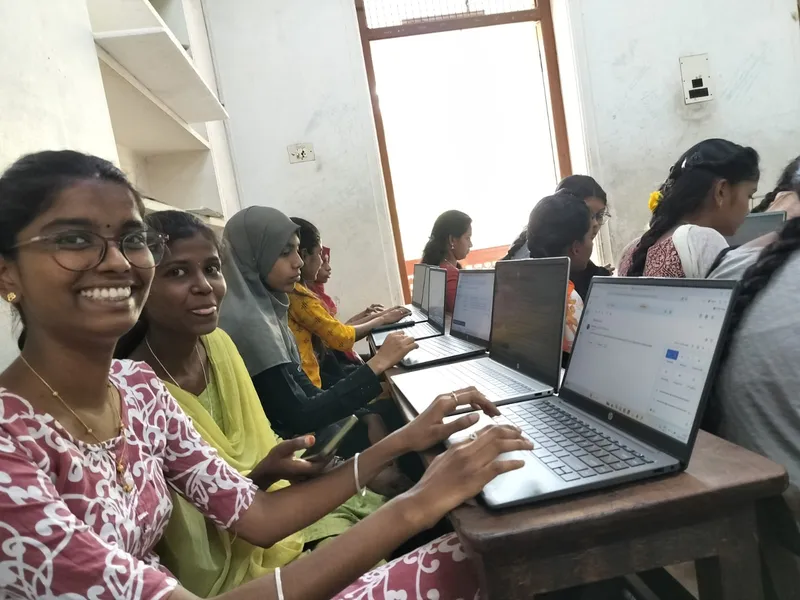
Participants at one of the sessions
Both Jayachandran and Verma are clear that the finale is a milestone, not a finish line. After the event, the team plans to release a white paper distilling the lessons from the entire journey—what worked, what didn't, and what India’s innovation ecosystem needs to do differently. Several jury members have already signalled their willingness to offer internships and co-develop applications based on the finalist ideas.
While they would love for the hackathon to be a continuous effort, they emphasise that it is going to be one of the events in the process of ensuring no girl gets left out of the AI journey, irrespective of which corner of the country they come from.
For the next edition, they want to include a Shark Tank kind of model with an investor angle.
“India’s single biggest problem right now is employment for the educated youth,” says Jayachandran. “Can we create a model that enables students from the backyards of this country to build something of their own, small as it may be, leveraging technology? And can we give them the confidence that this is completely possible for them?”
She adds, “Engage everyone. Enable innovation systemically. Build a large ecosystem that collaborates.”
Edited by Swetha Kannan