



Meet the woman entrepreneur taking Kerala’s coconut shell products to the world
Founded by Maria Kuriakose, Thenga Coco transforms discarded coconut shells into premium lifestyle products, creating jobs for women and rural artisans while building a Rs 3.5 crore export-focused business.

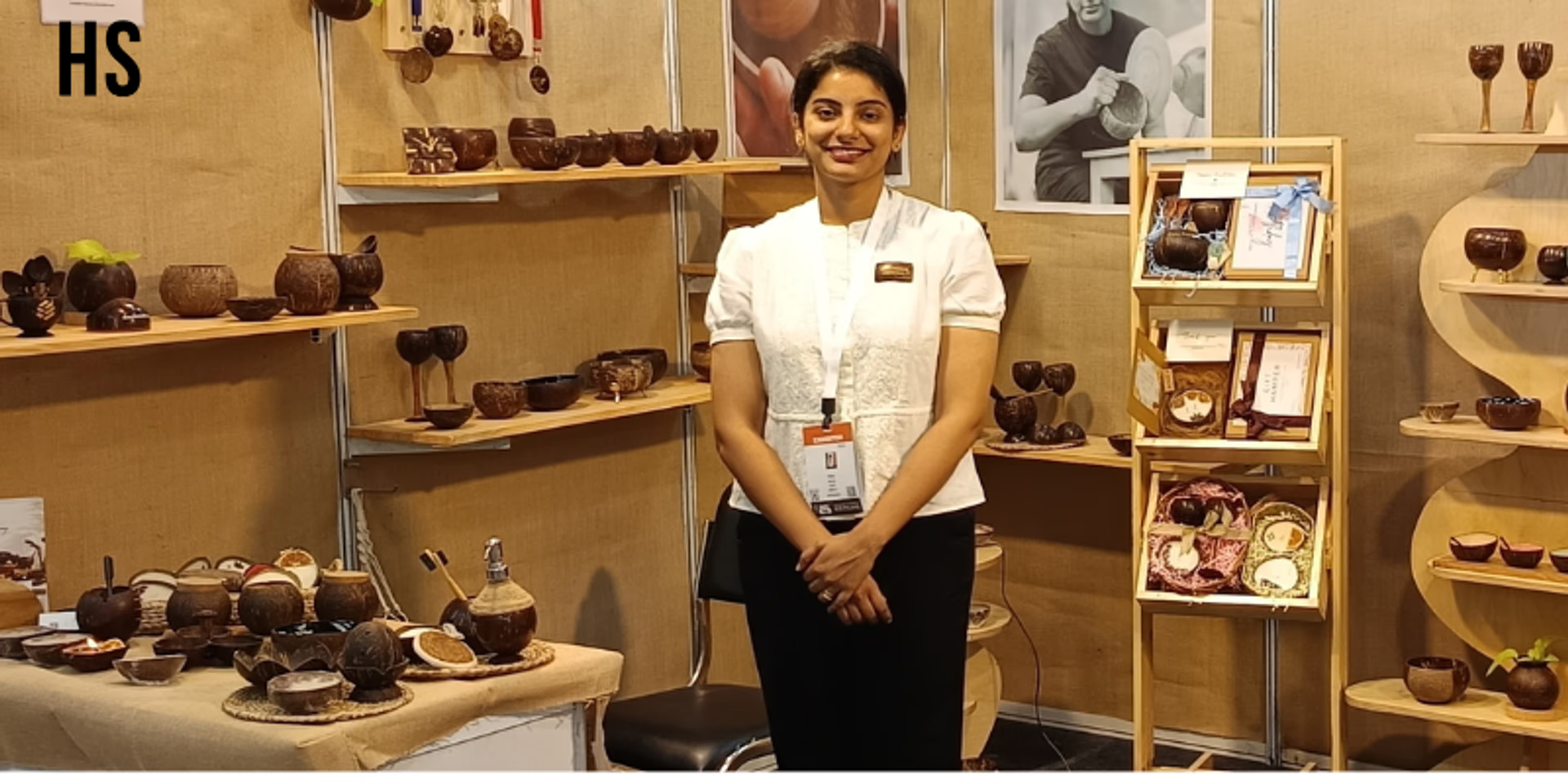

It is a story played across most of Kerala—complete your schooling, move out of the state to cities like Bengaluru or abroad for higher education, and build a career elsewhere. Returning home to start a business is seldom part of the plan.
For Maria Kuriakose, life began on similar lines. However, the journey away from Kerala eventually led her back home, with a business idea hidden in plain sight.
The founder of Thenga Coco, Kuriakose (31), has built a business that transforms coconut shells, which were once considered waste, into functional and decorative products. Operating from Kerala's Palakkad district, it has grown into a successful D2C brand with a presence in both the domestic and European markets.
Back to roots
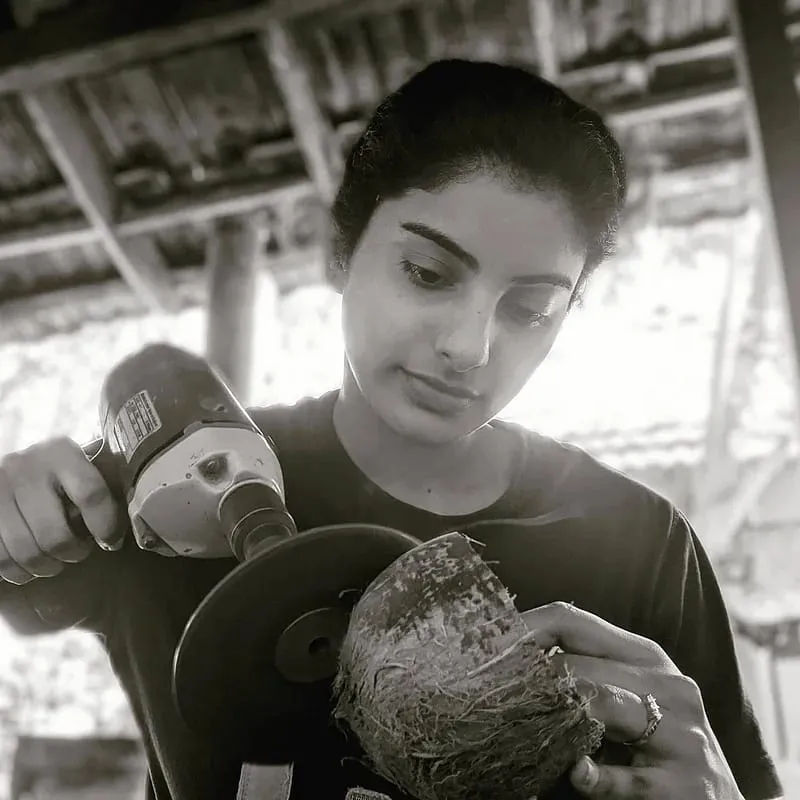
Maria Kurikose fashioning the first product out of a coconut shell
After moving to Mumbai to pursue a BA in Economics at St Xavier’s College, Kuriakose went on to earn an MBA scholarship to Spain. On her return to Mumbai, she spent two years in the corporate sector before working at a startup for another two years.
“After living abroad and working in Mumbai, I felt the opposite urge: to come back and do something here. There was always this inclination to start something of my own, rooted in sustainability and nature,” she tells HerStory.
With an abundance of natural resources surrounding her, she understood her path, but was unsure about the product or whether it would work.
“When I learned about social entrepreneurship, things started clicking. I realised you could contribute socially to the economy and the environment while making profits,” Kuriakose says.
She joined the Myna Mahila Foundation, where she worked with slum communities, manufacturing and selling sanitary pads and raising awareness about menstrual hygiene. This gave her the confidence to return to Kerala and rethink her focus on sustainability.
In the last few months of 2019, Kuriakose started researching what she could work on. “I found that coconut water had too much competition, and suppliers from Tamil Nadu offered better rates for coir products. Palm leaf products performed relatively better. Coconut shell products weren't even on my radar at that stage,” she explains.
She started with palm leaf products, selling them on Amazon and focusing on B2B sales to supermarkets and companies.
The discovery came by accident. Noticing some coconut shells lying around the house, she picked one up, rubbed the outer surface with sandpaper, and drizzled a little coconut oil on it. They gleamed.
“I showed it to my father,” she says, “and he said, ‘Wow, this looks really beautiful.’” She put a plant in it. Then she started thinking.
Kuriakose began approaching eco-friendly companies in Bengaluru, Delhi, and Chennai. Most found the coconut shell surprising, fresh, unlike anything they had seen. The first commercial order was for 200 pieces at Rs 60 each. When she began looking for shells, the real education began. Kuriakose explains that a coconut shell is not just a shell. For a bowl, you need a flat-bottomed one, and a teacup needs a different curvature entirely.
“People see a Rs 300 bowl and wonder why it costs that much when a coconut doesn’t,” she says. “They don’t see what happens before the bowl reaches them,” she adds.
The artisans nobody was buying from
Coconut shell craft is a traditional art form in Kerala. But the practice was dying as plastic and metal alternatives became more convenient and affordable.
Maria started attending agricultural exhibitions and tracking down these artisans. And, here she discovered the disconnect.
“The rural artisan didn’t know what kind of design would work for a tier-1 city buyer. I showed them. How do you make a teacup? A smoothie bowl? A spoon—not for cooking, but for serving, for the experience of eating?” she elaborates. Together, they built the products and changed the model.
When she got an order for a thousand pieces, she had a network of fifteen artisans, and she split it among them.
She was freed from the burden of sourcing and selecting shells, allowing her to focus on what the business actually needed: improving operations, refining marketing, and starting to think about exports.
In the beginning, it was all done by hand. Her engineer father helped develop basic tools like a sanding disc fitting onto a drill and a cloth wheel for buffing. They applied beeswax or coconut oil on the shells. When collaborations with artisans increased, they sourced high-power, efficient machinery from Coimbatore.
The all-women production unit
In 2024, with export orders large enough to fill containers—two lakh pieces at a time—the decentralised network was no longer sufficient on its own. Kuriakose set up a production unit in Velanthavalam, a village on the Kerala-Tamil Nadu border in Palakkad district.
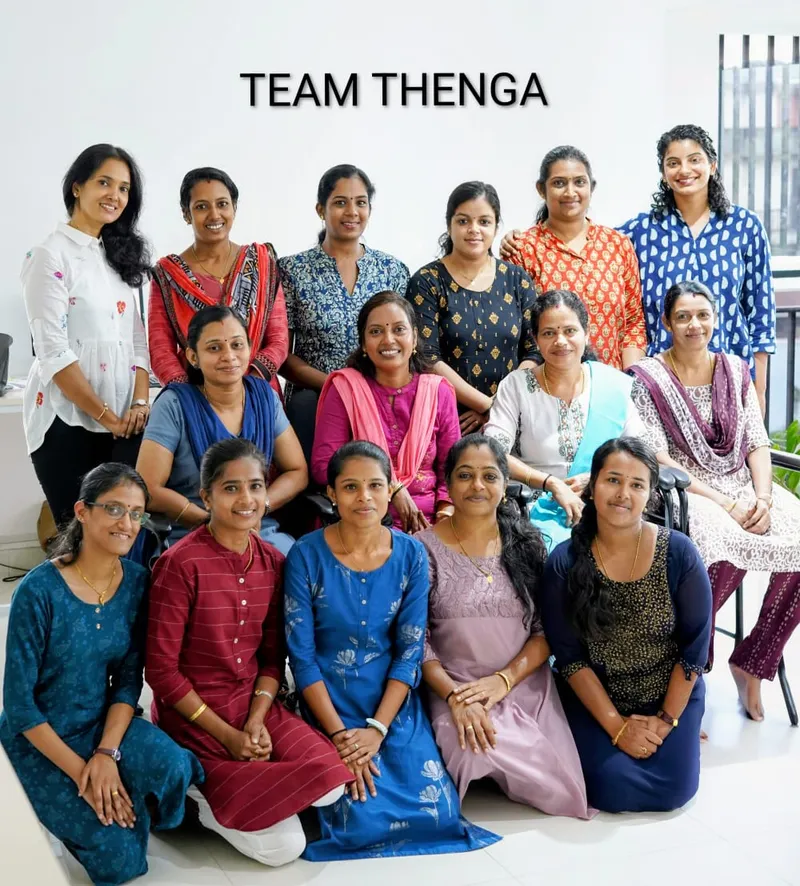
It is an all-women team: 26 women on the production floor, all local, none of whom had prior experience with the craft. They learned it at the unit, under supervision. It takes two to three months for a new worker to produce consistently good output.
“During that period, there is loss—shells that crack, surfaces that chip, poor finishing. You have to be patient,” she says.
At the Palakkad town office, 14 more women handle operations, finance, and marketing. The decentralised artisan network still operates in parallel, supplying domestic orders from clusters across Thrissur, Wayanad, Alappuzha, and Kozhikode. Some have their own machinery, while others receive a loan from Thenga Coco to purchase it.
“When I joined Thenga Coco, I didn't know anything about making products from coconut shells,” says Anitha, 29, who works at the Velanthavalam factory.
Starting with coconut shell ice cream cups, Anitha gradually learned to make a variety of products, including soap dishes and decorative items. "Each product goes through many stages. We clean, shape, polish, paint, and finish it according to the customer's requirements. Earlier, I didn't know any of these processes. Today, I can confidently handle them," she says.
"I am happy that I can work and support my family. Receiving a regular salary has made a difference to our household. It gives me confidence and peace of mind," she adds.
There is no limit
While many eco-friendly brands eventually diversify into bamboo, palm leaf, coir, or other natural materials, Kuriakose chose to double down on what others saw as a limitation.
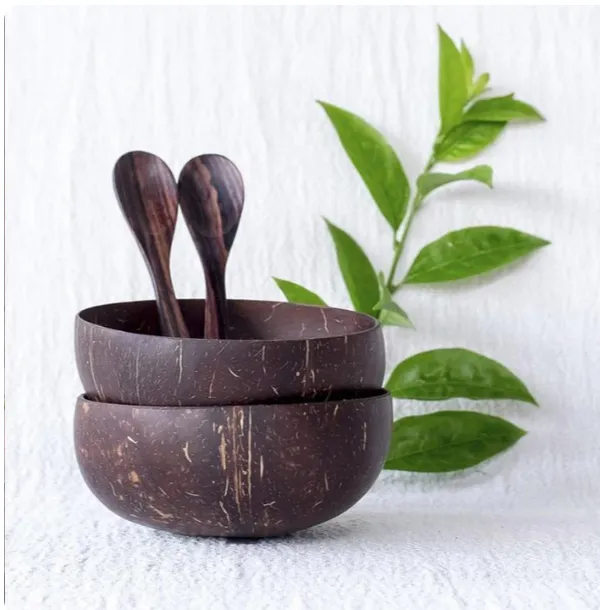
Today, the company claims to be India's largest manufacturer and supplier of coconut shell products, with a catalogue of more than 110 SKUs, all made exclusively from coconut shells. The range spans everyday utility products, home décor items, gifting solutions, candles, hamper sets, containers, and customised corporate merchandise.
Thenga Coco has collaborated with schools and the Kerala government to create medals and badges from coconut shells, and has also developed technically challenging products such as airtight containers with specially designed lids. The company has introduced eco-friendly enamel finishes to enhance colour and aesthetic appeal.
Over the years, Thenga Coco has expanded well beyond the niche handicrafts market, finding customers across industries and geographies.
Gifting products form a significant part of its domestic business. Premium hotel chains such as Marriott and Taj source products from the company, while resorts and restaurants in tourism hubs such as Goa, Varkala, and Mauritius use coconut shell products as part of their sustainability initiatives. Other business customers include candle manufacturers and even ice cream brands that use coconut shells as serving bowls. Together, the domestic B2B segment contributes roughly 40% of the company's revenue.
Exports account for another 40%, with Europe emerging as a strong market. Italy, Bulgaria, and Spain are among its largest overseas destinations, while Australia and Dubai are growing markets. Ecommerce platforms such as Amazon and Flipkart contribute about 20% of revenue.
One of the major challenges she has faced is educating consumers on how to care for a natural product.
“We don’t use chemical coatings, so coconut shells can develop a white mould-like formation if they are kept wet in an enclosed space. This is harmless; a simple wash and proper drying resolve it. But consumers conditioned by plastic wash something, then shut it in a cupboard while it’s still wet. With proper care—leaving the shell open to dry before storing—it lasts 10 to 15 years,” she explains. The other challenge has been to source quality coconut shells.
“I learned this the hard way in the summer of 2021, when I suddenly got a flood of complaints about cracking bowls. I had to learn that shells need to be dried under a shed with fans, not in direct sunlight,” she says.
Still bootstrapped, Thenga Coco currently has revenue of Rs 3.5 crore. The goal for next year is nearly double, with the increase primarily driven by exports.
The support she has valued most came through TechnoServe’s Greenr programme, which connected her with a mentor and provided access to masterclasses and a strong support network.
Ajay Menon, Senior Practice Lead (Entrepreneurship) & Program Director (Greenr Accelerator Program) TechnoServe India, points out that Thenga Coco is a compelling example of how locally rooted sustainable businesses can build commercially successful and scalable brands.
“Over the last 10 months in the Greenr Accelerator Program, it has grown revenue by 34% and jobs by 25%, while strengthening operational efficiency and market expansion. Their growth demonstrates that sustainability-led businesses can drive both environmental impact and strong business outcomes,” he says.
Thenga Coco has taken a subsidised loan so far and is raising funds for the first time this year. The funds will also enable Kuriakose to participate in international B2B exhibitions in Europe, thereby driving sales.
Edited by Megha Reddy