



How this woman entrepreneur is redefining mental wellbeing with Mindfully Sorted
With Mindfully Sorted, Sarmistha Mazumder is redefining mental wellness through immersive retreats and mindful travel experiences that encourage women to invest in themselves.


Sarmistha Mazumder spent more than a decade climbing the corporate ladder, holding leadership roles at organisations such as Accenture and Delphi Automotive.
Throughout this period, she remained deeply drawn to psychology and mental health. Outside work, she immersed herself in research, self-study, and specialised courses, steadily building expertise in the field.
When her son was born in 2018, she continued working. But somewhere at the back of her mind, the name “Mindfully Sorted” kept resurfacing.
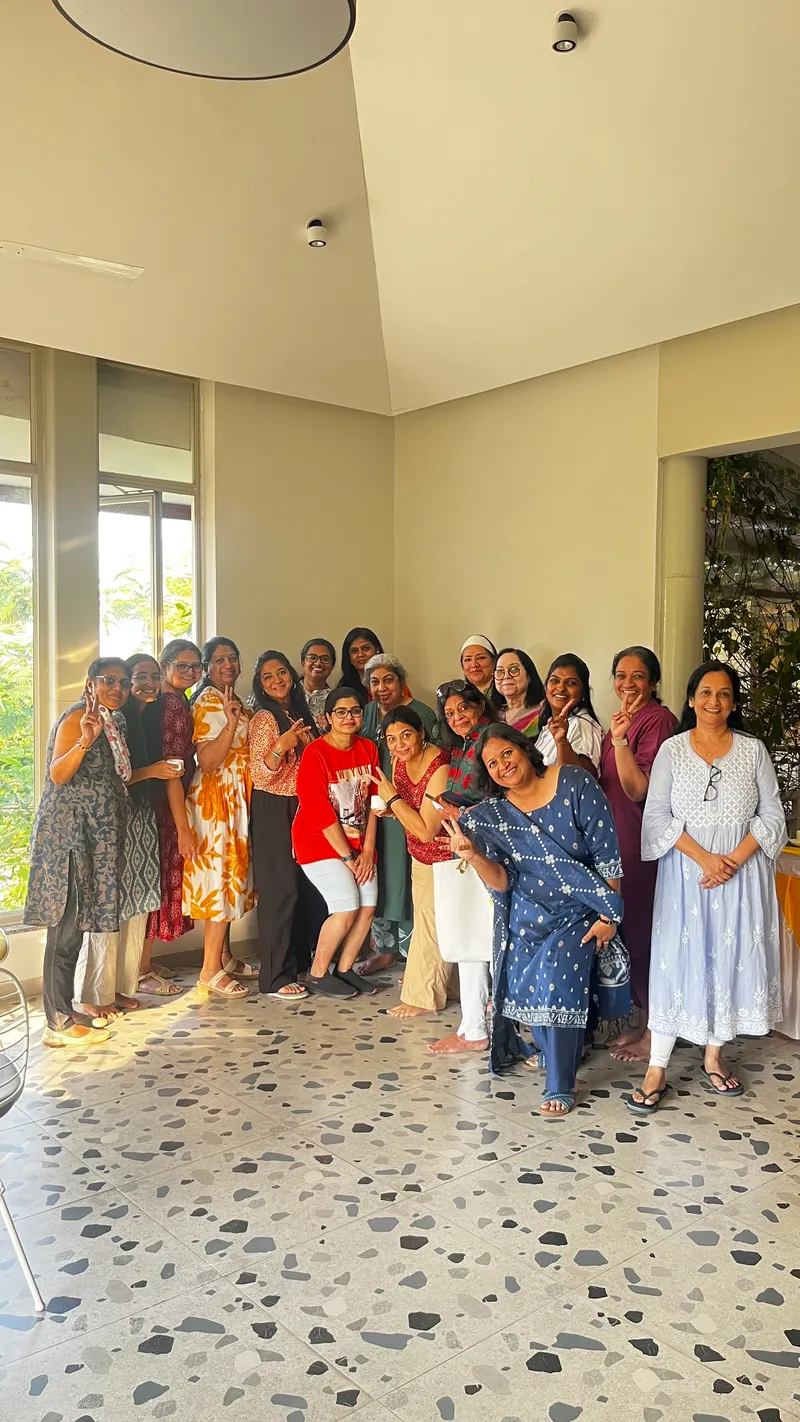
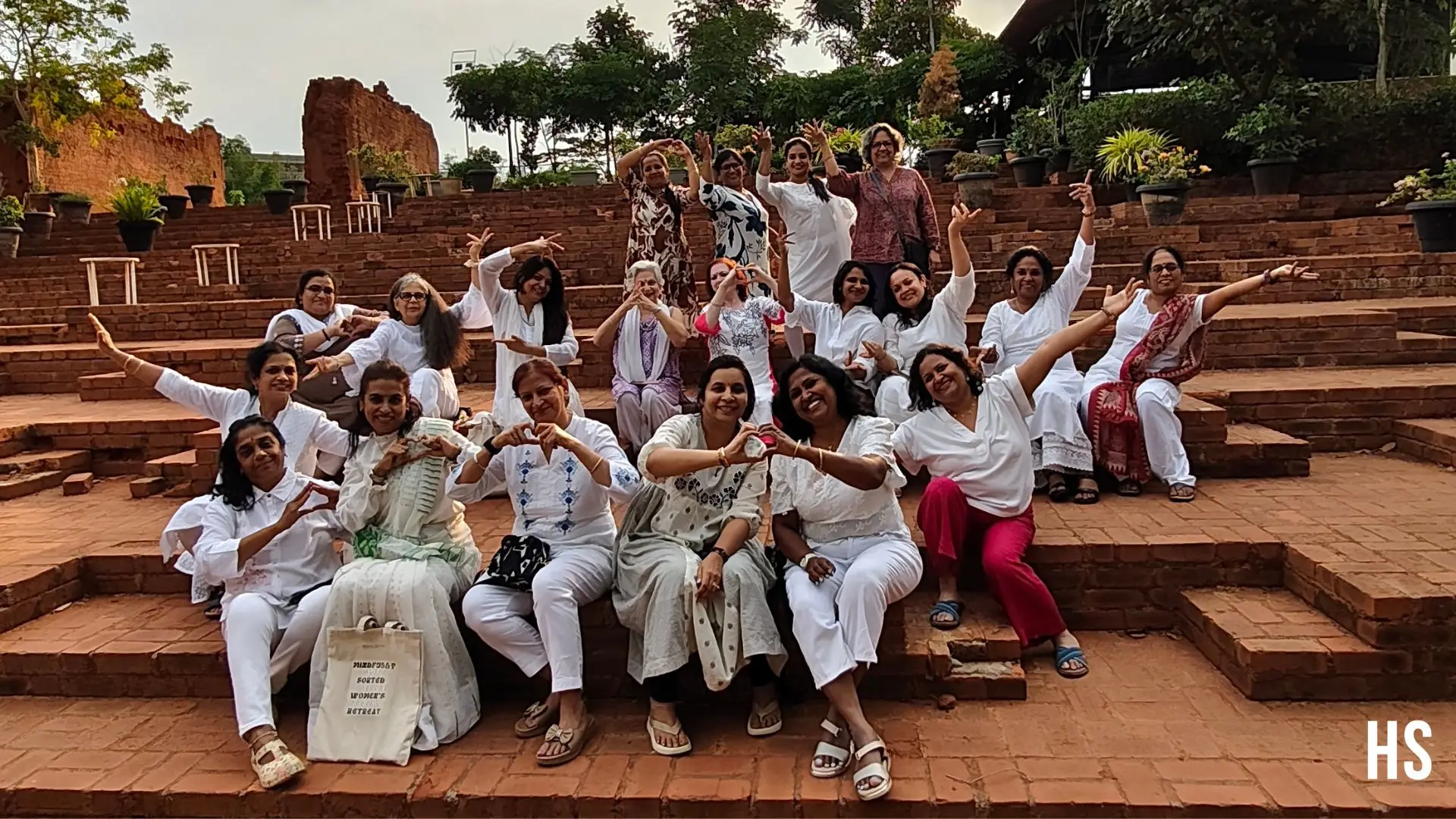
Participants at a Mindfully Sorted retreat
“I felt there was some purpose behind it and I wanted to do something about it,” she recalls.
When her son turned two, she quit her job to try her hand at something meaningful in the mental wellness space, though she was unsure what that would be.
She had noticed a significant gap—people were not making full use of the mental health resources already available.
Mazumder joined NSRCEL’s Women’s Startup Program to get more clarity and direction. She incubated Mindfully Sorted with the idea of building a mental health platform.
Then the COVID-19 pandemic struck, and mental health went from being an external issue to one discussed inside every home, she says.
But Mazumder also watched people begin speaking about mental health more openly. Through her nascent platform, experts were offering free workshops and sessions, and she was paying close attention to who was showing up.
It was overwhelmingly women.
Her Emotional First Aid certification program, which trained participants to be the first line of support for people in distress, certified more than 500 people, around 80-90% of whom were women.
When corporate sessions were opened to all employees, women accounted for most of the participation, and the word spread from there.
“Either women are more stressed, or they are more open to seeking help, or maybe both,” she says.
She also realised something else. Not everyone needed counselling, and there’s a step between “everything is fine” and “I need therapy”—a space of wellbeing, where people can simply express themselves, understand their emotions, and take care of themselves. This step, she points out, is often overlooked.
Three arcs towards wellbeing
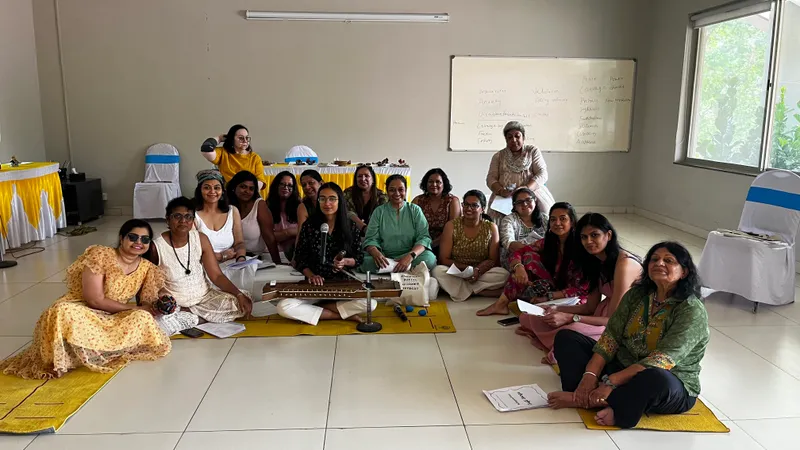
This led to Mindfully Sorted’s first wellness retreat in 2021 at a 100-year-old homestay in Coorg that belonged to a friend's family.
Seven women attended, most of whom she personally knew: two from her apartment complex and a few others through a friend. The facilitator, Sunanda, guided participants to express themselves through art, writing, and storytelling.
The women were all accomplished in their own right, with their own social standing. And yet in that humble homestay in Coorg, they opened up in ways that surprised even themselves.
"I felt like they just got that space to breathe, express, share, and be together. And it was so powerful. I realised that this is not just a good-to-do program once in a while. This is something that can be pursued further,” she says.
The turning point came when Tripura Kashyap, a pioneer in creative movement and dance, entered the picture.
The retreat they ran together was the first to have 15-plus participants and a proper pricing structure.
So far, Mindfully Sorted has organised more than 40 retreats for over thousand women across Goa, Rishikesh, Coorg, Chikkamagaluru, and Jim Corbett in Uttarakhand. The Mindfully Sorted Community has now grown to over 3,000 women across WhatsApp groups, Instagram, and email. Each retreat that follows a Friday-Sunday schedule has its own theme and its own expert.
Tripura Kashyap still leads dance and movement sessions. Dr Baishali Banerjee, a well-known vocalist and music therapy educator, conducts music therapy retreats. Anahita, a young facilitator, recently led “Sufiyaana”, a retreat built around Sufi music, poetry, and philosophy.
Every retreat follows three arcs: self-awareness, through experiential forms such as music, dance, art therapies, or storytelling. The second is identification of what needs to change, and finally, integration—how those changes get carried back into daily life. After the retreat, the community itself becomes a support system.
The majority of participants are in the 35–40 age group and above. The oldest woman to attend a retreat was 85 years old. It costs anywhere between Rs 25,000 and Rs 30,000 and includes accommodation, meals, and the programme.
The retreat attracts doctors, lawyers, architects, and entrepreneurs—professionals who run their own practices and clinics and who exist outside the structured HR ecosystems that provide corporate employees with wellness programmes.
“80 to 85% of the women who come for a retreat; this is the first time they've invested in something completely non-tangible for themselves. They may be earning well. They may have travelled the world. But they have always been with others or taking care of the entire family,” she explains.
A space to heal, reflect, and rebuild
When Garima Chaudhary, a creative director, signed up for her first Mindfully Sorted retreat on the outskirts of Bengaluru, she had a simple goal: to meet new people.
“I was new to Bengaluru and just wanted a few familiar faces to connect with after the retreat,” she says.
“The retreat gently helped me overcome my hesitation in talking to people. More importantly, it reminded me of the person I had lost touch with over the years—myself. Somewhere between the conversations, activities, and moments of reflection, I rediscovered self-love.”
One memory, she says, has stayed with her ever since.
“For the first time in a long time, I laughed freely, spoke without overthinking, and simply existed as myself. As I looked around at a room full of women cheering each other on without comparison or judgment, I realised that healing doesn't always happen through grand moments. Sometimes, it happens in the simplest ones, when you finally feel safe enough to be yourself.”
For Minakshi Wadhwa, an Associate Director at an IT company, the first Mindfully Sorted retreat came at one of the lowest points in her life. Having recently left an abusive marriage, she had moved to Bengaluru for a new job.
She attended her first retreat, an Inner Child Healing retreat in Yercaud, Tamil Nadu, and describes it as life-changing. Since then, she has returned for five Mindfully Sorted retreats, including music healing, dance and movement, and art therapy retreats held in destinations such as Chikkamagaluru and Rishikesh, with another retreat in Goa planned.
“I realised everything wasn’t my fault. Until then, I blamed myself for so many things. The retreat helped me identify childhood wounds, understand how they had shaped my life, and gave me a completely new perspective,” she says.
For Minakshi, one of the biggest takeaways was hearing other women’s stories.
“So many of us walk through life asking, ‘Why me?’ Then you hear what others have been through and realise you are not alone. You leave with hope, perspective, and friendships that continue long after the retreat ends.”
“Every woman should do this at least once. We spend so much time looking after everyone else that we rarely pause to understand ourselves. These retreats give you that space,” she adds.
Over the last four years, Mindfully Sorted’s work also expanded to include corporate and leadership spaces.
“I got my first full-time counselling partnership with a corporate client, and we serve as their counselling partner across India. One reason I think we do well in the B2B space is that our work is intense. People come to the retreats with real grief, pain, and challenges. We hold that space for three days. Whatever learning emerges there, we transfer into our corporate workshops, and that depth shows,” Mazumder says. It works with experienced counsellors with 10 to 15 years of practice and charges corporates only when sessions are actually used.
Looking ahead, Mazumder wants Mindfully Sorted to grow in two directions. The first is expanding its signature three-day retreats with new themes, facilitators, and destinations.
The second is Mindful Nomads, a new women-first travel initiative built around the belief that travel can be deeply therapeutic, especially when shared with strangers who become companions along the way. Unlike other conventional group tours, these are slow, immersive journeys that combine local culture with mindfulness and self-discovery.
Its first Mindful Nomads experience, to Ladakh, sold out within two weeks through a WhatsApp announcement alone.
“In Ladakh, we will meditate in monasteries at sunrise, learn about monastic life from monks, and take part in art workshops. It’s all intentionally woven together,” says Mazumder.
Edited by Megha Reddy