



How this woman entrepreneur is transforming desert livelihoods in Rajasthan through Bahula Naturals
Founded by Aakriti Srivastava, Bahula Naturals works with over 4,000 pastoralist households in Rajasthan, turning camel milk and desert produce into premium food products while ensuring women are at the centre of the value chain.

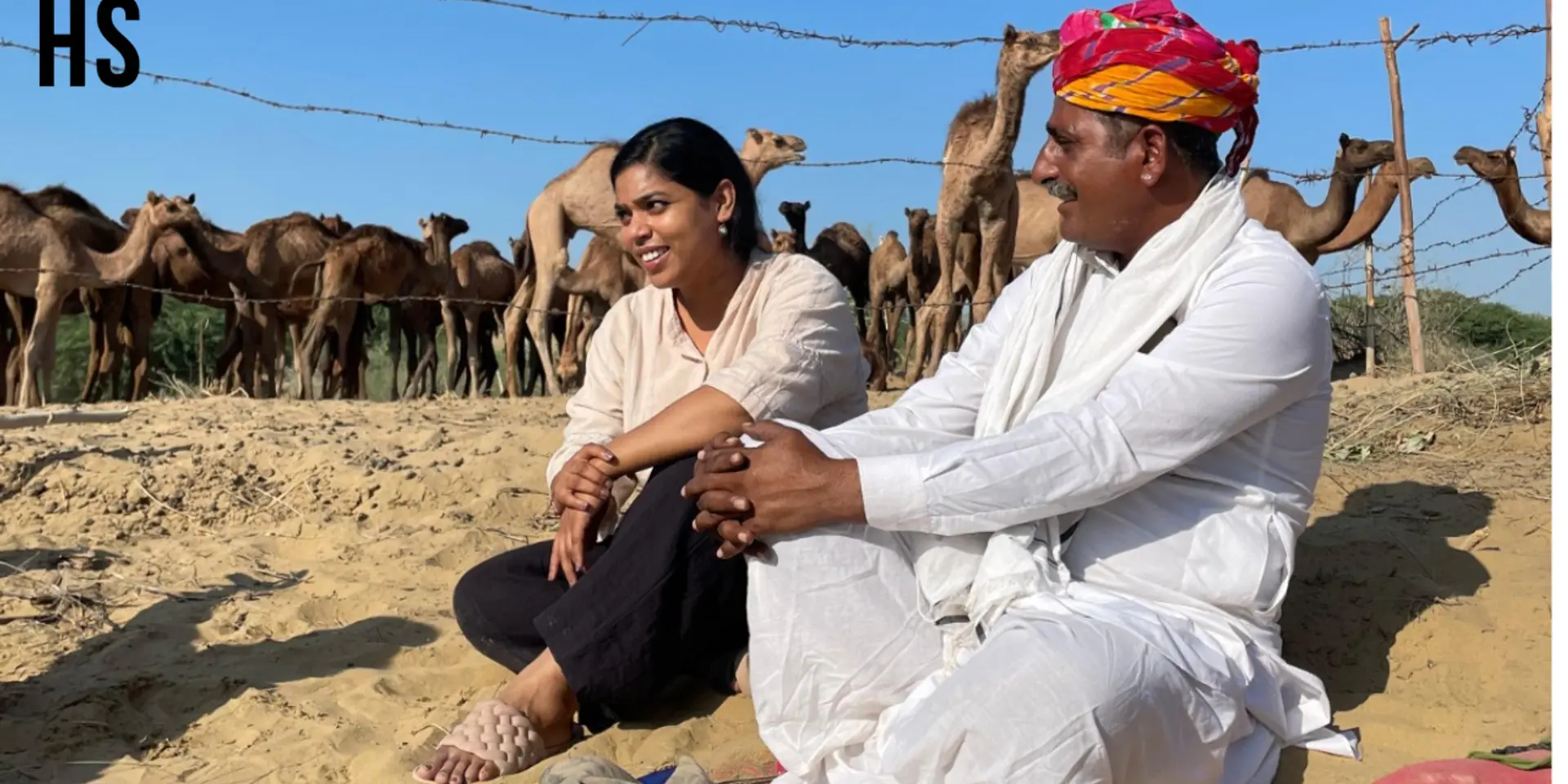

Aakriti Srivastava has vivid memories of her first trip to Bajju, Rajasthan, in June 2017.
At the time, she was filming environmental documentaries for a non-profit organisation in London and a media house in Delhi when someone suggested she visit this remote village in Rajasthan on the India-Pakistan border to cover stories of 71 migrant families settled there.
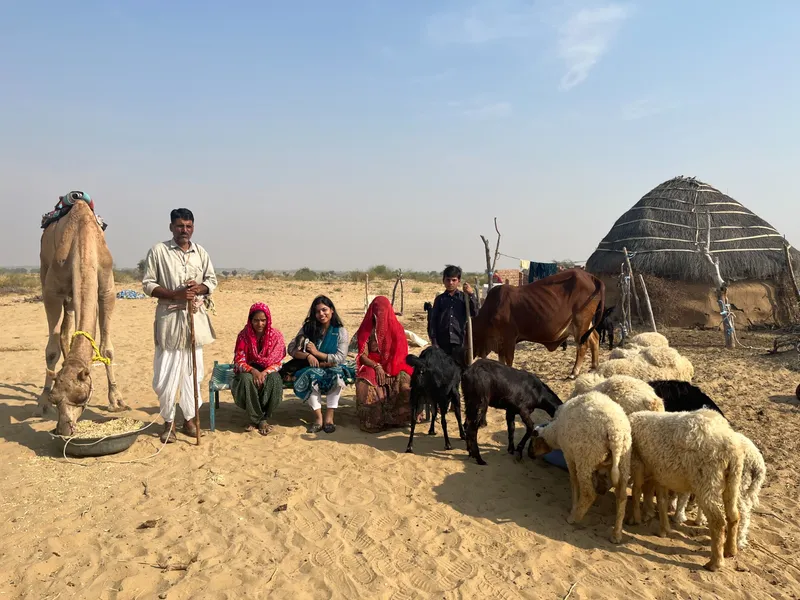
Aakriti Srivastava (in blue -middle) with the pastoralists
Curious, she decided to make the journey. She took a train to Bikaner, and boarded a bus into the desert, and as she went deeper into the dunes, the first question that came to her was, “Am I going to be safe? Is this even India?”
The sun would rise at 4.30 am, and dusk wouldn’t fall until 8.45 pm. From resources and weather to access to basic necessities, the challenges seemed endless.
Livelihoods were the most pressing issue. The idea of addressing that gap took root then, but it would be another five years before it materialised as Bahula Naturals, a community-owned, governed, and run enterprise born in the heart of the desert.
Srivastava was born and raised in Gorakhpur and decided to pursue journalism, an unusual choice in her household in Uttar Pradesh. After convincing her family, she moved to Delhi.
Building sustainable livelihoods
Located in the Thar desert, one of the world's most densely populated deserts, Bajju has 8,000 households that follow a dual housing system.
For about six months of the year, the families stay in the village. For the rest of the sowing, rearing, and farming seasons, they move with their entire household and cattle to dhaanis, houses built on their farmlands.
This dispersed settlement pattern is one of the most fundamental challenges here: any service or government scheme finds that people simply aren't there to access it for much of the year.
“Challenges ranged from water to service delivery, education to women's rights, the space for outsiders to contribute, and access to information, she adds.
For five years, Srivasatava documented stories through videos, articles, academic research papers, and policy work, while engaging closely with communities to understand their challenges.
When the COVID-19 pandemic hit, the question of why these challenges persisted stayed with her. During her research, she realised that the government had schemes, academic institutions had published papers, philanthropic organisations were mobilising communities, and funders had invested money. But all these efforts were either disconnected or not sustained.
If there were a sustainable source of livelihood, communities would gain the voice to reach the right channels to advocate for themselves.
What drew her to pastoralist communities was a contradiction she witnessed repeatedly in Rajasthan's deserts. Camels, livestock, and nomadic life are central to the state's cultural identity, yet the pastoralists who sustain that heritage often remain invisible and undervalued.
“It became clear that I had to work with pastoralist communities. And the name Bahula comes from the Sanskrit word Bahulata, meaning plurality, coming together. The idea was to bring all these different energies, communities, organisations, markets onto one platform,” she elaborates.
Working across three stages
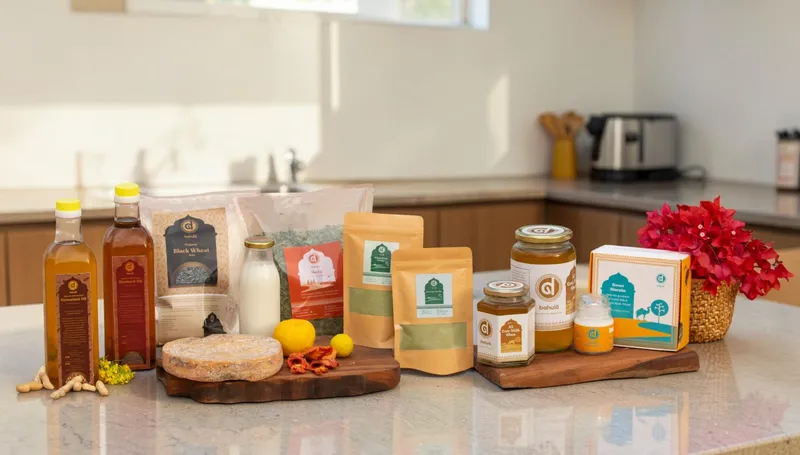
Bahula Naturals' product range
As a self-described “good food company” that brings toxic-free food from resilient regions, Bahula works across three stages.
It works with agro-pastoralist producers to ensure they have the right access to information, tools, and input services needed to eliminate chemical use and grow clean.
This includes connecting them to high-quality seeds and animal feed, deploying biogas units in their households to provide clean cooking gas, and using the slurry byproduct as a natural fertiliser to replace chemical fertilisers. It then ensures fair value for their produce.
At the second stage, Bahula manufactures across three product categories: camel milk and value-added products, indigenous Rathi cow’s milk and value-added products, and agri-produce. Stage three includes marketing and distribution.
In the Rathi cow milk category, it offers Bilona ghee and desi paneer made purely with chhaach (buttermilk) and milk, with no coagulants, no chemicals, and no third ingredient.
The enterprise has developed three varieties of artisanal camel milk cheese, including fresh and aged options and also produces a freeze-dried camel milk nutraceutical supplement.
Beyond camel milk, Bahula offers products such as black wheat atta, black wheat bhalia porridge, and cold-pressed mustard and groundnut oils. Its largest business comes from the premium B2B segment, where buyers are willing to pay higher prices for assured quality.
Locally, Bahula serves households across Bikaner through a doorstep delivery model, supplying everything from milk and ghee to cheese, paneer, oils, and flour. The third channel is ecommerce, through which it sells directly to consumers.
Bahula works with a network of over 4,000 households across Bikaner, Jaisalmer, and Jaipur. Srivastava is based in Bajju. The venture also has an office in Bikaner city, which handles warehousing and market dispatch. 95% of its team are youth from the same villages integrated into its value chain.
Women at the centre
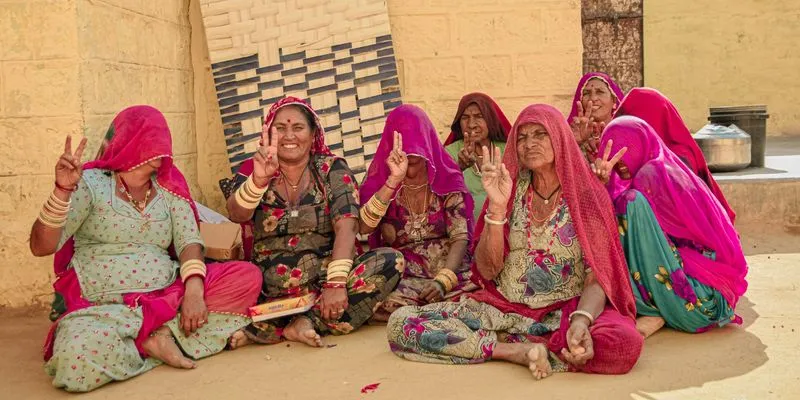
Women are at the centre of the value chain
For Srivastava, placing women at the centre of Bahula Naturals' value chain was a response to a reality she witnessed firsthand.
During her early years, she often stayed with families for days at a time, observing how households functioned. What struck her was the invisible labour performed by women.
"I would watch what a woman's day looked like. She would wake up before sunrise to tend to the animals. She would manage the household. She would go back to the animals, engage with whoever came to collect milk, keep track of how much was sold, and negotiate the price. She would arrange the right feed, send children out in the evenings to graze the animals, milk again, and handle veterinary needs,” she recalls.
Despite bearing responsibility for livestock and household management, women rarely controlled the income generated by their labour.
"The payment went into the husband's bank account. The woman often didn't even know whether the dairy had been paid for. She was at the mercy of the man in the household to give her money for animal feed, household expenses, or the children's education,” she says.
The pattern was similar across both cow and camel-rearing households. "The solution was clear. The people doing the work should be the ones getting paid,” she says.
While Bahula was not initially strict about this requirement, payments for milk are now transferred directly into women's bank accounts.
"The transformation that followed has been remarkable," Srivastava says.
One example is 16-year-old Devika, who lives about 25 kilometres from Bahula's manufacturing plant. After losing her mother at a young age, Devika had taken on the responsibilities of running the household, caring for animals, cooking, and looking after her father and three brothers. Yet the income generated from the milk she managed went to the men in the family.
When her household joined Bahula, the payments began going directly into her account.
Starting with two cows, Devika approached Bahula's delivery personnel with a proposal: if the company could help arrange a Rs 40,000 loan, she would purchase two additional cows and commit to supplying milk for a fixed period. The proposal was reviewed by Bahula's team, who visited her home and were impressed by her determination and business acumen. The loan was approved.
When Srivastava met her again recently, Devika shared a new ambition. She had enrolled in a distance-learning BSc Chemistry programme and wanted to become a laboratory technician.
"She asked me if I could arrange some books to help her study," says Srivastava.
The inspiration came from a woman employed as Bahula's laboratory technician, one of the few women working in such a role in the region.
It’s been four years since Bahula began operations, and the company is breaking even and covering costs. It has raised private and institutional grants and debt in the form of loans. Its biggest success is creating a market for camel milk and keeping it alive in a largely dairy-consuming country.
“We are 40 km from the Pakistan border, and water, electricity and medical access are luxuries. We have integrated decentralised renewable energy technologies across our value chain. On the human resource front, rather than waiting for academically trained professionals who wouldn’t come, we trained community members directly,” she says.
Bahula’s journey has been supported by the TechnoServe Greenr Sustainability Accelerator Program, which has provided mentorship sessions and helped connect it with the right market channel partners. Urmul Seemant Samiti and the Desert Resource Centre were Bahula’s key ecosystem partners in the early years.
“We are expanding from primarily B2B into offline experiential retail, starting with Rajasthan and then moving across India. Second, on the camel milk side, we initiated exports last year and are looking to expand into additional international markets in this category. Third, we want Bahula to become synonymous with trustworthy food, so growing in e-commerce in parallel is a key priority,” Srivastava says.
Edited by Megha Reddy